 review by
 Pokémon FireRed & LeafGreen is a difficult game to evaluate. Re-released on the Nintendo Switch eShop to celebrate Pokémon’s 30th anniversary, this 22-year-old Game Boy Advance remake of the original Pokémon Red & Blue feels like a lacklustre way to celebrate one of the largest media franchises known to man. On the other hand, I’m just happy to have a more convenient way to experience this nostalgic romp through Kanto again, catching personal favourites like Cubone along the way.
Making matters more difficult, FireRed & LeafGreen come as a separate purchase — $19.99 USD / £16.99 — rather than part of the GBA Nintendo Classics emulator which adds suspend saves and filters to many classic titles which are ‘free’ for NSO Expansion Pack subscribers.
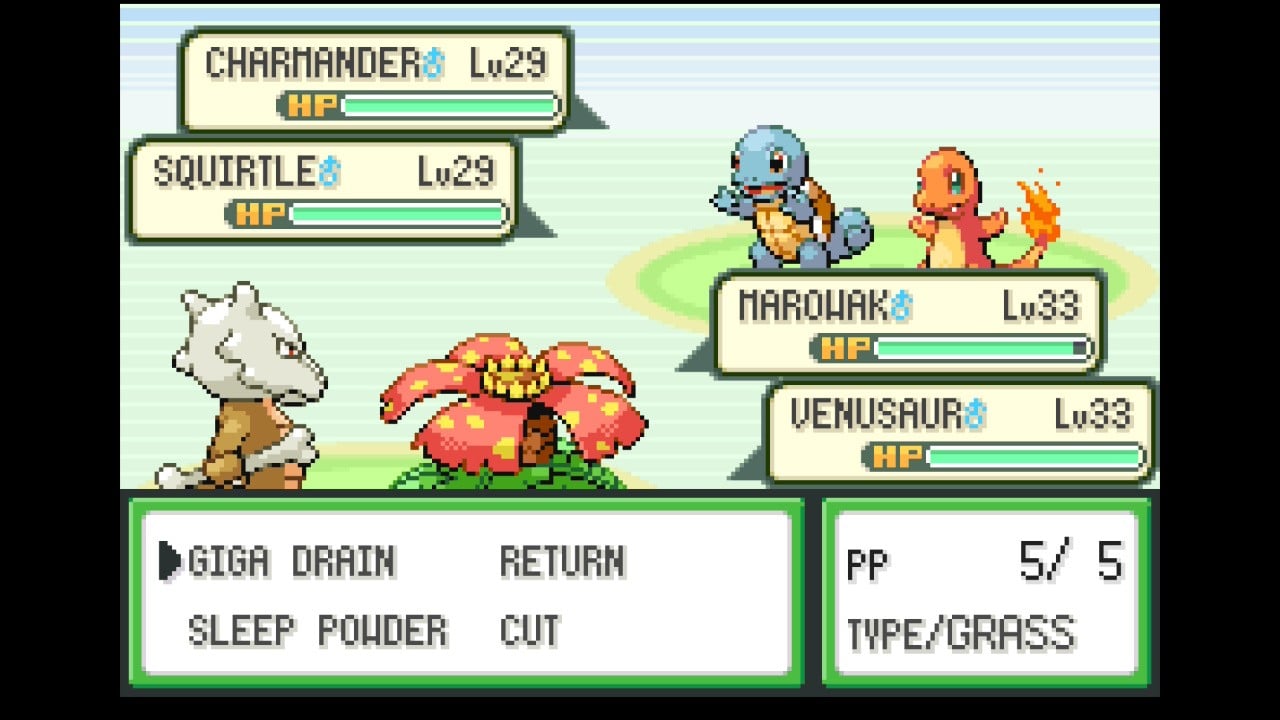
Some have speculated that FireRed & LeafGreen are not part of this because Pokémon HOME functionality is coming, allowing you to transfer your Pidgeys and Mr. Mimes into other games. If suspend points were possible, it’d be easy to catch ‘em all, breaking part of what makes this classic title so special and threatening the larger Pokémon ecosystem by, like — I don’t know — farming Master Balls and shiny Eevees.
Regardless, it makes sense that FireRed & LeafGreen were chosen to celebrate 30 years of Pokémon. We’ve visited Kanto many times before, but Pokémon Let’s Go Pikachu & Eevee adopted a Pokémon GO-style catching mechanic and reworked the story into something more modern, while the original Red & Blue have bugs, confusing design choices, and a plodding pace that only the most nostalgia-hungry trainers can withstand.
FireRed & LeafGreen sit happily in the middle of the other Kanto quests. They retain many of the original's classic mechanics while working out kinks like the infamous glitch that saw Psychic-types immune to Ghost-types, among many, many more egregious issues.
What’s more, they introduced late- and post-game areas with the Sevii Islands that include some Generation II and III Pokémon. The final area of these islands also includes the Trainer Tower, which features a bunch of different battle challenges to put your team to the test as a true post-game experience.
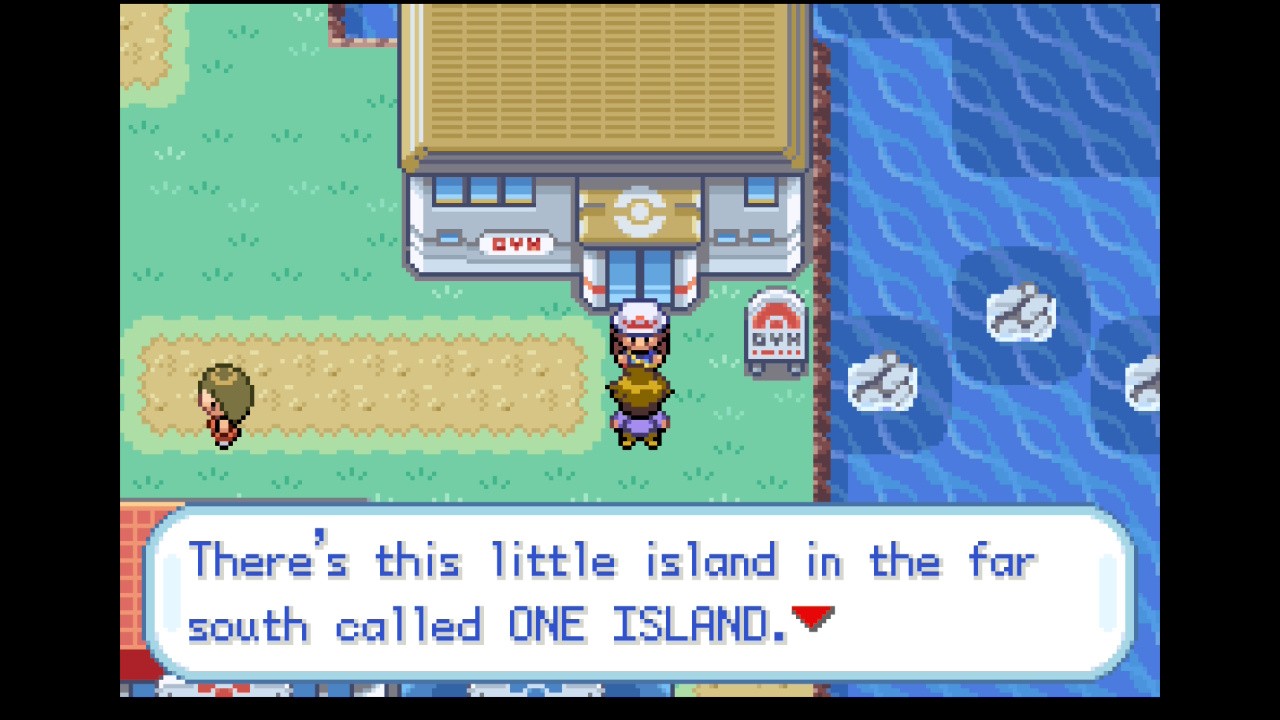
All that is here in this Switch re-release, plus access to Birth and Naval Island, home to the legendaries Ho-Oh, Lugia, and Deoxys. These were only accessible via real-world events before, so this all comes together to make this more or less the definitive edition.
If you don’t care about completing the National Pokédex, that is. Currently, it appears you won’t be able to catch ‘em all from other regions because you had to trade from other games — specifically Ruby/Sapphire and Emerald — in the original 2004 release and that simply isn’t possible at the moment.
Regardless, I consider this version definitive for a different reason: playing on my large monitor or handheld on my Switch 2 is far superior to the GBA’s tiny screen or the backwards-compatible DS. Stomping Brock and Misty with my Bulbasaur has never been so easy to see; here, the sprites are crisp despite the upscaling, and I enjoyed looking more closely at some finer details on these simple yet iconic Pokémon sprites.
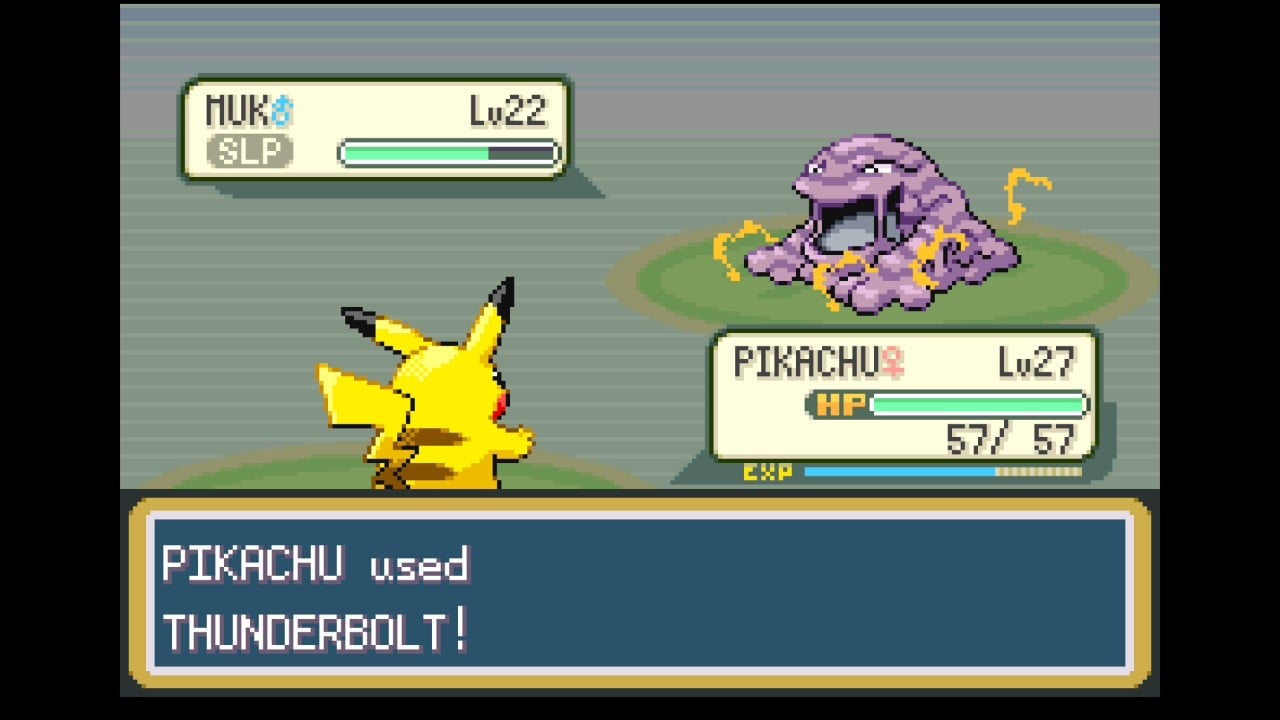
FireRed & LeafGreen still could’ve looked much better. Many have already decried the black bars that frame and shrink the screen to better match the original aspect ratio. After the first hour or two this stopped bothering me, but I do understand where people are coming from when they cite this as proof that this re-release is lazier than a drowsy Slowpoke. If expanding the field of view wasn't feasible, they could’ve at least added some cutesy frames to toggle between.
A lack of online functionality is also a bummer. Trades are local only, so if I want to evolve my Haunter into a Gengar, I’m out of luck because what Millennial that grew up with Pokémon has friends that live nearby nowadays, am I right?
While the black borders didn’t bother me, the lack of new features did. I would’ve loved to see Game Freak add some kind of challenge or remix to the game, such as reworked Pokémon spawns or NPC trainers with full, competitive teams rather than two Kakuna that only use Harden. A Master Quest, if you will. This would’ve gone a long way toward making the price point more digestible.
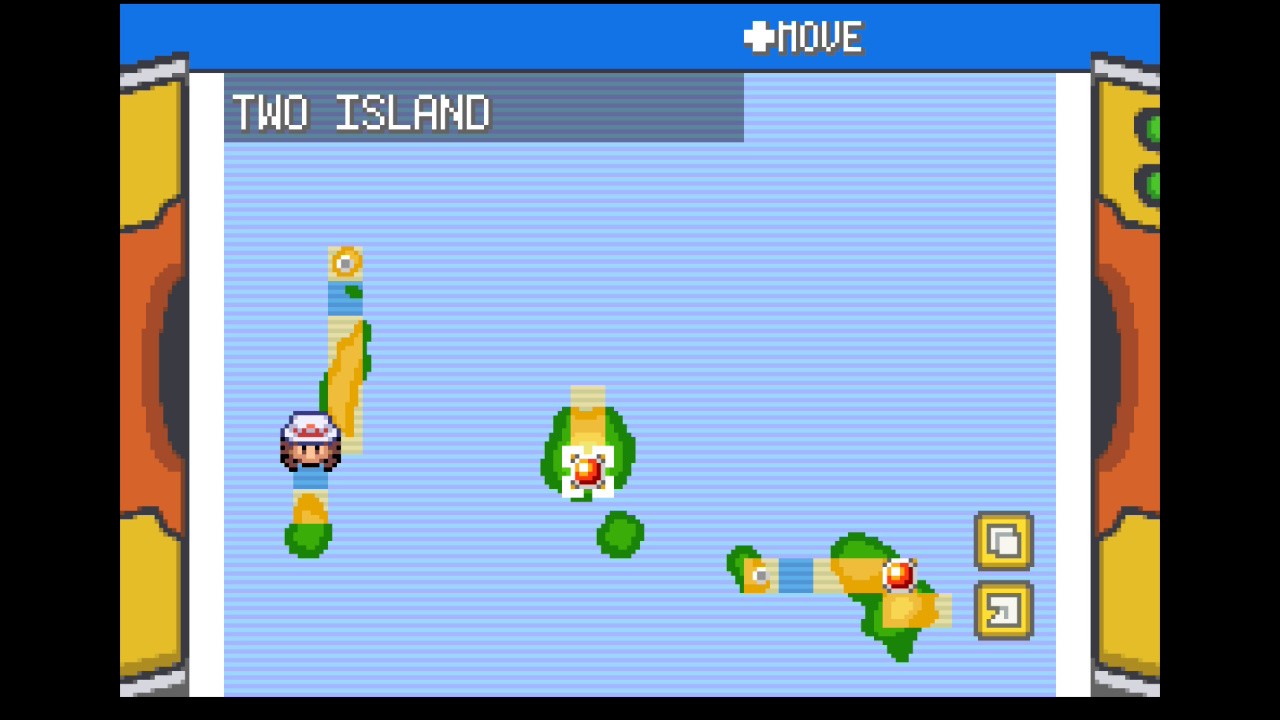
That said, playing through LeafGreen again has given me a fresh perspective on how far modern Pokémon games have come. I have been highly critical of the more recent entries, but going back in time to the GBA version of Kanto rewarded me with newfound appreciation for the mechanics in the modern titles, as well as for how things used to be.
You see, FireRed & LeafGreen were released before the Physical and Special Move split, meaning Dark-type attacks like Bite are all Special moves, while Shadow Ball is a Physical move because that’s what all Ghost-type moves nonsensically are.
This creates fun little build challenges for certain Pokémon, such as my Flareon that has a higher Physical Attack stat than Special, despite Fire-type moves being exclusively the latter. It’s not as easy as slapping Flare Blitz on it and calling it a day; instead, I had to grind the slot machines in the Rocket Game Corner not for a Dratini or a Porygon, but rather a Shadow Ball TM that turned my Flareon into a Psychic, Ghost-deleting menace.
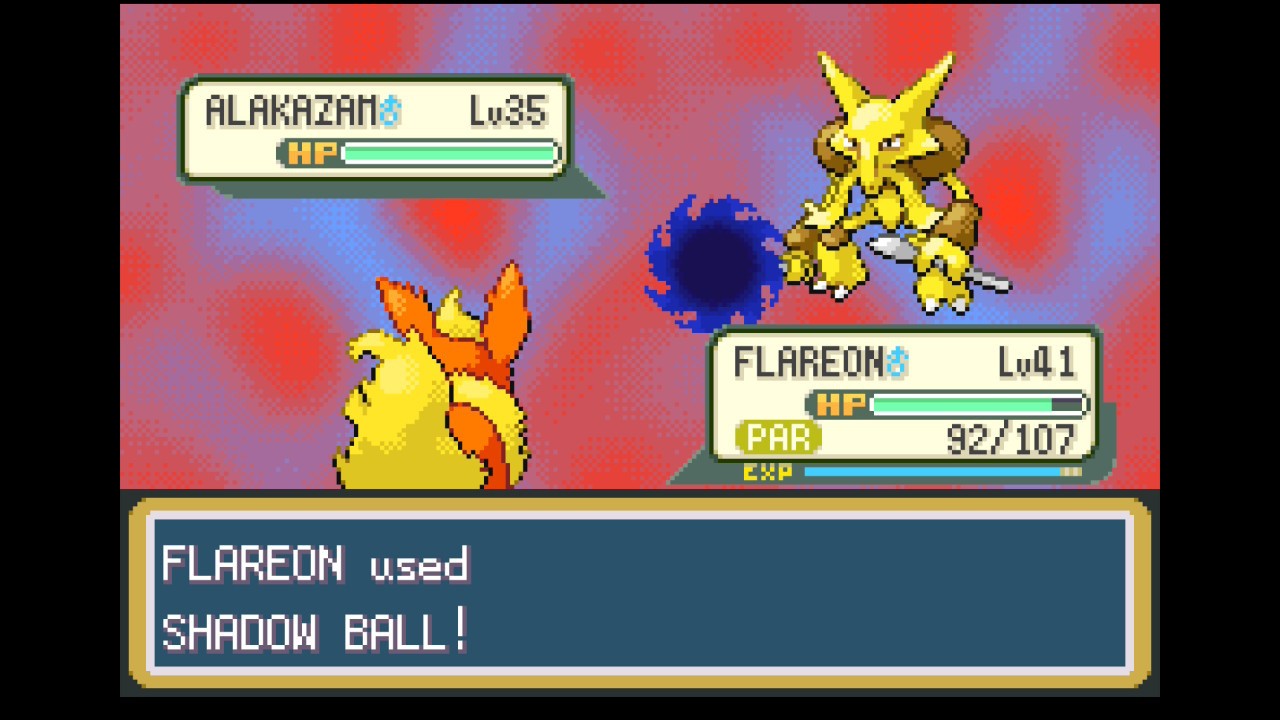
Here, there’s no way to sneak up on Pokémon and backstrike them with a Poké Ball for a higher chance of capture. No Alpha or overlevelled Pokémon roam wide-open spaces or are visible on the map. You can’t send Pokémon out to auto-battle, collecting crafting items as they amass experience. You can’t freely learn and remember moves at any time or even withdraw Pokémon whenever you want, and the 151 original Pokémon make the adventure feel cramped compared to the 400+ available in Pokémon Scarlet & Violet.
I mean none of this as a negative. It’s charming to go back to something so simple and concise as the series continues to explore new mechanics, and it's a great way to remember 30 years of Pokémon.
What’s more, my time with LeafGreen allowed me to appreciate how the series has evolved as a whole because — to be honest — I wouldn’t want a new Pokémon game in this classic, linear style. For that, we now have easy access to FireRed & LeafGreen.
HMs still suck as much as a Bugcatcher’s Caterpie, though.
Conclusion
All told, this FireRed & LeafGreen re-release is undoubtedly a lazy way to celebrate 30 years of Pokémon. For the asking price, Game Freak and The Pokémon Company could’ve included some extra goodies, like a hard mode or online functionality.
Still, this is the most convenient way to experience the charm of the original Kanto adventure, and going back in time to see how much the Pokémon series has grown gave me a newfound appreciation for all the catchin’ I’ve done over three decades, and all that there is to come. Now give us Pokémon HeartGold & SoulSilver, please.


Comments 106
Removed - current gen piracy/emulation
Lackluster emulation from Nintendo as usual lol
I'm actually really glad that they hardly changed anything. I wanted to play a classic, unedited Pokémon game on my Switch for $20, which is why the addition of the word filter is a massive disappointment (I wouldn't have pre-ordered it if they were upfront about its addition). Though I am glad that the Mystery Gift Mythicals are built in.
Not a 10/10 because of the word filter, but I have been enjoying the gameplay when I'm not thinking about the word filter, so I give it an 8/10 score.
No online was the worst one for me. We have to trade Pokemon the same way cavemen did.
Just want to casually inform people here that the Switch release for these games was datamined, and the emulator running these games activates emulator hacks based on which ROM is loaded into it, and it checks for five different ROMs, being FireRed, LeafGreen, Ruby, Sapphire, and Emerald. Now why do you suppose it checks for ROMs of games that aren't available on the eShop right now? 🤔
It's a port that comes up a little short.
It's been a soothing experience replaying this. It looks good on the Switch, no complaints. It's nice to have the somewhat pure experience. It's hard to resist speeding up the game when playing on emulators.
It's sufficient for what it is. I'm having fun.
Loving this atm. Only thing that maybe stops it being the “best” way to play these games is lack of ability to trade with RSE/Colo/XD…hopefully this is to come.
But otherwise looks and plays great. And being able to seamlessly swap between handheld and TV is a dream.
As someone who has never played any Pokemon games, outside of Pokemon Snap on the N64, I'm actually pretty excited about this release.
@Zuljaras
I don't think legitimate review websites can reference emulation as an option. I could be wrong, though.
I do wish they updated the text so it wasn't the same as the original. It looks fine on a small GBA screen, but not so great when playing it on my 50" TV.
My main complaint with these games has always been with how they pretend Johto Pokémon don't exist until the post-game. Would it really hurt anything to give us the option to evolve Golbat before the Elite Four? It's also odd that the Dark type exists, but we have no Dark type Pokémon to use for the majority of the game.
@Zuljaras Can you please let us all know where to get a steam deck for $0.
@Zuljaras the Analogue Pocket has an even better screen for these type of games than any of those options. And it can play real carts or sideloaded roms.
@Erigen Same. Not only is it the "caveman" way but as the article mentions you may not have the option to trade with friends. What if I live in a rural area where no one else plays Pokemon. This is true in my case, I live in southern Delaware, which is basically a glorified retirement community in the middle of nowhere. Good luck finding Pokemon fans out here. So I basically have to either buy a second Switch and a copy of the opposite version or else I'm locked out of the opposite version's Pokemon and trade evolutions like Alakazam or Gengar? Yeah no, that's a non-starter in the year 2026. Not supporting this lazy, cash-grabby slop unless they backpedal on no online (which seems unlikely).
I’d love to get one of these because it’s been so long since I played it but the asking price is absurd for something that’s so easily playable by other means.
Also it really does wind me up that I’m paying for a subscription service with GBA games as a main selling point yet they decide to flog some of its defining games separately rather than include them with the sub. Glad to have the option of owning them, I think every game on it should be available to buy as well but at least put them on NSO too.
It's funny that the article calls the port "lazy" as if the people working on it had lofty ambitions but didn't have the energy to make something better (as opposed to this being their vision from the start of the project based on the budget and timeline alloted.)
I don't mean this as a criticism, I just find the word "lazy" in gaming discourse kinda odd, especially considering just how much time and effort goes into making anything game-related. If you asked me to take the Pokemon FireRed mod and add Mystery Gift items, that'd occupy me for a good few months at least.
Online functionality would make this a must-buy for me.
@Nep-Nep-Freak there's a reason the mentioned "master quest" idea is called that, you could basically have the option for the original rom and a significantly more modified one and have them be entirely separate. they wouldn't need to stuff it all into the same thing, for instance.
of course, this is game freak and not nintendo so some higher-up over there loves not cutting good deals. if extra stuff like that was a thing, or the price was bumped down, i would maybe consider biting.
@TripleJump Not to mention it's false, anyway; they did take the time to fix the roar glitch with Entei, Raikou, and Suicune, add censorship so that you can't use naughty words when naming your character/rival or nicknaming your Pokémon, and made it possible to unlock event-exclusive items, which are added to your inventory after beating the Elite Four. Sure, it doesn't change as much as your average ROM hack, but these are very welcome quality of life inclusions.
Who cares if save states make it easier? We're just revisiting old content anyway. They arguably make all the NSO games "easier." Big deal. Let us play them and figure that out for ourselves. Nintendo literally put out "SP" versions of NES games to aid us in hopefully reaching the ends of the games. Completing your Pokédex is a grind. Maybe helping people climb that mountain isn't such a bad thing.
I think that's a fair score but also personally I'm loving having this on the Switch. Definitely some parts of it that have aged - the overall slow pace, Kanto's wonky level structure, not having stuff like Fairy or the physical / special split - but still finding it feels so much nicer revisiting these older games on the Switch than playing the newer ones and really hoping they do similar ports for the gen 4 and 5 games at some point.
Hoping for RSE next so I can then retire & store my cartridges for good, one of my Ruby ones stopped working so been scared to replay Ruby ever since
To be fair, access to Birth and Naval Island will be new content to many if not most even among those who played these back in the day, me included - that along with the legendary beasts glitch fix, the unfortunate censorship and HOME support is certainly more realistic than completely reworking the game to add a "hard mode" and to a lesser extent also online functionality (especially without further rising the price which people are complaining about as is)...
Anyway, personally I'm so looking forward to replaying FireRed on Switch thanks to this rerelease (in Japanese for my channel, most likely as soon as I finish Mario Advance 2) - glad that those here already playing these are having fun and judging by their sales I bet that applies to the general public, too!
$20 for some roms with minimal upgrades is ridiculous. Nintendo really knows their audience and plays on their nostalgia.
It’s crazy that not a single reviewer likes Pokemon on this site.
I mean without pokemon I wouldn’t exist.
The recent datamine found compatibility with Ruby/Sapphire/Emerald so there is a high likelihood they will be released next. I would like to get all the main DS Pokemon games as well on the Switch but I assume the likelihood of that happening is much lower than R/S/E. I assume the original Gen 1 and 2 games will not be released since FR/LG basically are meant to be in place of Gen 1 and if they ever decide to re-release Gen 2 they will just release the DS remake.
I definitely haven't been playing Radical Red on my phone for free instead of this cheap cash in.
@Don They're going to make so much money from this release alone that I think Gen 1+2 will happen down the line.
Gen 4 onwards probably won't happen till a DS Classics line is launched first, especially if the rumours/speculation of an additional screen attachment come to light.
If they do this say, as a new Pokemon Day tradition (Ruby/Sapphire do turn 25 next year after all), that's 3 years of releases till they get round to the DS titles (I would assume the 3rd versions would come a few months after the duo versions of their respective gen.).
Either way, too much money to leave on the table when they've now opened the floodgates.
@kmtrain83 Sure, but it is far from "the best way to play".
@nuke13 I referenced the Deck as an option because I love emulating on it. The free option is to get the games not the device. But you can play it on any cheap emulation handheld or low end PC/Laptop.
@HammerKirby Bingo!
I've played every mainline game. I think Let's Go Pikachu/Eevee (in handheld) are the best way to experience Kanto on Switch. FRLG are missing too many modern QOL improvements. I will not be replaying these on Switch any time soon.
It boggles my mind that they didn't do even the most basic tiny remaster. LIke literally all you had to do was make a widescreen version. Gamefreak is the absolute laziest pokemon dev.
"What should we do for the 30th?"
"Literally just sell the rom who cares"
I dunno, man… 7/10 seems low. I’m playing LeafGreen alongside my son playing FireRed and honestly… I don’t know if it’s the father/son thing or what, but I’m enjoying going back to these ones far more than I expected. They hold up far better than I would’ve thought. The online features should be there, there should be something new in the game, but outside that, it’s still honestly a remarkable game. It has such little excess too, so its simplicity is such an interesting thing circa 2026.
And what’s more is that I can compare my nostalgic perspective with the fresh perspective of my son who is hooked on the game. It’s his first RPG and he’s understanding the consequences of picking Charmander as a starter, but he’s also figuring it out. I see him learning the same things I learned by intuition. The game doesn’t exactly tell you what you need to do, what Pokémon you need, but it does let you figure it out. I sort of realized how hand holdy most games are in the series going back to this one. Even the Let’s Go games make things more obvious than these remakes do. It’s such a pure Pokemon experience and rightfully so, as it is basically ground zero, even though it’s a remake.
Is the price high? Perhaps. Should these be on NSO? Probably. But realistically, going back and playing this game sort of puts most games I played in 2025 to shame and I wasn’t expecting to feel that way at all.
@Browt Alana Hughes just gave Pokopia a glowing review.
@somnambulance I think it would be, this is a kinda disappointing release that they should have done more on, but also this game is still amazing and fun.
Mediocre packaging. This game deserved better.
@Browt Pokemon Compnay doesn't like Pokemon. Lazy releases like this tell me that much. We're all sitting here wishing they would care enough about it to spend more than like 2 days to make a worthwile re-release
20€/$ Rom with nothing added. Not even a nice physical.
I prefer to play this the way it was meant to be played on a handheld.
Analogue Pocket is perfect for this era.
The games are what they are, and we all know what they are. Given they've had no updates, reviews should probably reflect the current packaging in the context of 2026 rather than focusing only the content of the games themselves - and this review does that nicely.
The original FRLG were great when they released. They're still better Pokemon remakes than BDSP because they brought Gen 1 fully into Gen 3.
You can love the games themselves. But this packaging? Really disappointing. If it was any other game from 20+ years ago and they just threw up a ROM on the eShop, people would rightly call it out as a "lazy" release. Why should it be any different just because this is Pokemon?
@somnambulance Why seven ?
You said it all : good game, but a port lacking any improvement or addition and a high pricetag = 7
20 bucks for a 30 year old port... This is insane.
@SonnyBonds
She gave it one of the lowest scores on Metacritic.
@Tibob honestly, $20 isn’t a terrible price tag for this. It’s a chunky game with plenty to do post-game. Same as the uproar about Mario Galaxy’s recent release, I do feel the pricing is surprisingly fair, though there could’ve been an alternate way to release it. Most retro style indie titles retail at $20-30 when they release currently, so it’s in line with current market values for retro games. I’m not saying that it’s better than releasing the game on NSO as a price proposition, but I’m hoping there may be a legitimate reason why, such as Home functionality or future release compatibility that is the real reason for tbis.
@cylemmulo Hopefully they DO do more stuff with it. There’s always the possibility things could be patched in and that they chose to release it in this fashion because they are planning to make other older Pokemon games compatible with the Switch and Pokemon Home. There’s the possibility that more could be in the pipeline to celebrate Pokémon’s 30th Anniversary that is being reserved for future announcements.
Honestly I’d not be so defensive about it had I not had so much experience with Pokemon-likes over the years and had gaming’s release slate not been so weak last year.
I don't think it's accurate to say no online when it is getting home.
Either way the fact I will be able to move these Pokemon to home is worth it for me. Especially since I can actually get the event Pokemon without hacking.
This will be my first legal deoxys, so I'm happy.
@Angelic_Lapras_King
Hopefully R/S/E come before the 25th anniversary, especially now that Wind and Waves are not coming out this year. I would be very happy if they re-release everything from Gen 1-5, would buy every version like I did on the 3DS virtual console.
@somnambulance
20$ is in line with a retro remake/remaster.
Not with an identical port. For 20$ you can get 4 Castlevania Advance games, and for 30$ you have 6 Megaman Zero games. With bonus functions & features.
Is that pricetag thievery ? No. But let's not defend the fact that they put 0 effort into this and that the comparison hurts.
Currently farming nuggets woooo
FR/LG and SS/HG are the high points of the series for me.
FR/LG offers so much more content for the price compared to the Let's Go remakes as well. And without the dumb gimmicks
"No new content"
It's a GBA game emulated. What new content would you suspect it had? If it had any it wouldn't be the same game...
"No online functionality"
Sure, this can be a downside. But I don't see how you would be able to add "online functionality" to a GBA game. Sure the NSO games have it, but this isn't a part of it.
"The screen is framed with uneven black bars"
Yup. They scaled it to the best scale for the Switch (2) screen. Which means you get black bars.
I've played a lot out of Red and Blue, and only little out of FireRed and LeafGreen original. But after going through so much on FireRed, it felt like an old friend came back to greet me, and make me so much more than what I was during the old days of Pokemon.
Damn, I miss the old days of the Gotta Catch Em All phase.
@Don Well, Gen 5 won't happen for a loooooooong time since they are next in line for the remake treatment.
Makes you appriciate modern pokemon games? I think it reminds you how much has been stripped out. Caves and other dungeons are practically all gone, Scarlet and Violet din't even have a Victory Road. EXP sources don't flow from every crevice to the point its difficult NOT to be overlevelled all the time.
Sure I don't miss having to teach HM moves but the modern games feel so lacking in any kind of friction its difficult to stay awake.
Hopefully the rest of Gen 3 and later gens can be given a similar rerelease Gen 5 is probably my favourite gen and I hope they never remake it not after what they did to Diamond and Pearl, just make the originals avaliable.
As a proud Genwunner I'm sad this was such a lazy job. Home transfer is going to be one way so you can't even complete the dex if you don't know anyone with the other version. I hate how GF and whoever develops Animal Crossing are so so lazy and know they can get by off the franchise popularity.
Removed - flaming/arguing
@Tibob I’m not necessarily defending it, just saying that the price point isn’t nearly as outlandish as many people are acting that it is. It’s Mario Galaxy Switch version all over again.
It’s better value than many of the retro releases LRG has pumped out the last couple years, for example. I mean, Jaws on NES ported to Switch was $35. I don’t care if they added a music player, gallery, and additional content, that’s far worse value proposition when you compare the content and quality of the games.
Surely Capcom and Konami are putting out better retro comps and, for the most part, so is Digital Eclipse, but the vast majority of retro re-releases are basically roms sold at a price point comparable to indie releases, and Pokemon FR/LG is as a base game better than the majority of games releasing like this these days.
@JohntheRaptor I am defending nothing. I just know what to expect from a re-release of a 22 year old game. Expecting modern things or new things is just not going to work. If you want to play a modern Kanto remake... you can just play Let's Go Pikachu / Eevee. Which has online support.
@ShadLink How is it "not going to work" ???
Everybody else makes it work but Nintendo couldn't ?
@somnambulance Limited Run's Jaws was 35$ on physical... the digital is 15 (which is still ludicrous). But the Jurassic Park was 30 for 7 games which makes more sense...
I'd be happy to part with 20$ for Red or Green, but not barebone. At least some QoL and the "original" GB game would have been apreciated.
@KayFiOS "Entei, Raikou and..."
WHAT!?!
It is what it needs to be. The unaltered experience of playing a GBA game once more.
A real shame it has no online, though.
Helps me "appreciate" modern Pokemon games? I'm not sure that's the word I would use, personally 🤔
"The screen is framed with uneven black bars"
And reading that has made this re-release go from a really hard sell for me to a hard pass in 5 seconds flat.
@Tibob Actually even Nintendo has it in the NSO games. But adding online to Pokémon would require some sort of room system to be added (which the NSO apps have) so it would require them to basically make a NSO app for the Pokémon games.
But those won't work with Home. So it's a double edged sword. Do you want online multiplayer or do you want Home support?(and let me guess... Pokémon Champions).
@UpsideDownRowlet OMG I didn't notice that! Autocorrect strikes again!
@the_beaver I didn't know FireRed and LeafGreen released in the 90s.
What's the actual difference between the Pokémon games when they release as a pair, as they normally do? Is there different story or is it literally the exact same game but with some different Pokémon to collect?
everything people complain about in games today are nothing burgers for me. I personally love that I have a chance to play these old games.
@ZimmerRemmiz you realize the Pokémon company made 90% of the code of Radical Red and the modders just made some aesthetic changes and added some difficulty. If you're going to call a game a cheap cash in don't use the game that stole the majority of its content from the company you're calling out as the example
The games are great and the price tag is fine. Glad they actually patched out the Legendary Beast glitch. 8/10.
On what planet are the black bars "uneven"? It's preserving the original aspect ratio of the games.
Did every ROM available on NSO get criticised for that too? If anything, having blank borders as opposed to the imposed ones on NSO that cannot be turned off is a massive improvement.
In any case, AU$30 for a barebones ROM is laughable. I think I'd rather just replay Let's Go instead.
@Zuljaras me outside Gabe Newell's house with a battering ram reading the last bit of the message
OH! Not the deck. Jeez, I'm embarrassed now.
(Recently with retroachievements on my 34XXSP and Steamdeck I rather play on those instead of my OG cartridges on my Analogue Pocket anyways.)
@Nep-Nep-Freak I think it makes sense to have those filters in the games actually. I don't personally want to run into those words when I'm watching a walkthrough on Youtube for an example. And don't think some other people want to as well. Unless Youtube creators want to give warnings for what's to be seen, which doesn't happen often, unfortunately. That's why the people I mentioned and myself appreciate Pokemon and the other Nintendo IPs.
In fact, there aren't a lot of RPGs that are for a general audience out there. Which is too bad since it's a great genre to dive into, and I think it could have an impact on more people that would be thankful o play them if there were more to their liking.
Great review. Solidified my choice to wait until there’s some downtime. I’m in no rush.
It's the definitive Kanto experience on a modern platform. Automatic 9/10 from me. Online trading would have brought it up to a 10.
I understand people's frustration but I'm honestly happy with the pricepoint for what it is. $30 NZD for a good quality Pokemon game vs $100 NZD for what has been kinda lackluster for me the past few gens. Playing through Leaf Green for the first time and it's good to actually feel like I'm putting in a level of effort and having to think about my choices with Pokemon again is a nice change of pace. Is it slow in parts? Sure, but as I heard elsewhere this morning "It may not respect my time, but it does respect my intellegence"
Amazing you'll talk about con after con after con and give it a 7 because "Nintendo". lol.
@ShadLink FireRrd and LeafGreen has support for the wireless GBA adapter, they already have a room system built in they would just have to reconfigure it to use the Switch's connection instead and figure out a way to group players.
Easier said than done obviously which is probably why they didn't want to bother. I don't know if it were a particularly popular feature back then either. But it does highlight another chunk of content that is inaccessible.
@Druidsbrook Yes, I feel the same way. Caves, dungeons, and evil team bases were Pokemon staples growing up. Coming back to the series during Gen 8 and finding that Galar had no dungeons at all in favor of open zones never sat right by me. Let's not even mention the bland emptiness of Paldea.
Don't get me wrong, freely exploring is also a series staple. But it should be balanced by some good old fashioned dungeon-crawling. Modern Pokemon games just aren't the same without it.
No new content? Really? WOW, is all I'll say.
If anything I feel like playing older games has made me appreciate them more, once again.
I feel like I'm taking crazy pills with modern Pokemon compared to some of the older games, but no; Pokemon even the older games still wash some of the current ones.
For me the lack of extras like screen filters, borders, changing aspect ratios, rewind and stuff bring it down especially for its price. Like yeah the games are still great as ever and seeing bug fixes along with events included is nice but it feels very bare bones with NSO games offering more.
I agree with most points in this review but
like
"No new content"
Did. Did you actually expect them to add brand new content to a 21-year old Rom File. When has Nintendo/TPCi ever done that (Those E-Reader levels in Mario Advance 4 don't count). Why would they ever do that. If they were gonna add new content, I think they'd just go for a full blown remaster instead.
(but that was never gonna happen after 2021's incident because people act like companies can't make better games when they get a 2nd chance. Surely ILCA wouldn't be able to flop 2 times in a row, right?)
@Browt why are you saying something so blatantly false? A 7/10 is a good score lmao.
Solid release for $20 bucks. No complaints. Enjoying it quite a bit.
@iNintendo
I didn’t claim their score was low, I said it was one of the most negative in metacritic. Currently out of 59 reviews, they scored it the 4th most negatively.
@Metazoxan I wouldn't call Home support online support, a separate app that plucks Pokémon from your save file and stores them in the cloud more like. Clearly by online, everyone means battles and trading here, which really is a baffling omission since (as far as I'm aware) these use the same emulator as the NSO app. Not sure if online alone would have necessarily made the price point any easier to swallow though.
TIL the Player's Choice reprints of these games used to retail for $19,99 back in the day, and you even got a physical thing out if!
Although these are lazy ports, at the very least they did make some changes to a few things that make sense once the online stuff comes along. Also it's the closest thing to a GBA VC we got at the moment for Switch right behind Shantae Advance: Risky's Revolution, Double Dragon Advance, Ninja Five-0, Mortal Kombat Advance, Gekido: Kintaro's Revenge, and Mega Man Zero, and Battle Network and maybe Rayman Advance (had the music not get ruin).
@RobbEJay The Switch version works with local wireless multiplayer. Exactly like how it did on the GBA, but without an adapter. But that wouldn't work for online, since you at least need a (connection to a) matchmaking server to do that. Which the GBA game does not have.
I am talking about this screen:
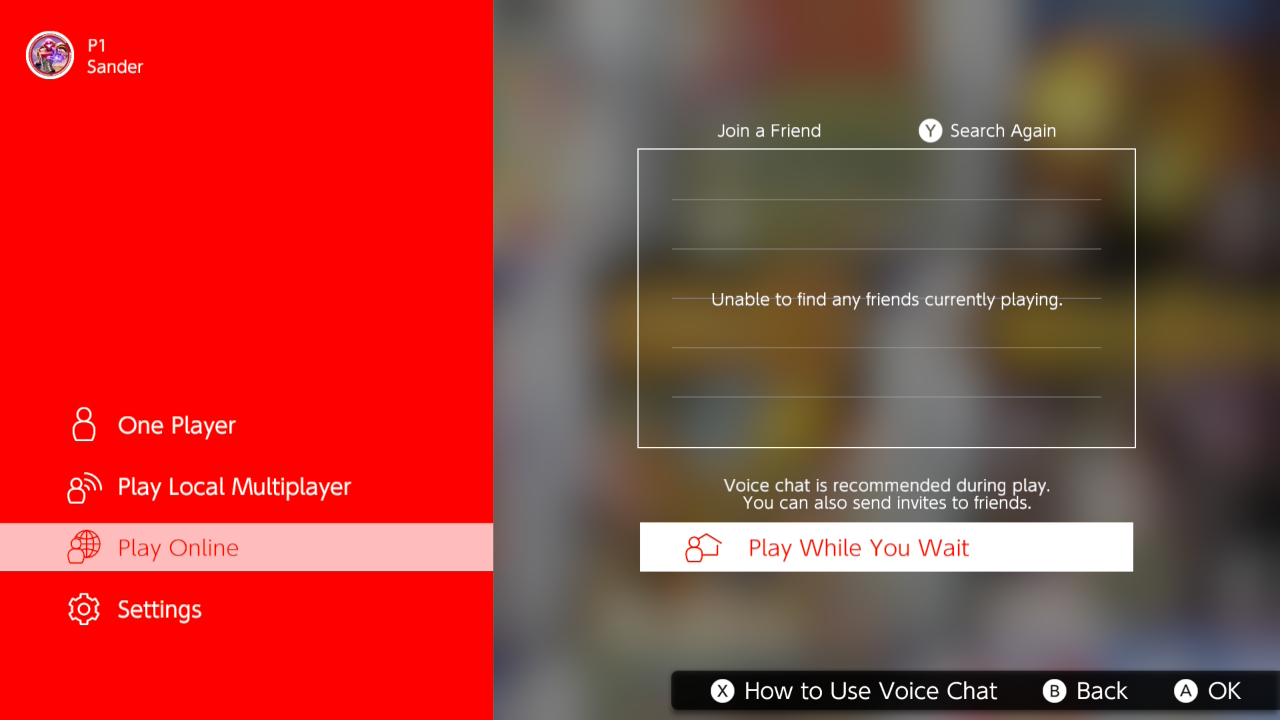
It's the NSO-app that allows you to play over the internet. It then hooks in on the wireless/link cable connection of the played GBA/GB/GBC game to allow for multiplayer.
I am guessing here. I think the FireRed / LeafGreen games run on the same emulator that is inside the NSO app. And it automatically starts a local wireless connection as soon as you start one in game. (quite easy, just read the memory and add a hook). Switch local wireless is not using a router or modem to create a network, but just uses Nintendo's own standard to directly connect two or more systems locally. (Some games allow for LAN play, like MarioKart, which does require a router) Creating this local connection disables the connection to the internet. (this is the case for all Switch games that have both local and internet connections) So you will need to have an option to do either local wireless multiplayer or online multiplayer. And this something a GBA game can't do.
For some reason the rerelases do not have the NSO app menu. And I am guessing here this is because of how Pokémon Home connects to these games. Pokémon Home can't read the save games of the NSO apps for some reason.
So you would have to choose: add online multiplayer or add home support. And I am happy they picked option B here. Since I do not care about online multiplayer for a 22 year old game. I do want to play with these Pokémon in Pokémon Champions though.
What a shame that Nintendo couldn't take some inspiration from the modding community.
There are way more exciting Pokémon ROM hacks available which are infinitely more interesting and packed with QOL features.
This release isn't about game presentation or accuracy, so why not put more effort in Nintendo?
Me and the misses are having great fun reliving this region and the first time I have a pokemon buddy to trade with. And it's still cheaper than going to the movies these days.
I’d love it if GameFreak would continue the 2D series in conjunction with the 3D. Spend less time developing the 3D, at this point I don’t care.
Removed - discussing moderation
I'm still excited to jump into these eventually, but with Pokémon Pokopia releasing in just a couple of days and Pokémon XD: Gale of Darkness coming later this month at no additional cost, I'm okay with waiting to see if they at least resolve the border issue. Seems like it should be an easy fix to me! I am happy that the event Pokémon are obtainable! That is awesome!
Thanks for the review!
I gave it some thought, and think I will be picking up Pokemon LeafGreen. Should be a fun trip down memory lane, and the fixing several critical bugs from the original release and inclusion of limited time events I never got to experience is a nice bonus.
After having played LeafGreen for like an hour(first time in 20 years I think), I can confidently I'm happy to be playing a legit consistently good Pokémon game for once.
Like sure, Pokémon Scarlet might be the best modern Pokémon game out there but it's still not anywhere near the quality of the GBA era games.
And I'm not talking about nostalgia either.
I simply do think that the GBA games are peak mainline Pokémon.
Modern re-reviews feel jaded honestly. On one hand I understand this review is critiquing the port itself, but on the other hand, the score ultimately is associated with the quality of the game itself, which is far too low for such a classic like FRLG. Ah well. Good thing it doesn't affect my opinion at least.
@Tarpii It's not Nintendo's say on how to re-release these games. At the end of day Nintendo is just the publisher, not the developer. It's likely this is how the Pokémon Company wanted these games to be release in. They are not doing what the modding community is doing cause they are selling a product, not polishing said product to the point of the game losing its purpose. Remember it's purpose is to sell you two old games that are remakes of two older games that you probably won't buy anyways. It was release for attention purpose and to persuade new players to get into the newer Pokémon games but trying these older ones.
Still have my original copy, so very much not for me. Honestly, I wouldn't pay the asking price anyway with how little effort went into this one. They really should have sold this as a collection that includes the original Game Boy versions. Included an art gallery and sound test. Among other things.
Pokemon Company had 2 different ways they could've gone about selling these as standalone that would've worked, and they did neither, fumbling this release hard. They could've either released them at $20 but add a lot more work into them by allowing you to complete the full dex with 1 game, add borders, have Home support on release, and other emulation pluses like fast forwarding. OR they could've just put the bare minimum into it like they did but charge only $10. They instead chose the worst of both worlds, making this a mediocre release that also costs more than it has any right to.
I bemoaned this coming as a separate paid for game for those already subscribed to NSO. It should have been included.
Charging what they are for this without throwing it in is rubbish. From what people are saying, with basically 0 enhancements, other than home compatibility and some in-person events unlocked.
I do love pokemon, so maybe I'll just make do with pokopia. That seems like a blast
@Alex79uk The main difference usually is just the version exclusive pokemon, including legendaries/mythicals. In some rare cases this extends to different gym leaders, villain teams, professors and even internal time settings. Iirc, Black/White and its sequel had one of the biggest version disparities due to some locations being unique to each title.
But most of the time, regardless of which version you choose, nothing in the main story is altered in any significant way. FRLG's main thing is the version exclusives and a different form for one Pokemon tied to an event in the post game.
@Kelnos Ah I see - thanks for the reply!
For $20, they should really give you BOTH games, not just one... It would almost be acceptable if there were physical versions at least. If it's digital only, they shouldn't cost more than $7.99 each in my opinion. I won't be getting this unless there's a steep sale.
People need to ask for a lot more from Nintendo for their hard-earned money.
A Switch port of Pokemon FireRed & LeafGreen... Nothing special other than Pokemon Home compatibility. (Game Freak should've put FireRed & LeafGreen on NSO)
I just spent 25 minutes and all 65 of my ultra balls trying to catch Articuno who I knocked down to just a fraction of a millimetre of health and paralysed, only to be rejected every single time. Such a fun game.
And don’t even start about how stupid and boring and broken catching in the Safari zone is.
I think I just had an epiphany after 30 years.
This sucks.
This is great considering. Pokemon Leafgreen is what really got me into the series back in the day, so 20 dollars is not bad. To me, Gen I, Gen II, and Gen IV are the pinnacles of the series but that may change if I play the newer ones. Been really enjoying Leafgreen and Let's go Pikachu. 🙂
Show Comments
Leave A Comment
Hold on there, you need to login to post a comment...