 review by
 I have to admit, prior to this review, it’s been a while since I played either Super Mario Galaxy or Galaxy 2. I dabbled a bit in the first entry in Super Mario 3D All-Stars, but I spent the majority of my time there playing Mario Sunshine (still my ‘favourite’ of the 3D entries – blame nostalgia, I guess) before getting sidetracked by other games.
So in the time since I last properly ventured into the great beyond with my favourite plumber, I’ve experienced a plethora of genuinely incredible 3D platformers like Astro Bot, Crash Bandicoot 4, Donkey Kong Bananza, and of course, Super Mario Odyssey. Jumping back into Galaxy and Galaxy 2 on Switch 2, two things became apparent: first, a few minor technical hiccups with the games are perhaps more noticeable now than they were 15 years ago; and second, they still represent 3D Mario at its absolute peak.
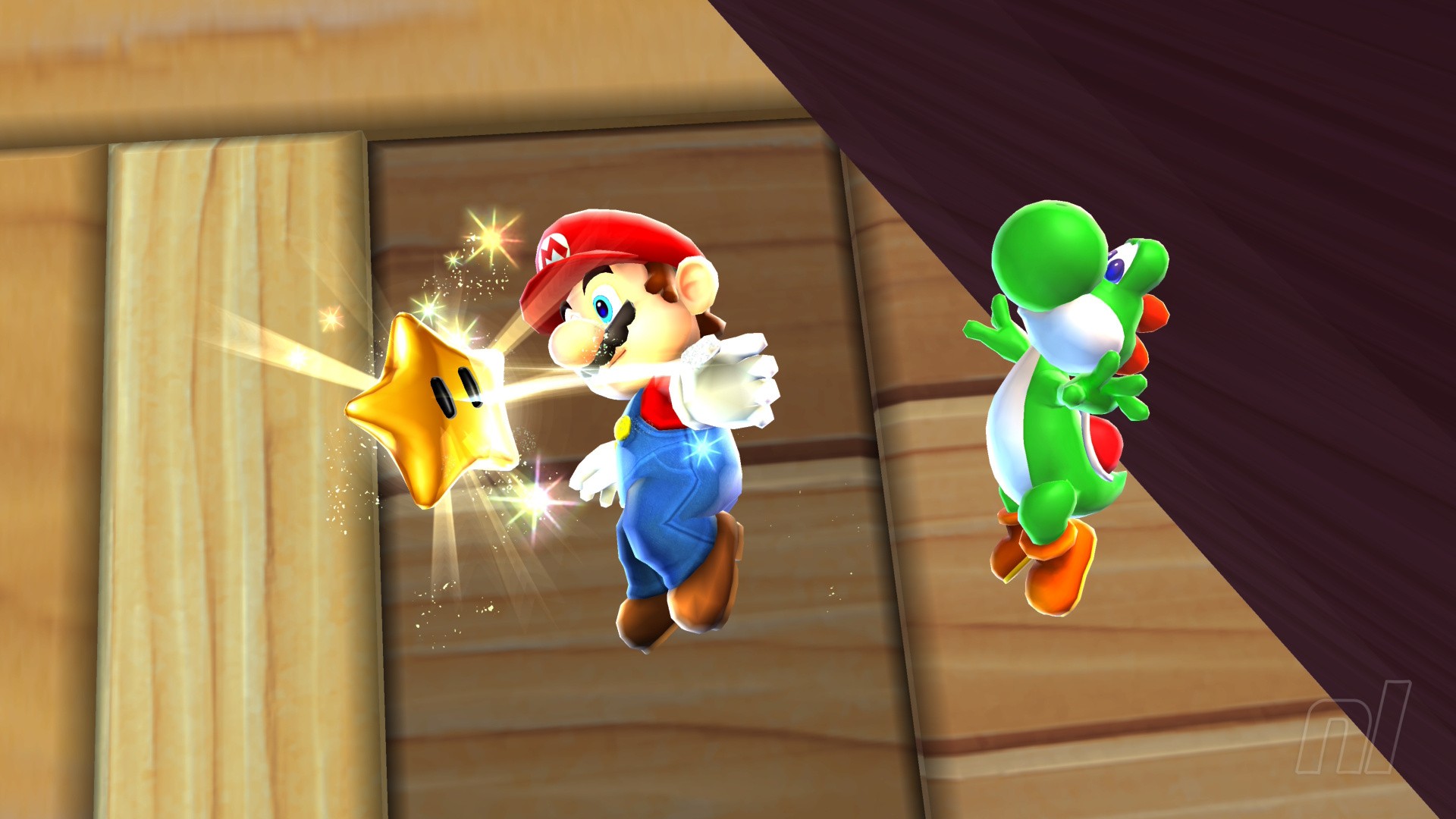
These games are Nintendo’s crowning achievement. They’re bursting with creativity to a degree I’ve not seen elsewhere before or since. Whether you’re skating across a frozen lake against a backdrop of stars and a beautiful piano melody, or ground-pounding a bloomin’ meteor into a giant floating Bowser accompanied by the most bombastic orchestral track imaginable, this pair provides experiences that will stick with you forever. They’re simply that impactful.
They've never looked as beautiful as they do here, either. Not only do you get to enjoy them at up to 4K in docked mode and 1080p in handheld, but many textures have been updated to take advantage of those crisper resolutions. There’s nothing here that’s comparable to the upgrades seen in, say, Metroid Prime Remastered, and it’s possible you might not immediately register the changes, but many environmental assets in particular look much more detailed.
The UI is also cleaner, with an altered font and slightly smaller icons. The version of Galaxy 1 included in 3D All-Stars did the bare minimum, but Nintendo has finally given both games the love that they deserve, and they look glorious.
In addition to the enhanced visuals, these releases also feature several gameplay additions. ‘Co-Star Mode’ makes a welcome return for those who wish to bring a friend on board to help gather Star Bits or defeat enemies. Player Two waggles their Joy-Con about to move the onscreen cursor, but if you’re on Switch 2, you can also use the console’s mouse functionality, and it works wonderfully. Chances are you’ll play both games solo, but it’s a nice little extra regardless.
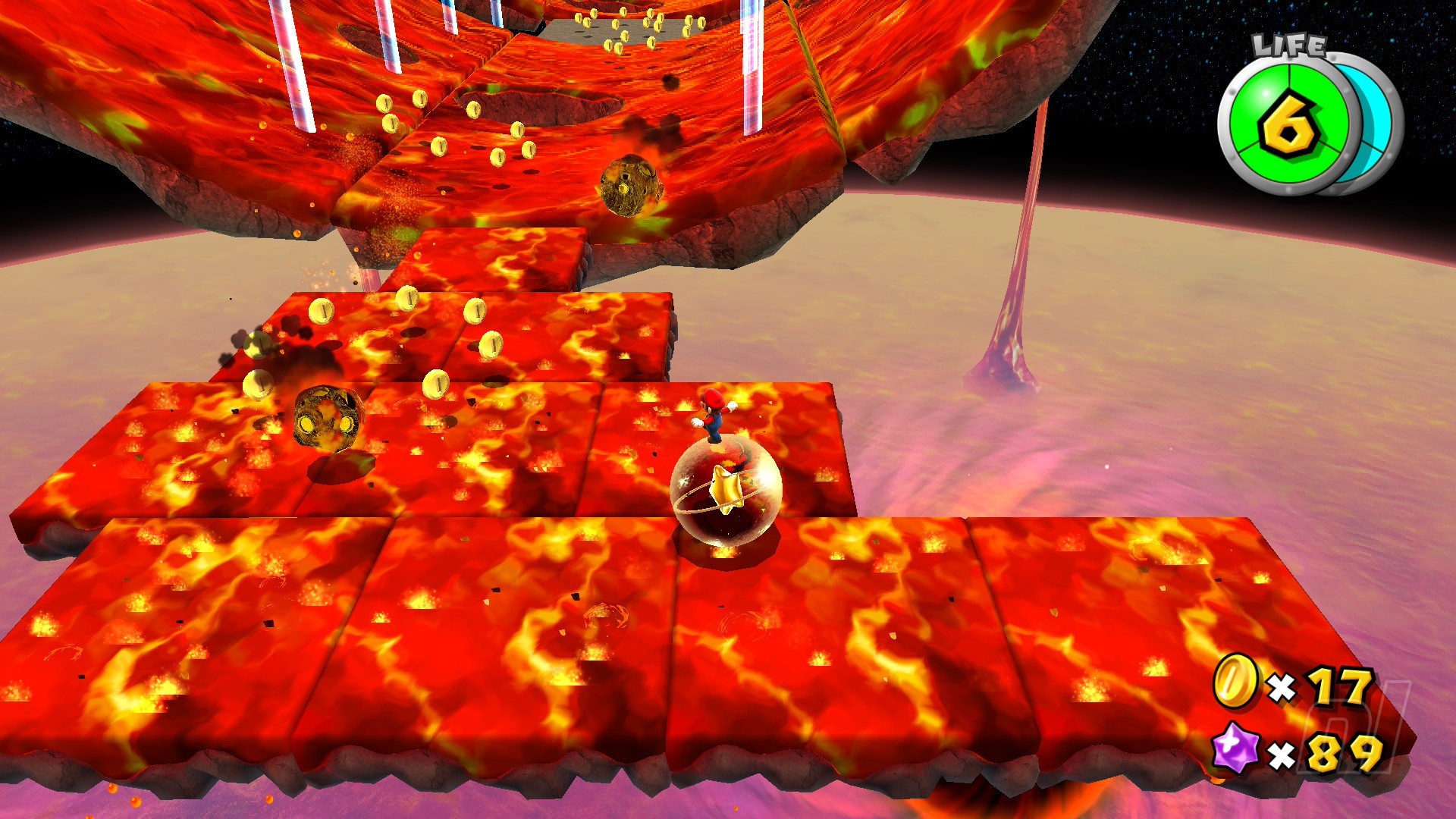
Taking inspiration from Odyssey, both games also feature ‘Assist Mode’ to help out newcomers or really anyone who needs a bit of a leg up. This automatically doubles available health, and you can even nullify damage by standing still to regain it. Finally, if you happen to fall off a ledge, a bubble will encircle Mario and bring him safely back to land. Galaxy 2 in particular can be pretty tricky, so it may prove useful.
For those interested in Galaxy’s in-game storybook, the first entry has a brand-new chapter. In addition, a completely fresh storybook has been added to Galaxy 2, with its own new accompanying music. I won’t go into detail, but they’re fun, albeit inconsequential additions that I enjoyed reading.
And finally, amiibo are supported, though you’d be hard-pressed to find a scenario in which they actually prove useful. I don’t have many, granted, but every amiibo I tapped into the game yielded about three Star Bits. Pretty useless, then. There are, however, two Mario Galaxy amiibo coming on 2nd April 2026 (yeah, only 182 days after the games launch!) - the Mario & Luma amiibo provides a health boost, while Rosalina grants a 1-Up mushroom.
As for the general controls, if you’ve played 3D All-Stars, then you’ll know roughly what to expect. Naturally, you can't use a Wii Sensor Bar on Switch, so gyro is used for collecting Star Bits and executing the Spin Attack (though you can also just tap ‘Y’ for this). It’s undoubtedly the most sensible solution, but it’s still not ideal; you’ll find yourself frequently tapping ‘R’ to recentre the pointer, and if you’re using a Pro Controller, twisting and turning it constantly feels somewhat awkward. Using the Joy-Con separately is the best way to play in docked mode.
In handheld mode, you can use the touchscreen, but gyro control (for the pointer) is also available, which was missing from 3D All-Stars. Waggling the console around to collect Star Bits can sometimes feel a bit weird, and again, you’ll be resetting the cursor with ‘R’ constantly. The sensitivity feels about right, though, so relatively small movements yield big results. Regardless, let’s just say you probably won’t find me playing these games on public transport.
Otherwise, Mario feels just as natural to control as ever. You could argue that Nintendo pushed the movement fluidity even further with Odyssey, but whether you’re hopping around on a series of tiny planets or swinging from flowers atop Yoshi’s back, it never feels any less than exhilarating. Mario Sunshine rightly garnered some criticism for its twitchy, unpredictable movement, but the Galaxy games struck the perfect balance, taking everything that worked so well in Mario 64 and polishing it to a mirror sheen.
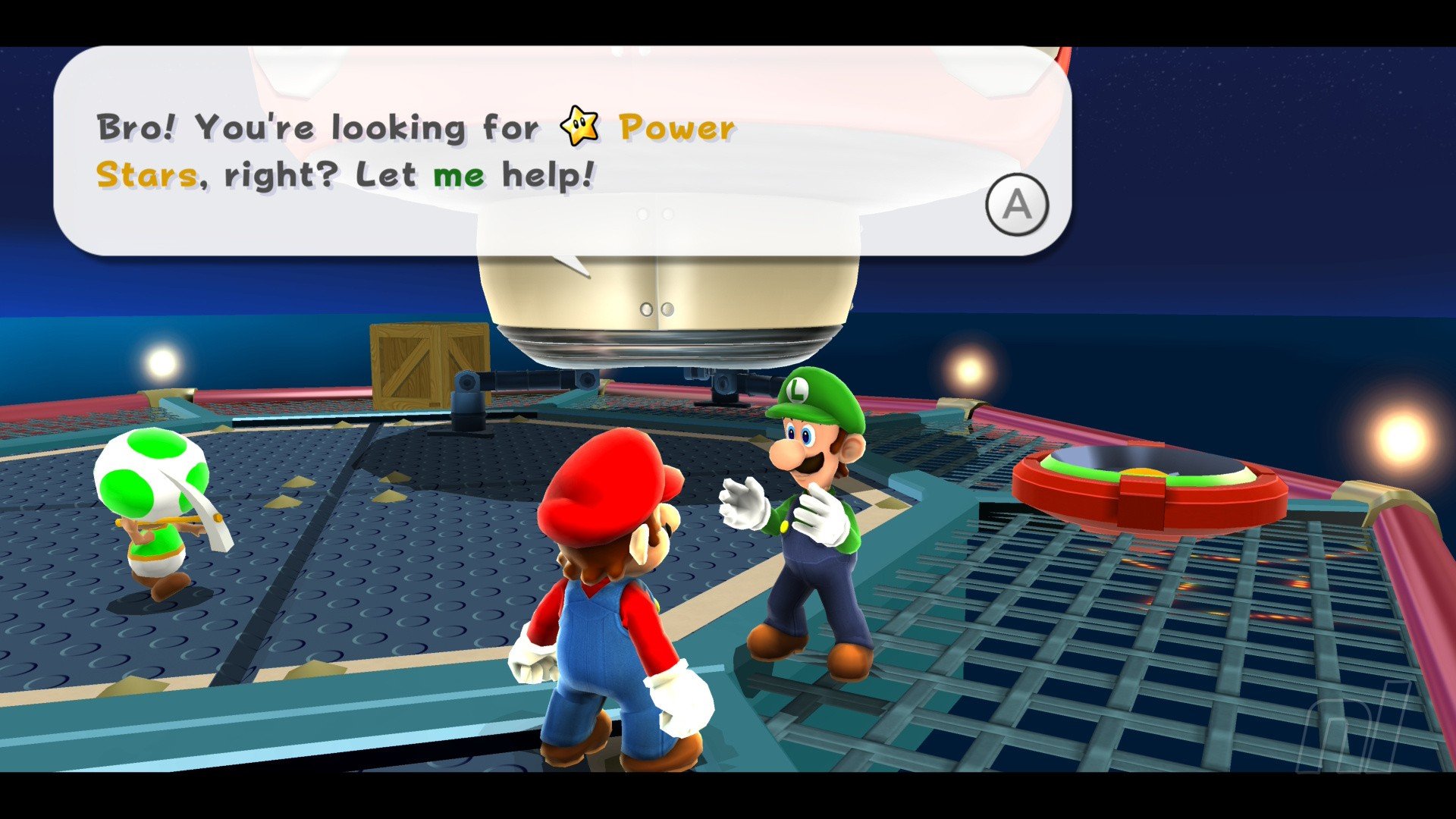
As for the games themselves, if you’ve somehow never played either before, then it’s worth knowing roughly what each entails. The first — you'll be shocked to hear — sees the dastardly Bowser kidnap Peach (along with her entire castle) before blasting Mario off into the far reaches of space. Our hero meets Rosalina and the Lumas, and must travel to a host of galaxies to collect enough stars to reach Peach and defeat Bowser. It’s standard stuff, but Rosalina's introduction is significant, with the character making multiple appearances in subsequent games and becoming a fan favourite. It's also worth adding here that if you also own Galaxy via 3D All-Stars, you can't transfer your save over to this new version.
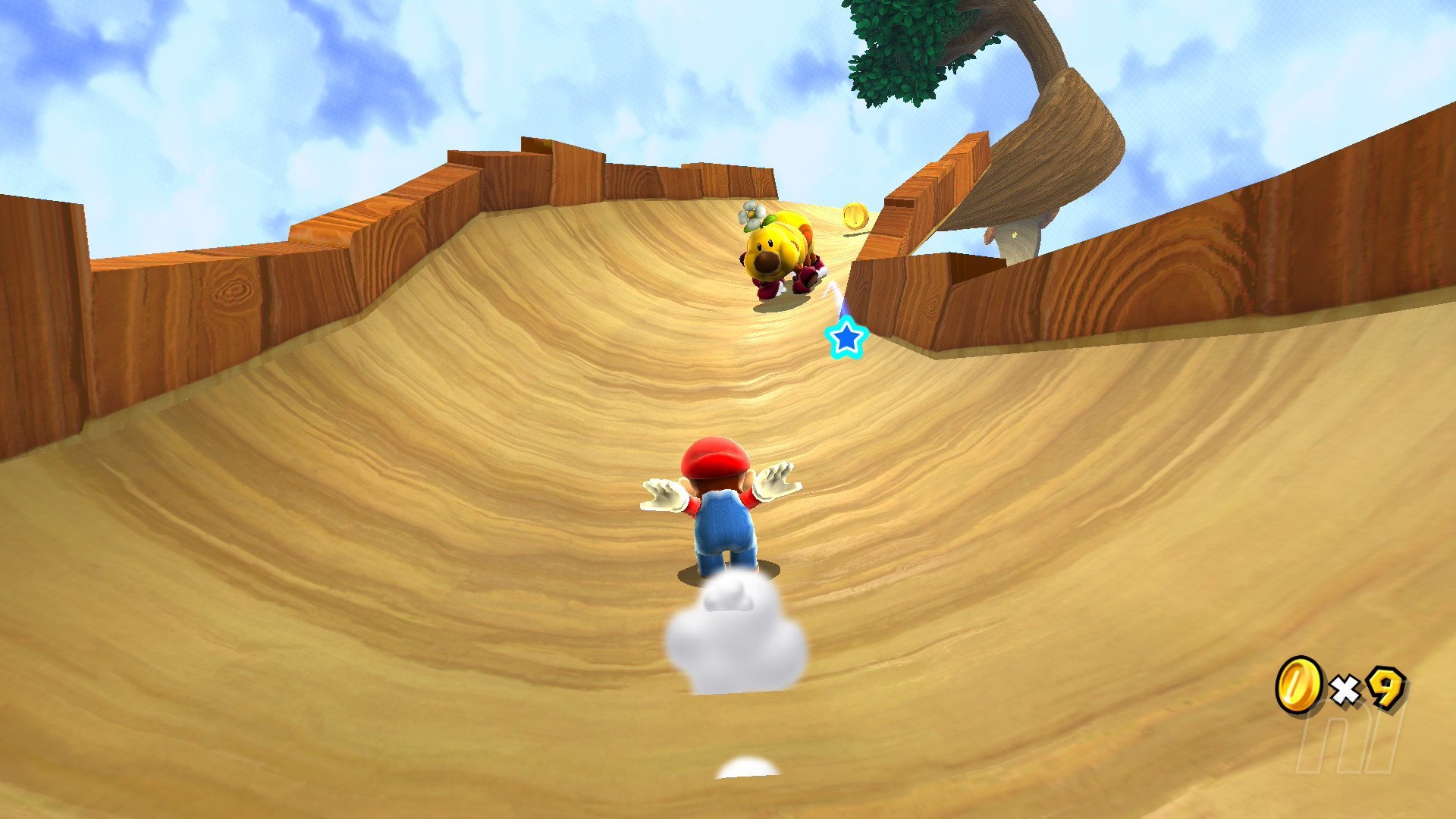
In Galaxy 2, the setup remains roughly the same, with newcomer Lubba taking over Rosalina’s role as leader of the Lumas. Here, you travel between galaxies via Starship Mario, a delightful little fortress fashioned after the plumber’s head. Neither game provides a particularly captivating story (though the storybooks do a good job at fleshing things out), but this really doesn’t matter one iota – the gameplay more than makes up for any narrative shortcomings.
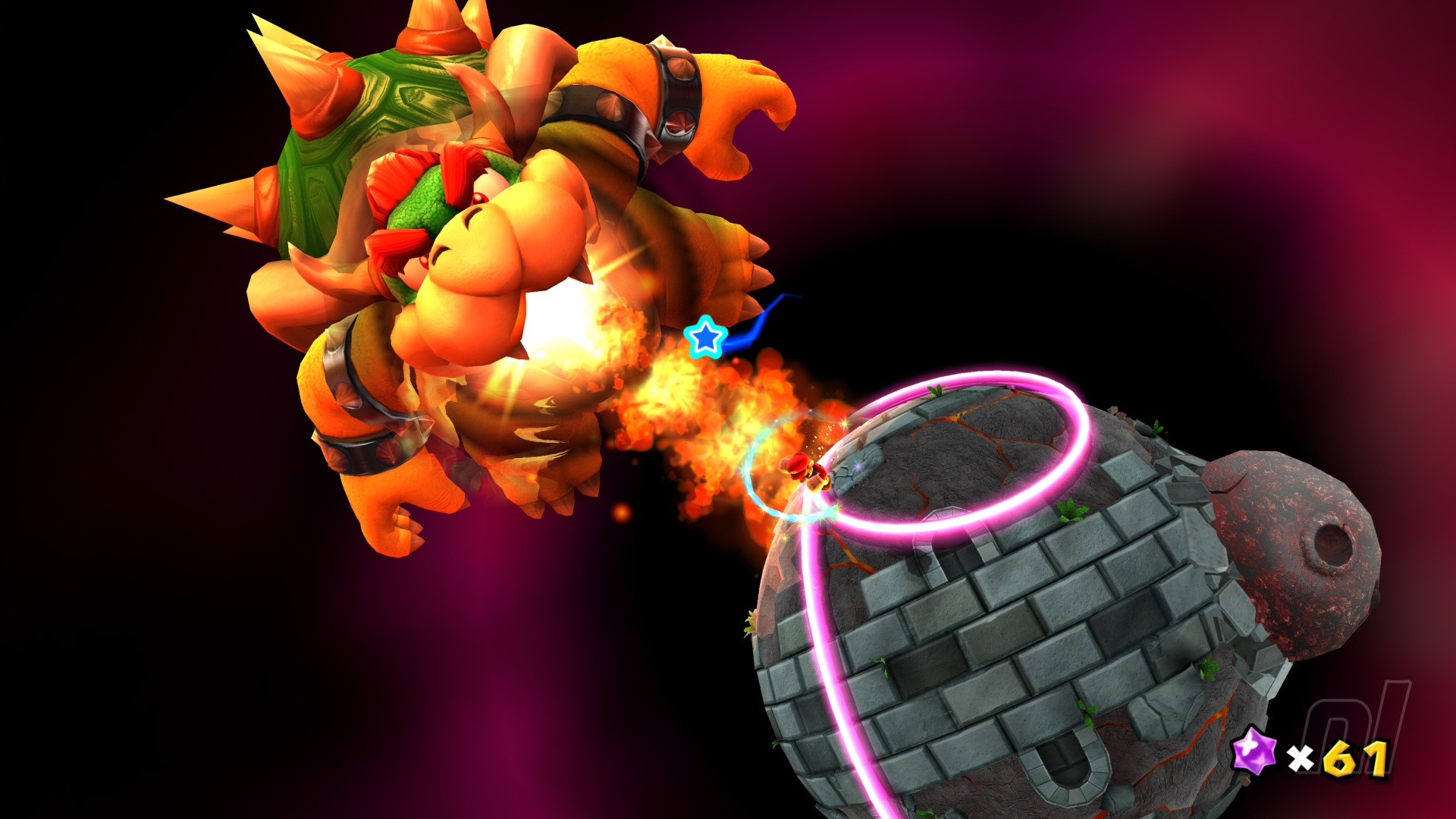
Indeed, the real draw of both games is the galaxies themselves, with standouts including SpaceJunk Galaxy (oh man, the music!), Throwback Galaxy (a Mario 64 recreation, are you kidding me?!), and Toy Time Galaxy (giant Mecha Bowser – need I say more?). I also adore Bowser's levels, which include an awesome rendition of his classic theme from Mario 64 before ending with spectacular boss encounters that feel genuinely epic.
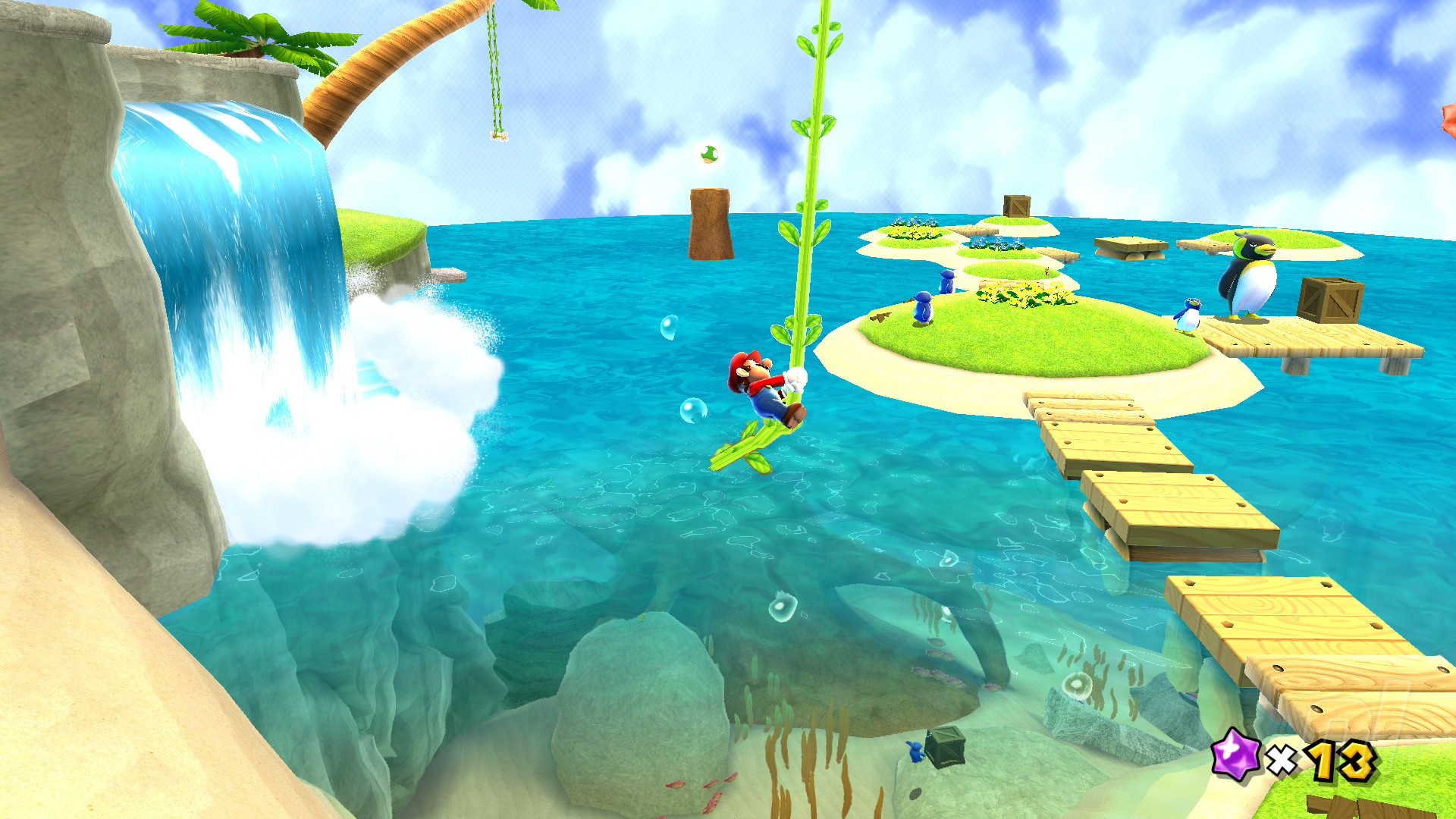
Sending Mario into space sounds ridiculous on paper, but it really was a stroke of genius. The way the games subvert expectations around how a 3D platformer should function is marvellous. Gravity plays tricks at every turn, and there are countless moments where you think you might fall into the abyss only to flip upside down and land on the underbelly of a teeny, tiny planet. It’s utterly absurd, but it just works.
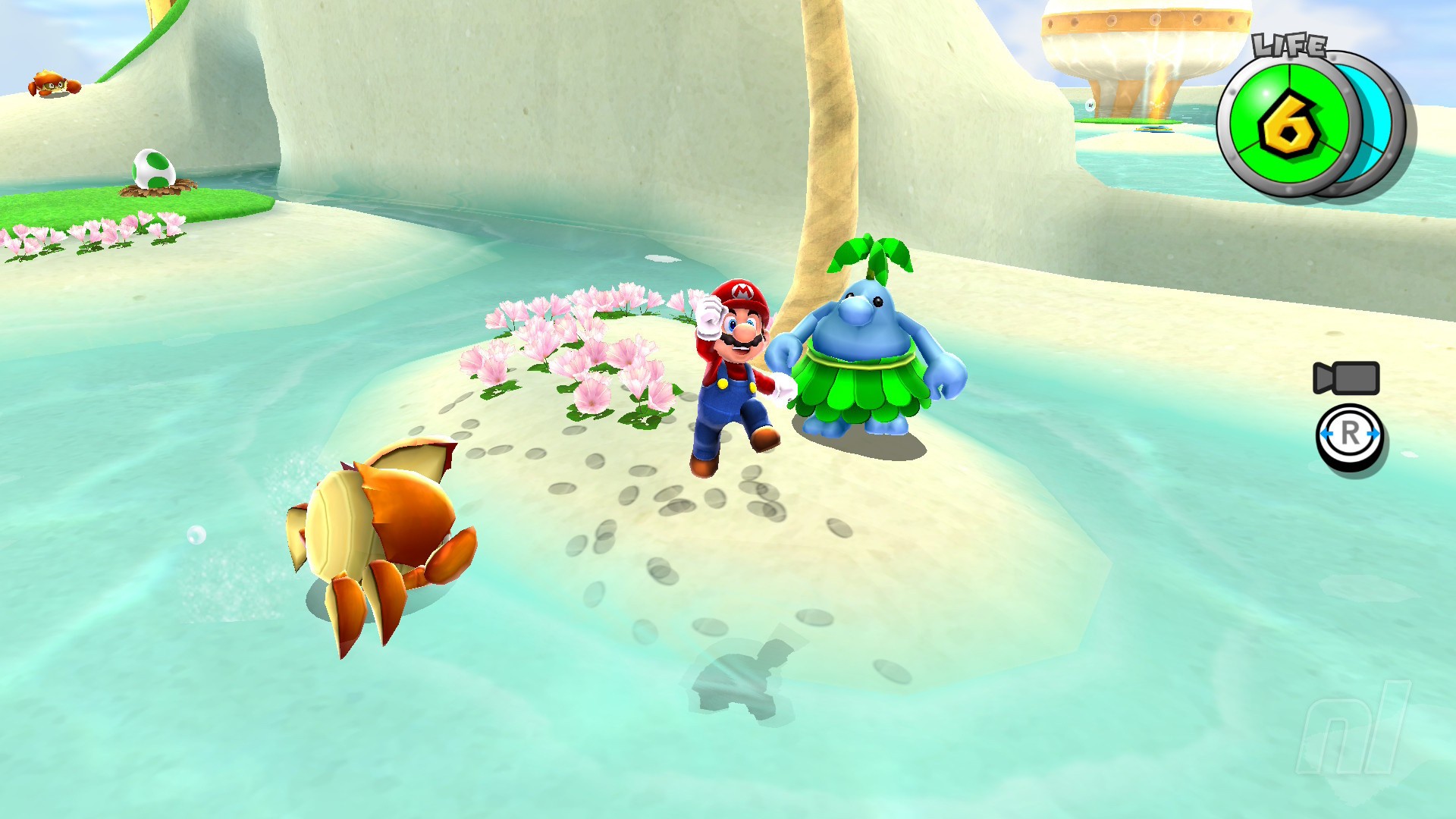
The only caveat is that sudden changes in camera angles can occasionally mess with your directional inputs; you need to release the left stick entirely and let things recentre before continuing.
The absurdity is really what makes these games so special. They go places and do things that aren’t possible elsewhere, even in the mighty Mario Odyssey. Most games are tied to the limitations of their worlds, but going into space gave Nintendo licence to break the rules and create scenarios that stretch the absolute limits of creativity. There’s nothing else quite like it. One moment you'll be buzzing around and climbing a wall of honey with the Bee Mario power-up in Honeyhive Galaxy, and the next you'll be flipping up and down as the gravity shifts in time with the funky music in Upside Dizzy Galaxy.
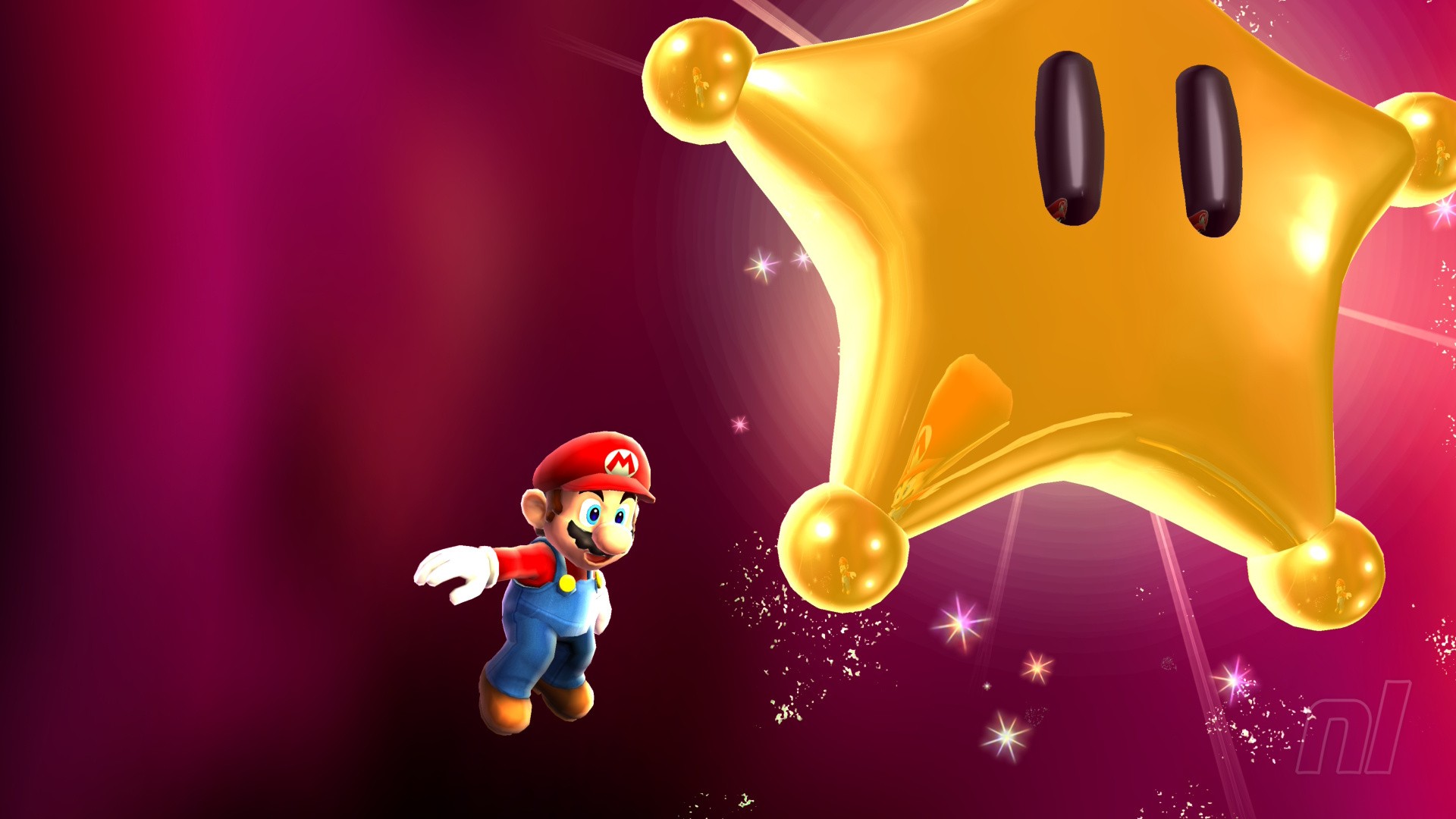
I mentioned one power-up there, but both games include several awesome transformations that completely turn the gameplay on its head, and they're all wonderful. If you want, you can also swap over to Luigi in both games after meeting certain criteria; a lovely little bonus for fans of Green 'Stache.
Which brings me to the price. You’re looking at $39.99 / £33.99 for each game separately, or $69.99 / £58.99 for the bundle. That’s a lot of money, no question about it. I can understand why folks have gotten up in arms about it, but it's hard to deny the quality of the "content" and "value" here; Galaxy and Galaxy 2 are two of the greatest platformers of all time that, if you’re playing on Switch 2, run at native 4K while docked. Even if you’re on Switch 1, you’re still going to benefit from a whole bunch of upgraded textures that make the games look better than ever.
Should they be cheaper simply because they’re ‘old’? I don’t know. It’s a tough scenario, and ultimately, I wouldn’t begrudge anyone for skipping these releases if you already own them on the Wii. What I can say with absolute certainty, however, is that if you do pick them up on Switch, you’ll be treating yourself to 40 hours+ of borderline perfect video gaming.
Conclusion
There’s no question about it: Super Mario Galaxy and Galaxy 2 are two of the most sublime games ever created. With gameplay that subverts expectations and scenarios that wouldn’t be possible if not for the creative freedom of the cosmos, they represent the Mario series at its absolute best. They look better than ever, boast small yet welcome additions, and expand upon the narrative with new storybook pages.
Gyro aiming simply isn’t as effective as the Wii pointer, however, and you’ll be recentring the onscreen cursor a lot. Very minor issues with the camera are also a bit more noticeable now than they were 15 years ago, but the fact that Nintendo managed to pull off some utterly ridiculous sequences without the camera going haywire remains a remarkable feat. These games command a high price on Switch, to be sure, but you’ll be playing them for the rest of your life.


Comments 174
So excited to finally play Galaxy 2
Grabbing these ASAP.
I still feel sour with both Mario Galaxy games as both of them applied strict assignments by keep reverting your multiple Mario lives back to 4 no matter how many lives I have farm before and I don't like that gimmick.
Is Assist Mode with Double Mario hearts and Auto Bubble to prevent falling to bottomless pit will guarantee can compensate the multiple lives that back to 4 lives everytime I load the game?
Already have a physical copy of 3D All Stars, so ill likely download galaxy 2 soon. Never played that one, so im very happy its now available.
They’re riding high on the eShop prior to release, and honestly… deservedly so. I’d take cheaper, certainly, but these are, quite simply, two of the finest games ever made.
Will be playing both after being done with Hades 2. Never took the time to properly play these back then so looking forward to 100% them!
Price bad price bad price bad. Alright got that out of the way...
The Galaxy games aren't my favorite Mario titles but they're still solidly made games nonetheless and it's nice to have them available in a more permanent state compared to the last time Galaxy was rereleased.
"In handheld mode, you can use the touchscreen, but gyro control (for the pointer) is also available, which was missing from 3D All-Stars"
Thank god, gyro control my not be ideal in handheld mode but it's still miles better than having to use the touchscreen.
Also there are parts in Galaxy 2 that would be straight up be unplayable without it (there are parts where you need to press A to jump with Yoshi, use the C-stick to move left or right and use the pointer to aim at a point for Yoshi to cling onto)
Again complaining about the price in 2025 in a review devalues the review. Also with some looking around on differen online stores you can easily find the games for €10-15 cheaper.
Wait… these are 10/10/10/10 all day long but only score 9/10?
No 1P mouse mode is a terrible oversight, but I'm glad to hear that gyro works in handheld this time. 3D All-Stars Galaxy was nearly unplayable in handheld mode with the touch controls.
As someone who's never played these (although watched a friend beat 1) and therefore never spent the money back in the day, I'll have no problem picking these up once I find a decent sale.
Before anyone whines about the price consider this, buying both originally would've cost you over 120 dollars total. At 70 now it's like buying only one of the games back in the day. These are 4k versions with extra features not in the originals. Even the first game on mario 3D all stars for switch didn't look as good.
If you can't handle the price get out of gaming while you can. It's only gonna get worse every generation.
I'm so excited to get these
yep! those are the cons!
can't think of any other cons.
Bring on Galaxy 3! Can't be a coincidence that the next mario movie is galaxy plus this collection just released.
The price is obviously steep, but unfortunately I will be contributing to the problem and buying the physical $70 version. I already have Galaxy on 3D All Stars, but I desperately want a physical version of Galaxy 2 and they don’t sell it separately. Between the $70 game and two $40 amiibo, I’m blowing $150 on 15+ year-old games I’ve already bought multiple times before. Yikes.
Imagine if this had been EA or Take-Two; it would have been docked points for how cynical the release is.
These games were available for a tenner each at different periods on Wii U. This is pure nickel-and-diming and I’ll be sticking with my Wii copies as a result. But it’s one rule for Nintendo and another for everyone else.
They are amazing games, two of my favourites of all time. I just really don’t see how people can defend this release.
Well, there goes my wallet... Once again... I feel like I really have to get these physically, as a collector of all things Nintendo. All I hope is that I can get it at a reasonable price...
@thesilverbrick
"Between the $70 game and two $40 amiibo, I’m blowing $150 on 15+ year-old games I’ve already bought multiple times before."
why? honest question, I'm curious where the value is for you. ✌️
Not grabbing this collection day one because I have too much to play already, but definitely looking forward to revisiting these classics games sometime next year for sure!
The price is expensive but man I'm probably gonna take the dive again since I love the Mario Galaxy games. Out of the two games I still prefer Mario Galaxy 1 since I liked the setting a lot more with Rosalina having more of a role.
Galaxy 2 is amazing but I agree with what Alex says the starship Mario is kinda boring when compared to Rosalina's starship.
I might hold off a bit before buying though, thankfully so far this isn't a limited release like 3D All Stars and let's hope it stays this way.
@Truegamer79
"Before anyone whines about the price consider this, buying both originally would've cost you over 120 dollars total. At 70 now it's like buying only one of the games back in the day."
"If you can't handle the price get out of gaming while you can. It's only gonna get worse every generation."
you are arguing in two directions at once. ✌️
I was one of the 10 people in the whole world who like the touchscreen in handheld mode, but I'm looking forward to gyro in handheld mode. Gyro on Switch 2 is much more accurate, so I feel this might be the better way to play in handheld!
@The_Nintendo_Pedant
Why does it seem like people who whine about the price of games are more on the Nintendo side than any other company?
I seldom hear any complaining when the latest call of duty comes out with some super special day one edition with all DLC included for 200 dollars or some crap. It's like people just wanna rag on Nintendo. How dare they make money!
Still excited to play these for the first time someday! 😃
£50 in Smyths essentially making them £25 a piece
£25 each for 2 of the finest games ever made really doesn't seem that bad to me.
I was planning to just download Galaxy 2 as I already have Galaxy 1 on 3D All stars but if it's £34 on its own I may just spend the extra £16 and have them both together for the convenience
@DennyCrane It's in All-Stars, but not in handheld (except for the Manta and the Star Ball). The pointer was only witht the touchscreen. The gyro wasn't used for the pointer before, you had to play TV and Tabletop Mode. But now you can in handheld too, as highlighted by this review. I hope it clears the misunderstanding
They're expensive, indeed. It would be smarter to wait for a sale, yes.
But that doesn't mean they aren't the best 3D platformers ever made. Must have.
@MTMike87 Same, I will pick this up probably by the end of the year.
I have 3D All Stars and Galaxy 2 (Wii U), but I will buy this collection for the visual updates (for both). 🙂
@Truegamer79
IDK! Ive only had Nintendo consoles for 2 decades now, and I couldn't care less to follow the discourse on the latest COD nonsense. ✌️
@thesilverbrick $80 of that isn't for the games, though. The amiibo.. buy them if you want, but let's not pretend that they're part of the cost of the game.
It would be interested to see a Mario3D Allstars Mario Galaxy 1 comparison on SW2 with SW2 upscaling vs New Galaxy remake.
Rather power up the old Wii U if I want to play these, with motion controls no less.
@Member_the_game Similar for me. I may wait to see some Black Friday discounts.
The visual enhancements may justify getting Galaxy 1 again. 😊
Heck every Nintendo made switch 2 game has been called too expensive lately, they said it with Mario kart world, DK bonanza and now this. How did you people even manage to buy a switch 2 in the first place? 😲
For two of the best mario games or heck best video games of all time i'd say it's worth it. I remember buying super Nintendo games for 70 dollars.
Will my switch all stars galaxy save file work with this release?
Thanks for the review, so happy that newcomers and those including me who want to eventually replay these fantastic games will finally able to do so on both Switch 1 and 2 thanks to this rerelease (glad that most here and also elsewhere judging by the eShop etc. aren't focused on the starting price, again it's what matters the least compared to the games themselves and their creators and even more so when people could and should look/wait for discounts) - looking forward to my copy to arrive and then playing it at some point to reexperience the magic of these games!
@The_Nintendo_Pedant Exactly. People here complain about the prices of Nintendo games because those are the games they care about.
Frustrating I traded a bunch of old games over the summer for 3D All Stars but much like the reviewer said for them I have only played Sunshine on that thus far so may just keep that for that & 64 instead of trading it back in.
I think the advantage for Nintendo prices is games don't depreciate on Switch, like DK TF used is still worth way more than the Wii U version so one can always buy a first party Nintendo game knowing it's more or less still gonna worth the same in a few years.
That kind of prices for 15 and 18 year old games, no thanks.
@DennyCrane I played 120 hours and outside of the Manta and Star Ball, you cannot use the gyro for the pointer in handheld. I won't reply next, this is not the place to argumenting. Have a good day.
I was under the impression that the Swtich 2 Joy-Cons needed a lot less re-centering than the original Switch ones. Is that actually the case, or is it basically just as bad? Because I'm way less interested in Galaxy 2 if I'm going to have to constantly re-center the controller's gyro.
Looking forward to playing Galaxy 2 soon enough. I think I’ll prioritize new games still for the month, but definitely purchased it because I know I’ll play it again someday. Playing Galaxy 1 when 3D All Stars came out was proof that a good game is a good game, no matter the age or limitations of the original hardware. I personally find Wii era games difficult to return to, but these ones are timeless. It’s such a wonderful thing that 2 is now available on Switch as well.
Is Nintendo moving to remastering Wii games and stops remastering GameCube games? Lately they been remastering Wii titles including DKC Returns, Kirby Return to Dream Land and of course Mario Galaxy 1 and 2. The last GameCube remaster release was over a year ago when they released Paper Mario Thousand Year Door.
I suppose many textures have been upgraded, but a lot more got downgraded. Look it up. It's amazing how most remasters look worse than the original game.
@hYdeks See if a game is a good & still holds up what does age have to do with it?
Plus people pay ridiculous amounts of money for retro games all the time and some of those games are several decades old.
If the original Wii games sky rocketed in price like GC games did during covid then I am sure most people will not being having this attitude
That said I do agree the price is high but I also understand why Nintendo have done what they have.
I never did get around to playing the 3D All-Stars version of Galaxy, Sunshine was arguably the main attraction of that release since it had the widescreen update and other enhancements, and actual GameCube controller support.
Anyway, I'm actually looking forward to jumping back into Galaxy 1 and 2 this week, particularly the second game but I'll work my way up to it.
I do think it could've been a little cheaper, but I also don't think it's an unfair asking price with the current state of the economy and the games industry, and factors beyond just the software directly such as the Nintendo staff that make things happen.
Sold my Mario Allstars to buy this one. Cant wait to play Galaxy 2 again in 4k ❤️👍
Don't care about the price but will only get galaxy 2 as I already have 1 on 3D all-stars.
I hope that Wii gets added to the NSO at some point so we can get Wii controllers for the Switch, as these games feel so much better to play with them.
I may just get Galaxy 2 as I have 3D All Stars and there isn't much reason for me to get it again
About the physical release, does it make only one icon appear on the HOME Menu or does it make two?
@carlos82
The most important thing about potential NSO Wii Remotes (and Nunchuk accessory) would be the inclusion of an IR pointer and sensor bar set-up.
The Wii Remotes actually do more than just pointing and motion though, like the built-in speaker for additional sound output separate to the TV, and small internal storage for Mii data, etc.
Joy-Con controllers do most of what's really need of a Wii Remote though, and I can see Nintendo preferring to port Wii (and some Wii U) software, rather than put them behind NSO.
Awesome. I still have my Wii copies and 3D All Stars but I still bought this collection. I found it for relatively cheap. Looking forward to playing these again! Particularly Galaxy 2, for obvious reasons.
@Truegamer79
People are entitled to their own opinions about pricing. If something doesn’t represent good value to them so be it. Being critical about others purchasing decisions is pointless, they can decide what to do with their own money.
@vyseofhr it was docked a point
Regardless of what we think about the price, to kids nowadays these could be the first time they'll get to experience the Galaxy games in the comfort of their Switch if they don't own 3D All Stars and is another means for them to be excited about the upcoming movie in 2026.
@RupeeClock even if games are ported I'd still much rather have a replica of the Wii mote controllers. I personally don't feel the joycons are an adequate substitute. Gyro controls aren't as good as the pointer controls for games like this and the HOTD Remakes vs the Wii versions, whilst I'm still not a fan of the button size and analogue sticks of the joycons, albeit they're a bit better on Switch 2
@Truegamer79 These games cost ten dollars each on the WiiU a whole decade ago. The miniscule updates they've made to this game cannot possibly justify a premium pricetag for two games approaching 20 years old.
But since you think expensive games pricing people and fans out of the market is totally okay, why don't they make it 160 dollars? 80 dollars each because they're so full of Nintendo quality.
@DennyCrane Where did you pre-order it from to get it at a decent price like that?
@Lord : No. This new edition of SMG is a separate piece of software entirely and comes with improvements not featured in the barebones 3D All Stars release (which was pretty much just a straight port of the Wii version), so, sadly, no crossover of pre-existing save data. On the flipside, this looks like a great opportunity to play the game all over again.
@HammerGalladeBro : Two separate icons. The digital versions of the game are sold separately after all, and there are plenty of physical releases that spawn separate icons for the included games.
I will gladly buy this for $40, if it ever drops that far, but I'm no rush to pay $35 each for games over 15 years old.
And I just want to know if the Switch 2 features are built into the cartridge or if I'll have to wait for a reprint. The fact that even re-releases of old games get day one updates is so bloody frustrating.
I haven’t played either of these 😱 I want to play them, but need someone to confirm for me that you can invert Y axis on BOTH games? I’m sure I read somewhere that in the original version(s) you couldn’t 🤔
@DennyCrane Thanks mate. I'll check it out. If I can get both physically for £42, then I'll gladly hold off for a bit.
@DennyCrane Apologizes accepted and I'm sorry if my previous comment seems rude. This make total sense then. Technically you play tabletop, since they aren't directly connected to the console, but the way it's build you play like in handheld mode. It makes sense that it work for you with NexiGo and not for me, who had the joycons attached to the console
I'll buy each one separately. I hope it runs well on Switch 1.
Do the games run at 120 FPS at 1080p or 1440p?
Two of the absolute best games ever made for £50? Sounds good to me.
Price sucks compared to other gaming companies doing the right thing and actually giving discounts on older games. Though really everything is more expensive now. Annnd Nintendo is a corporation beholden to their shareholders when it comes down to it, unfortunately. Capitalism baby!
Can’t wait to replay 1 and play 2 for the first time!!
I absolutely cannot wait for these! I am going to look for a physical copy, which I normally don't bother with, but these are special enough that I am willing to take to time going on a hunt for them!
Nice review. One thing I can’t find anywhere mentioned is whether these games support HDR. My guess is no, which is a shame because the contrast between the dark space and the bright Lumas and stars could’ve been a treat with proper HDR implementation.
That said, this still seems like a great package. I’ll probably pick it up once it gets cheaper used on GameFly or eBay or something.
It's not possible to use right analogue stick as the pointer, meh. Definitely no buy. Other Wii ports available on Switch 1 are better.
Removed - flaming/arguing
I probably shouldn't because the price is a bit high but Super Mario Galaxy 2 is my favorite 3D Mario game and second favorite Mario platformer ever behind only World, so I'm going to buy it. Been wanting to have it on the Switch for a long time now.
Flagging this for a spoiler filter:
sees the dastardly Bowser kidnap Peach (along with her entire castle)
I would love to instantly replay Galaxy 2, didn't do that since day one on the Wii.
But God I'm so tired of accepting Nintendo absurd pricing.
I'll skip it until a sale happens.
@SillyG Thanks a lot.
That's the reason I'm asking, I'm afraid my progress on the digital version couldn't be used on the physical release if it were just one icon.
I intend to get Galaxy 2 digitally at first, then get the physical copy if I come across a cheap one in the future.
Id have liked these to be cheaper, but I will pick up Galaxy 2 at some point.
@Truegamer79 That would be really nice, since they didn't announce a brand new Super Mario game during the Direct.
I love these games, they have the best level design of 3D Mario to date, however I really didn’t like to play Galaxy on Switch. Wiimote is the only appropriate way to play these, I’m afraid.
Hopefully we can get a 3D Mario in Switch 2 with excellent level design and another sandbox one like Odyssey, but it’s unlikely.
@HammerGalladeBro : You'll be able to pick up from where you left off. Most compilation releases of this kind are no longer consolidated into a single launcher like they used to be, and if the games are downloadable separately via the eShop, it stands to reason that any physical release thereof will also spawn separate icons for the included games.
This is in contrast to 3D All Stars, where the games were not sold separately (digitally or physically), and was only ever available as a single, combined release.
Inessential if you own both games on Wii
This is a weird con. That's like saying, "If you've already played these games, you might not want to play them again."
Couldn't this be a con for any game that gets a re-release?
Also, why should a game being older necessarily make it depreciate in value? Many of us are using our limited, personal perspectives to judge a game's worth in price. I'll bet at least one whole generation has never played these games. Why shouldn't they see them as fantastic new Mario games? They still play well, the graphics and other bits have even been "modernized." If I had never played them, I might think a bundle with two games at the same price as a single, maybe-standard 2025 AAA video game is a great deal.
For all the Iwata stans out there, he talked a lot about preserving the value of the games. It's why Nintendo doesn't automatically offer steep discounts over time and why they have so many "evergreen" titles. He said that the free games out there or even the ones that regularly get bigger and bigger discounts (a la Ubisoft) set expectations for all the others to follow suit. This is not unique to the gaming industry either.
It may not be what you want to pay, and maybe you do agree with the free/heavily discounted approach, but I wouldn't say that this warrants an attack on Nintendo and certainly not for greed. Anyway, that's my take.
I really don't understand the price discourse. $40 seems perfectly reasonable to me. I don't understand why people think these masterpieces are worth less than that.
My copy arrives next week and I'm pumped! Can't wait
Galaxy 2 is already pre-ordered on my Switch 2. Now I'm just waiting for the darn game to release already. Waiting for 2 days until it releases is killing me...
@AussieMcBucket yeah the "inessential if you own the original games" comment was weird to me. Who here hasn't regularly repurchased a game on different systems, especially when a quality remaster comes out? Why would I wanna hook up my Wii and play 480p versions when they're available on modern systems (and portably)?
They're worth the price and probably the best case against the notion that games should be devalued solely based on age. They're still premium top tier entries in 3D platformers and I'll go to bat any day that 2 is the best 3D Mario game (even if I prefer the Observatory so much more than the world maps).
That said, I'm probably holding off on pulling the trigger. The evergreen beauty of these games is such that I can and do still play them on the Wii U while wanting for nothing. Portability is cool but these are some of the few games I only ever want to play on a big screen.
Preordered SMG2 right after the direct, since I already have the 3D All Stars collection from the 35th anniversary. Actually never played SMG2 aside from beating SMG1 back in the Wii days. Very excited!
My favorite 3D Mario series, absolute must-plays.
Day 1. 10/10
Cosmic bundle.
These are a pass for me since my Wii copies are perfectly playable, and I'm not particularly fussed about snazzier visuals. I AM curious about the new storybook sections, but I'm sure I'll find screenshots online.
That said, these two are my favorite 3D Mario games (Galaxy 1 takes the crown). If anyone hasn't played these and has even a passing interest in platformers, please grab them!
@neogyo Baldurs Gate 3 is about £35 on pc even after a discount and that's several years old now
@AussieMcBucket
These games went down in value ages ago. Both had Nintendo Selects versions for $20 and both were available on the Wii U eshop. This seems like a fairly straightforward port, so there's not much to support a higher price in that respect. If any other company had released these, they'd be $40 max and would probably be better ports.
@charliecarrot Maybe I'm misinterpreting it. Maybe they were just telling us that if we have played them before, not all that much has changed from the originals, so they may not be essential re-purchases. I guess the wording threw me off.
@charliecarrot there's a set of gamers who strongly believe video game prices should be something like car prices I guess. Only going down after release and eventually only good enough to be given away 🤷🏻♂️
Wow cool I'm still not paying 70$ for it
Two of the best games ever made. Galaxy 1 and 2 are incredible games that all gamers should experience at least once.
I don't care about the price. Really. I have them both on Wii, I have All-Stars and now I'll trouble-dip (pun intended). Why? Because I can and Nintendo deserves all my money for Galaxy 1 alone (I liked it more then 2 back in the days).
Galaxy 1 for me is simply one of the three best video games ever. And if you ask what the other 2 are? I can't tell. I just don't want to exaggerate.
Bringing those 2 in 4K and as a physical bundle is nothing less then a wet dream for me.
Definitely picking them up; the price seems completely fair to me who doesn’t have access to a Wii (and I don’t look very good in beards)
Reading the review did a good job of putting into words why I like the 2 Galaxy games so much more than Odyssey. I kept waiting for Odyssey to get better but it's mostly the same throughout. I waited a few years for dlc equal to the Galaxy games but it never came. And now 8 years later still no sequel. Bananza is good though.
My biggest gripe w/ the pricing is no Switch 2 cart version. The $70 is a Switch 2 price but only Switch versions are on the cart. I got a Switch 2 for Switch 2 games, I'm done buying Switch boxes. It's like even Nintendo is making Game Key Cart games for Switch 2 if only the Switch version is on the cart and we need to download the Switch 2 versions.
So where are all "GKC are evil" people lamenting no Switch 2 cart? 🤑
I loved Galaxy 2 but never did play Galaxy 1, so I bought 3D All Stars right away 5 years ago.
Here in 2025, All Stars is still on my shelf, and I STILL haven't played Galaxy 1.
I was torn thanks to the high price tag, but soon decided to get this 1 & 2 Pack, just because I loved Galaxy 2 so much and wanted easy access to the duology in a nice definitive set for my collection.
I've got a feeling once I start playing either of the games, the good feels will just wash away any buyer's remorse.
And who knows? With the Mario Galaxy movie in theatres next year, maybe Nintendo will make a 3rd Galaxy game.
Excited to play Galaxy 2 in 4K!
Have both on Wii, have the 3D allstars on Switch, purchased Galaxy 1&2 now aswell. Love these games. Just couldn't resist to buy again.
Still not buying this. I own three copies in various forms of SMG and two of SMG2. Screw you Nintendo. I’m done buying the same games from you over and over. That ship has sailed.
No matter how you shake it the price is whack. Still I’m gonna pick these up for Christmas because I’ve never played them. I never had a Wii.
Galaxy 2 is peak 3D Mario. Cant wait to run through it again as its been ages.
@SuperWarioWorld Okay, thank you for those points and your opinion.
@rjejr be real: if there were a SW2 cart it'd be $80 and you'd be complaining about that even more. Don't try to deny it you KNOW you would.
Not enough to justify the $69.99 price.
No doubt these games are spectacular. I own both on Wii. However, reading the comments here, it's no wonder Nintendo can set prices to whatever they want. We're voting with our wallets, and we're telling Nintendo they can push even harder.
Can't wait to get both physical on cartridge for £49.99 I still can't get over how well made Galaxy was for the Wii how well it's aged, just hope Nintendo make Galaxy 3 or something as grand for Mario's next 3D adventure.
@Truegamer79 you're wrong actually. These games were 50 US dollars when released. So 100 bucks for both. They were also released as Nintendo Selects on the same console.
@rjejr But the Switch 2 "version" is free, if you have the Switch 1 version it works on both, just better resolution for Switch 2 ofc, tbh I really like they didn't skip Switch 1 like they did with GameCube when 3D All Stars runs Sunshine in wide screen with no issue nearly 100% Galaxy 1 on my Switch lite I can't wait to dive into Galaxy 2.
Personally I'm glad the new content is minimal - I'm quite happy to stick with the Wii versions, so I'm glad I'm not missing out on any new levels or anything (I still haven't played Bowser's Fury, as much as I'd like to, because it didn't seem worth paying full price for that package when I already have 3D World on Wii U).
I think relatively straightforward ports/remasters like this are the way to go for most games: it gives easy access to them for anyone who hasn't played them before, and people who have played them don't need to buy them again, so everyone is happy! Right, guys?
Some of the people trying to justify the price for these 15 year old games are the reason why Nintendo is pushing the limits of what they can get away with regarding pricing.😐 These games aren't worth the high asking price in my opinion for minimal updates
Please let there be a part 3; the universe demands it!
Idk if bring myself to get the collection when I have 3D All Stars, but Galaxy 2 is a sure buy. Really wish they didn't release it this way, but $40 isn't wild when I paid that same price for Metroid Prime Remastered so...meh.
@AussieMcBucket I had the same thought. That is a weird con.
Another reason to lament the lack of motion control upgrades to Switch 2. Shame the camera add on didn't find a way to incorporate Wii level precision, and fun, into the mix.
To me it’s clear the main public for this compilation are the non gamers families who will go see the Super Mario Galaxy Movie in theatre, hence the price that’s a bit expensive for us gamers who already played them. And it’s a great strategy when the 1rst trailer will drop and people will be hyped there’s already gonna a game in store.
All new to me...and as has been said before with a lil scouting you can easily pick them up below RRP.
@RoboCube The Switch 2 cart version isn't free, there is no Switch 2 cart version, you have to buy the Switch version and then upgrade it to a Switch 2 version after the Switch 2vlaunches I guess, but who knows when that will be. Certainly not Nintendo. They apparently didn't even know when this Switch game was coming out or the 2 game related amiibo wouldn't be releasing 6 months from now.😝
@N00BiSH Of course I would. Sane people complain when things are insane. You say that like it's a bad thing.😂
I won't hold it against anyone for picking this up, but it's insane to see people defend outrageous prices like these when these very same games have been rereleased for far cheaper before — cheaper than what they initially retailed for even. It's just as absurd to put down anyone justifiably criticizing this release.
@rjejr there's no big upgrade for these games like with BoTW, it's more like the performance patch for Mario Odyssey, where it just looks/runs better when you're playing on SW2.
£49.99 in the UK physical. Pretty good IMO.
Looking forward to playing both on the SW2. Past the midway point in life but always up for some Nintendo magic for the kid in me.
Noooo! I will not pay £58 to play these games as badly as I want them. £40 and I’m all in, that’s my limit.
Galaxy 2 for me, then
Hated the Wii console cos of the Wiimote, so whilst I own these 2 already, I never really played them. Hopefully these play better with the pro controller
Feels like you kinda deliberately went out of your way to not give it 10/10.
Galaxy has more a more refined and polished version of sm64 controls? Yea I guess if SM64 had no flow or momentum whatsoever and if it had end lag on the long jump.
"These games command a high price on Switch, to be sure, but you’ll be playing them for the rest of your life."
incidentally, i fully expect my wii + games to outlive my switch + games by a healthy margin.
Price seems irrelevant considering it's a package. I don't remember the same outrage over Metroid Prime Remastered or TTYD remake costing £50 (if we're going by Nintendo's eshop prices).
@The_Nintendo_Pedant Is that without repairs? The Wii was notorious for the disc drive failing and ine went at the tail-end of that generation. It's a very easy thing to fix admittedly.
@Lord No,
It's mentioned in the Nintendo Life review towards the end of the article.
@ROMhaiku
"I don't remember the same outrage over Metroid Prime Remastered or TTYD remake costing £50 (if we're going by Nintendo's eshop prices)."
those games are not nearly as popular as mainline Mario games, so there would naturally be less "outrage." that's my shot at an explanation, anyway, take it as you will 👍
"Is that without repairs?"
well, my Wii is going strong, disc drive and all, but i would say that the Wii is both more robust and more reparable than the switch. 👍 i will definitely fix my Wii of the disc drive does fail, im skeptical that my switch even could be repaired if and when it fails one day.
I completely agree with the three cons in this review and they are quite important. I also don't consider them traditional platformers, but action games where you spend a lot of time hitting enemies and rocks and travelling. I prefer the style of Super Mario 64 and Super Mario Sunshine, but these two are quite intense and generally good.
Besides, the Wii Remote not only is much better as a pointer, but also more comfy and with better buttons. It's a shame that Nintendo don't support older controllers when Switch also uses Bluetooth.
@The_Nintendo_Pedant Nothing interesting to add but appreciate the reply and yep I agree that makes sense re: popularity. I also hope your Wii is made of pure Nintendium and does last forever.
@ROMhaiku
"I also hope your Wii is made of pure Nintendium and does last forever."
i really appreciate it! ive had incredible luck with my Nintendo consoles thus far, with only minor repairs to keep things working 100%. 👍
(somewhat less so with my segas and playstations 😆)
@DennyCrane I’ve been reading this site since 2014 and Im pretty sure your comment here is the coolest comment I’ve ever read. Amazing.
The review says the games are 4K docked, but these are vanilla Switch 1 titles - not Switch 2 enhanced, so how is that possible?
Day one, off course. Because Galaxy.
Nice review, by the way !
I was never as bowled over as a lot of people were with these games. I liked them a lot and bought both on Wii, but they still didn't make the impact of Super Mario Bros. 3, Super Mario World or Mario 64 for me. I'd not be buying them again personally as I still have my Wii hooked up with a component cable, still looks OK to me. Maybe if they're on sale at some point for portable play sake.
Definitely am keen on Galaxy 2 soon down the road. A bit miffed however that Nintendo didn't include a soundtrack feature for Galaxy 2. It wouldn't have been too hard at all to copy-paste the exact same UI from 3D All-Stars. But that's why I'm content to wait for a discount while I play through Galaxy1.
I'll pass. I own Galaxy 2 and I can pick up Galaxy 1 used for far less than this. The little effort put into this to upscale graphics is not worth the asking price, and I prefer the original controls.
I think what kinda grates on my nerves is that Super Mario Galaxy 2 should have been included with 3D All-stars. I felt like it was a missed opportunity and not a true "3D All-stars" compilation. It's just a slap in the face in my opinion.
So brings me to my next point: I'm kinda getting tired of companies putting out an "ultimate" collection of games but they are missing games from said collection. Final Fantasy Pixel collection missing the additional content, Mega Man/X Legacy Collection 2 has to be downloaded (on NTSC ver)...same with FFX/X-2. Some companies are repeat offenders and it just makes me sad that they choose money over loyalty. We can extend this to hardware. Remember when the new 3DS XL didn't come with an AC adapter? Like what?!?!
And the price point of $70 USD just stings a little in that these games are being charged at premium prices of even new games....sorry but remastering a old game with upgraded visuals without adding additional content or something extra on side doesn't constitute this new price point....I would have been comfortable with the $60 USD price point (grudgingly). In fact, 3D All-stars, 3D World+Boswer's Fury, Wonder were $60 USD when they came out. It's just absurd to me that that they would increase the price by $10 to be this new normal. $10 may not seem much but in long run it does matter because companies just don't care. And, unfortunately, the sad reality is that people will keep buying at this new price point. Some of you are lucky to pay without blinking eye but some it does matter. And, if you are in the camp where you advise people that they shouldn't be buying games if $10 is too much, that's not the point...for some people, games are a break from the vigors of reality. Our escape...our depression/anxiety reliever. When we see our beloved hobby being taking advantage of with these ridiculous price increases, it puts a sour taste in our mouth. Nintendo has more than enough money Nintendo to absorb that $10. We have been with Nintendo through the thick and thin... they should be with us through the thick and thin.
Then it's at what point does it feel like Nintendo is not catering to their fan base anymore and just nickel and diming everything? They could have included extras in/outside the game to really make it feel like "Thanks for sticking it out and enjoying our games! We appreciate your loyalty and wanted to give you a little something back" It feels like that love letter to fans was never sent.
Played the heck out Galaxy 1 back on the Wii, and I have that Mario Collection on Switch that contains Galaxy 1. Only played a little bit of Galaxy 2 on Wii and didn’t beat. I’ll probably grab that at a later date.
Will stick to my Wii versions
Hey! Great to see this back in the helm. Also, my pfp!
What still troubles me the most isn't as much the price (Nintendo doesn't rerelease its past games as budget games) as the fact that this release lessens the value of 3D All-Stars as a cartridge to play. It makes it a 2 game cart for existing owners. Weird move, especially when Galaxy 1+2 is a Switch release, not Switch 2. So could've been done the right way (4 games) years ago.
I have to drag my Wii U out to play Mario Galaxy 2.. But would rather do that than pay a ludicrous amount for ports.
Wish Nintendo would do a full on HD (or 4K) remake of Mario 64 or Ocarina of Time, I'd pay them whatever they want for those 😂
@BrewsterTea I believe there is a soundtrack feature? ‘Listen to the soundtrack of each game from the main menu – 154 tracks in total!’ From Nintendo’s website
@vyseofhr
Why talking about "defending"? I'm going to buy these games but I don't need to defend the fact that Nintendo is releasing them. I'm not the one that made the call to release them. I just consume them and I don't need to defend that to anyone.
No one wants to have to reconnect a Wii to a CRT to replay these games. This is a worthy remaster.
How could they "represent 3D Mario at its absolute peak" and be 9/10?
@deKay free patches according to polygon review
Money hungry move by nintendo. And the best part. Thier gonna get away with it.
They look like awsome games but hard pass.
The constant complaining about pricing is exhausting. Look around you. Please. I'm a lot less bothered by paying $70 for two of the greatest games of all-time than I am by paying $150 minimum every time I look at a grocery store.
I heard a great example of why this conversation is silly. Goodfellas is a 35+ year old movie. Currently, a 4K Blu-Ray of that film will set you back about $40. Just think about that and then think about Mario Galaxy 1+2 being $70. Video games are art. They shouldn't be cheaper just because they're "old" games. It's not a used car.
Value is different to every individual. I'd personally pay more than $70 for Galaxy 1+2 if I had to, but I wouldn't dream about buying a Call of Duty, Assassin's Creed, or WWE 2k game at full price, and I like those games. Age =/= value.
By the way, I say all of this as someone who probably has less money than 90% of y'all in this thread.
@Lyricana I am fully aware the amiibo aren’t a required part of the game, but they’re an accessory specifically tied to this release. I’m spending $150 on Mario Galaxy related items connected to this specific rerelease of the game.
@The_Nintendo_Pedant That’s a fair question. It mostly comes down to playing the games at a higher fidelity, but also I’m a collector. I own over 1100 physical games and just about everything Nintendo has ever published. I know it’s entirely my own neurotic choice to continue buy these items, so I’ll refrain from complaining too much, haha.
@AmplifyMJ Oh nice, I missed that! Great to hear.
@BrewsterTea 👍
Well, the problem with paying $150 at a grocery store is that there's less left for games.
Feels weird for there to be a new Mario game and I'm not even tempted to turn on my Switch.
At least someone out there acknowledged the camera problems. I would add that the games simply can not be played how they are intended to be played in handheld mode. The gyro aiming just doesn't work correctly. You can touch the screen to grab the star bits, which is awkward and I don't like touching the screen for anything.
The imagination on display is at the 9/10 level, the games themselves are 8/10, and on Switch I'd struggle to give them a 7. Its a lazy port of games that need work in the first place.
@CRASH64 I can play them on my Retroid, which has an AMOLED, for free.
@Truegamer79 You are very right
@joeyflannel @Iggy1621 I think this is a false equivalency, sure goodfellas is 40 dollars in 4k - but you can still easily get the dvd for 5 dollars and play it on any modern player. Galaxy 1/2 not so much.
You mention that games are art and I highly agree. It's an argument i've made my whole career and if they are art they should be preserved in a tangible way. Nintendo had the virtual console right there and we saw what happened.
I don't entirely disagree with your argument, but it sorta falls apart when we start to look into the comparison of 4k films and remastered games.
If I just wanna experience goodfellas the entry barrier is a 5 dollar dvd. If I just wanna experience galaxy 1 I need a wii and a copy of the game (about 15 bucks these days?). The fact that there's no easy way to experience the original game is the hangup.
If I could still experience galaxy in its original form on a switch without the HD/framerate improvements, for 15 bucks with the HD upgrades being optional we'd have a fair comparison.
The bigger issue is the need for galaxy 2 to be omitted from 3D allstars. Feels like they just planned this ahead of time on some road map to Mario 40th. The second issue is that 35 dollars a game on the tails of silksong (a new original game) costing 20 bucks, and Expedition 33 costing 50 dollars sorta magnifies the glaring greed here. Nintendo coulda charged 40 bucks for this collection and still turned a profit. But alas we're the ones that look at games as art and care about preservation. These corps only see profit margins and $$$. Will I be buying this collection yep, it's the only way my girls can experience these two great games without a coarse barrier of entry. Am I happy it's 70 dollars nope.
can you use pro controller + joycon as the cursor?
@Anti-Matter "I still feel sour with both Mario Galaxy games as both of them applied strict assignments by keep reverting your multiple Mario lives back to 4 no matter how many lives I have farm before and I don't like that gimmick."
This is completely right. They did not fix this issue. If you can replay easy levels over and over there is no fun of having "Lifes". It just slows you down on the progress. They should have make it at least optional to pile them up while saving the game or count the numbers you die or get rid of this outdated mechanic at all. I think this is quiet annoying as well.
@Olliemar28
I still have one big doubt after reading the review... can you use gyro controls (as the pointer) with the joy-cons when playing on dock mode?
@HammerGalladeBro it makes 2 separate icons on the Home Screen if you buy the physical edition
@cire_GDC With the greatest of respect, DVD players are nowhere near as prevalent as they were even five years ago in people's homes. Technology marches on in all areas of entertainment, not just the console sphere.
Still confused why they changed lubbas gender for no reason
@RodSD64 yes
Great collection but in my opinion, these games don't work well portably. They play best on screen with detached joycons.
I wasn't going to get these since I already own them on the Wii, but must fully admit that the Mario Galaxy movie got me feeling nostalgic. Bought the cart yesterday😅
Show Comments
Leave A Comment
Hold on there, you need to login to post a comment...