 by
by 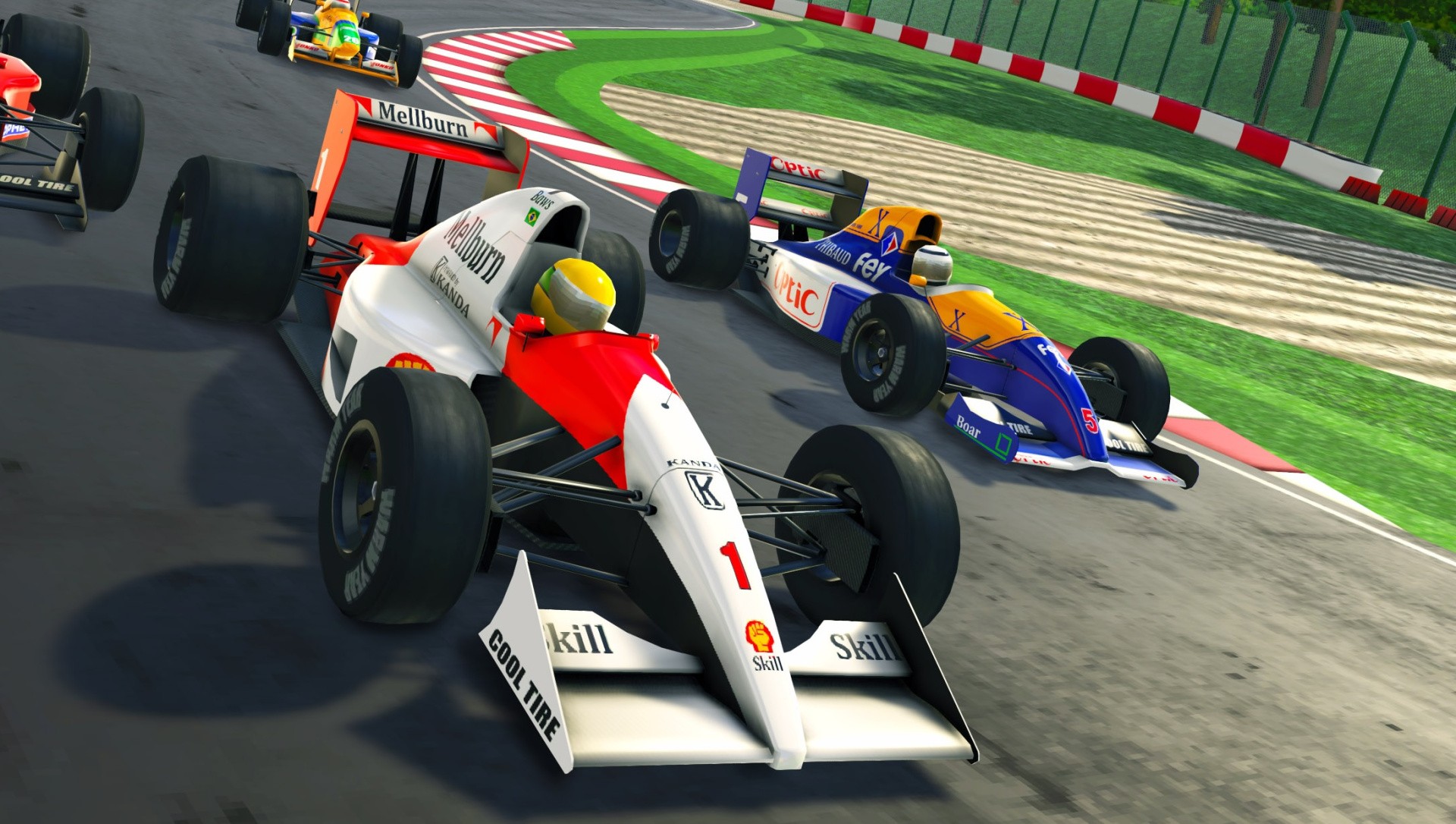
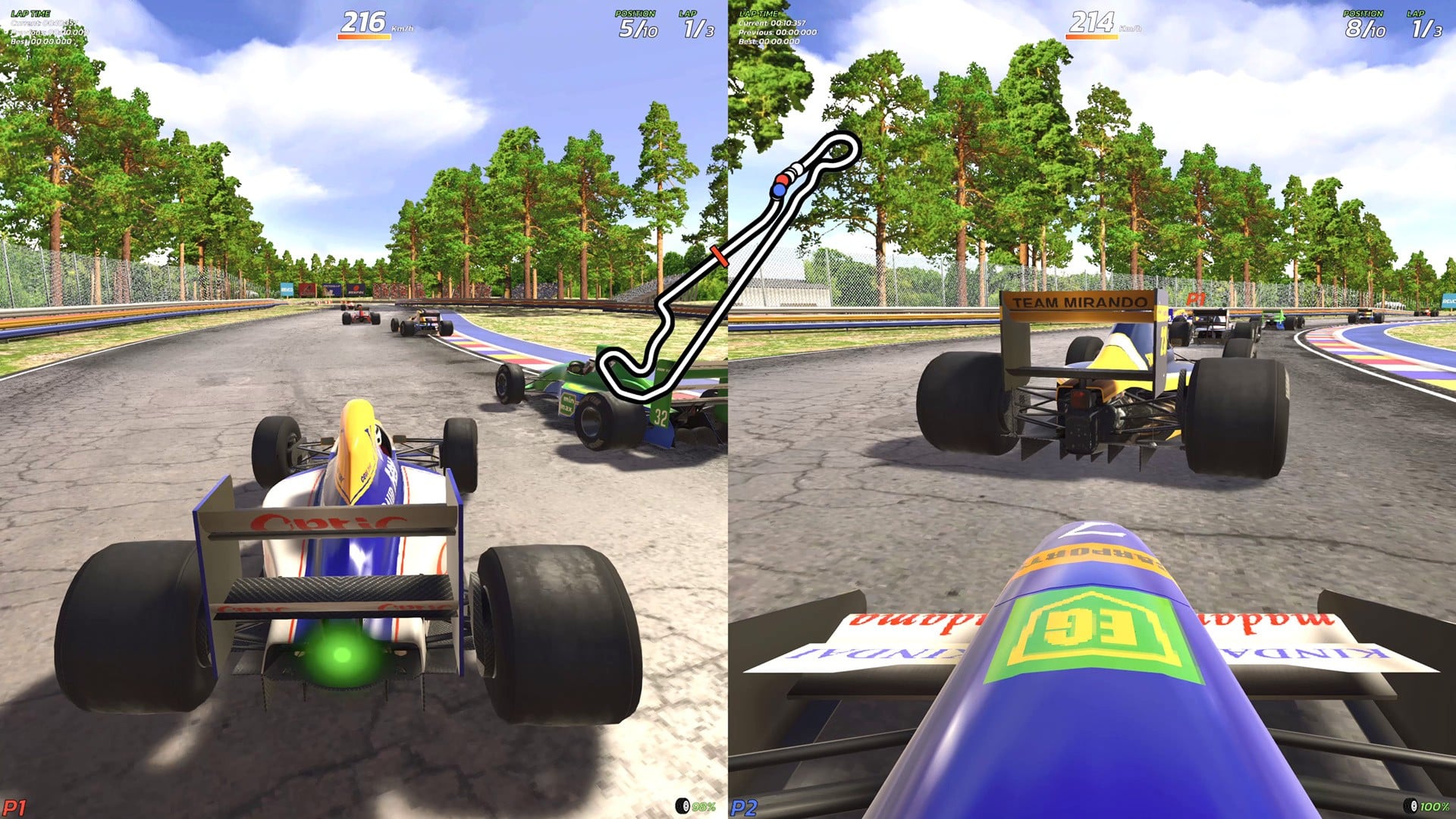
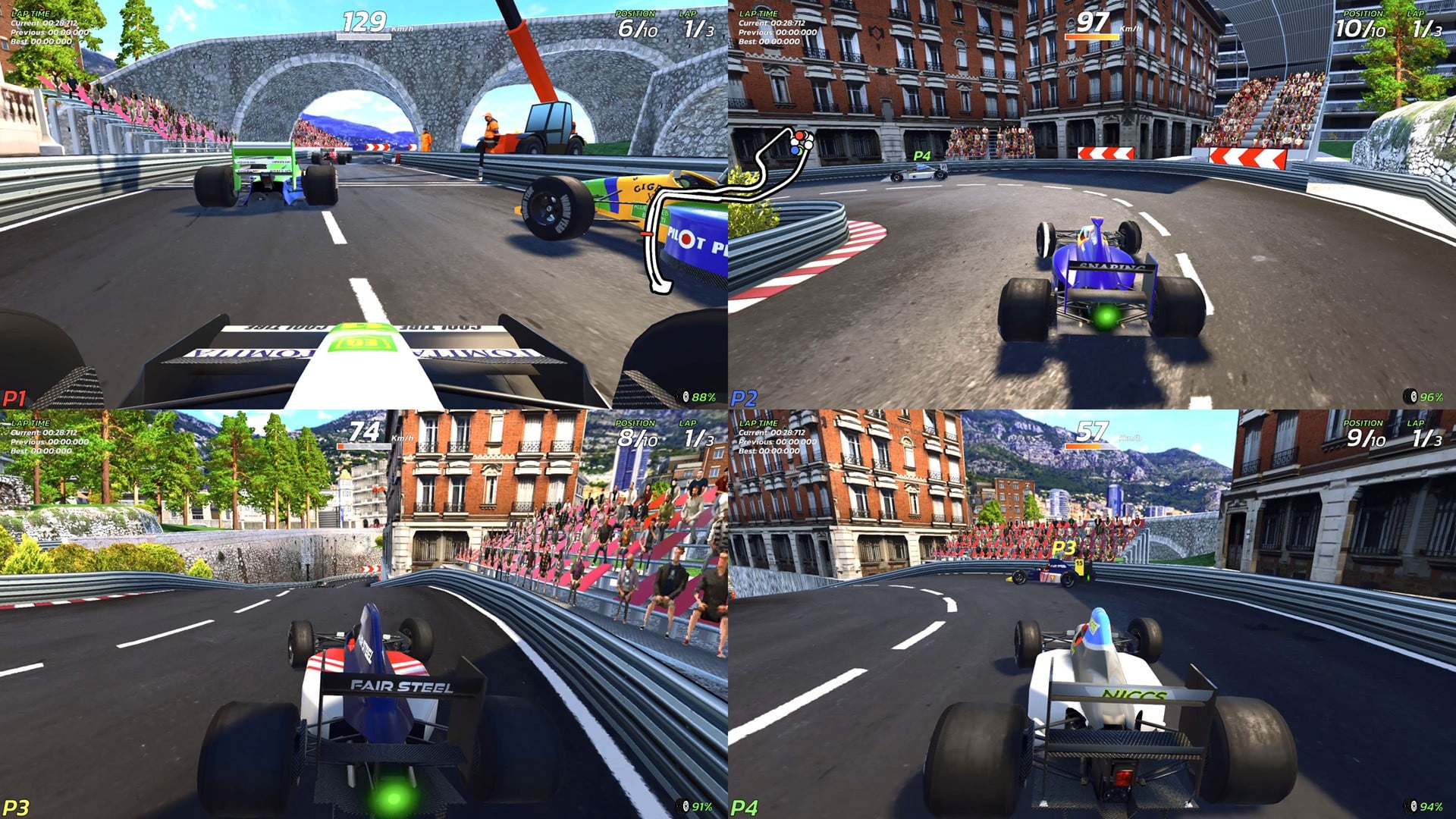
There are plenty of notable things about 4PGP, which launches on Switch and Switch 2 today – the iconic (but unlicensed) 1990s F1 cars, the 120Hz visuals (on Switch 2) and the four-player split-screen mode – but I have to admit that, as a seasoned arcade fan, the involvement of the legendary Kenji Sasaki (Ridge Racer, Sega Rally, Sega Rally 2, Sega Touring Car Championship, Star Wars Racer Arcade) as an advisor on the project is what really made me sit up and take notice.
Keen to learn more about the origins of this title and Sasaki's influence on its final form, I was lucky enough to speak to Quanah Sugiyama (4PGP Project Manager at publisher 3goo), Jonathan Marolle (Game Director at developer Vision Reelle) and even the great man himself, Kenji Sasaki (Project Advisor).
 Watch on YouTube
Subscribe to Nintendo Life on YouTube852k
Nintendo Life: Can you give us some background on your team's racing game pedigree? What notable titles have the core team worked on previously?
Quanah Sugiyama: As a publisher, 3goo brings extensive experience in marketing and releasing racing games in Japan, including acclaimed franchises such as Gear.Club Unlimited and WRC. Our portfolio spans a wide range of racing genres—from hardcore simulation titles like Rennsport to open-world experiences such as Test Drive Unlimited Solar Crown.
In addition, our director, Jonathan, is a veteran developer with over 20 years of experience in racing game development, having worked on major franchises including Test Drive Unlimited, The Crew, and Gear.Club Unlimited. With this combined expertise in development, publishing, and global racing franchises, we are highly confident in our ability to both create and successfully bring racing games to market.
Nintendo Life: F1-based racers come in all shapes and sizes, with some going for intense realism while others are more arcade-like. Where does 4PGP sit on this scale, and what titles have inspired it directly?
Quanah Sugiyama: From a gameplay standpoint, 4PGP firmly embraces its arcade roots. The controls are simple and intuitive, complemented by a turbo system for instant bursts of speed. At the same time, it is designed to deliver a true formula racing experience, where success depends on well-timed braking, precise steering, and learning the optimal racing line.
Visually, we aimed for a careful balance. The game captures the sleek, high-speed look of real formula cars while adding a colourful, approachable style. We made sure not to lean too far into a cartoonish look, as to keep the “coolness” factor of formula racing intact.
Nintendo Life: You're clearly aiming at offering an accessible, family-friendly experience with 4PGP, but how are you making sure it will be challenging enough to tempt genre veterans?
Quanah Sugiyama: Just like our favourite classic arcade racers, 4PGP follows the timeless philosophy of “easy to pick up and play, yet challenging to master.” Players begin on lower difficulty settings, where top speeds are reduced, and the handling is more forgiving, allowing anyone to jump in and have fun immediately.
At higher difficulty levels, though, the game becomes far more demanding: cars are significantly faster, rivals more aggressive, and even a small mistake can cost you the entire race. Truly mastering the game requires learning each track inside and out, maintaining focus throughout intense twists and turns, and skillfully managing both tyre wear and the turbo gauge.
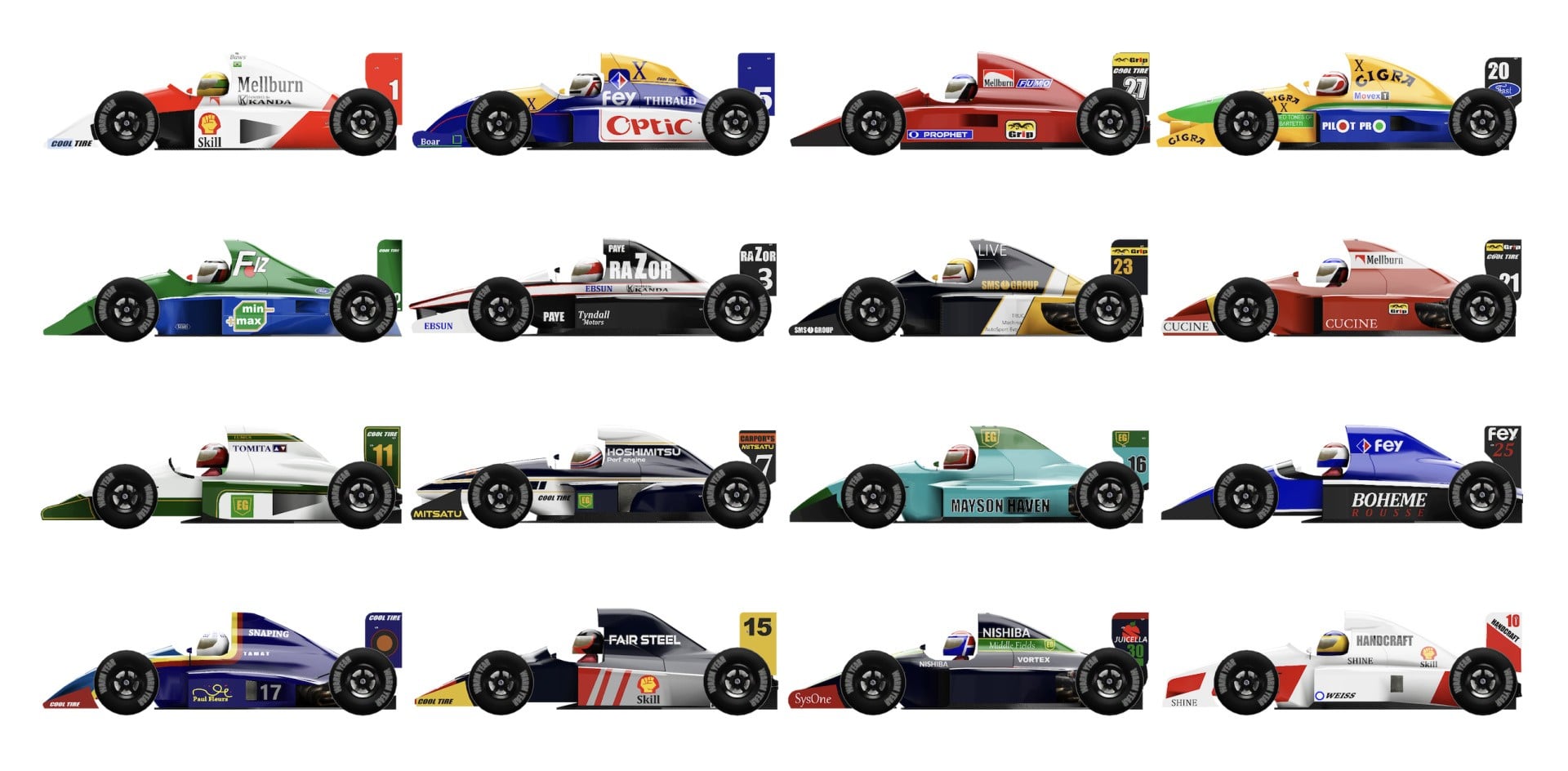
Nintendo Life: You've gone for classic '90s liveries for many of the included cars. What made you pick this era of F1 in particular?
Jonathan Marolle: In the world of motorsports, some cars are truly timeless. Across generations, they are instantly recognisable—even to those who aren’t racing fans or lifelong petrolheads—thanks to their legendary liveries and unmistakable silhouettes. The drivers who piloted these machines became icons in their own right, known around the world by people of all ages, similar to Hollywood actors or pop stars.
This golden era fits the game perfectly. It captures the spirit of 1990s arcade racing, celebrating iconic cars that everyone knows and remembers. On a personal level, these machines hold a special place for me—I genuinely love them, and that passion is woven directly into the game.
Nintendo Life: For players raised on, say, Mario Kart 8 and Mario Kart World, what would you say 4PGP offers that makes it worth a look?
Jonathan Marolle: Mario Kart 8 and Mario Kart World are incredible games. I play them every week with my sons, and they’re always a blast. But when you’re looking for intense racing with real cars, there’s simply nothing quite like that available today. 4PGP aims to fill that gap. It delivers the instant fun, accessibility, and competitive challenge of a kart racer, but set in the world of motorsport, designed from the ground up for four players.
Also, speaking as someone who was once a child himself, I know that kids don’t like being treated like kids. So, giving them the option to race cool, semi-realistic cars, rather than go-kart-type vehicles geared towards a younger demographic, is something I think younger generations will really appreciate.
Nintendo Life: What has it been like working with a genre legend like Kenji Sasaki, and how deep has his involvement been with the game? Did Sasaki-san demand any sweeping changes to the game at any point during its development period, for example, and was he involved from the very beginning?
Quanah Sugiyama: Sasaki-san has been on board with us since the project formally kicked off, providing invaluable insight across a wide range of areas, including UX, graphics, controls, game balance, and music, which helped make the game feel like an authentic 1990s arcade racer. While we had prototypes prior to his involvement with the racing mechanics, tracks and vehicles fleshed out, the UI, HUD, and overall colour scheme underwent major reworking under his supervision.
Nintendo Life: How did Tomoyuki Kawamura become involved, and what has it been like working with him on the game's music? Did he simply offer compositions of his own, or did you make suggestions based on his previous work in titles like Sega Rally and Virtua Racing?
Quanah Sugiyama: Kawamura-san was introduced to us by Sasaki-san. The two have worked together with on many projects, and Sasaki-san felt he would be the perfect composer for the aforementioned authenticity we were trying to capture. While we didn’t intend to directly imitate the soundtrack of any specific past title, Sasaki-san did advise us that Kawamura-san had previously worked on Sega’s INDY 500, which had a tone similar to what we were looking for, and encouraged him to draw on his memories from that period for composition.
Nintendo Life: What aspect of 4PGP has been the hardest to get right?
Jonathan Marolle: Frame rate was the biggest technical challenge on Nintendo Switch. Maintaining a smooth 60 fps with four players, in both handheld and docked modes, was essential to support the fast-paced gameplay that defines arcade racing games of this era. At the same time, a great deal of effort went into making 4PGP feel technically authentic, particularly in areas such as the physics engine and graphics. In the 1990s, hardware limitations forced developers to rely on clever tricks and simplified physics to convey the motion of cars, while early 3D arcade boards were unable to render large numbers of textured polygons. I intentionally embraced the same approach to capture the essence of what made those games so fun and accessible, adopting similar constraints—low-poly models, a limited number of low-resolution textures, and the absence of filtering or advanced post-processing—to recreate that distinctive look and feel.
Nintendo Life: What element of the game do you think players are going to be most surprised by?
Jonathan Marolle: I think players will be most surprised by just how smooth and immediate the game feels. Like a classic arcade experience, you can jump in and be racing within seconds—we’ve reduced loading time to basically nothing, and there is hardly any downtime between races; the pace is relentless.
On top of that, the performance is rock solid. The game runs flawlessly at 60 fps on both Nintendo Switch and Nintendo Switch 2, even with four players, with no frame-rate drops. The Nintendo Switch 2 Edition pushes things even further, offering 120 fps/Full HD and 60 fps/4K settings. The combination of instant access, smooth performance, and high visual fidelity makes the game feel incredibly responsive—and that’s something players won’t expect until they experience it firsthand.
Nintendo Life: What are the key differences between the Switch and Switch 2 versions of the game?
Quanah Sugiyama: As Jonathan mentioned in the aforementioned question, the frame rate and resolution have improved dramatically. The other major feature is support for the Switch 2’s GameShare feature. With this, up to four players can play locally or online on their own devices, using only one copy of the game. It’s a great way to share the fun with friends near and far.
Nintendo Life: What has it been like factoring in Switch 2 features, like 120fps and GameChat?
Quanah Sugiyama: GameShare, being a brand-new feature on the Nintendo Switch 2, was quite the challenge to develop for.
As one Nintendo Switch 2 system would have to render up to four screens at once, we had to strike the perfect balance in optimisation, where the game can run at a decent speed without sacrificing the fps and resolution too much.
Audio was another challenge we faced, as the game had to generate different sound effects (acceleration, braking, crashing, etc.) for each player’s vehicle on separate devices when streaming. With a traditional setup, all of the sound effects would be playing on all of the players’ devices at once, so finding a workaround was crucial.
For 120 fps, the implementation was quite simple, as the Switch version was already very well-optimised, running at a constant 60 fps despite the technical limitations of the system.
Nintendo Life: Sasaki-san, what did you think when you were first approached about contributing to 4PGP?
Kenji Sasaki: To offer some background, I first met Nicolas, the CEO of 3goo, nearly 30 years ago when he was a correspondent for EDGE magazine and interviewing me during the development of Sega Rally. I still remember being caught off guard by his sharp questions and very specific requests regarding racing and driving games—I even found myself at a loss for words at times.
After that, we would meet occasionally every few years, and I followed his career as he went on to found 3goo and publish numerous racing titles, so I had always hoped that we might have the opportunity to work together someday. When he eventually approached me about serving as a special advisor on 4PGP, I was genuinely delighted to receive the offer.
Nintendo Life: How have your previous games influenced your input into 4PGP? What lessons would you say your career has taught you when it comes to offering advice and input on this style of game?
Kenji Sasaki: Since 4PGP’s goal was to [recreate] the kind of fun found in 1990s arcade racing games on modern hardware, I took time to break down what made the games I’ve worked on so enjoyable and identify the elements that really stood out.
Although the development schedule limited what could be achieved in a short time, my goal was to bring as much of that “era-specific atmosphere” into 4PGP as possible. With that in mind, I provided advice and direction on visual creation and selection, as well as the overall construction of elements like the background music, to help the game capture the feel of those classic arcade racers.
Nintendo Life: What aspects did you have the most influence over during 4PGP's development?
Kenji Sasaki: The key elements I focused on were the sense of pacing, the background music, and the overall visual atmosphere that evokes 1990s arcade games. Including things like menu and game flow design, we focused on making the experience easy to understand and ensuring the game progressed at a fast, satisfying tempo. I also tried to keep my advice tightly focused on the most important points, with the goal of improving the feel of the game when played and giving players a stronger sense of responsiveness and satisfaction.
Nintendo Life: What was it like working with Tomoyuki Kawamura again?
Kenji Sasaki: Kawamura and I have collaborated on game development many times over the past 30-plus years, and I consider him a true brother-in-arms from our days in the trenches of arcade game development. Because of that shared history, he understands my intentions instinctively, which made our collaboration extremely smooth and effortless.
Nintendo Life: Many modern racing games aim for realism over accessibility. What advantage do you feel arcade-style racers offer over 'serious' simulations?
Kenji Sasaki: I think the clear advantage is being able to enjoy the game casually and intuitively in a typical home play environment. With racing simulators, standard consoles and devices often can’t convey enough information, which can make them feel difficult or intimidating for general players. Using large, immersive displays, motion-based cabinets, or VR can make the experience extremely realistic and intuitive to control, but realistically speaking, not many players have access to that kind of setup yet.
Nintendo Life: 4PGP's feature set appears to place it in competition with family-friendly racers like Mario Kart and Sonic Racing. What does the game offer that those titles lack?
Kenji Sasaki: I think there are people who have trouble connecting with the cute, highly stylised characters and overtly comical presentation often found in those titles. For players who want a more serious racing atmosphere but feel that full-fledged racing simulators are a bit too demanding or inaccessible, I think there’s room for a game like 4PGP to fill that gap and meet that demand.
Nintendo Life: 4PGP is an original title. Would you like to see studios like 3goo given the chance to work with some of the famous arcade properties you helped create during the '90s?
Kenji Sasaki: I don’t place much importance on specific IPs or brands. As long as we can create a game we truly want to make—and one that players are looking for—I’m open to any style or approach. I would love to make another rally game, though.
Nintendo Life: Do you see yourself contributing to more games in the future?
Kenji Sasaki: Of course, I’d like to remain actively involved. If there is demand, I would love to work on commercial titles, but there are also more personal projects and ideas that I would like to challenge myself with developing.