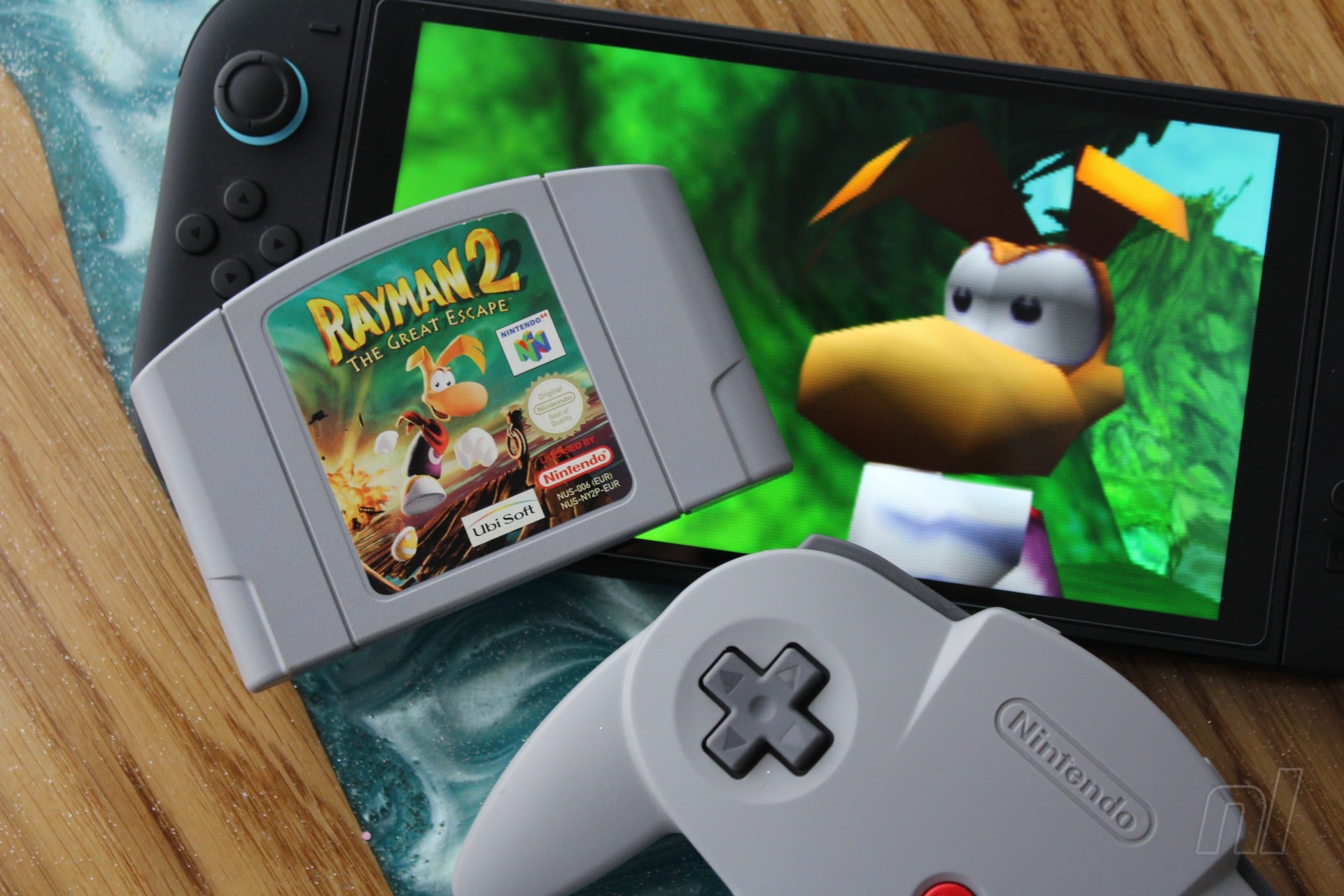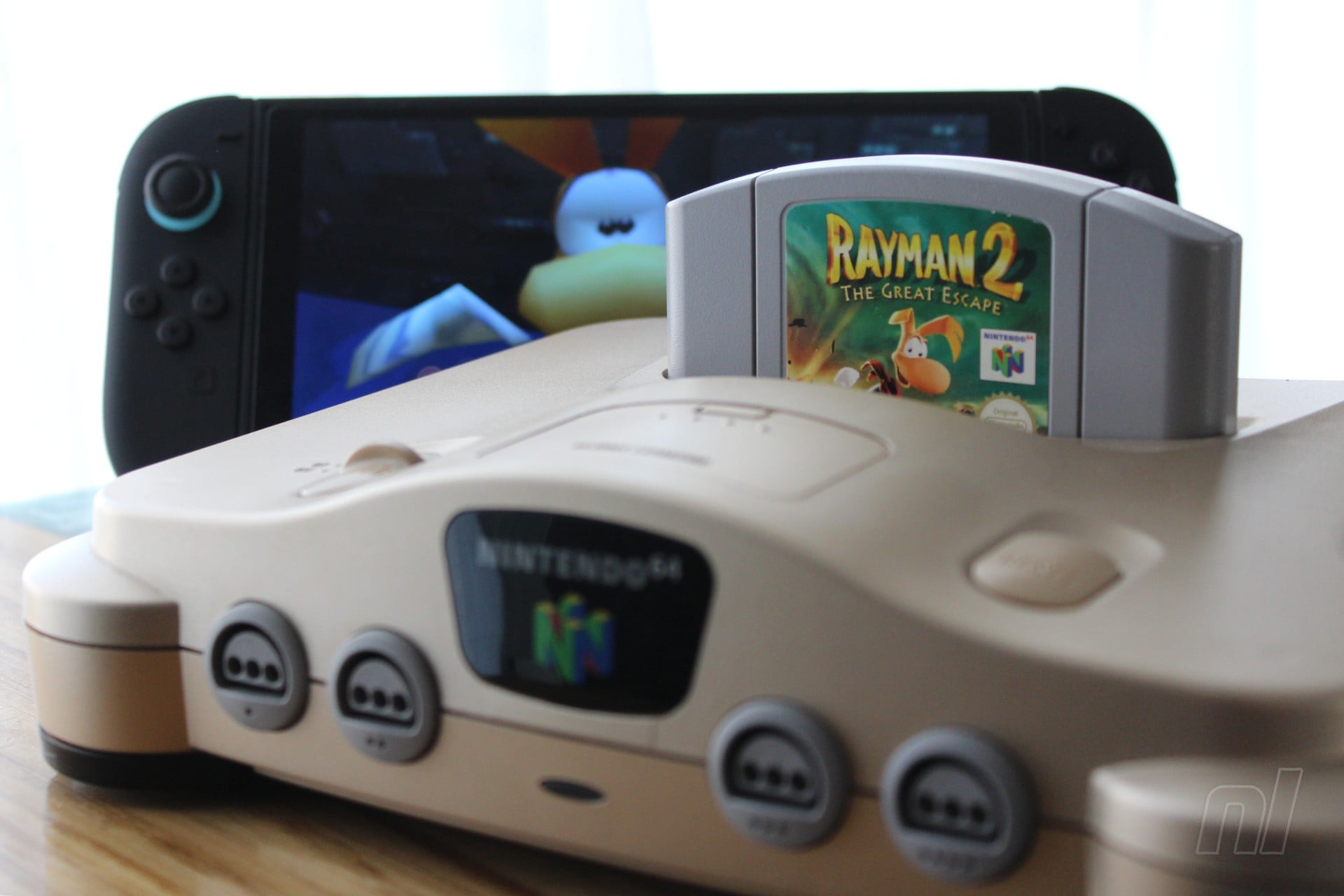
Rayman 2 has been added to the Nintendo Switch Online N64 library. His fight for freedom against a literally iron-fisted despot represented a braver, weirder time for Ubisoft, and today Francisco looks back on a classic...
For many of us, Super Mario 64 changed platforming forever by introducing the boundless possibilities of the third dimension. I wasn’t one of them. As a latecomer, Rayman 2: The Great Escape was my Mario 64, the game which opened my eyes to all the strangeness, spectacle, and drama the revamped 3D genre could offer.
 Watch on YouTube
Subscribe to Nintendo Life on YouTube845k
It happened by pure chance. I couldn’t afford Mario 64 after becoming the proud owner of my baby blue Pikachu Nintendo 64 in 2000. However, my local game store had Rayman 2 on a special deal, sat on the shelf unloved since coming out in 1999. And the oppressive world, sinister tone, and unique brand of heroics I discovered have been seared into my memory ever since the first time I wandered into the fantasy dystopia of the Glade of Dreams.
The Glade is a fairytale land, whose whimsy gave way to perpetual gloom under the literally iron-fisted rule of Admiral Razorbeard and his clanking robo-pirate minions. Their slave count grows by the second. The Teensie Kings, their citizens, and the fairy-like Lums are all helplessly locked up. Rayman himself starts the game imprisoned in the brig, hopeless and alone. When his powers are smuggled in (thanks, Globox!) to finally allow a dramatic prison break, he becomes a freedom fighter unlike any platforming hero before him.
If Paul Thomas Anderson’s flick One Battle After Another was an N64 platformer where Leo could actually pull off a long jump, its cover art would likely be a lot like Rayman 2: a member of the resistance speeding away from a well-placed detonation.
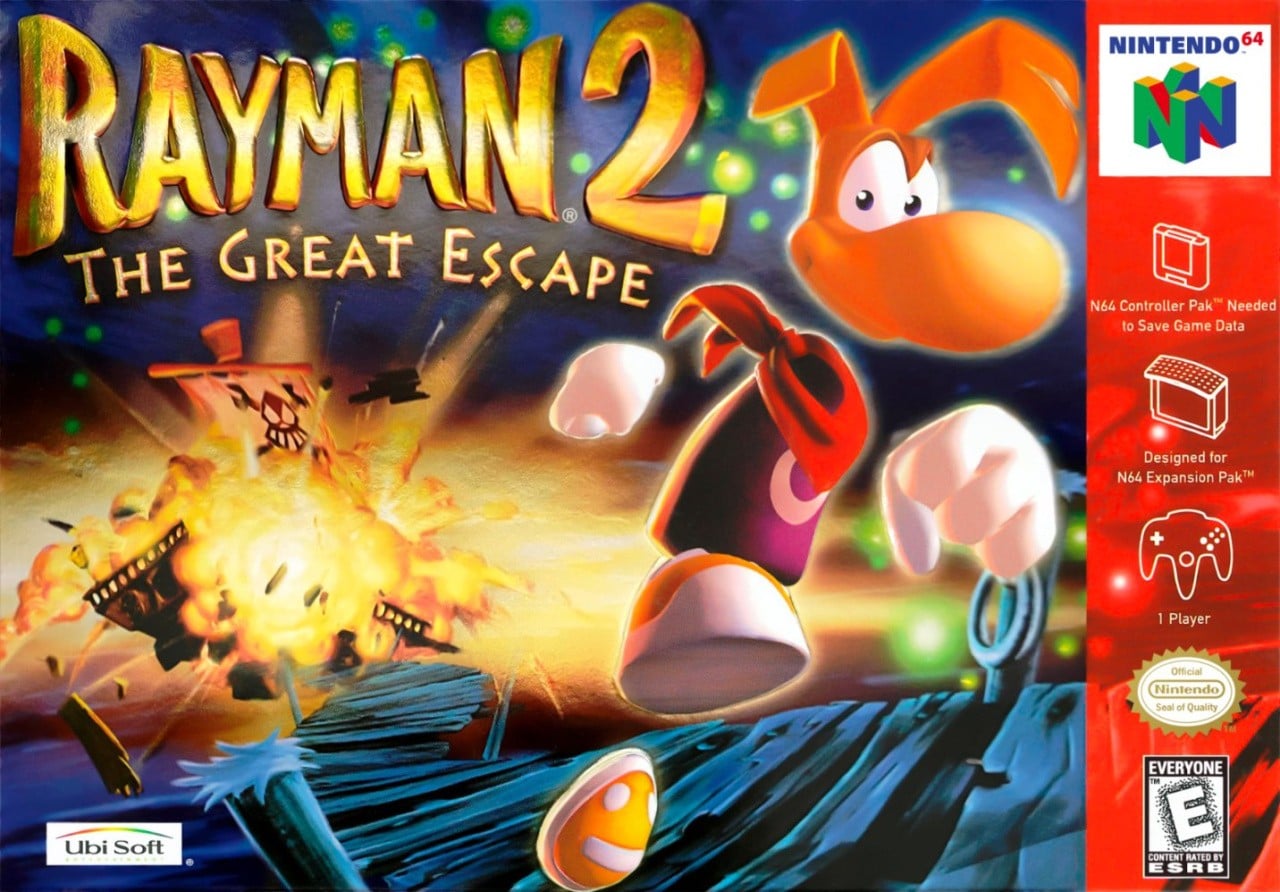
I’ll be the first to admit there are N64 platformers with more expansive level design, but Rayman had other goals. Rayman 2’s linear levels make the most of his polished moveset of “hairlicopter” gliding and lobbing energy projectiles, while giving his eight-hour adventure a breakneck sense of dramatic momentum.
He may look ‘armless, but he has the unruly toolkit to beat the most committed anarchist, even Donkey Kong! Rayman is shattering cages to free vulnerable Teensies and Lums. He’s raiding the robo-pirates' very own gunpowder kegs to blow up every barred door in his way. He’s taming walking rockets bronco-style for high-stakes pursuit, even commandeering their own ships to blast his way to Admiral Razorbeard.
A one-man counterattack from France’s favourite platforming hero draws a painfully obvious comparison to the spirit of the French Resistance; no coincidence when the game shares its name with the famous Steve McQueen film about Allied POWs in World War II. From the moody opening cinematic — which rivals the dramatic stakesetting of Metal Gear Solid if you ask me — the game’s sky-high stakes represent Rayman’s darkest hour.
It’s a world away from the original Rayman, which was an accomplished but straightforward jaunt through platforms creatively constructed from sticky nougat before battling giant saxophones. Rayman 2 went so much darker. The series, always inspired by The Dark Crystal, came closest to Jim Henson and Frank Oz’s creepy cult classic with Rayman 2’s palette of ominous green shades and environments layered with deep shadows.
When you come to the unnerving Cave of Bad Dreams, you find a Tim Burton-esque nightmare. You’re running down giant skeletal spinal columns, leaping from skull to skull as they sink into forboding depths, then climbing up rows of ribcages like you’re bouldering in the Parisian catacombs. With other levels introducing putrid waterlogged bayous and frightening pirate-infested cave docks, the vibe’s often closer to Shadow Man than Banjo-Kazooie’s pantomime nasties – despite Banjo Tooie’s imaginatively creepy efforts.
With its dystopian setting and firm sense of justice, the similarities between Rayman 2 and director Michel Ancel’s next game, Beyond Good & Evil, are impossible to ignore. Just swap out Rayman’s kidnapped Teensie Kings for Jade’s alien-abducted orphans, or Razorbeard’s Buccaneer flying ship for the Dom-Z’s space base. It’s a tragedy that this promisingly ambitious trajectory ended in 2003, as much as I love Rayman Legends’ giddy thrills.
Today, both games represent a braver, weirder time for Ubisoft in the mid-2000s. A time before money-printing machines like Assassin’s Creed and Far Cry kicked into gear, and the Rabbids condemned Rayman to a supporting role in his own series. This was when the Ubisoft I loved the most were at the peak of their powers, exploring the outer reaches of the 3D platforming genre.
Decades later, Rayman remains on his interminable hiatus, and the question of which version of Rayman 2 is best remains stubbornly unsolved. The PlayStation and PlayStation 2 versions spoil the game’s rich atmosphere with cloyingly over-enthusiastic English voice acting. Many claim the Dreamcast version is definitive, but no additions could convince me to pick up that Tamagotchi contraption it calls a controller.
For me, and I’ll admit this is a game where my nostalgia-tinged glasses are practically superglued on, the Nintendo 64 version is the best way to play Rayman 2. Its soundtrack is unique to the system; without the CD storage space other formats could use, it relies on catchy and effective MIDI melodies. Its pared-back approach is best seen in its opening cutscene (below), which adds none of the distractions of its other versions. And the N64’s anti-aliasing haze suited its shadowy vibe magnificently.
Now it’s on Switch Online, Rayman 2’s own Great Escape from its undeserved obscurity gives the N64 version an unbeatable claim to be the best of all: you can play it right now. And you absolutely should.
I’ll never forget Rayman 2. And that’s not just because I replayed its opening stage more times than I could ever count, having missed the fact that the N64 cart needed a memory card to save my game. It’s proven so memorable thanks to its rebellious heroism, oddball creativity, and unusual place in Ubisoft history. It taught me to fight for freedom or die trying. Even if the outcome was usually an explosive end after taking a wrong turn on my untamed rocket steed.