
“Zone Profile Fantasy”? “Zoom Port Focus”? Nobody knows whether ZPF is an acronym or not, except perhaps the three-man development team behind it: Perry Sessions, Mikael Tillander, and Jamie Vance. Prior to ZPF, Sessions and Vance created a contra-style NES demo called Cavity Destroyer for Vance’s brother’s dental practice. From there, the two joined with Tillander, a coder, to repurpose some of Sessions’ old graphics work for a new Mega Drive shoot-'em-up project.
ZPF was first teased all the way back on Christmas Day 2020, with a playable demo surfacing in 2023. Declaring itself a “Future Metal Fantasy”, it bears similar stylistic hallmarks to 1993’s Lords of Thunder for the PC Engine, marrying shooting action with fantastical landscapes and cyberpunk elements.
It also features a similar shop system, where accrued medals can be spent to boost ship power, purchase lives, or convert cash to points. Initially, there are three stages to choose from, and a further three to unlock. Once all are cleared, the seventh and final domain becomes available.
ZPF is strict in that only one continue can be purchased from the in-game shop. It can’t be relied upon to see you through the game, but if you clear the first stage without dying, the shop can be almost completely emptied out early on. If you’re geared toward survival, your focus will lean toward powering up your ship and melee weaponry, or grabbing an extra life.
You can also halve the number of bullets on a stage, but this is perhaps better left for later in the game. If you’re in it for score, you want to be dipping on the 'Medal X2' as soon as the first stage ends, doubling the drop rate. The ultimate score challenge, though, lies in never buying anything from the shop at all, and instead converting all your accrued cash to points.
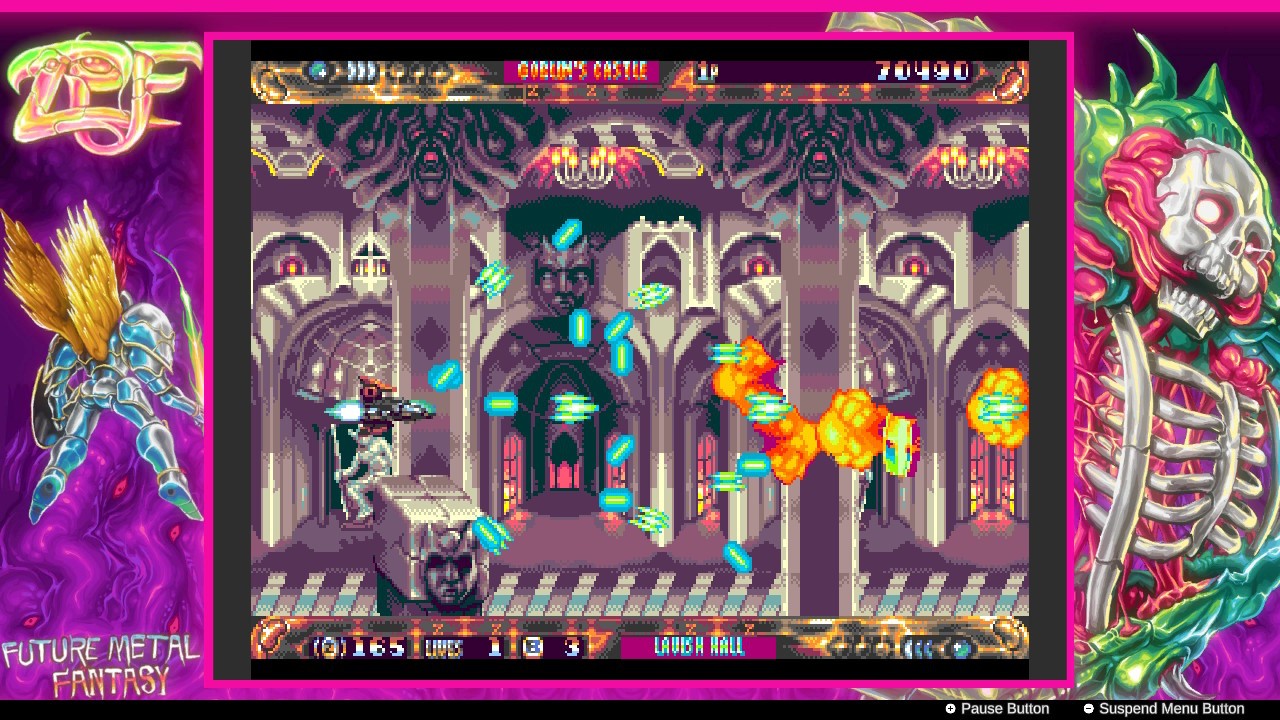
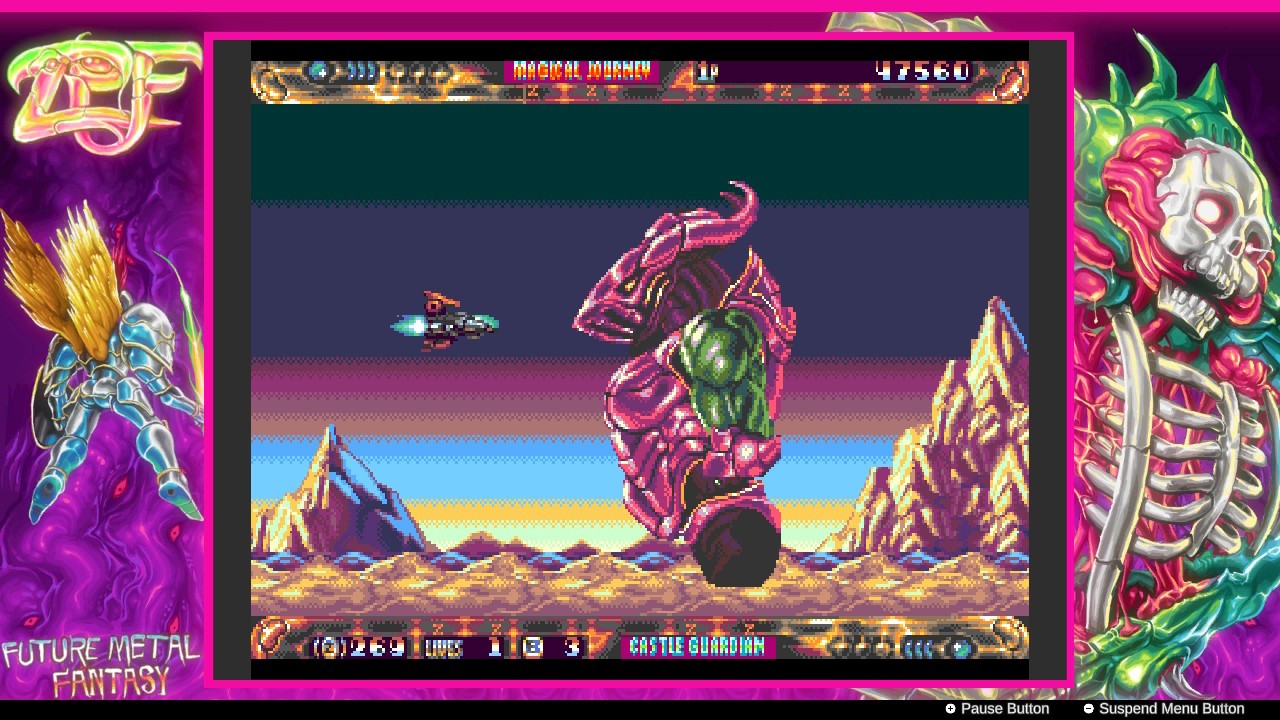
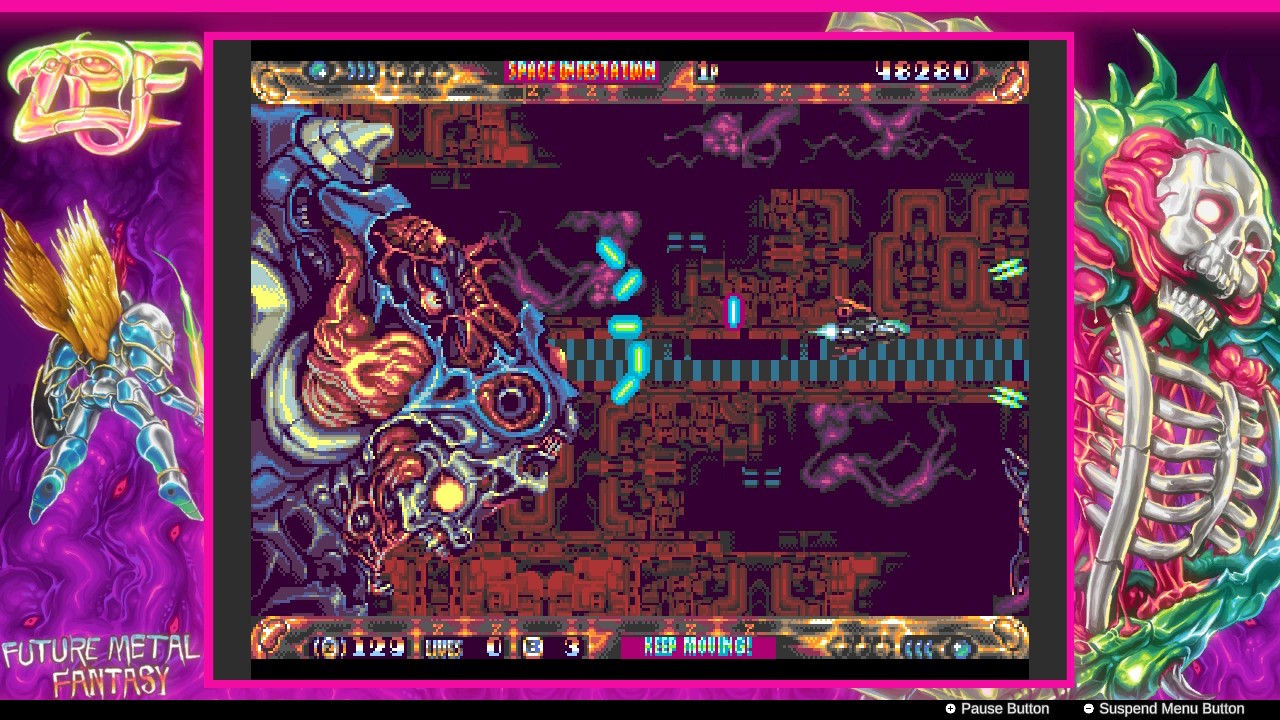
Visually, ZPF is a lucid, neon-drenched experience. Glowing with syrupy sunsets and fiery pits, it does impressive things with the Mega Drive’s relatively limited colour palette, and it’s easy to forget that it’s a 16-bit game when you’re being slapped with deep parallax scrolls, enormous bosses, and detailed techno-scenery. It journeys from fantasy realms filled with giant turtles, goblin castles and apple-green forests, to future space factories with decapitated astronauts floating in Zero-G.
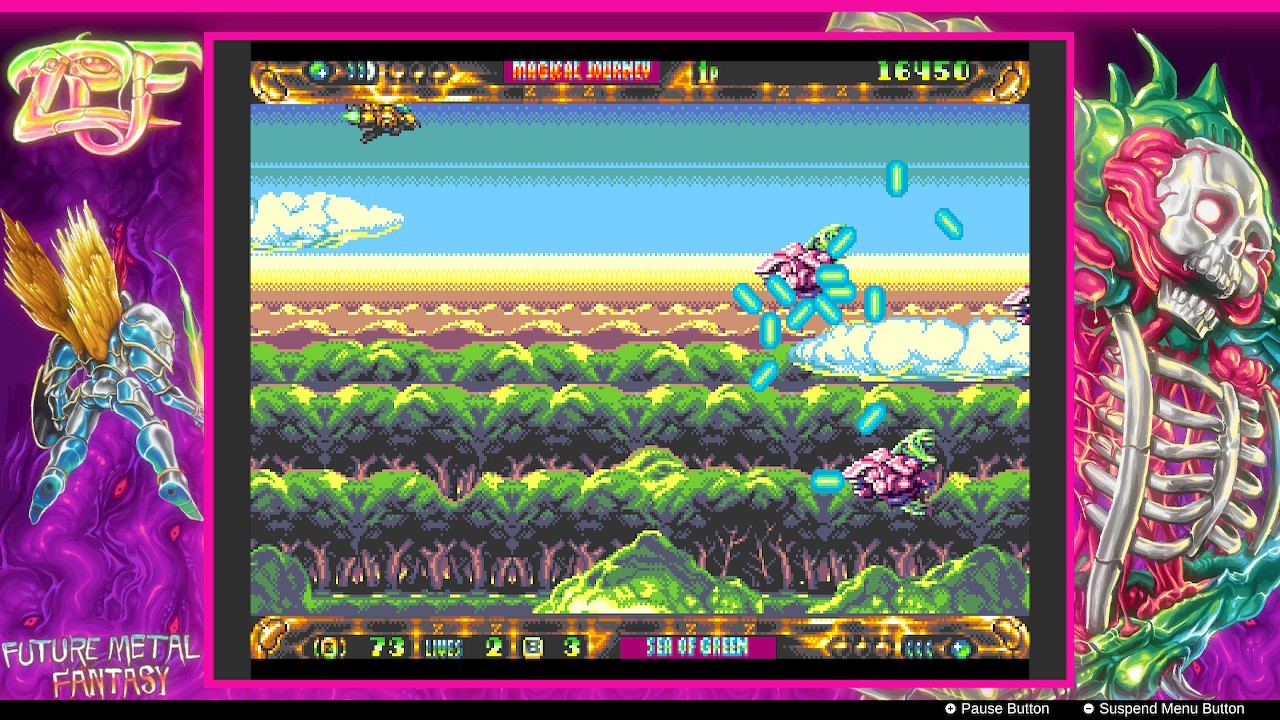
You can choose from a selection of three ships before starting each stage, all with different properties. Some have a more powerful melee weapon, like the Knight, and others a more powerful concentrated shot, like the Gold ship. Gladius sits somewhere in between, offering spread fire with good screen coverage, and is the best all-rounder for beginners. Part of the game’s strategy is figuring out which ship is most effective for each area, although it’s totally possible to just stick with one throughout.
The melee attack deals heavy damage but requires you to get up close to use it. It’s particularly effective on larger enemies who can soak more bullets, but there’s a risk-reward element involved in nose-to-nose approaches. Equally, not all melee weapons are equal in power, and as such you need to have a game plan prepared if you’re going to be using them regularly. You’re given three considerably powerful bombs, but spend them wisely as only one is replenished with each cleared stage. Elsewhere, bonus lives can be obtained, usually carried by special blue falcons.
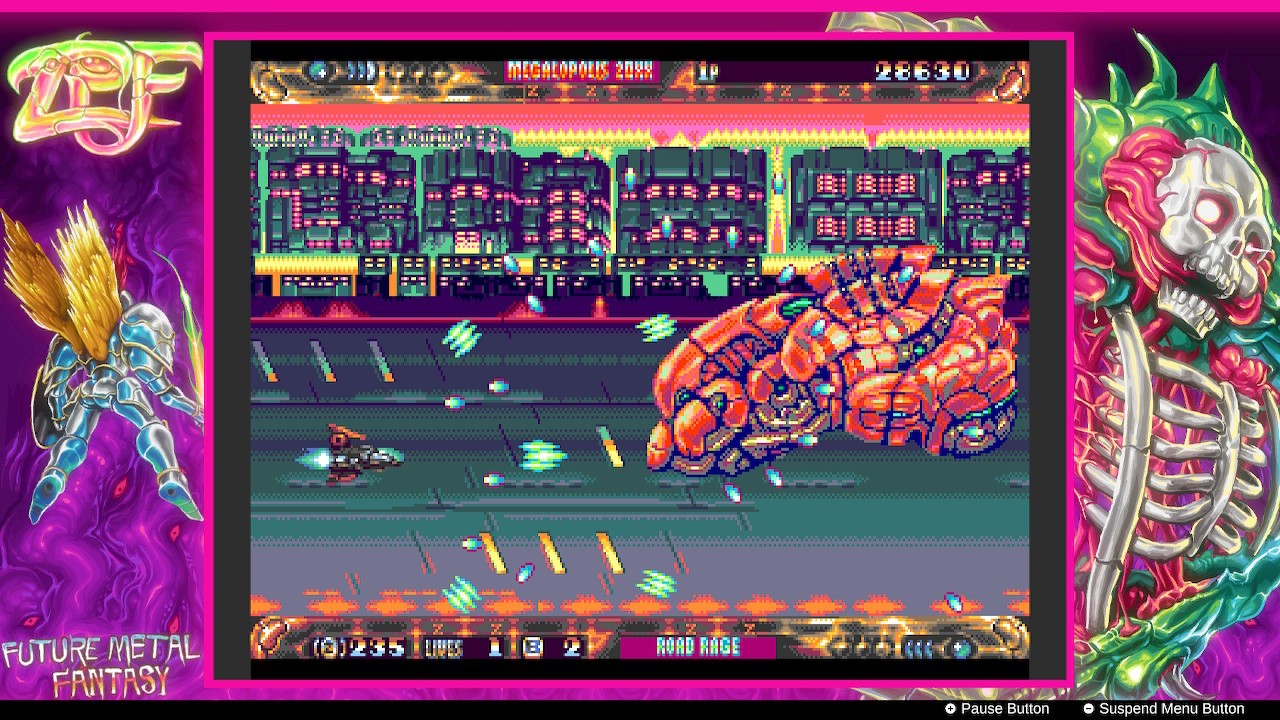
In terms of its visual impact and scale, ZPF is impressive for a Mega Drive game. The sprites are large and robust, and the crafting is nicely handled, and while there’s some slowdown in places, there’s rarely a sprite flicker. It’s enjoyable to learn and to weed out its secrets, but can prove frustrating while you get to grips with its pitfalls. Certain tiny bullets (particularly prominent in the Goblin Castle) are almost invisible in the Switch’s handheld mode, and the ultra-colourful backgrounds often make it tricky to see incoming fire.
In terms of bullet patterns, the game spits out slow, random bursts alongside floaty aimed shots that head in your general vicinity. It sits midway between Japanese-style shoot-'em-ups and 'euro-shmups' — as they’re known amongst aficionados — making it feel somewhat unique. It has an unusual segmentation, too, where the screen will flash white several times a stage, changing the background scenery and enemies. It’s a little odd at first, but it kind of grows on you.
Contrary to popular belief, ZPF isn't all that difficult, it's just uneven, sporting sudden spikes and excruciating sniper pot shots that require pre-emptive learning. It’s also screaming out for a ship speed toggle. As it stands, your movement tends to be slightly too quick for such large bullets, making annoying accidental collisions commonplace.
There are minor niggles, too, like the shop select screen being active before it’s actually revealed on screen. This means if you’re tapping the button to get through the stage introduction, you can easily convert all your medals to points by accident, leaving you with an empty wallet. The developers obviously spotted this issue, but instead of resolving it by default, you need to head to the options and turn 'Shop Zipper' off.
Elsewhere, it’s difficult to know which sprites are destructible and which aren’t, like the carriers that appear in the Space Infestation stage. Bosses look fantastic, but their patterns range from aimless and easy to abrupt and thankless, eagerly blindsiding you with attacks that have little in the way of foreshadowing.
While these road bumps can all be overcome with practice, the critical problems reside more with the Switch port itself. There are no screen filters and no screen size adjustments, locked in a 4:3 aspect even in handheld mode, which isn't ideal. The control setup changes are clunky, assigned to an exterior menu, and there are no save states or rewind functions.
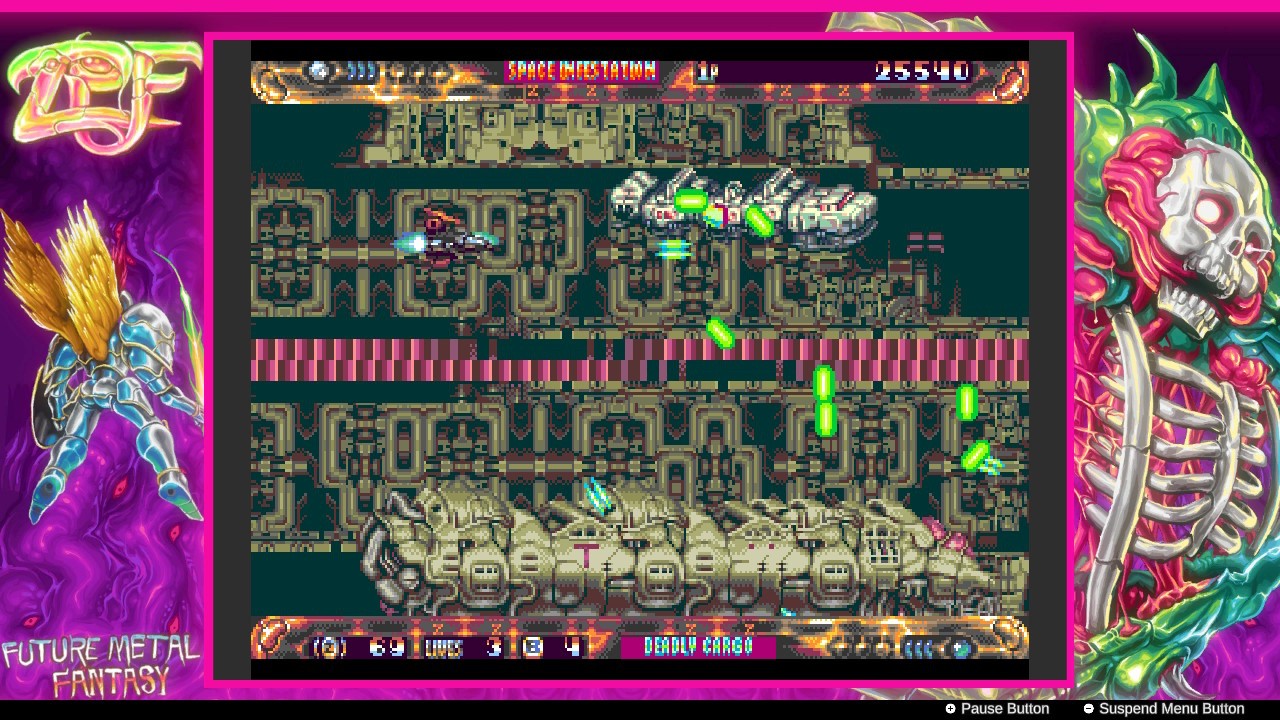
All you really get is the game itself, and that’s okay if it ran 1:1 with its Mega Drive counterpart, but it doesn’t. While there don't seem to be any lag issues, the port suffers from persistent intermittent scroll judder. It’s noticeable immediately on stage one, and the worst part is it seems to impact the actual game controls, too, so when it judders, your movement is affected just enough to occasionally throw you off. The larger the screen, the more pronounced it is. On a TV in docked mode, it’s incredibly aggravating; on a smaller, 16” screen, it’s still present but feels better; in handheld, it remains present but appears largely diminished.
I also had a crash on the stage one boss where I was forced to restart the game, as he no longer would take or return fire.
Conclusion
ZPF is an interesting new Mega Drive shoot 'em up that, with its key-collecting secrets, hidden bosses, stage variety and fantasy theme, feels unique. It’s been put together with a lot of love, and while its clear the development team aren’t expert shoot-'em-up designers, they’ve still done incredibly well with the hardware. It’s frustrating at times, and many will be put off by not having continues or any method of practice, but those who persevere will find an enjoyable route to high scores and one credit clears.
The issue primarily is the bare-bones Switch port that has zero additions or quality-of-life features, and suffers from a juddering issue that really damages the experience. If you’re buying on Mega Drive — and it’s recommended you do so — add a point to the scoreline.


Comments 5
I've been on a "built for Mega Drive/Genesis" kick lately as that was my 16-bit era system. This will definitely go on the Wishlist!
6 sounds too high given those cons. Sounds like it would be very frustrating to play.
A mega drive game too intense for the Switch, cool. Cool cool cool. 🙄😮💨 Would be interested normally, but c'mon. Fighting the game to play the game is never worth it.
Is there still screen judder on the Switch2? @Tom-Massey or is just broken, period?
After playing this on the Genesis, compare to other horizontal shmups like Lightening Force, this one is just meh at best. It's an okay shooter but I feel this version would had fare much better if it's an actual indie game that took advantage of modern systems and not just a Genesis rom on an emulator. It could had been much better here, the lack of qol features despite using emulation is also a disappointment. You can't be selling a rom and then still pretend that you're releasing an indie game.
Would much rather play Truxton. Hate these horizontal shooters
Show Comments
Leave A Comment
Hold on there, you need to login to post a comment...