
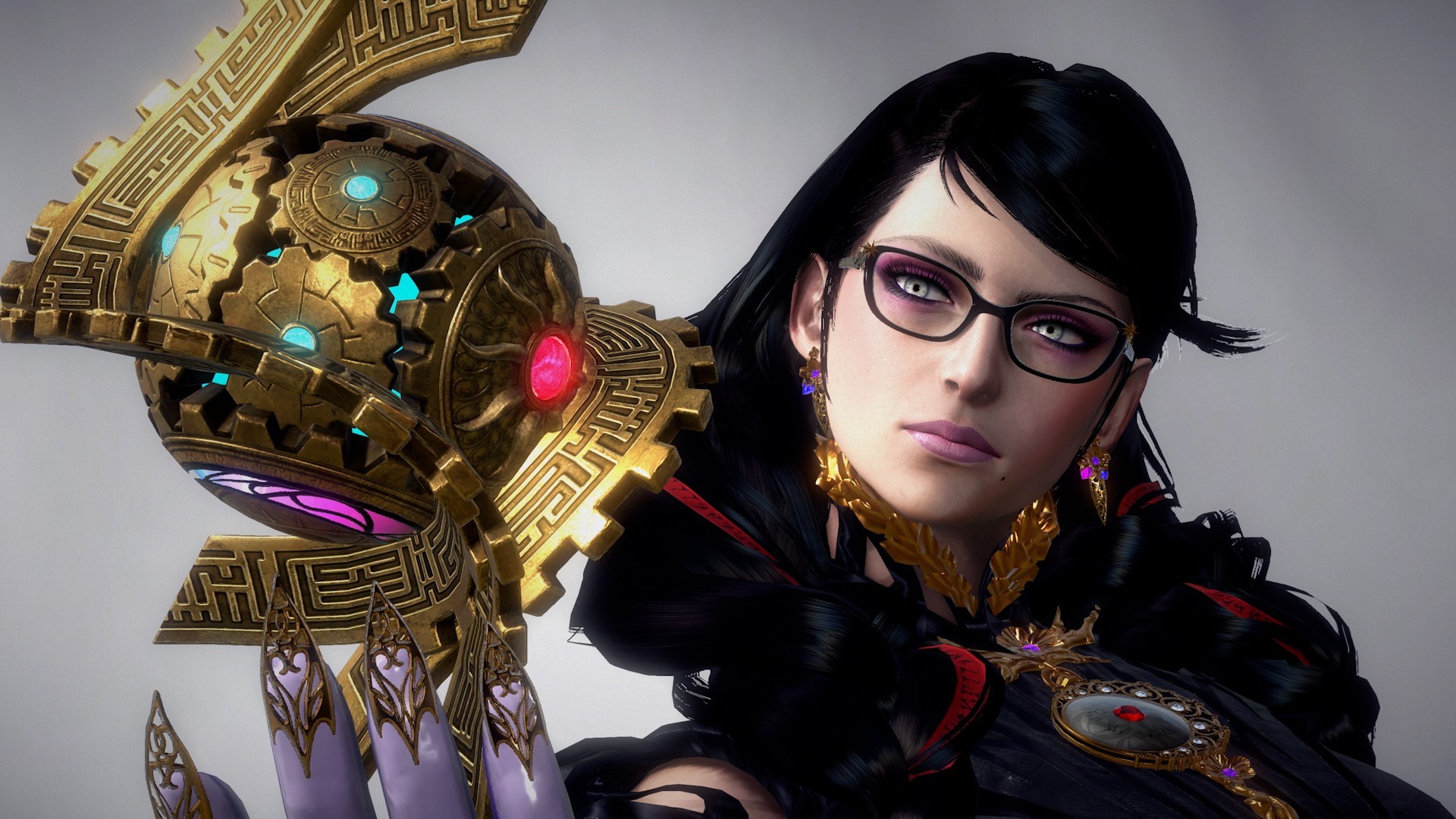
Though many folks loved Bayonetta 3 (we awarded it a 10/10 upon release), many fans have understandable concerns regarding the game's multiverse setting and the events of its ending. Spoiler alert right from the start with this one, we'll be diving into some pretty hefty stuff here.
So to explain further, Bayonetta 3 included a multiverse narrative in which our heroine was simply one of many Bayonettas, each of which found herself in grave peril. This in itself felt like a pretty drastic departure from the narratives of the first two games, but according to creator Hideki Kamiya in his latest book The World of Hideki Kamiya (thanks, Nintendo Everything), he actually dropped hints long before Bayonetta 3.
“We often hear that said, but actually the existence of a multiverse was depicted from the first Bayonetta. Since it was displayed in a low-key way perhaps it didn’t fully convey the idea.
"So in Bayonetta there is a scene directly after you battle Balder right? In that, you rescue Cereza, a young child who had been absorbed into Balder’s body, and then send Cereza to the past, and it’s here that the timeline splits.
"After sending Cereza to the past, there is a scene where Bayonetta returns to the present and approaches Luka, and the background is doubled-up and blurred. That is a depiction of the real universe and another, diverged universe layering over each other. It’s a display of two worlds existing in parallel."
He goes on to encourage those who believe that the multiverse idea came out of nowhere to go back and play the first two games, though he also concedes that "the explanations were not sufficient".
Moving onto the ending of the game, in which many had assumed concluded with the death of Bayonetta and the introduction of Viola as the new main protagonist, Kamiya also states that hints are dropped to imply that Bayonetta is actually alive and well.
"But in Bayonetta 3, some amongst the players imagined the situation quite negatively, and just accepted that ‘Bayonetta is dead.’ That was a big miscalculation on my part, and I understood the difficulty of thinking about how much space players should have left open for interpretation.
"To say it clearly, the ending of Bayonetta 3 does imply that Bayonetta is still alive. There’s a menu where you choose your destination with a dart, that is a bit like Viola’s room right? As you clear stages, things you gathered during Viola’s journey such as photographs and keepsakes start getting added there too. After clearing the final chapter in the menu there will be a single new photo of Viola added, and in that photo you can clearly see Luka from behind. If Luka is there in this world, perhaps somewhere Bayonetta is too…"
We're not entirely convinced these explanations will be sufficient for some fans, but it does all make sense, at least. However, we sincerely doubt we'll see anything from the Bayonetta franchise anytime soon now that Kamiya has left PlatinumGames. The company still exists, to be sure, but a lot of the core creators have now moved on.
Kamiya is currently hard at work with his new studio Clovers on a direct sequel to the acclaimed adventure Okami, though its release window and target platforms are currently unknown.