 review by
In all the world, few things are as powerful as language. We use it to communicate all our hopes and fears and inner thoughts to each other. Words have a power all their own, which is why Shujinkou struck me as such an interesting concept; a JRPG that aims to teach players the fundamentals of Japanese. While I applaud the ambition behind that lofty goal, the Switch port of Rice's dungeon-crawling-focused RPG held some technical missteps that keep it from truly shining.
Like many JRPG fans who don't speak Japanese, I’ve always had an ambition to learn. After two years of lessons, I could count myself as conversational; I was able to make my way around Japan on multiple trips without embarrassing myself, but couldn’t call myself anywhere near fluent. Shujinkou doesn’t seem like it is going to help anyone reach fluency — the lack of voice acting so you can hear the words and symbols you are learning prevents that (although you do have the option to hear male and female pronunciation models via explanatory signboards in the dungeons) — but the aim here is to hammer home the basics, and that is something the game does remarkably well.
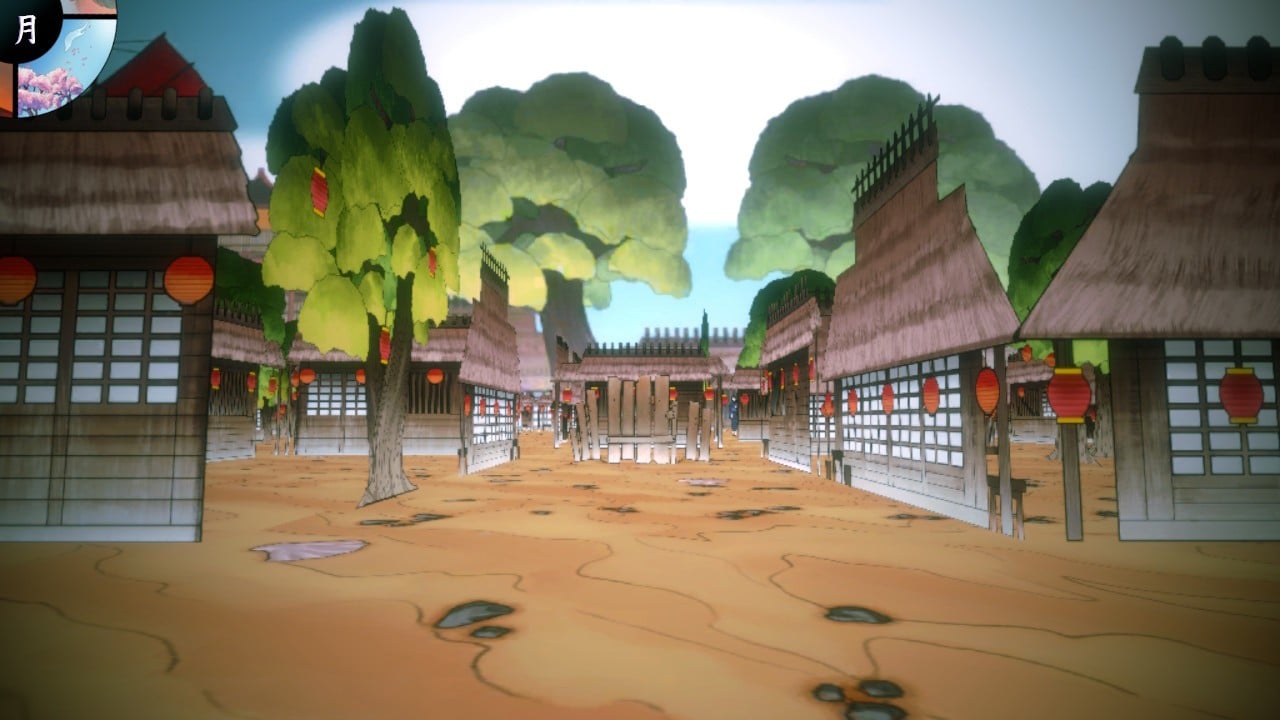
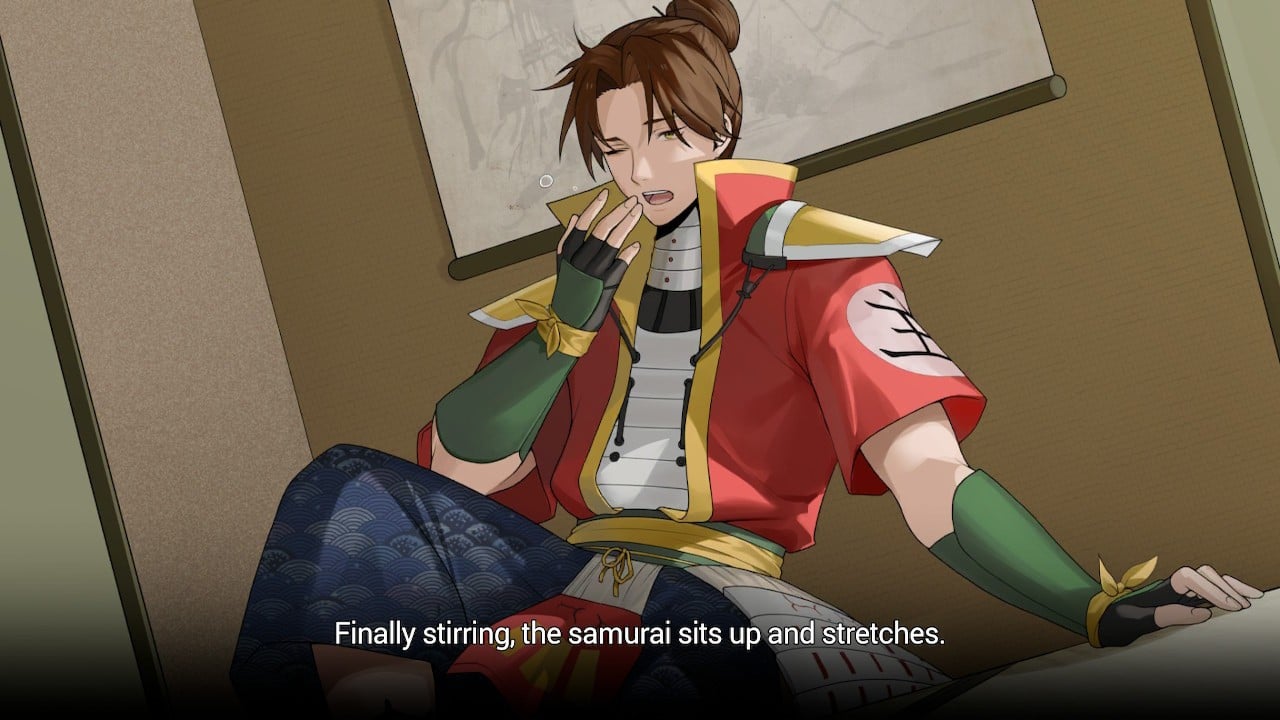
The plot is as linear as you'd expect from a JRPG. You move from dungeon to town to dungeon, with the story unfolding in cutscenes that consist of floating character portraits accompanied by text. Where it does feel like it deviates from the traditional formula is that it starts with Shu and his team investigating the Akuma monsters who are attacking people and it never really strays from that vein. While the danger does grow in scale, it all feels like the same plot thread.
I was expecting to start with small stakes in a coming-of-age story before we set out to punch a god in the face, but that isn't what happens here. Which is fine, of course, but the plot didn't scratch the itch I was hoping it would. Not that it was bad - just that it was simple. As you progress through the story, Shu is joined by Jin, a fox spirit whose mischievous behaviour can be a bit jarring for how seriously the rest of the game treats the plot, and Kou, a princess masquerading as a ninja.
The base version on Switch takes you up through the 'Genya arc'. That arc alone is probably around 30 or so hours if you just focus on the plot and don't worry about any side content. From there, you can pick up the separate Sabaku arc DLC to take the game up through its conclusion. The reasoning behind splitting the game here is to allow Switch players to have a good (and cheaper) entry point into the game. The Genya arc doesn't end on a big cliffhanger or anything, but it does feel like you're meant to go somewhere else next to finish the story.
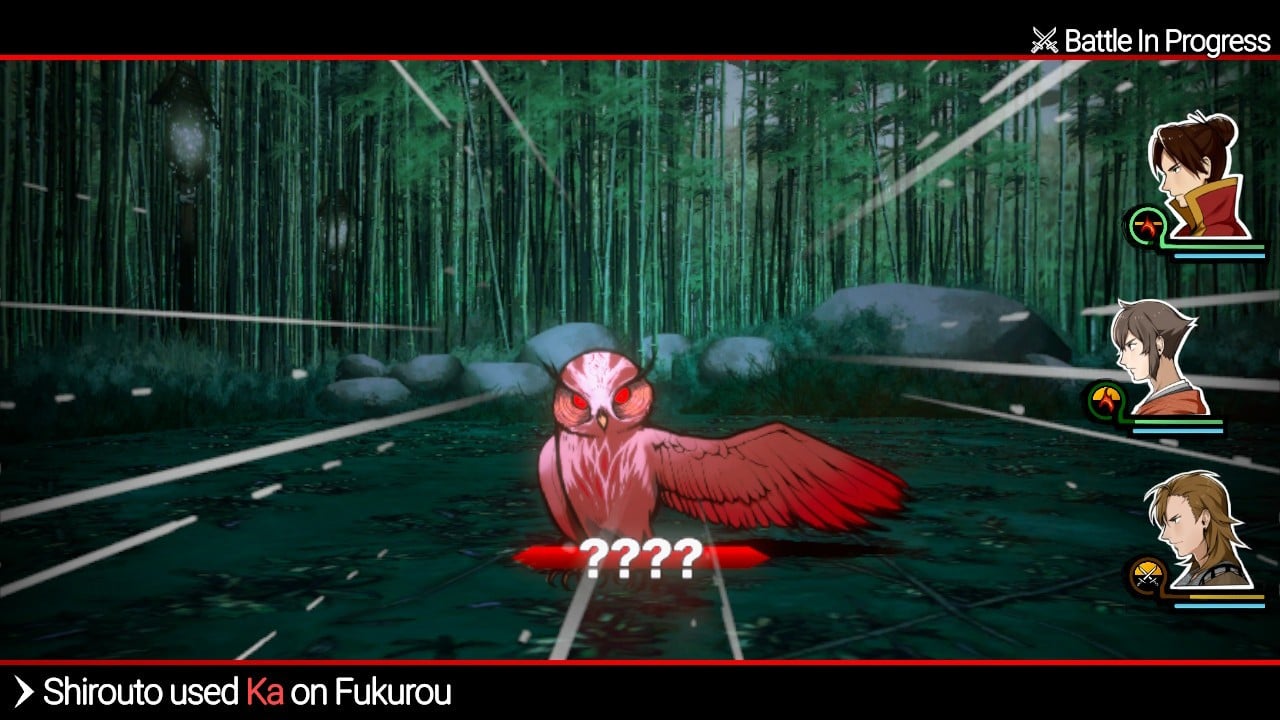
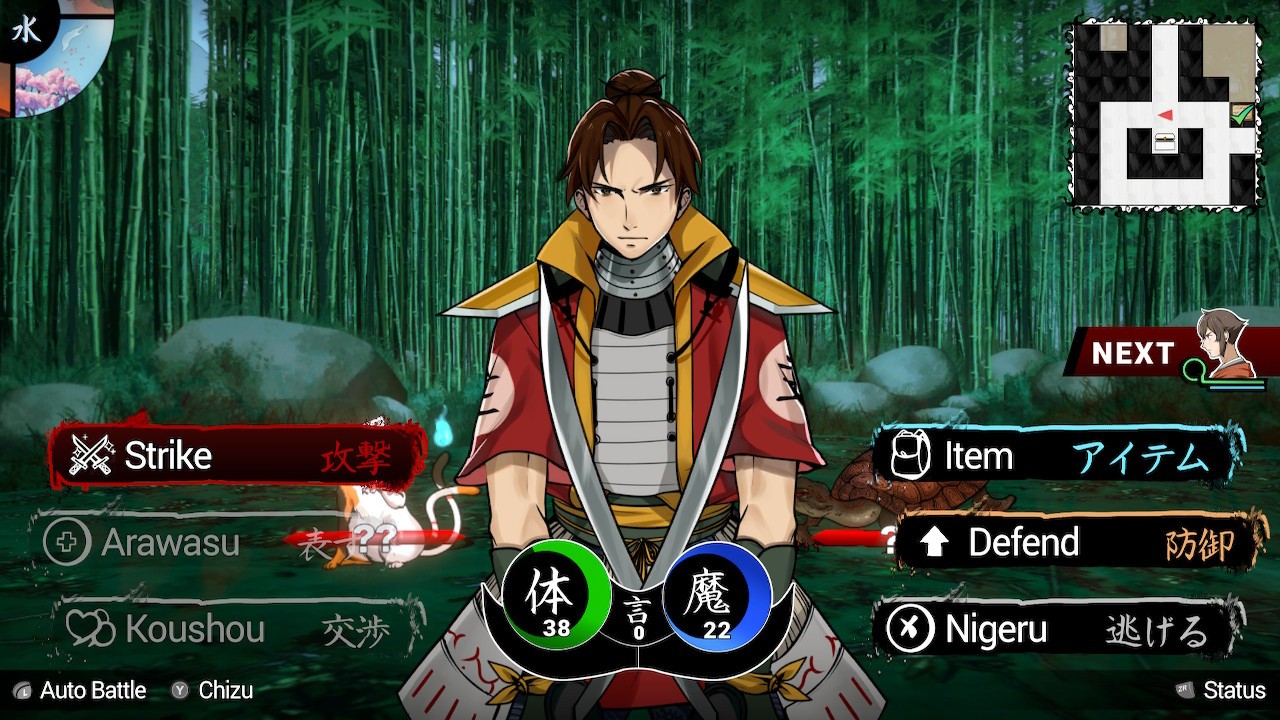
Combat in Shujinkou, the core and best part of the game, centres around Japanese words. Creatures pop up at semi-random intervals and attack your party. You can fight them with your swords, but early on, you unlock the power of Kanakae Orbs, each of which contains a symbol from one of two Japanese syllabaries, hiragana and katakana. Each character can equip up to five of these Kanakae Orbs and choose one per turn to attack with. If the symbol you attack with is in the enemy’s name, you’ll do extra damage.
This is a fun mechanic, and it will help you learn the names of the animals you come across. The first dungeon, for example, is filled with cats (neko), dogs (inu), birds (tori), and demons (oni). Remembering the Japanese word for these common creatures is essential to getting through the many battles you’ll face in the game. The game also throws in some vocabulary in the menu and in dialogue, giving you the option to have a translation of certain words as they are dropped into conversation.
I will note that some of these translations are less helpful than others. While it is useful to know that 'chizu' means map, it is somewhat baffling that it offers a translation of 'shogun' as simply shogun or 'daimyo' as daimyo, with no effort to explain the English equivalent of those terms. It was a small detail that struck me as humorous, considering how much effort went into making the language lessons a core part of the gameplay.
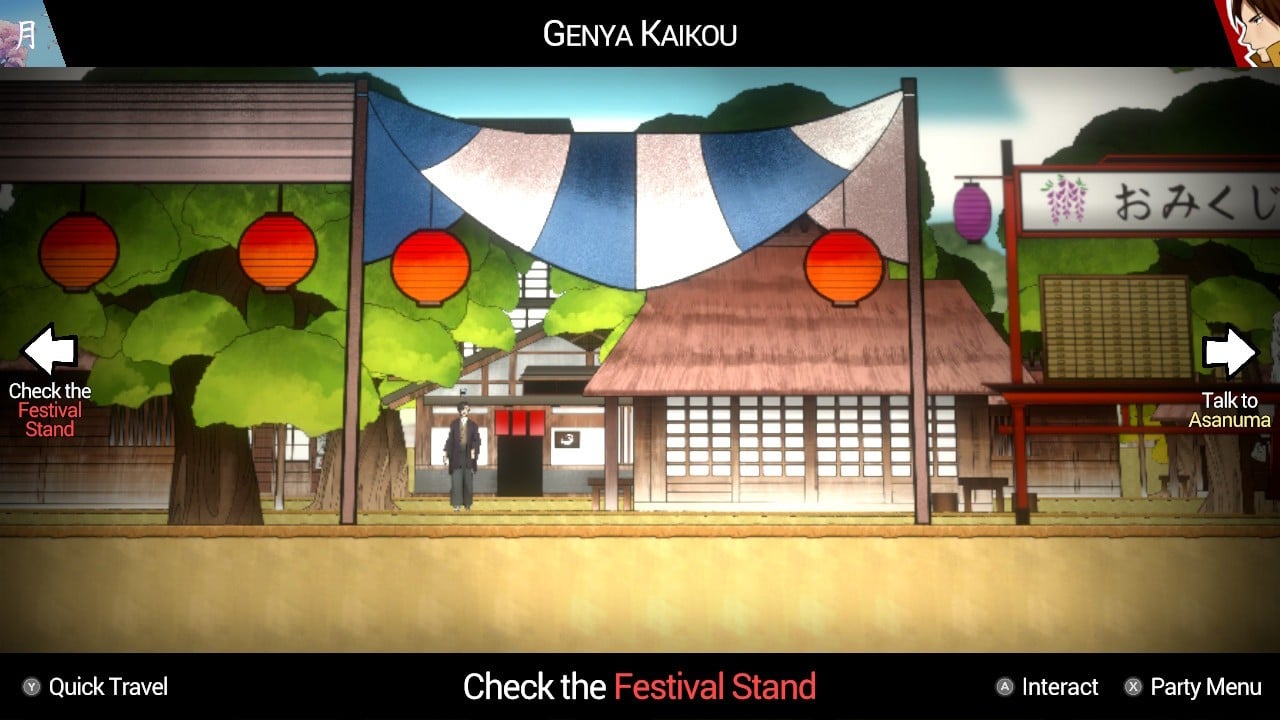
Battles take place in dungeons scattered around the map. Fans of the Etrian Odyssey series will immediately spot the influence here. While towns feel like something out of a point-and-click adventure like Monkey Island, dungeons switch to a first-person perspective. A map is given and must be filled in as you travel through it, complete with one-way passages and doors. Most monsters appear randomly, with a symbol in the lower right corner giving you an indication of how likely you are to be attacked as you explore.
These battles can be difficult enough, with some deadly enemies coming out of nowhere (even in the first one) to deliver a devastating party wipe, but the real danger comes from the larger enemies that roam the map. In Shujinkou, these are called Yajuu, but Etrian Odyssey fans will recognise these as reskins of the iconic Field On Enemies (FOEs) from that series. They pursue you around the map and are significantly more powerful than the standard enemies you run into. When you first encounter them, you should avoid them at all costs, though you’ll probably want to grind in each dungeon until you can comfortably take them on. I spent a lot of time running through the dungeon, jumping back to town to heal and upgrade my equipment before setting off to try my luck again.
There are several big difficulty spikes in the game, usually about halfway through a dungeon. Even lowering the difficulty to its lowest level had me grinding and risking a party wipe if I ran into the wrong random encounter. This was honestly frustrating, especially later in the Genya arc when I was nearing the end of the story. I came to dread the moment when I ended up with each dungeon's mini-boss, which was (thankfully) usually visible before I walked up to them, allowing me to save right before.
You can use the touchscreen to click on items in the battle menu or navigate around towns, but it isn't necessary. In fact, it feels slightly counterintuitive to do so. The place where the touchscreen controls are most useful is in the optional vocabulary minigames.
If you want to practice your Japanese a little more, there are six minigames in total (including fishing — fish-slapping — and a type of pool), all of them focusing on a different part of the language. These are useful if you want to focus on learning, but I struggled to find them fun. There is a bubble-popping game that is a bit more fast-paced, and a memory game that focuses on sentence structure. As learning aids, these aren't bad, but they feel very separate from the rest of the game and, again, I struggle to call them 'fun'.
The combat in Shujinkou is better than the rest of it, unfortunately. The characters and scenery are all flat, standing there doing the gentle swaying that I usually associate with a Flash game. The graphics are simple, but they work during the also-simple cutscenes; where I struggled was in navigating through the towns. Because everything is 2D, towns become awkward to move around in. Trying to remember where anything is becomes a chore, especially in areas larger than the starting town.
The actual enemies look better, with an almost watercolour feel to them that fits with the world Shujinkou is building. Similarly, the music is very Japanese-inspired, with a high-pitched whistle at the start of combat that feels straight out of a samurai film. It is a little predictable but, again, it works within the world. The soundtrack is extensive and does what it sets out to do - it sets the mood, pulls you into the setting, and then fades into the background. I certainly wouldn't call it bad; I was never annoyed with it and never found it jarring, but it didn't stick out in my mind at all.
Some small questionable narrative choices (we’re expected to believe that Shu retired as a samurai at the age of 24, for example, although the reason is revealed in time) are forgotten thanks to the unique combat system that centres language-learning without making it feel like an educational game.
My biggest complaints from my time with Shujinkou are things that I expect are only present in the Switch port. The non-combat inputs aren’t intuitive, so I found myself opening the party menu when I meant to close the map constantly, and I would have given anything for a quick save feature. There are also long load times that are thankfully infrequent but still frustrating. Since launch, a patch has addressed various issues, and a new Visual Fidelity option improves how things look, especially on Switch 2.
Language is at the heart of Shujinkou, but it is much more than an educational game. There is a solid, unique dungeon crawler in here, which is refreshing considering how underrepresented the genre has been in recent years. A unique combat system ultimately defeats somewhat basic art, counterintuitive controls, and frustrating town navigation.
[Note. Following feedback, we have expanded the text above with further impressions and discussion of Shujinkou's mechanics and features, plus some minor corrections to the original text.]
Conclusion
You won’t become fluent in Japanese by playing Shujinkou, but it will introduce the basics of both hiragana and katakana to you in a game that features the best bits of the Etrian Odyssey series in a very clever way. The combat system is solid enough that not even the counterintuitive menus could keep me from diving back in for more.


Comments 34
@SpecialStreamCannon I don't speak Japanese, so I'm not sure, but I think it's "daimyo," not "daimo." Also, I just noticed your username while writing this. Always appreciate a DBZ reference, haha.
This game looks fascinating and I'm stoked to try it. What a seriously cool concept! Be still, my weeb-y heart.
Hi, Director of Shujinkou here! Thank you so much for playing Shujinkou - it looks like you had an enjoyable time .
I'm assuming you cleared the first labyrinth and made it to the second town, and it reads like an excellent First Impressions type of article. But there doesn't seem to be any mention of story progression with unlocking Jin, Kou, the minigames, quests, or a lot of other features that are present in this title, which took seven whole years for the team and me to develop.
Assuming a little under 4 hours were played for this review, I'd hope you guys would be willing to take a little bit more of a deeper look into Shujinkou before giving it a score like this—there are some seriously creative puzzles, dungeons, and a fair amount of lore that explains why Shu is retired so young, etc. - no need to rush the review or anything!
Love you guys Nintendo Life, been around for 10+ years and am grateful for the coverage.
I imagine I'll get this at some point, but I currently have a low tolerance for difficulty spikes and grind - it feels like something a good designer should try to avoid, because while there are some that will tolerate or claim to like grind and difficulty spikes, they are unnecessary.
@gcunit There are five difficulties in the game - Painless, Easy, Normal, Hard, and Extreme. We aim to welcome new players to the dungeon-crawling genre through the Easy and Painless options .
Thanks for the review, glad that it's overall good as is although I have my fingers crossed they can further improve it on Switch 1 and/or 2 through patches - considering its focus on learning Japanese I'll eventually play it for my channel for sure (maybe also on my own if I have the time, but we'll see)!
This is a game that I will definitely pick up at some point, but there's so much I'm already playing at the moment I know it'll just get left to one side.
Also: in the cons, suddently isn't a word @SpecialStreamCannon 😉
@springer17 same here. I'm definitely getting this sooner or later as I can't have enough Dungeon Crawlers and I've been studying hiragana and katakana for a while now. The only obstacle in my way is my huge backlog
@hisownsidekick Yep, it's daimyo (to be precise daimyō as vowel length distinguishes words in Japanese although luckily I don't think it can be confused with other ones in this specific case).
@GoombaJMR Nice to see you again here on Nintendo Life - thanks for the additional information, looking forward to playing your game when I'm able to get it, most likely after these incredibly busy months when it comes to gaming, and I have the time for it (hope you won't mind me playing it on stream for my channel at some point even though I'm not sure exactly when also considering the abovementioned, but I really should do so since it's dedicated exactly to learning Japanese with videogames)!
@JohnnyMind If you decide to play it on stream, let me know! I'd love to hop in and say Hi . The game has a 158-track OST and crazy levels of character development, so I'd hope people would be willing to take a deeper look into the overall game and its systems!
Reads more like an 8 to be honest, judging by the reviw content. Cheers for the review.
GoombaJMR and this review has me convinced (actually already downloaded it based on trailer and other reviews elsewhere 😅 - metactiticing at 90 on PS5 😲)
@GoombaJMR Nice, I'll let you know when the time comes (hopefully timezones won't get in the way as I'm from Italy) - looking forward to playing it even more than I already was now that you mentioned the OST and the character development and regardless, I hope as many people as possible will check your game out and support it!
This one is definitely going on my wishlist. I love dungeon crawlers and the concept of learning basic Japanese while doing it, is great!
Yup. This sounds interesting and I like the educational battle gimmick. To the wishlist it goes
Definitely will pick this up at some point. Looks fun and I'd love to see if it helps actually teach Japanese basics
@GoombaJMR
Nice job to you and the team on this game! I kept seeing it near the very top of this year's best reviewed games so excited it's come to the Switch now! As a fan of JRPGs and a Japanese language learner this game seems right up my ally!
Whilst this review does read more like a hands on preview as you pointed out, I would be interested to know if you were looking at optimising the switch versions controls as those criticisms seem valid.
I’m visiting Japan next spring so this might be worth picking up
Definitely going to pick this up since it looks to be very much my kind of thing with a load of quirky stuff. Just unfortunately a bit cash-strapped at the moment. Also, always nice when the developers post in the comments here.
@GoombaJMR Why you didn't use ō (Shujinkō) in the title?
@AJWolfTill Arigatou!! <3
Some notes (hope this isn't too long—sorry in advance—very passionate!):
@Vyacheslav333
A couple reasons - style-purposes, font-purposes, having the 9 letters (3 letter symmetry for our 3 main heroes), and because 'ou' is one way to represent おう when writing romanized form! Funny how we don't type out Tōkyō or Toukyou, but Tokyo, huh!
@GoombaJMR Thanks for your engagement and the info about the difficulty options, that's great to know.
Edit: TRILOGY!?! Nice - best of luck with it all, I look forward to playing it all someday.
@GoombaJMR I've seen Japan's train stations to use macrons, like Tōkyō-to.
@GoombaJMR so awesome seeing you in here explaining more about the game!! It does appear the reviewer didn’t quite get deep enough as you mentioned a lot was left out. I had read for instance that there is a ton of music variety (as you pointed out, so many songs, awesome!).
From what I’ve seen and heard, amazing job. 7 years of time well spent. Looking forward to picking it up at some point tho my gaming time is so limited these days for what I’d like, this gives me an extra excuse to make more time tho since I’ll be learning 🙇♂️
(Ok Vyacheslav, doesn’t detract from his point lol.)
I really enjoy this game! The dev is super active on the Shujinkou discord as well, if you care to interact with him.
@GoombaJMR Are you planning to bring the game to Xbox in the future? Would love to buy it there.
@Questionable_Duck We managed to get registered and approved with Xbox, but I still need to work out agreements etc. with them to get the dev kits and all of that!
To address a couple of things, firstly, thanks to everyone who pointed out those little typos (I've corrected both instances, and we're genuinely grateful for the feedback).
And on the subject of feedback, I've added a line above the conclusion mentioning that we'll be adding additional discussion of various features not mentioned in the text at present. Hopefully, some added context will give everyone an expanded idea of the game's scope.
And echoing the sentiments above, thanks to @GoombaJMR for being here and addressing community questions so candidly!
@dartmonkey - Thank you! always love chatting with the community~
One more important note in the review:
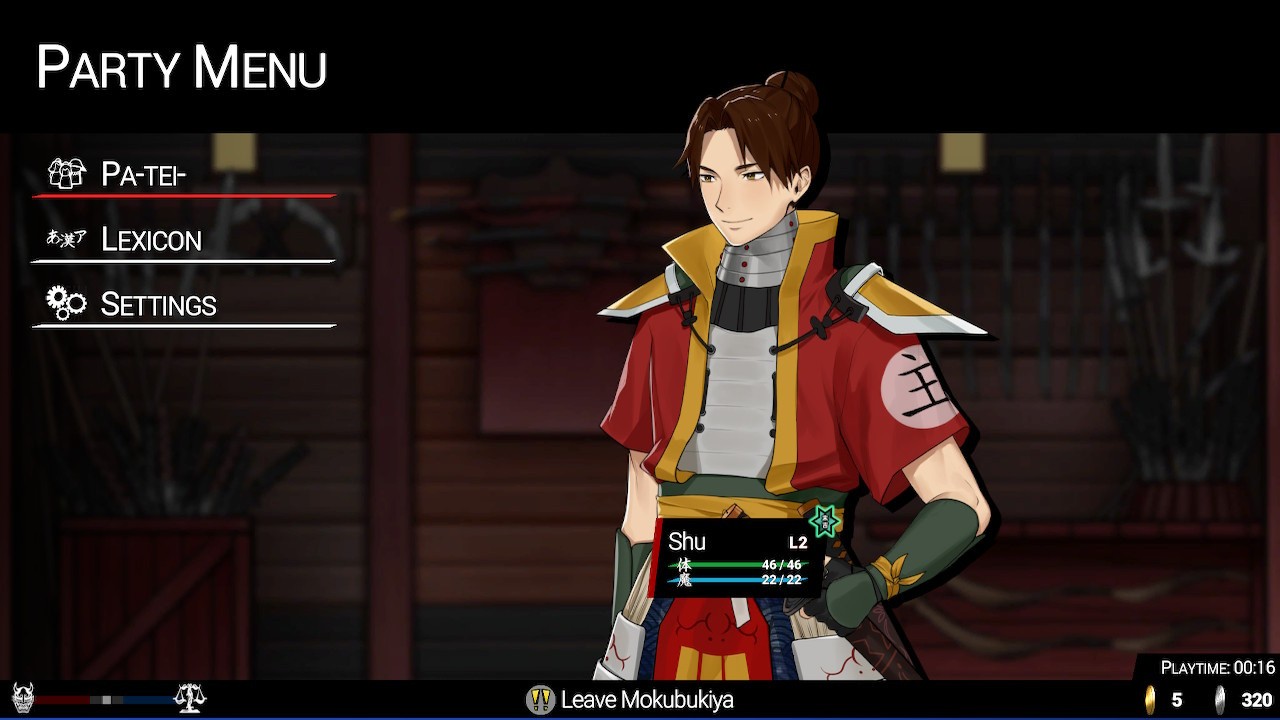
"The lack of voice acting so you can hear the words and symbols you are learning prevents that" - There are male and female pronunciations for all of the hiragana, katakana, grammar sentences, and more in the kanban (signboards) that you encounter in the labyrinth, and they can all be checked at any time in the Party Menu, so it might be more accurate to say that we do have several hundred lines of male and female vocal lines!
I ain't much for book learnin'. Some kinda foreign talk like that is how you get disappeared by ICE round here.
Thank you so much for the developer who came and nicely contributed to complete this review! I am convinced after hearing how much passion and soul you put into this niche but extremely unique game. I am getting it at my next paycheck!
Now having said the nice words first, if people allow me to throw a little jab haha. But thank you also for unintentionally exposing the reviewer lack of depth in their analysis : 😂. This was an elegant and very classy way of telling someone to be better at their job! Cheers!
@GoombaJMR Awesome, hope to play it on Xbox soon!
Yes, thank you to the dev for clearing things up!
I was left with a bunch of questions after reading this review, which I'm guessing was from Switch 1 gameplay? Y'all really should specify if you're reviewing on old hardware. And what is meant by unintuitive inputs? The review made me think inputs might be optimized for mouse and keyboard? And if so, I would've liked to hear whether there are Switch 2 mouse controls.
Anyway, touchscreen kanji writing practice (neither kanji nor touchscreen were mentioned in the review...) makes this an immediate must buy for me! Although I can't put down Hades 2 just yet 😄
So if I know the kana already, this wont teach me anything new?
@GoombaJMR
Thanks for the detailed and candid insigjt!
I'm juggling Silksong and Hades 2 right now but I tend to make time for RPGs in the winter months. Rest assured you are now top of my list 😄!
@jesse_dylan I'm only 5-6 hours in, but I can confirm that it also teaches grammar, vocabulary, and kanji.
Show Comments
Leave A Comment
Hold on there, you need to login to post a comment...