
“What's the mindspace of someone that is trying to rebuild from scratch, away from all her friends? What is that mindspace like? Is she really healthy or happy? What leads her to do that?”
Those are the questions Isadora Sophia, lead coder and writer on Neverway, an unsettling horror RPG with life sim elements, asked herself when creating the beginning of the game. For the life-sim genre, moving away is a chance for a new beginning, one always sprinkled with hope and bright opportunities. We never get to see the ‘why’ part of why someone moves away. It’s always the ‘what’s next’.
 Watch on YouTube
Subscribe to Nintendo Life on YouTube845k
Neverway is about starting anew, but this fresh start is tinged with all the anxieties of modern life, the sombre loneliness and uncertainties of change. Oh, and the spectre of a dead god.
I had the chance to play through an hour-long demo and chat with two of the lead developers on Neverway – Sophia, mentioned above, and Pedro Medeiros, the lead artist and designer, previously known for his incredible pixel art in Celeste.
Neverway is a lot deeper than initial inspirations might portray. In fact, Medeiros admits that the game didn’t start with a clear plan.
“We just started out like, ‘Oh, let's test this out, let's see what goes.’ And then things started changing and we kept adding stuff and then when we looked, we said, ‘Okay, my God, we have a huge thing right now.’”
“We started to iterate over different games,” Sophia recalls about working on the game in the early days, “We didn’t have an idea of what the game was going to look like. We were following our intuition, making something that seemed fun until we got to the shape that Neverway is.”
“We have a lot of difficulty even defining the game because it came from a lot of ‘What feels good in the game?’”
Pixel Palette
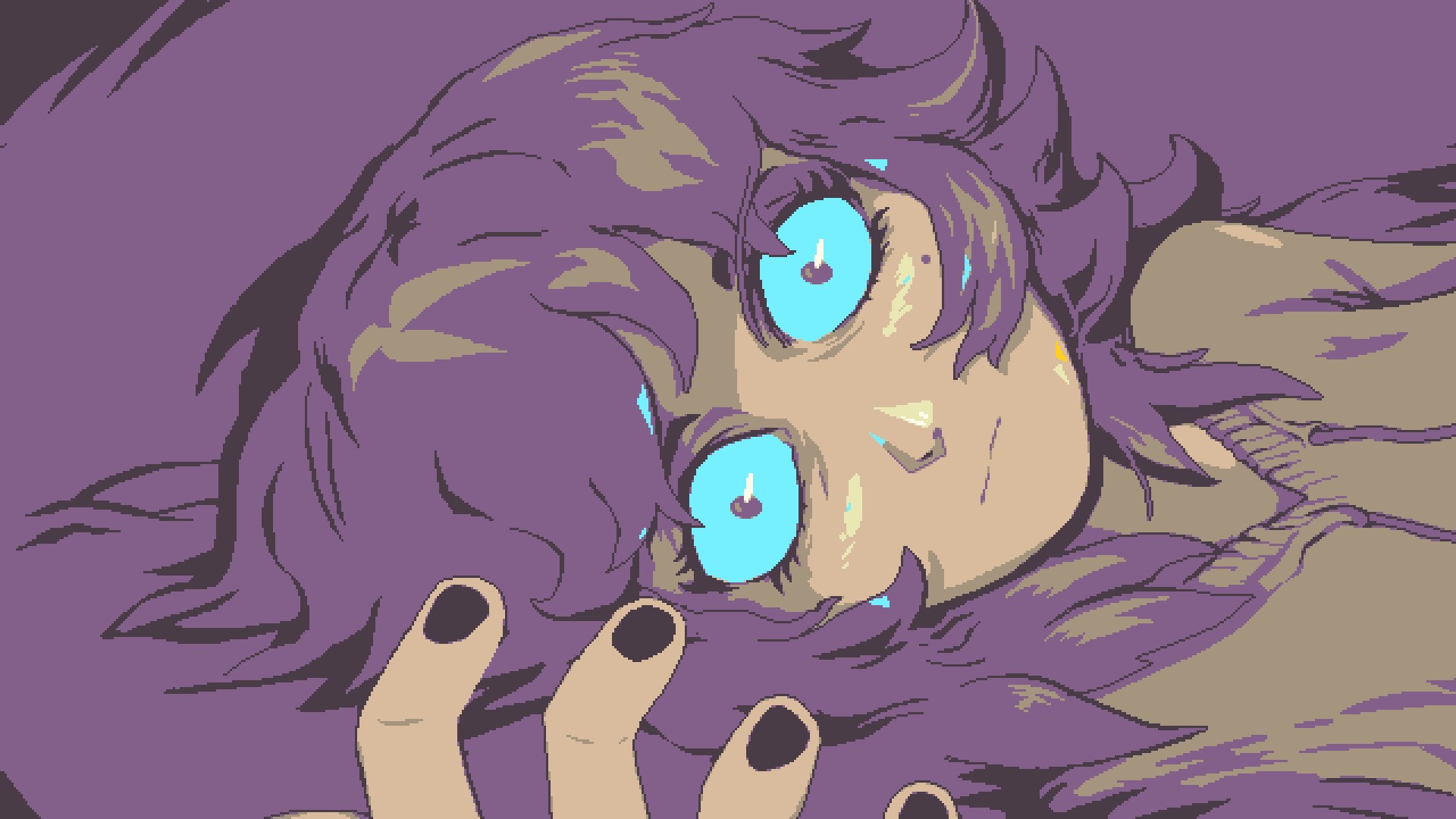
What will strike everyone about Neverway at first blush are the visuals. The pixel art is beautiful throughout, not just because of the lovely character portraits and models, or even some of the more-disturbing elements of the game, but the limited colour palette.
we kept adding stuff and then when we looked, we said, ‘Okay, my God, we have a huge thing right now.’”
Medeiros recalls that “it was the very, very first thing we [settled on],” and is often one of the first things he works on when he starts creating the visuals for a game. “Even Celeste, every game that I work on, I always start with a very limited colour palette. And then I keep adding colours to it. And then eventually, I'm like, you know what? Screw it. Let's do colours.”
But with Neverway, Medeiros wanted to do something different. The team embedded the blues, purples, greens, greys — all drained of pop and life — into Sophia’s engine (which she created from scratch). It creates deliberate restrictions for Medeiros because he can’t change the colours at all.
“I like limitations like that, and as soon as I have them, I immediately start pushing against them. Like old games did.”
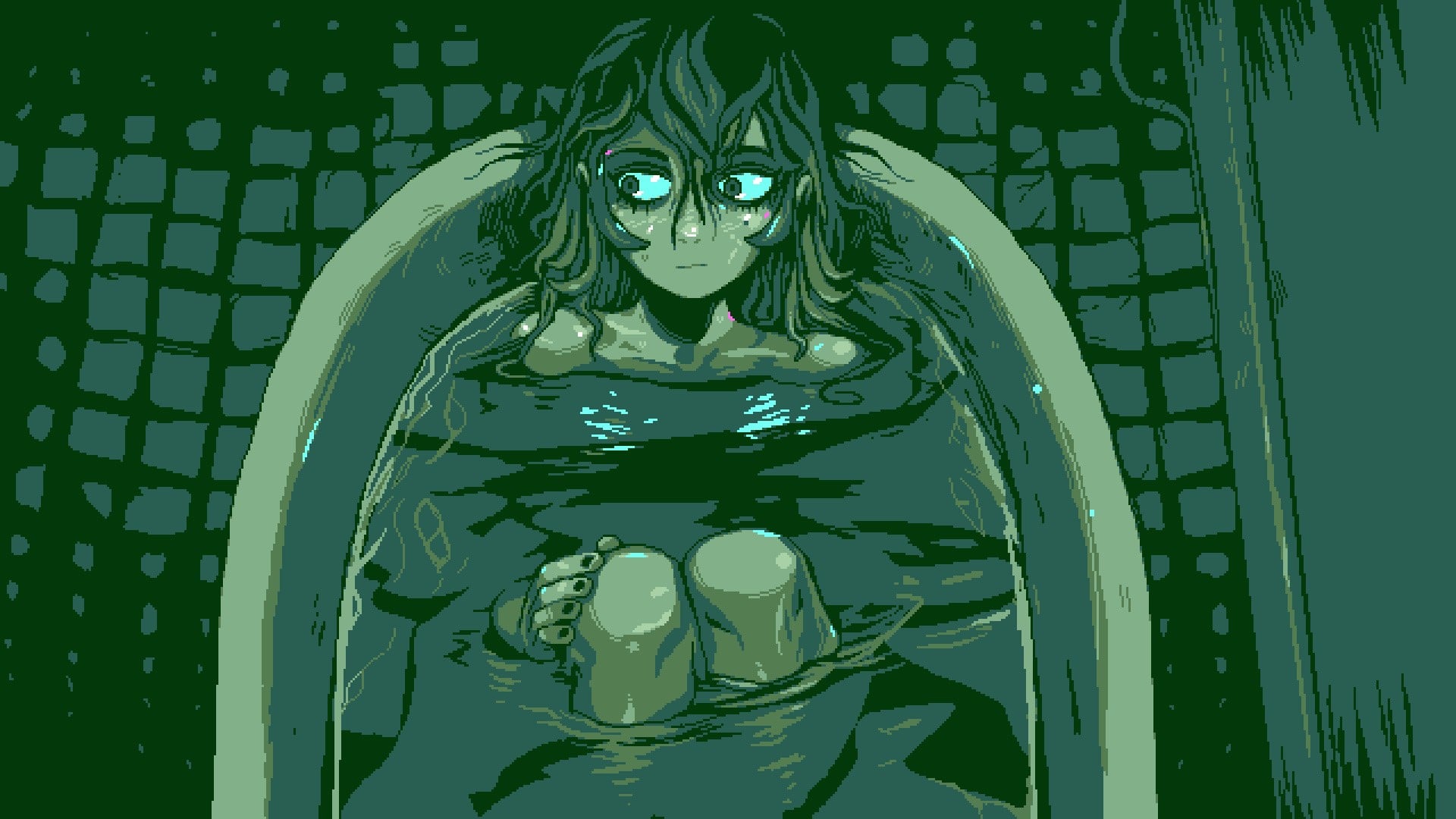
The muted greens and browns of Fiona’s apartment at the start of the game, the purples of the inside of the subway, and the almost-teal-like hue of the simulated forest, brought to mind the Game Boy. The limitations here just help set the game's mood perfectly.
Two-tone
And the mood is the thing that sticks with me the most about Neverway, and it goes beyond the visuals.
At the demo’s beginning, you order what food you want to eat – a choice between the incredibly nutritious instant noodles or packet soup. You answer big questions like 'Where do you see yourself in five years?' with drab, empty replies. Then, the screen cuts to Fiona, a woman who has quit her job and walks through life in a state of ennui. She’s soaking in the bath, almost waiting for the water to take her in.
Right from the opening, I felt an uncomfortable familiarity with Fiona. It’s not like other life sims where I’m playing an idealised version of myself or some make-believe character; Fiona is a person who’s going through it right now.
After I got out of the bath and ate the rather underwhelming meal (look, we’ve all eaten instant noodles after a crap day), Fiona wanted to go to bed. But my eyes couldn’t look away from the PC humming away in her bedroom. I examined it, and saw a handful of unread emails — from this morning to almost three weeks ago — taunting me. One by one, I clicked on them.
Job termination threats for not coming into work. Reminders that the company will throw her stuff out if she doesn’t pick it up. Notes from her partner about leaving her sweater at their house. It’s a breadcrumb trail of depressive signs and lack of acknowledgement from others, and it feels timely in 2026.
Sophia talked to me about how the team “asked ourselves” about common tropes, such as moving away and rebuilding your life. But the reality isn’t so simple, as the prologue demonstrates. “Even though it's a game, a lot of things are not real. Especially around character motivations, we always try to say, ‘Let's ground it’, let's really try to think about it.”
Food for Thought
Medeiros reiterates the importance of taking “a very absurd concept then [making] it very grounded,” and that’s something that comes up at the end of the prologue. After Fiona picks her things up from her former workplace, she takes the train back home. Interacting with a strange character on the train, however, she collapses and is thrown into some horrifying dream where I have to guide her tentatively through the carriages.
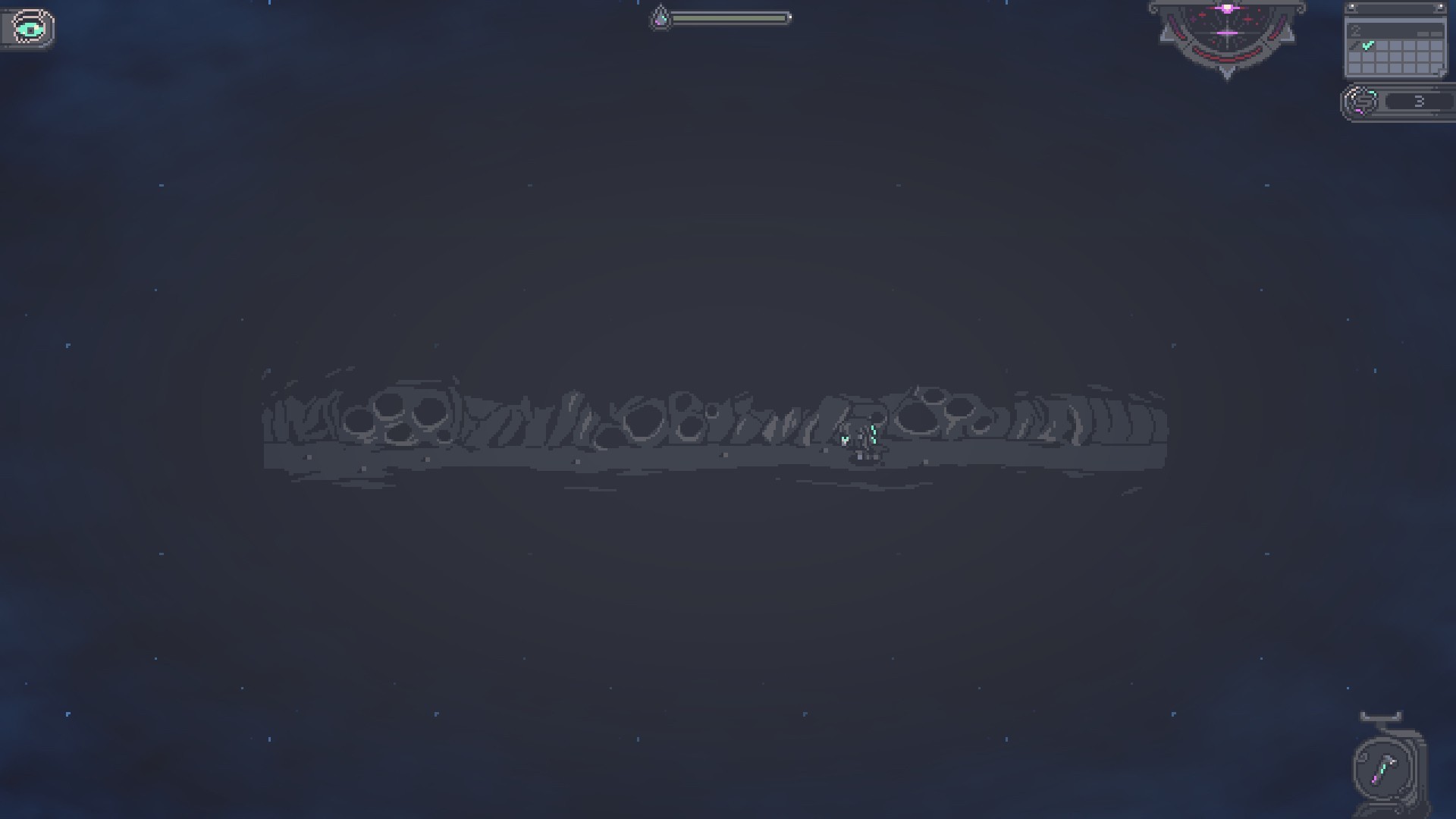
Eventually, after picking up a pipe to fight off strange enemies, I’m crawling through a strange tunnel that makes me feel claustrophobic. Everything is a shade of grey and there are holes where I swear I keep seeing things scuttle past. When I emerge on the other side, the person I tried to speak to earlier throws herself off a broken platform, and not long after, I wake up close to home.
we always try to say, ‘Let's ground it’, let's really try to think about it.
In front of Fiona is a billboard. “Buy happiness today – buy a farm on Montgomery Island!” Fiona’s portrait looks vacant as she reads, and I sit at my computer, contemplating the potential. ‘But what will moving away actually do?’ I ask myself.
That’s exactly the kind of question Sophia and Medeiros wanted me to ask. Neverway might embrace the rhythms of life sims and farm sims, but it’s asking bigger questions and throwing more gameplay at the wall than Stardew Valley or other games of their ilk.
“Let's show how this works. Let's move away, let's do it. And then we explore the consequences and see what happens. And hopefully we get to something good.”
The Legend of Fiona
The second part of the demo is where Neverway becomes a sort of pseudo Zelda-like. At some point in the story, Fiona is thrown into a simulated world where she’s guided by a mysterious character, Fang. Here, she learns how to fight and explore, and I start to see just how deep this game is.
Neverway’s combat is basic. You can hack and slash at enemies using your sword and you can dodge roll. Eventually, I unlocked a grappling hook which allowed me to platform across large gaps. The top-down perspective and the puzzles really do hark back to Link’s Awakening or the Oracle games, but with a life sim twist of harvesting and gathering materials.
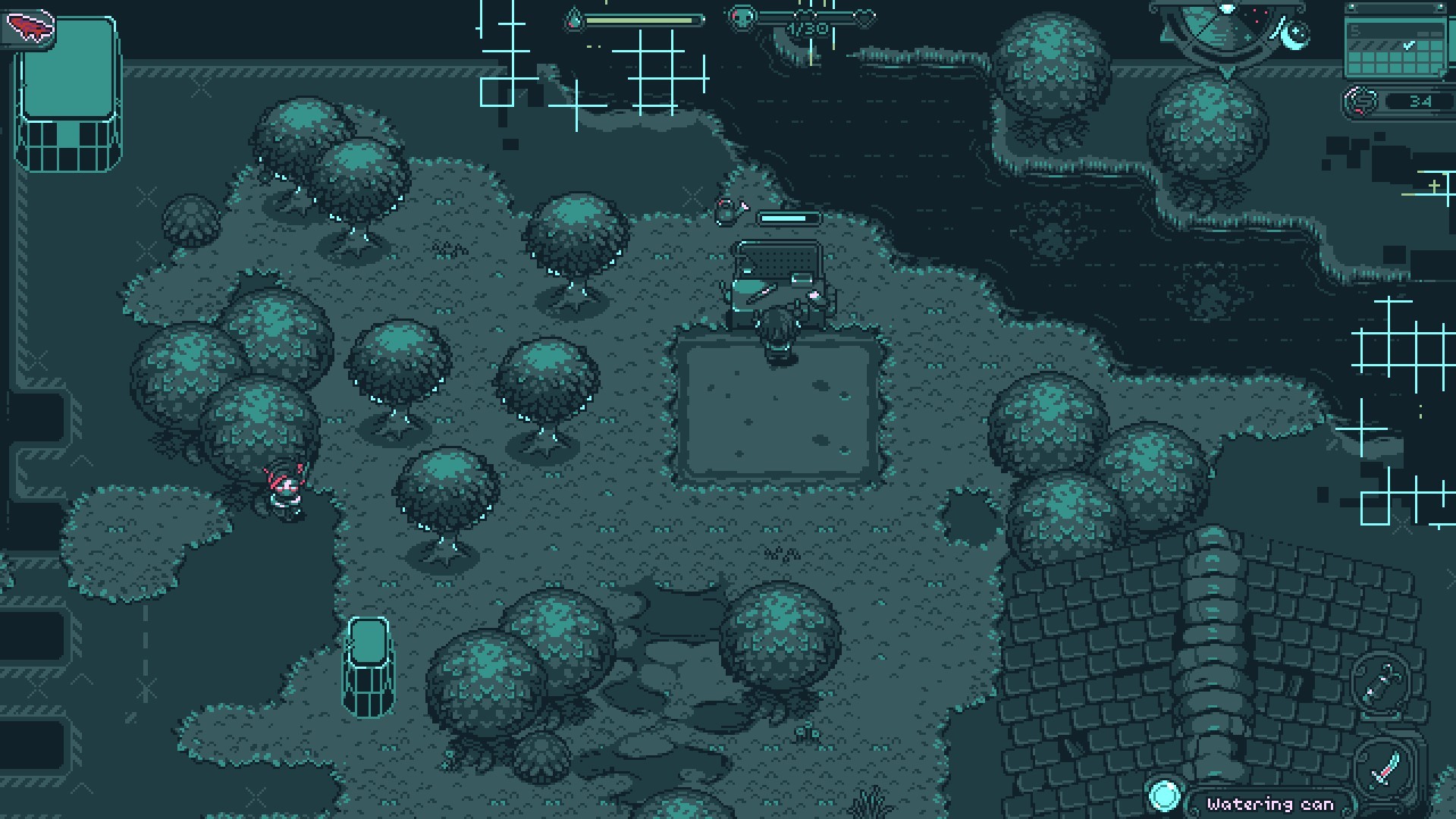
To escape, I need to build a bridge, but it’s not as simple as bringing logs to the broken planks. I actually need to chop down trees, gather the logs, and make the planks myself. Plus, level up my Industry stat, which helps with crafting.
I pick up a watering can which allows me to help a simulated friend out with a quest. Eventually, I found an axe so I can chop down trees. I even open up a shortcut or two, and die to some of the tougher foes, including a miniboss. It all adds just a little extra layer to the dungeon crawling.
There are more tools in the full game of course, but Sophia says they go beyond their basic means. “[Neverway is] a very system savvy game, so whatever tool we have, we try to go as deep as we can.” I tested that out myself in the demo, using the hookshot on an enemy to pull them into a bottomless pit.
Tools can be used both inside and outside the simulation, and they have varying effects. While the duo didn’t tease too many tools, they did mention a bomb (of course) and an umbrella — “because it’s fun” — and the latter will actually stop your stamina from going down faster in the rain.
Harvesting Dialogue
It’s a surprisingly dense game, and because of that, it makes sense that Neverway is more structured than other life sims.
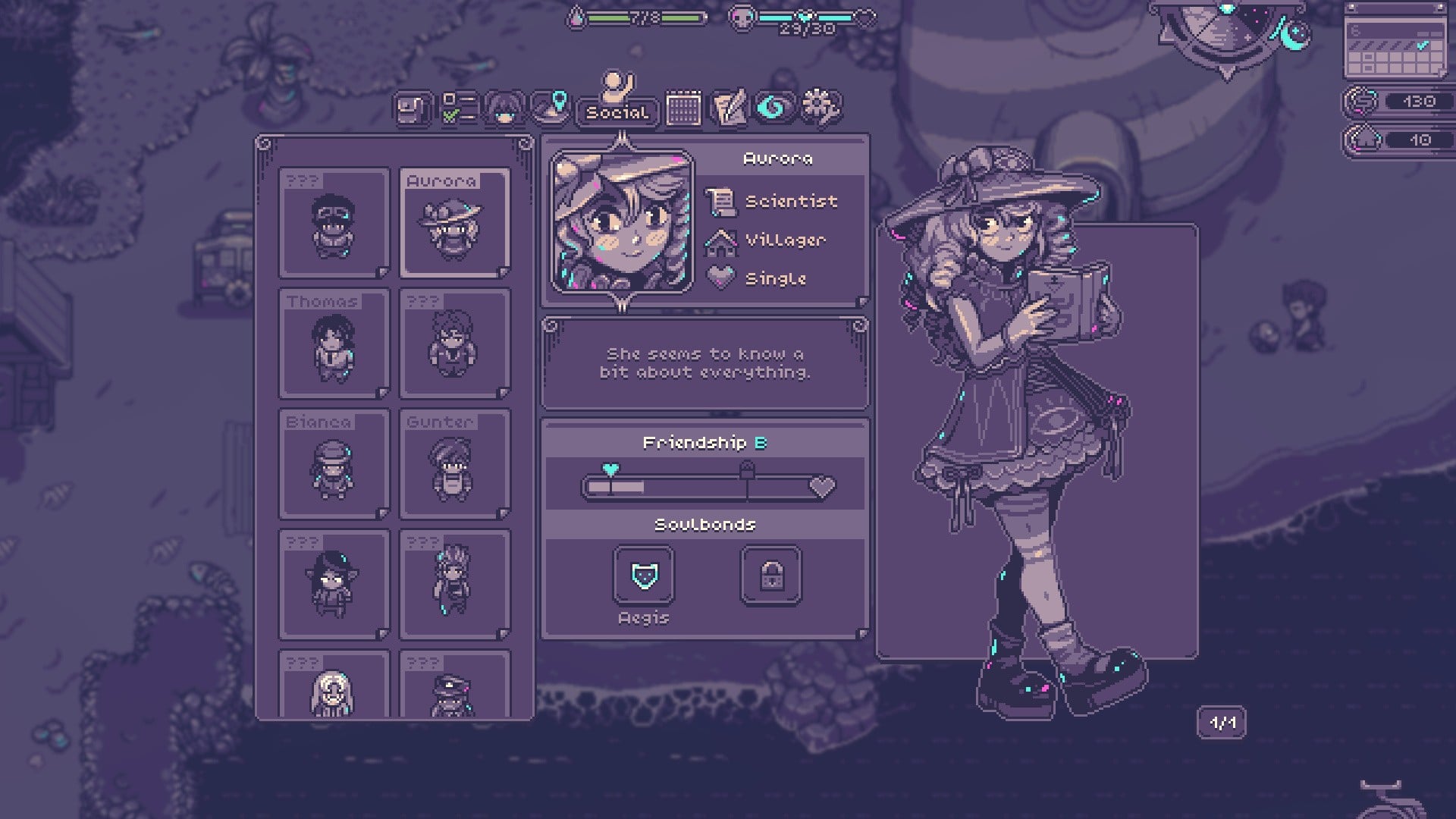
Your day is broken up into timeslots so you’re “not always anxious for time like in Harvest Moon or Stardew.” You can farm, you can explore the island, you can talk to the other residents, and you can even get into a romantic relationship with them. I confirmed there are no gender restrictions, but you can even go as far as not making friends with anyone, which Sophia says “will reflect on Fiona” in all assets of the game.
“I hate testing that.” Medeiros laughs, and I can’t see how anyone could put Fiona out there alone like that.
But that’s just one aspect of Neverway's complexity and variety: the dialogue. Sophia created a whole engine for the game so the dialogue system and relationship system would work, and everything affects everything. She cites Portal’s GLaDOS and Wheatley as inspirations for the dialogue trees and, despite this being her first writing job, her experience building the engine puts her in the best position to see “the cost” of each choice.
When Fiona arrives on Montgomery Island to start her new life, the gatekeeper to the town coldly asks if she has a job lined up. You can either be truthful and say you have nothing, or lie very unconvincingly. I lied, concerned he’d kick me out if I revealed I didn’t have a job. He rolled his eyes and let me in, but I got a little bonus.
Turns out, being truthful and lying affects Fiona’s skills, growth, and relationships. Sophia told me that characters will remember what you said at times and sometimes even confront you over your lies, which has me on tenterhooks. I don’t want to make Fiona’s life any more difficult than it has been already. And I’ve only seen a slice of how dialogue affects things.
The Life Game
If — when you sit down and play Neverway when it eventually releases later this year — you feel a little bit uncanny, then that’s deliberate.
Forgetting to change into your pyjamas, for example, will mean you’ll wake up the next morning with a pain (debuff). If you run out of stamina farming or exploring, you might be too tired to cook or get dressed. Even in combat, if you go into a fight with too little stamina, you might not be able to swing your sword as much.
“All those systems are there to simulate real life in a way that you can go back to it and simulate real life using the game rules, basically,” Medeiros tells me, and it’s The Sims that inspired the team to interconnect all of these systems.
“When I was playing The Sims when I was a kid, I remembered all those bars, the energy bar, happiness, social, and I started seeing those bars in my real life.” We laughed, but it’s true. We all have a ‘stamina bar’ in real life, and we all have different feelings for different people.
All those systems are there to simulate real life
One of the last things Medeiros said was “Game systems help you understand the real world,” and that’s stuck with me. They certainly can because they help you see why you might get tired in real life, or why you might not sleep well. Something like Neverway, which uses horror and unsettling imagery to convey depression and ennui, might help people relate to Fiona and understand their own feelings.
Taking the life-sim genre and stuffing it with a bit more structure, and a robust RPG system is one of the simplest ideas developers can have. But you can do so much more with that as a base, as Neverway appears to be demonstrating early on.
After all, it took just an hour split between sombre, relatable slice-of-life moments and solid Zelda-style action combat and puzzles to convince me that this game is now my most-anticipated of the year, and I can’t wait to play the full version in October this year
Many thanks to Isadora Sophia and Pedro Medeiros for speaking with me, and to Tinsley PR for setting up this meeting.
Neverway launches on Switch sometime in October 2026. Let us know if you're looking forward to the game in the comments.


Comments 7
I’m also really excited for Neverway. I don’t usually fall for these pixel life-sims or indie Zelda-likes, but that game has the parts for me. It looks well thought out and perfectly themed.
I hope the prologue comes to Switch too! I’m really looking forward to this one. With this and Mina the Hollower, we might be in a third wave of retro indie classics perhaps? Great interview too.
The pixel art here is nothing short of stunning.
It looks a bit like Omori. I am so interested.
A Link to the Past-like? Lol.
Talking about them, btw... When Mina the Hollower is supposed to be released, huh?
Never knew about this game till today, 100% on my radar now.
I recognised some stills from the trailer but this was very off my radar.
The restricted pallete helps to make this stand out along with the greater evel of darkness. Oh and music from Disasterpiece!? Ok now we're cooking.
Show Comments
Leave A Comment
Hold on there, you need to login to post a comment...