 review by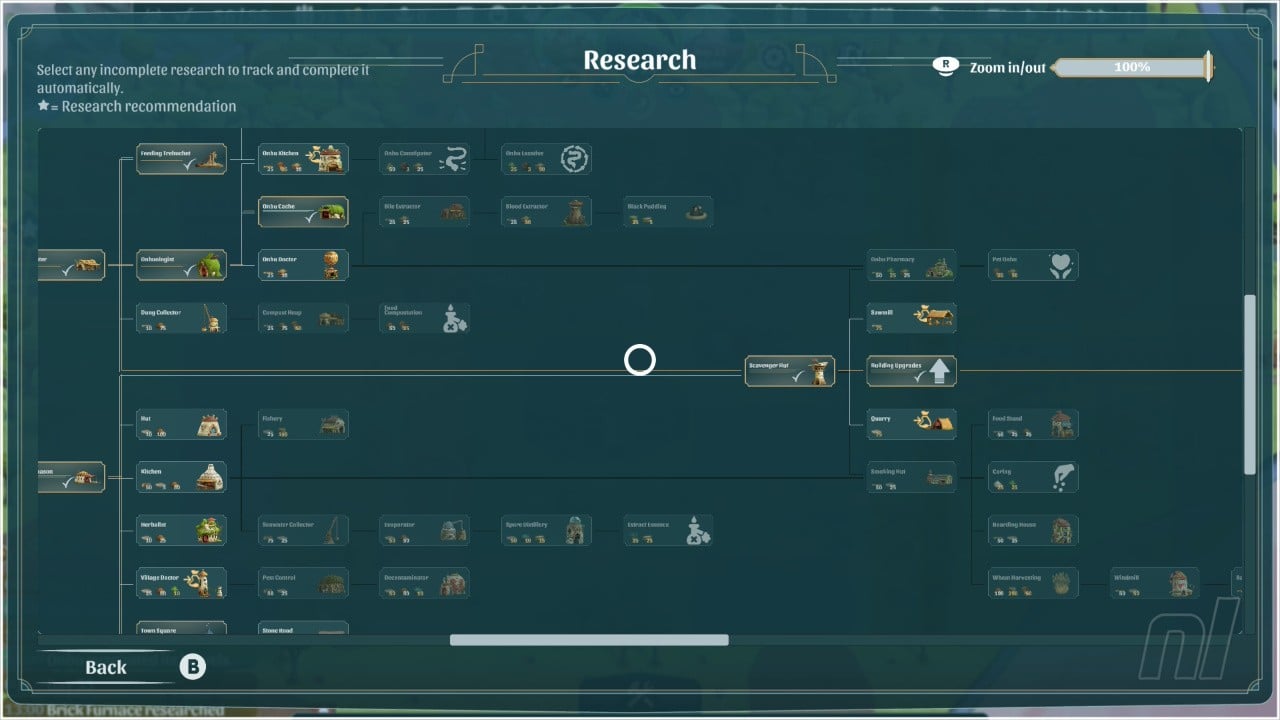
The world is an unpredictable place, full of strife and economic instability. So, there will always be room for another cosy city builder.
Swiss developer Stray Fawn Studio sticks to the genre formula but delivers a charmingly fresh thematic twist. The Wandering Village casts you as the steward of a tiny community, striving to survive on the back of a gigantic creature that quite literally wanders a post-apocalyptic wasteland.
Your chosen Onbu (which roughly translates to 'piggyback ride' in Japanese) ambles across the desolate landscape while villagers scramble over its vertebrae, carving out a life and unlocking the mystery of the world around them. Throughout the journey, your community makes contact with others scattered across the Onbu’s path.
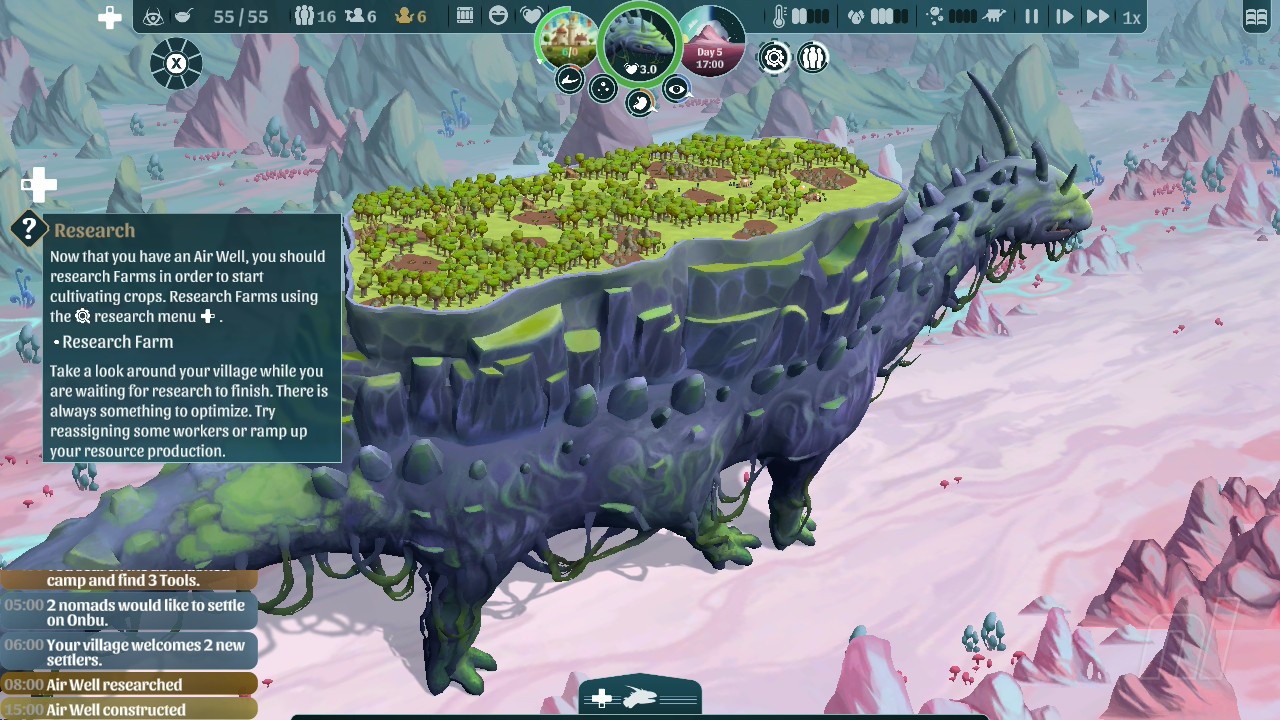
Balancing the needs of your villagers with the well-being of their colossal host is a fascinating experience. At any point, you can pull the camera back to watch the Onbu's thunderous footsteps, and zooming out even further reveals the wider biome it currently inhabits.
For the most part, this is a traditional management sim, complete with generic building types and a straightforward research tree. But nuances start to emerge once you tailor your playstyle to the living, breathing land mass beneath your people’s feet. The symbiotic relationship between the settlers and their walking province is where the game finds its unique rhythm.
Early on, Onbu meanders aimlessly, occasionally stopping to graze or curling up for a nap. As you progress, you’ll unlock tools that let you influence its behaviour and eventually guide its path.
You’ll need to feed Onbu, treat it when it gets sick, and steer it using a giant horn. As the game unfolds, your toolset expands. Unique synergy abilities range from the wholesome (yes, you can pet the big goof) to the unsettling (sacrificing your own villagers for the creature’s benefit). An even more sinister layer of control emerges, with abilities that discipline the creature and siphon its bodily fluids for your own gain. Exploit this strange animal that lets you have festivals on its back, or make an effort to nurture it? That choice is left to you.
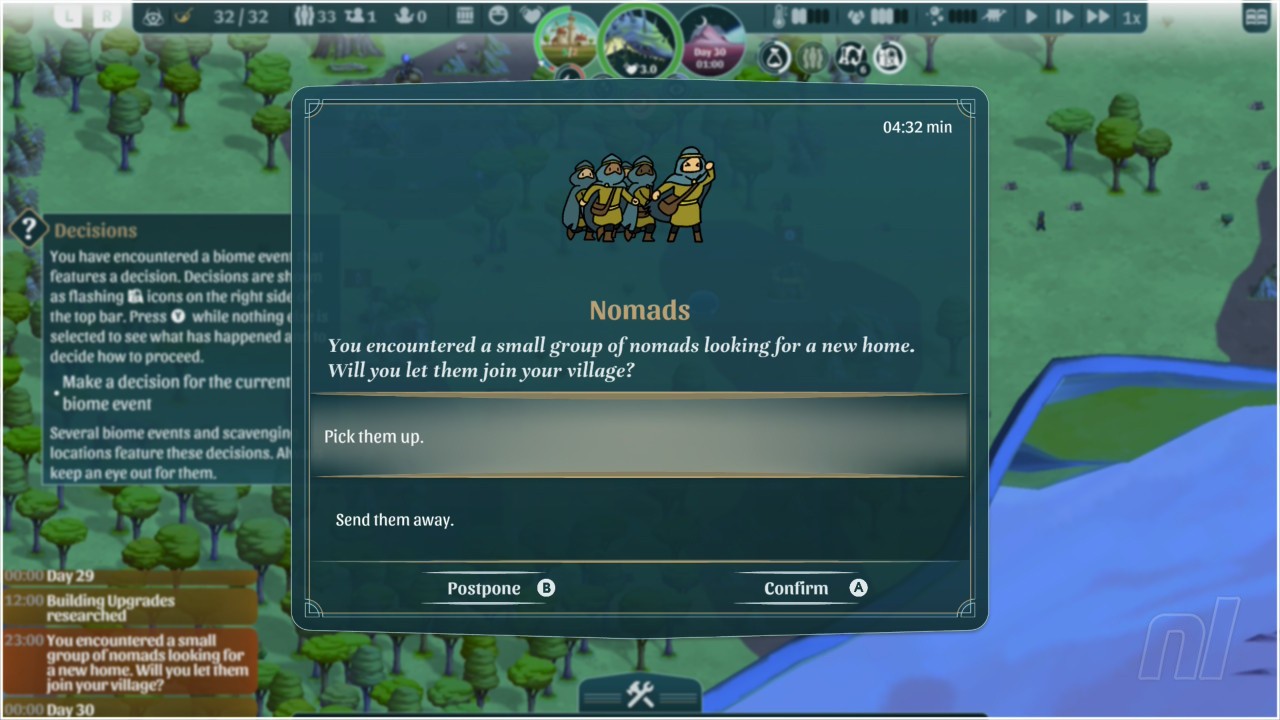
The pace of the main campaign is steady, with a reduced sense of danger that makes for a mostly relaxing experience. The challenge lies in managing staff across your growing infrastructure. Each building requires a specific number of workers, and while nomads will occasionally join your settlement, increasing the population, your workforce is often limited. You’ll find yourself frequently reassigning roles to adapt to whatever issue crops up next.
Occasionally, Onbu will pass through hazardous areas that can make it sick. It also needs to be fed regularly, so keeping an eye on the map for nearby grazing spots is essential for its health. You can even build a catapult to launch food into its maw.
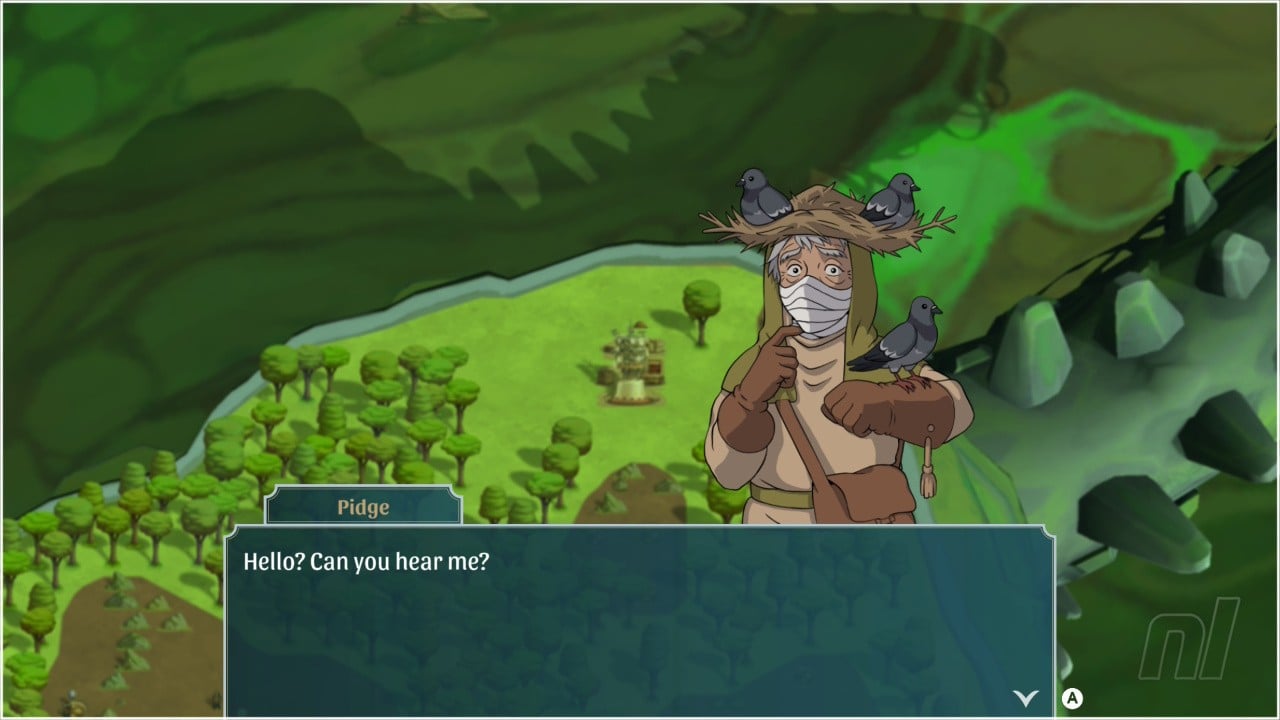
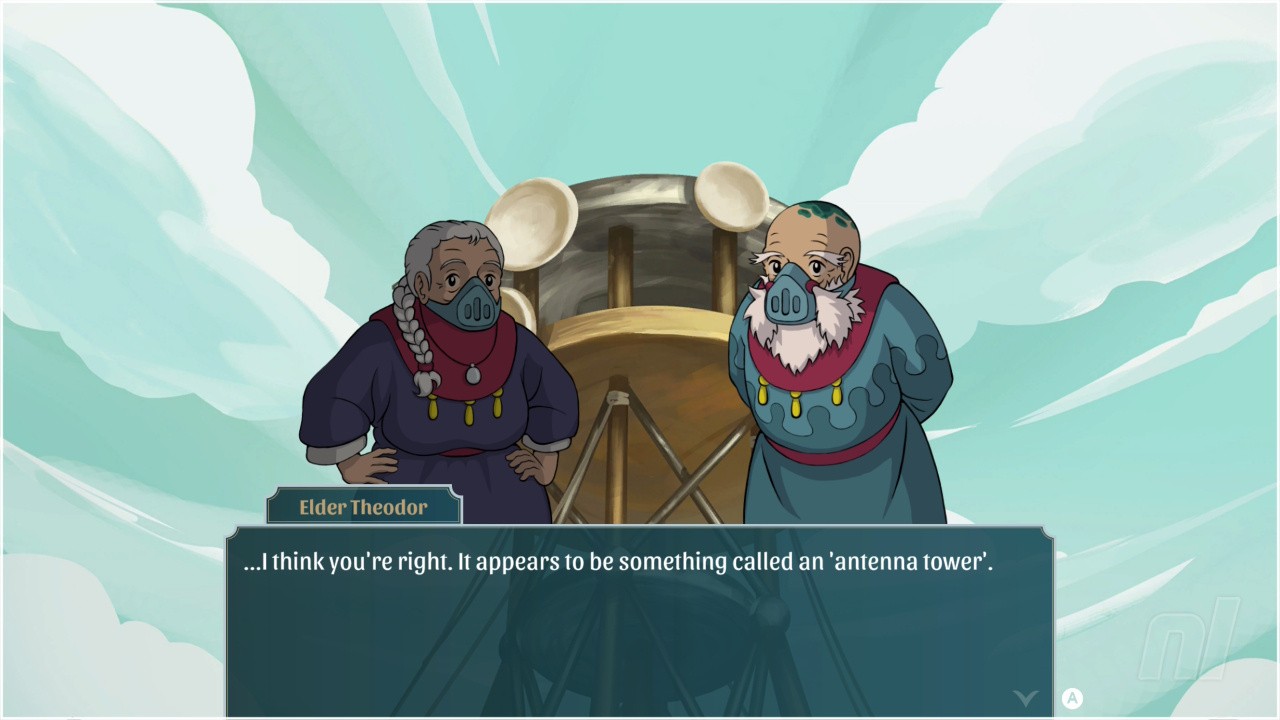
The story is a bit thin, revolving around the construction of a radio tower that receives transmissions from the world beyond. From there, your village elders try to uncover what led to the collapse of civilisation, while building relationships with other settlements. Aside from a couple of beautiful, Ghibli-esque animated sequences, most of the dialogue unfolds through static text boxes.
The size of Onbu’s back makes the build area limited and manageable. Still, things can get hectic. In the late game, you’ll have an army of villagers zipping around at 4x speed, creating a lively little metropolis. The Switch handles things surprisingly well, although zooming in while fast-forwarding occasionally caused a slight judder on the older hardware. Everything is pure controller input, with no touchscreen functionality. Performance on Switch 2 appeared flawless, with the larger screen complementing the format nicely while undocked.
While the main story is diverting enough, with multiple layers of difficulty to tweak your game, there are also a couple of other modes designed to encourage that just-one-more-go mentality.
Challenge Mode offers a collection of modifiers that adjust the experience, making it as punishing or forgiving as you’d like. There's also a Sandbox Mode, which allows you to disable some of the Onbu and villager debuffs, giving you the freedom to coast through an endless campaign. This level of accessibility is greatly appreciated and often missing from other titles of this ilk.
Managing an ever-growing community on what is essentially a Tamagotchi the size of an aircraft carrier is an inspired experience that engages throughout its campaign and into the freeform modes. It delivers the familiar elements of the sim management genre, but with an added layer of responsibility: cohabiting with, neglecting, or even ruling over your adopted home.
Conclusion
The Wandering Village is a worthy addition to the city-builder genre. It's a mostly undemanding hybrid that mixes sim management with a touch of pet care. A slight experience, with an uninspired and slow-moving story, but it still manages to charm in its own quiet way.


Comments 15
Thank you for the review! I'm interested in giving this game a try even though I don't play the genre due to its aesthetics.
I also appreciate the information regarding performance on Switch 1 and Switch 2.
Thanks for the review, will eventually give this a try for sure then - glad to hear it overall runs well also on Switch 1 apart from the case mentioned for those playing it there (not me included as I'll play it on Switch 2, but still)!
Another one that I will be skipping, but I hope that anyone who plays it enjoys it!
I've been looking for this one, but if the story is shallow, I'll keep looking
I expected a higher score at the end of the review, definitely reads more positive than 7/10. I don't usually play city builders but I've had my eye on this one for a while, looks really interesting.
@Princess_Lilly Same here, I was excited reading the first section promising a complex mystery of how the world fell apart, but by the end the reviewer seemed to think less of its story.
I'll probably investigate a bit more but will most likely pass on it myself
OMG! Something totally different from game devs. We should all praise them for being brave enough to attempt something not a metroidvania, rouge lite/like, fps, or rpg. I'll definitely try this at some point.
I'll keep an eye on this one, then.
Are city builders generally associated with story?
that con: Not much building variety
does not make sense at all there are more than 50 "different" buildings in the game, and both raw resources and refined resource, or this is Your first management or You just want to add someting against it to lower the score
It actually sounds quite clever. I like the fusion of genres and it has worked. I may give this a try further down the line. Cheers for the review.
No touch screen, does that mean no mouse mode on Switch 2 either? Does the controller feel natural or does it feel “adapted” to controller? I see menus and maps in the screen shots and touch/ mouse would be my ideal way to interact with that kind of interface.
@JevVoi no touch screen i'm afraid. The controls were very comfortable - sticks for camera, d-pad and shoulder buttons for menu nav.
@gcunit Nope, and as a PC gamer, I play a number of them. Story is always nice, of course, but it does seem a little odd to fault it too much on that front.
And not a Discworld reference in sight. Quite odd.
Just in time. I've been looking for a Switch city-builder that would entice me enough to purchase for quite some time now. Looks like this is it.
Show Comments
Leave A Comment
Hold on there, you need to login to post a comment...