
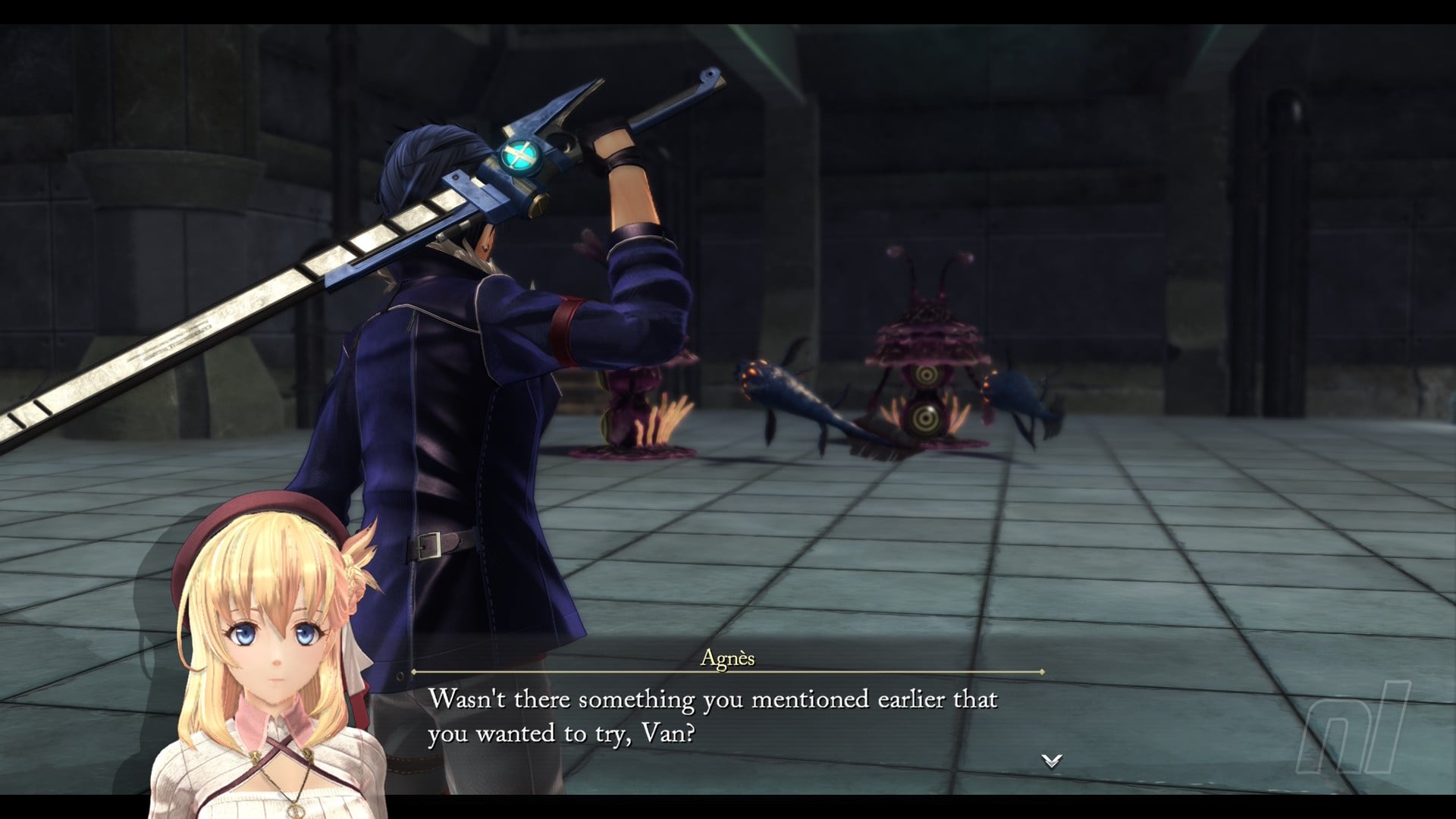
The long-running Trails series needs little introduction, as Falcom has been chipping away at this JRPG narrative for the better part of two decades across a variety of arcs and perspectives spread over more than a dozen interconnected games. While newcomers have traditionally been discouraged by the mountain of homework necessary to ‘get it’, Trails Through Daybreak offered a nice on-ramp for the series a couple of years ago, kicking off a fresh arc. After a somewhat disappointing sequel, many hoped Falcom would right the ship with Trails Beyond the Horizon and start offering some payoffs for the many plot threads it’s set up. Luckily, Falcom has started to get things moving, and this entry overall feels like an improvement over Trails Through Daybreak II, though it isn’t without its flaws.
Centred on the initiation of humanity’s first steps into space, this is narratively a continuation of the ‘Calvard arc’ that started with the first Daybreak game, but there’s also a good reason why this wasn’t simply called Trails Through Daybreak 3. While Van is (debatably) the primary character of this release, there are also two parallel story routes starring Kevin and Rean, two protagonists from previously concluded arcs who still have a role to play in the all-encompassing storyline now approaching a grand conclusion that the technological developments of Zemurian space exploration are bringing into focus.
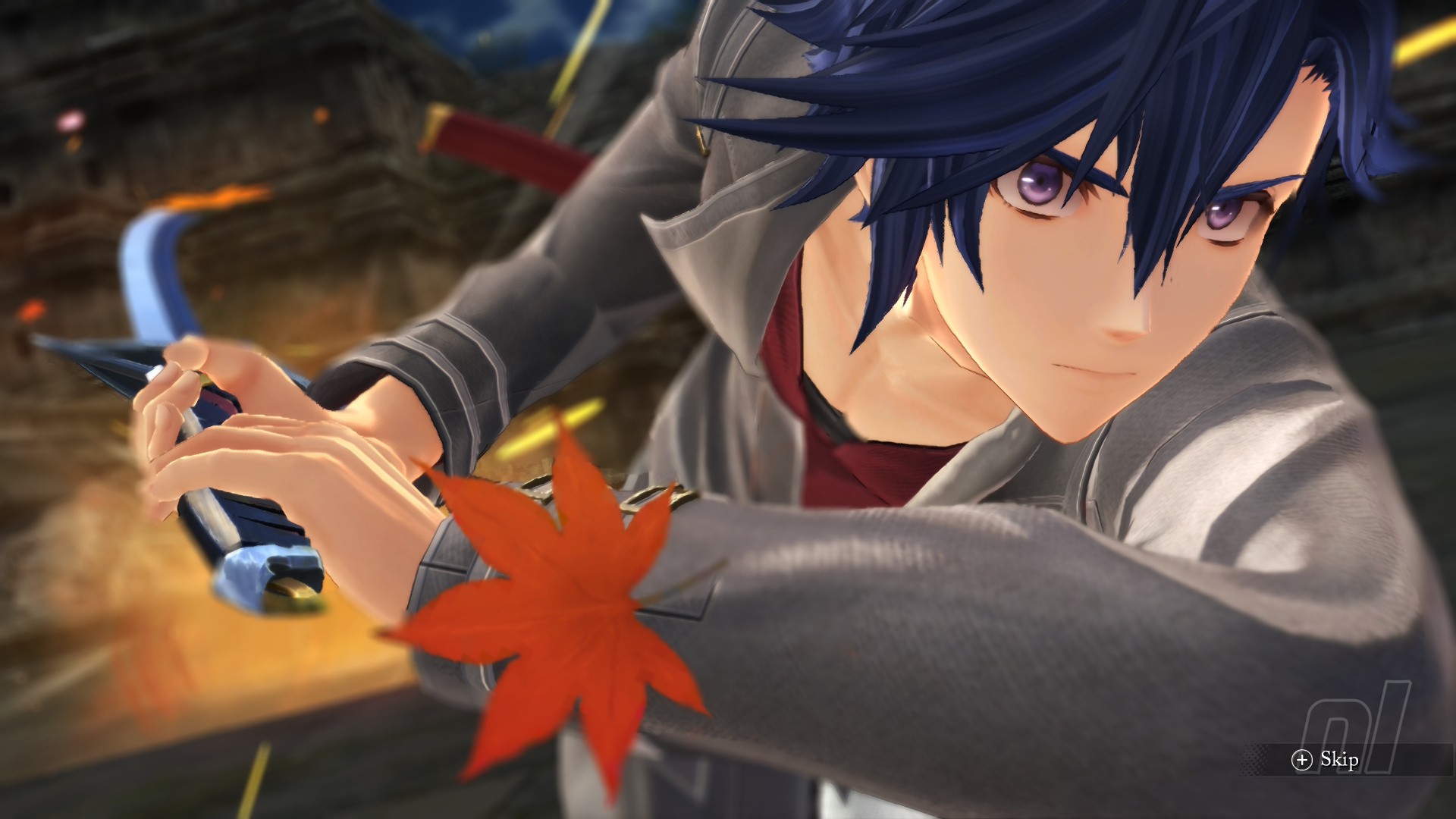
This three-route narrative approach proves to be both a blessing and a curse. On the more positive side, it’s interesting checking in with these older characters to see how they've grown and changed ‘offscreen’ while the focus of the series shifted elsewhere. Plus, bringing some legacy characters into the fold demonstrates how Falcom has begun to unite the previously distinct casts in the run-up to a finale years in the making.
On the other hand, these additional cast members dilute the Calvard characters' story a bit and contribute to turning what is ostensibly a ‘payoff game’ into yet more table-setting for a later resolution. Given the mixed reception to Daybreak II's relatively inconsequential storyline, it feels like a rug-pull in some ways that we have to keep waiting for things to really kick into gear.
Not all players will consider this more indulgent pace a bad thing, but Trails Beyond the Horizon sometimes feels a little too comfortable in keeping the narrative in neutral, coasting towards a finale and making lots of promises that will hopefully be delivered on in the future.
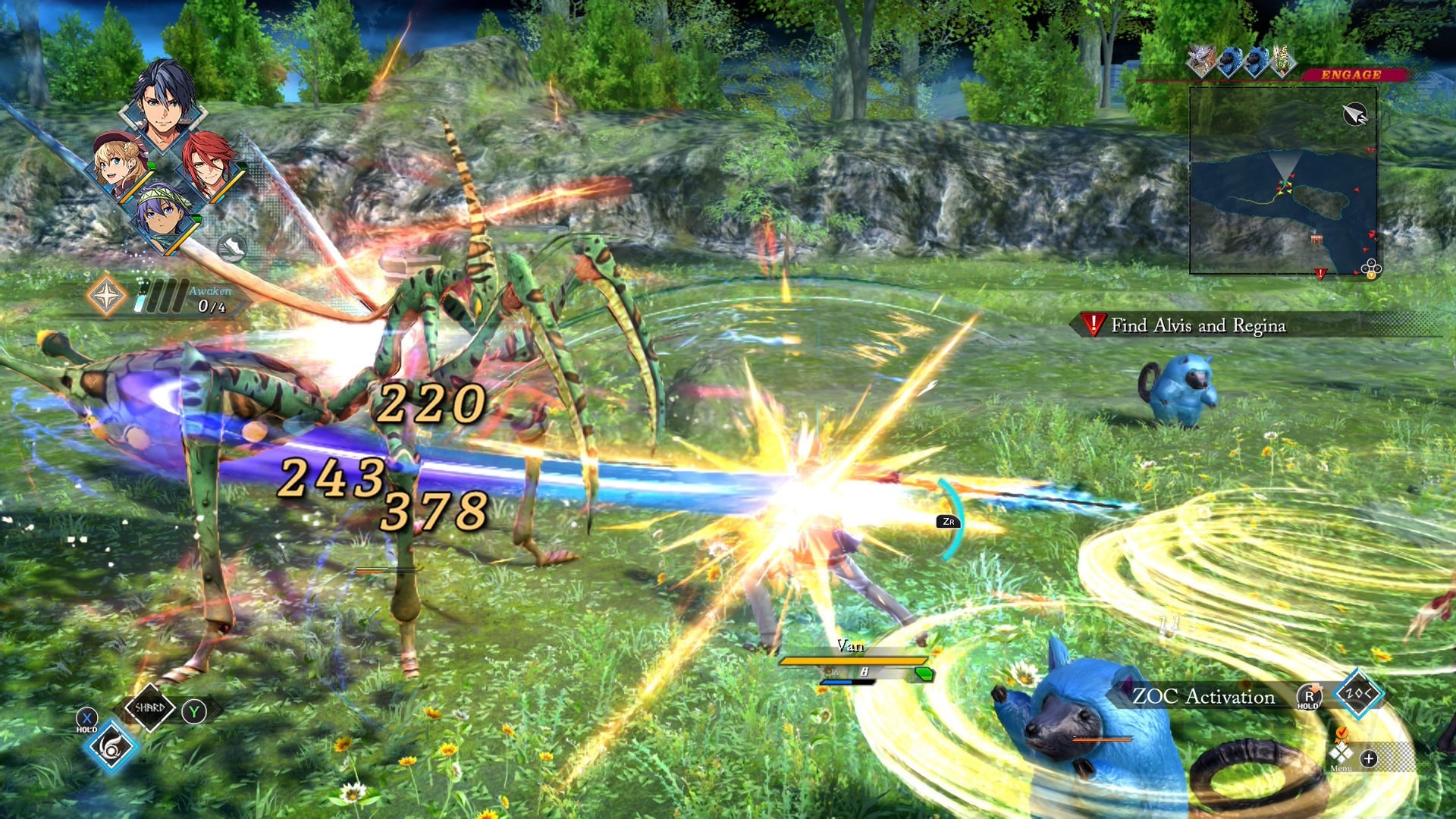
Combat continues the hybrid battle system implemented in the last two Daybreak games, mixing simple action combat with a much more in-depth turn-based system. When you first encounter enemies in the field, batting at them with your weapon to chip their health down will also build a gauge for a more powerful stun attack which can combo nicely into the turn-based mode.
This action combat acts as a nice way to clean up trash mobs or to soften up foes before a proper battle starts, but it can fall apart the longer you engage in it and realise how surface-level it tends to be. Falcom has done a good job of making it more interesting over time with the addition of things like reaction attacks and quick arts, but the mechanics here are still relatively sparse, particularly when compared to the significantly more complex turn-based mode.
Once you transition into turn-based combat, things play out more akin to a typical Trails game. When it’s a party member’s turn, you have a variety of attacks and active skills at their disposal, most of which are affected by character positioning. Not only can you freely move characters around within a fixed area before taking an action, but casting arts or crafts usually requires you to ‘aim’ an attack or area of effect to just the right spot to maximise passive buffs and how many enemies get caught in the blast.
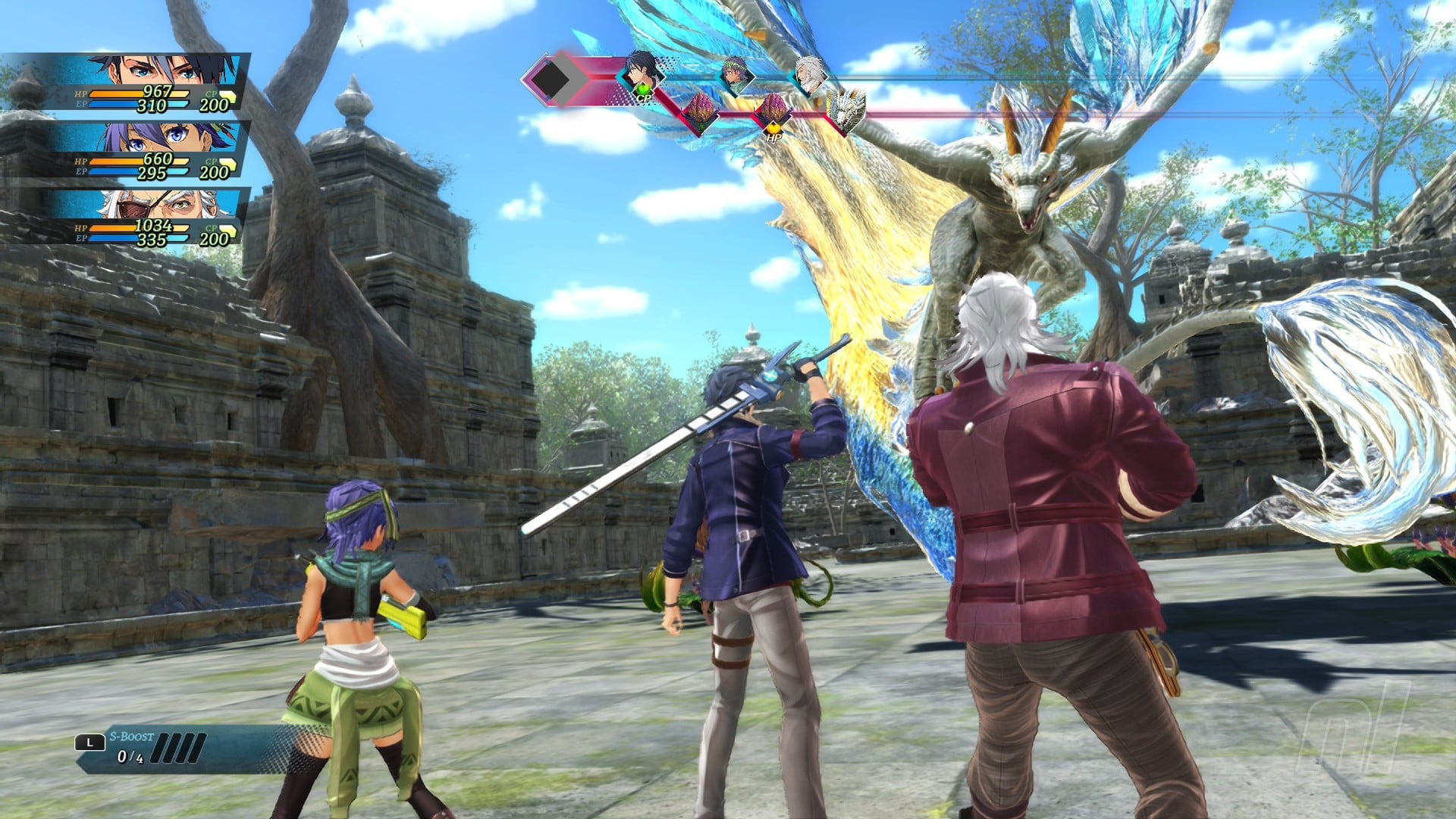
Amid all this, it’s important to also be cognisant of how your potential actions affect the ongoing battle timeline. Not only are there stat bonuses that you can use (or steal) if you’re careful about how you organise party actions in the turn order, but there are ways you can delay enemy actions to create more openings for your party. Though there’s a learning curve to its management, the timeline adds a fun and dynamic layer to combat proceedings that keeps you engaged not just in what you’re doing, but also when you’re doing it.
This hybrid battle system wasn’t just copy-and-pasted into this entry, however; Falcom has added even more mechanics in the form of ZOC, Awakening, and Shard Commands.
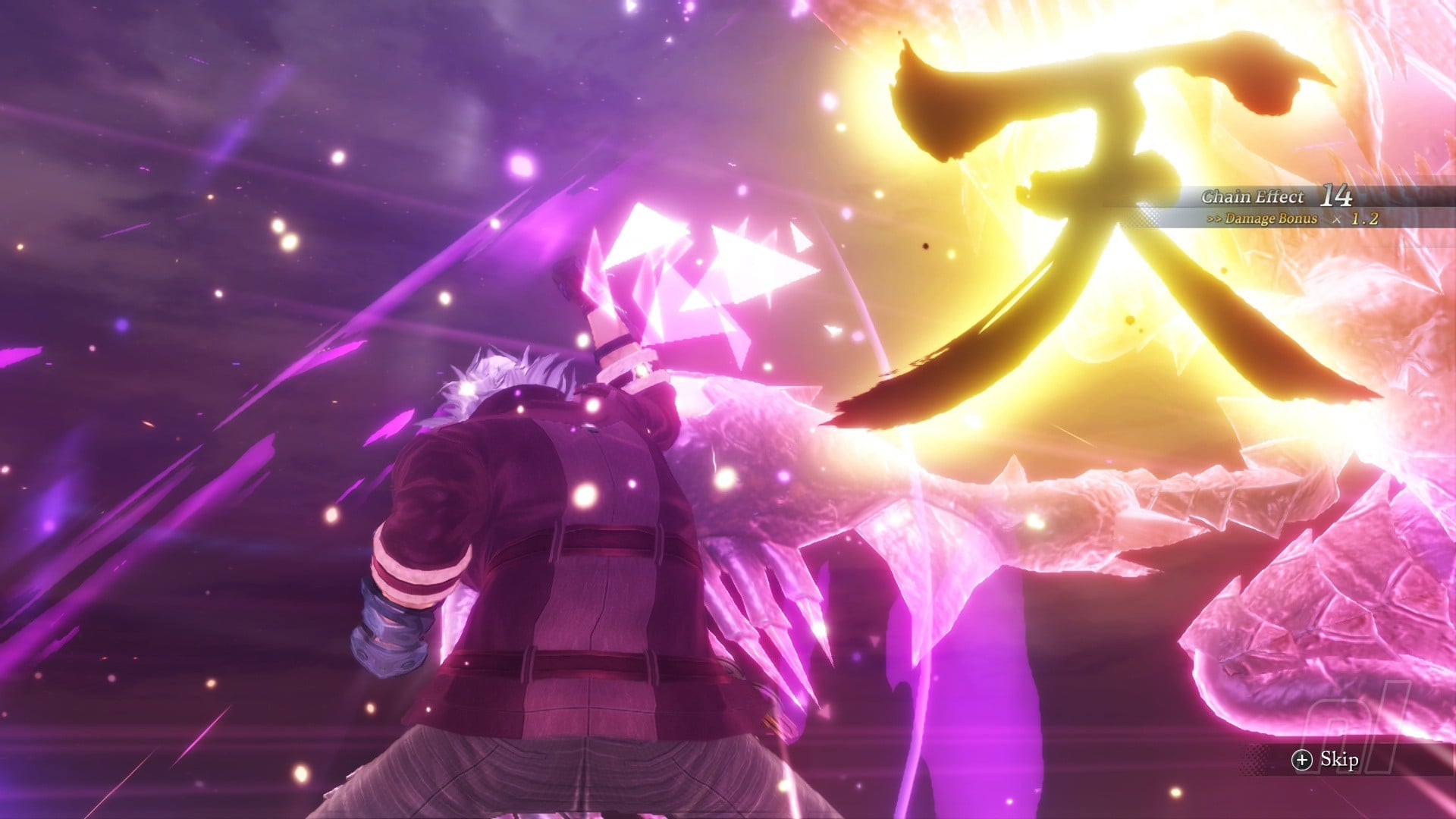
ZOC acts as a way of slowing down time, which either lets you get in a lot more hits on the field or gives you an immediate extra turn in turn-based combat, while Awakening acts as a ‘beast mode’ that can supercharge your damage. The most interesting of these are Shard Commands, which ultimately allow you to burn some boost points in turn-based fights to activate party-wide buffs that can massively turn the tide of battle if you time them properly.
The new mechanics don’t feel like revolutionary new ideas and ultimately result in a lot prettier effects and bigger numbers, but it’s nice to see Falcom continuing to iterate on the new combat. Yet when considering all the different features together, it can sometimes feel like there’s a bit too much going on, particularly for the majority of the average encounters you’ll find yourself in. All the same, there’s lots to sink your teeth into with the gameplay here, and the system really shows its potential in the occasional tough boss fight that demands you pull out all the stops.
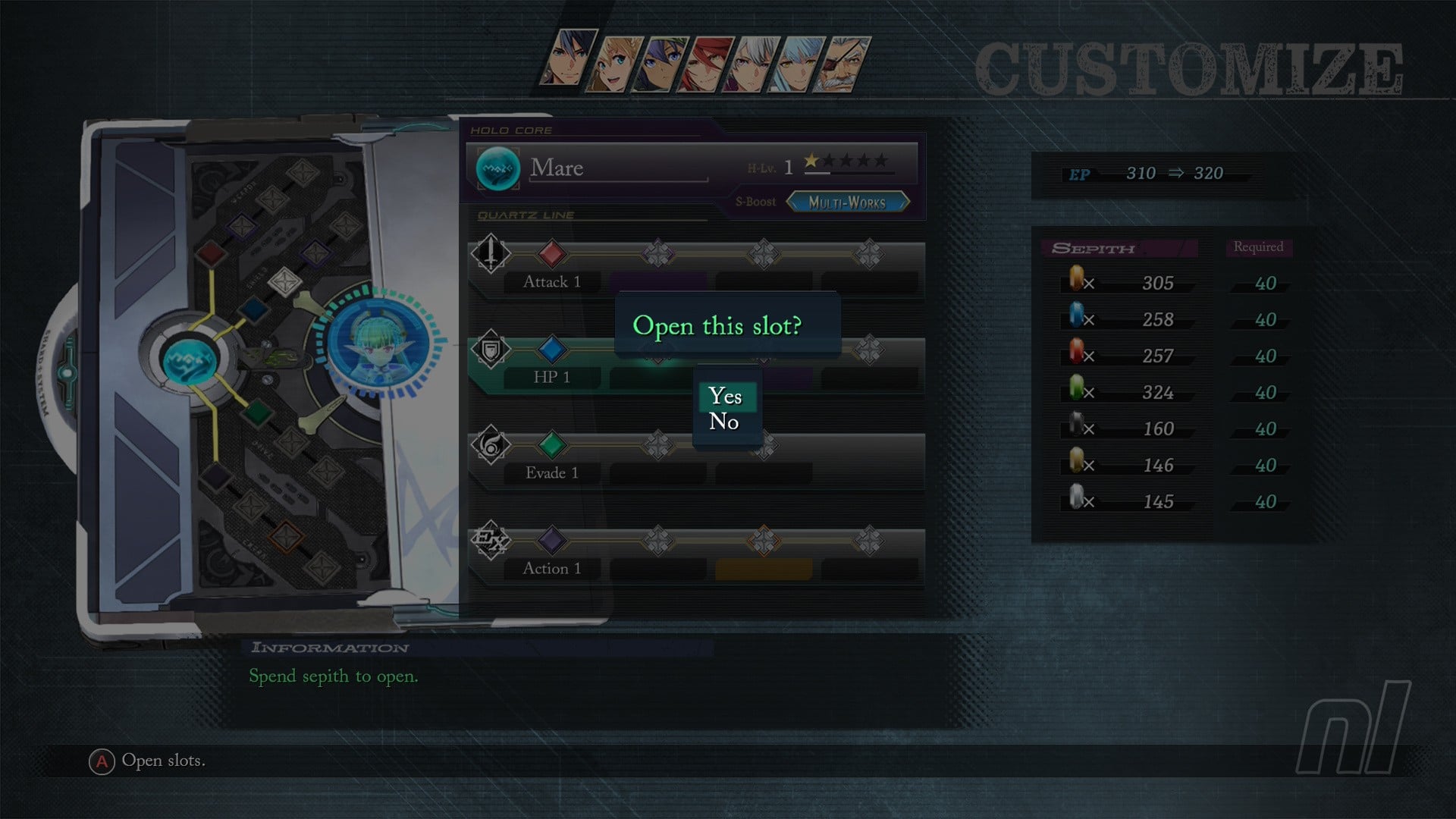
When it comes to building your team, Trails Beyond the Horizon also borrows the Orbment system from previous games, wherein each character can be equipped with various elemental crystals that grant them new arts, passives, and stat bonuses depending on how you lay things out.
Though there’s no explicit class system here, how you choose to configure a character’s Orbment can significantly affect the sort of role they occupy in your party, and you’re encouraged to really get into the weeds with experimenting with party compositions as the narrative unfolds. It can feel a bit confusing at first, but fooling around with it reveals lots of depth for tailoring your party, and I think it manages to strike an elegant solution to offering deep party customisation without needlessly bogging you down in menus and comparisons.
While the expected mountain of side quests is still present and accounted for, the Marchen Garten makes a return as a significant portion of the optional content. Here, it’s been dubbed the ‘Grim Garten’ and gotten a creepy makeover to reflect a story event that led to its change. The structure largely follows its previous appearance, wherein you put together a party and delve into procedurally generated dungeons in pursuit of fresh rewards and unique story content.
Not only does this provide a convenient way to put together characters who otherwise have little to no interaction with each other in the main story, but it also has an interesting feature where you collect and view 'memories' that fill in some really critical pieces of plot information.
Grim Garten doesn’t necessarily offer much that you can’t find when playing through the rest of the game, but it's a fun side mode that strips away a lot of fat and just lets you get to the meat of the thrilling combat. Plus, it can be a nice distraction from the occasionally glacial pace of the main narrative, where you can kill some time and gather resources to power up your team in the main story quest.
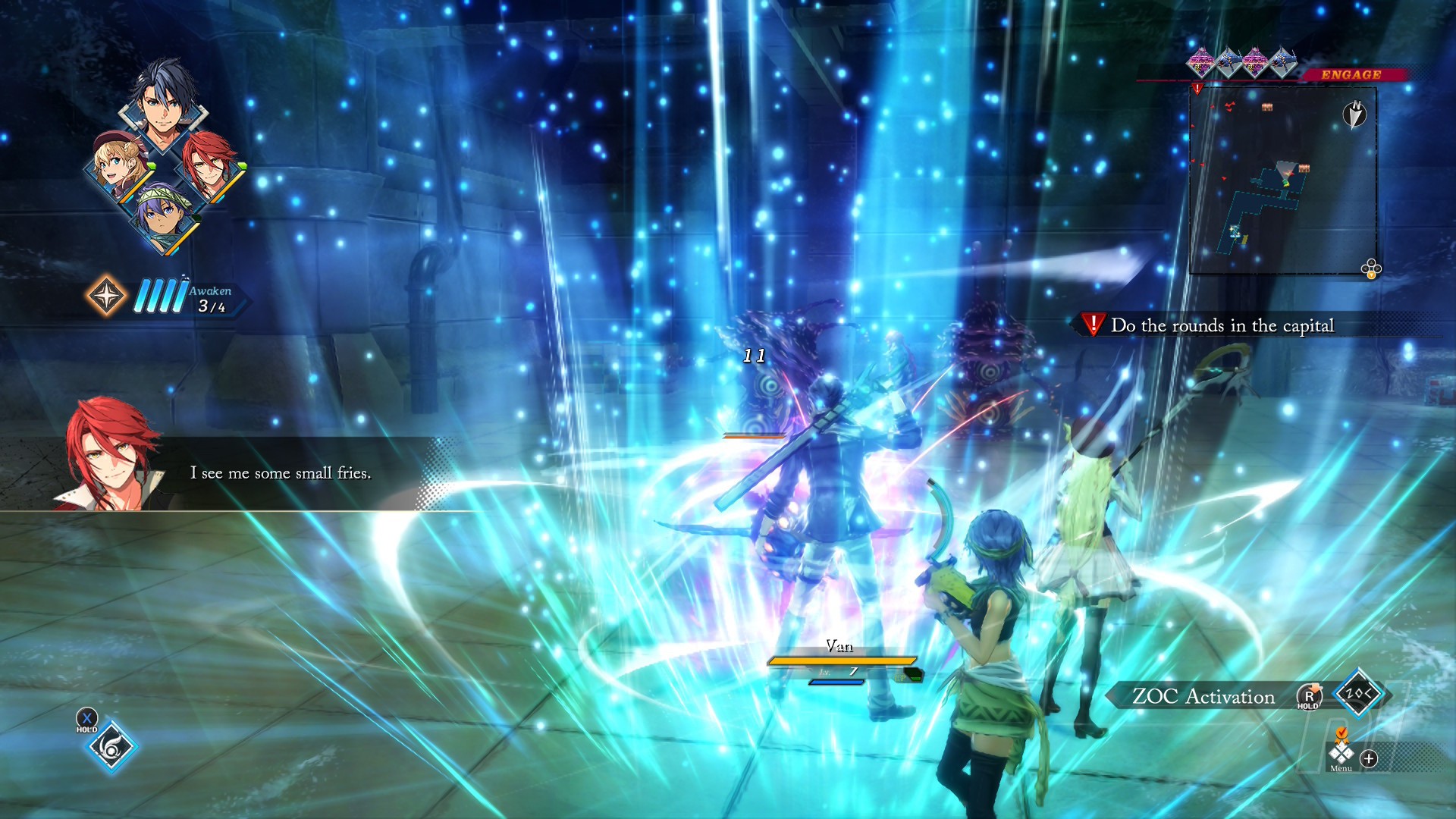
As far as visuals are concerned, this is one of the most beautiful Trails games yet. The new engine that Falcom debuted with Trails into Daybreak really sings on the Switch 2 hardware, holding to a mostly stable 60fps while maintaining an impressively sharp image quality in both docked and handheld modes.
Most notably, the text is actually readable on the Switch 2 screen this time around, clearing up an irksome issue from the last couple of games. Animation quality has also gotten a nice boost this time around, with many of the bigger attacks and arts having a nicely cinematic quality to them that hides some of the ‘Falcom jank’ that gives these games some of their charm.
Conclusion
Trails Beyond the Horizon is another solid new entry in the long-running series and feels like a firm step forward, even if it’s not quite as big a step as some may have hoped. Though the story can be uneven, it’s buoyed by a strong and diverse cast that keeps you invested and reminds you how all the work Falcom has been putting in over the years has ultimately been pushing towards something.
Couple its engaging (if sometimes slow) narrative with polished graphics, deep character customisation, and a dynamic combat system, and you’ve got a great and ambitious JRPG that especially stands out in these relatively early days of the Switch 2 library. I’d give this one a strong recommendation to series fans, as it really does feel like a step up from Daybreak II. Newcomers, though, will want to give this one a pass until they’ve played the previous two Daybreak games, at least.


Comments 44
I’ll eventually get back to finish the first game in this new story with Van. I loved my time with it, but after 80 hours and little over halfway through the game, I got burned out. It’s a brilliant game, however, much like the other titles in this long running franchise.
Looks pretty good, but I'd rather play some of the older ones first. Also disappointing that the Switch 2 version is a Game Key Card. But still, hopefully anyone who plays this new game in the series enjoys it a lot 😀.
I need to finish the other 25 Legend of Heroes games before getting to this one lol
@Nep-Nep-Freak god, are we still complaining about GKCs? 🙄
Thanks for the review, definitely interested in playing this at some point - not anytime soon though since I haven't even just started the Trails series yet (finally doing so this week, but of course with Sky 1st Chapter)!
Looking forward to this next week, I already preordered mine from nis europe just waiting for the dispatch email.
Also I found a great review that mentions the game running at 120fps:
https://www.nintendo-insider.com/trails-beyond-the-horizon-switch-2-port-impressions/
@mackers84 Fingers crossed your copy arrives tomorrow (I already have Sky, but I'll most likely start it tomorrow as well after having played the games I'm currently playing as part of my gaming schedule first and foremost)!
Thanks for the review! I hope to get into this series at some point. But seeing as I haven't even dipped my toes into the grand pool of Dragon Quest, I'll do that first. But it's great to know that this is at least a good game!
Thankfully there is a Switch 1 that isn’t a key card
Choosing game key card will heavily ruin Falcom's reputation forever. Selling a fake game for $70 is insane.
I just pre-ordered this game to put in my backlog with Daybreak 1 & 2. I should really get to playing these games. So many games so little time.
on push square Some very rough visuals
so i guess no physical switch 1 version of the game only a switch 2 game..
When I got my first PC in 1988, the idea that I could copy my floppy disks to a hard drive, rather than run them from disk was a revelation. Now we have GKC, and it is a curse.
@mackers84 with the Sky trilogy coming (and the remake is fantastic) I think youre in good shape being switch only. It'll leave Cold Steel 1&2, which truth be told aren't terribly essential since you'll get to know the cast plenty in the next three games anyway.
The Crossbell dualogy is fine to start if you want to tackle those instead
I need to start reverie, and than all the daybreaks. Buying the switch 1 physical version day one to put it in my physical backlog. Falcom really drop the ball by delaying all the release for a switch 2 game key card version.
>Runs beautifully on Switch 2
Oh thank god. Was so scared cause they showed basically nothing of that version, and outside of Sky 1st the track record really hasn't been that great lol. Now im excited for next week!
@Serpenterror How is this a fake game? Wtf? The cardridge can still be sold to someone or a store if you're tired of it lol.
I find it funny that people are crying so hard about the Game-Key Cards (I don't like them either), but refuse to blame Sony and Microsoft for doing the exact same thing with their games for a decade or so already. The only difference is that Nintendo chose to be transparent about it.
@johnedwin No there's a physical Switch 1 release and it's $10 cheaper than the Switch 2 version.
@rawzeku While not perfect, Daybreak 1 and 2 are actually not that horrible.
I tested Cold Steel 3 yesterday before going to sleep... it was horrible.
Horrible graphics, slow game, FPS drops, latency issues, game breaking bugs and malfunctioning Turbo mode. (All of these occured in the Demo)
@Maple A big percentage of PS4/PS5 and Xbox games work if you put them into a console without internet. Game Key Cards won't. For us collectors this is a problem when Nintendo eventually shut down the servers. It's about preservation. I still have my NES games from the 80s and they still work.
For reference, check out doesitplay.com
83% of PS5 games do NOT need a internet download to be played.
Any reason why the Switch 2 version is MORE expensive, despite being a Game key card?
@kmtrain83 You could also make copies of your files back then, or put it back on the floppy and use it elsewhere without requiring permission from an online server. People don't like that with gamekey cards you don't actually own the game.
Looks great but a hard pass. Game key init.
@Solid_Python Starting from Trails in the Sky, this is the 13th game.
@Vlash Either I misunderstood what you just said, or you don't know what you're talking about.
I literally just cut the internet connection to my Switch 2 and started Octopath Traveler 0 (Switch 2 GameKey card) without any issues whatsoever.
The only thing you need, is an internet connection to download the game. Which, btw is the same thing Playstation and Xbox do. Let's be honest too, who doesn't have a damn Internet connection in 2026 to download games?
I truly hope that I just misunderstood your comment, and that you just didn't make a false assumption without verifying yourself, cause all it took me was 2 minutes to prove your statement wrong.
Executes "WillPlayTheEntireSeriesSomeday.exe"
from a video i saw their are performance issues in this game the level of draw distance is pretty shocking as you move around the city you see stores and stands materialize shadows appear out of nowhere characters literally appear and disappear..
@Maple It's a fake game cause it isn't real just like how you're not real.
@Serpenterror It's insane that they have the balls to charge $10 extra for a crappy key card. If it were a real physical cartridge it would be justified, but this is just pure greed.
@Maple Okay, now delete Octopath Traveler 0 from your Switch 2 and try to to play it from the GKC while you're in airplane mode. It won't launch, cause there's literally no data on the cartridge.
With PS4/PS5, the discs actually do contain a playable build the majority of the time. (Again, go check out doesitplay.org to see the stats for yourself.) Sure, many games still have patches, but they are still fully playable from start to finish on Playstation without the internet, just like what we used to have on Switch 1.
And because Switch 2 storage is tiny and Switch 2 games are massive, good luck trying to cram all your games on there in the future to prepare for the inevitable server shut down 20+ years from now.
If you don't care, that's fine. Maybe you're okay with paying full price for long term rentals (or in Daybreak 2's case, full price + an extra $10 Switch 2 tax compared to all other platforms). But stop trying to pretend that PS4/PS5 have this problem on the same scale as Switch 2: they don't.
Also, I hope Nintendo Life can give us a review for the Switch 1 version. In particular, I'd like to know how it runs on Switch 2.
@Maple, I think you might have misunderstood me. Just as @topsekret said, if you hadn't already downloaded Octopath Traveler 0 to your system beforehand, you wouldn't have been able to play the game at all. This is the key difference. There are many circumstances where this matters, such as being somewhere without an internet connection, like on a plane, or years from now when Nintendo decides to shut down the servers or a publisher suddenly decides to remove the game the servers.
On PS5 and Xbox, the whole game is actually on the disc most of the time, so you don't really need to download anything from the internet in order to play. The game is simply installed from the disc to the system. While there are often patches today, most games don't actually need these patches in order to be playable from start to finish. This means they can be completed without an internet connection, even after the servers are shut down.
And this isn't about "who doesn't have internet today in 2026", this is about what happens when the servers are eventually turned off and your cartridge becomes nothing more than a piece of empty plastic that you can't play anymore.
When Sony or Microsoft shuts down their servers, you can still play your games. It won't be the patched version, but you can still complete the launch version of the game to the end.
If this is of no concern to you, then that's okay, but for me and many others, this is the main problem with GKC. This is why we won't buy them. I have bought 970 physical games that I can still play today. In recent years, I have had to do more research before buying, but I still try to only buy physical games that are actually on the medium and will be fully playable in the future.
My trust in Nintendo, Sony or Microsoft is not the greatest when it comes to server availability in the future.
I hope this clarifies what I meant?
@kmtrain83 Well, but the flopppy contained the data! That's a crucial difference Having switch carts that contained data and you could still copy to fast internal storage (like ps5...) would be the proper way to handle things and provide best performance
@Vlash
I fail to see the logic there, I'm sorry... You can still download all the Wii games you bought even tho the shop was closed years ago, same for 3DS.
Not sure what got you all thinking that Nintendo will shut down your console or prevent you from downloading games you already purchased from sheer pleasure.
Just so we're clear, I do not agree with their policies as well, but it's no different than what other companies have done in the past. Right now, you're just all scaremongering.
Let's agree to disagree here.
@Mormel
Yes of course. GKC fits this weird hybrid that is hard to grasp. Digital gamers don't care. Physical collectors mostly care about the box on the shelf. When it comes to inserting the disc, I'm not sure what produces the negative psychological reaction to having to obtain the files via download. What ratio would not cause psychic harm? 90/10? 95/5? I don't believe anyone expects games that are "complete" on cartridge not to have updates later on, so it is never 100% on disc in modern games. You must have internet to have the complete experience.
I actually have Daybreak 1 and 2, but I still need to play Trails in the Sky First!
I think for the other archs in between Sky and Daybreak, I will just watch story videos as I do not have time to play the other 10 or so games haha.
@Maple "You can still download all the Wii games you bought even tho the shop was closed years ago, same for 3DS.
Not sure what got you all thinking that Nintendo will shut down your console or prevent you from downloading games you already purchased from sheer pleasure."
I hate to be the bearer of bad news, but Nintendo itself has already confirmed they will eventually terminate the ability to redownload Wii games. From their official FAQ:
"In the future we will close all services related to the Wii Shop Channel, including the ability to redownload WiiWare and Virtual Console games"
This doesn't do much to inspire confidence that the same thing won't eventually happen for 3DS, Wii U, Switch, and Switch 2.
@darylb24 Don't let FOMO get the better of you. The very fact all of these games are connected and Falcom is committed to keeping it going this way is literally the biggest appeal of the series. This game is still going to be around and playable 2 years, 5 years or even 20 years from now.
Take your time, play through all of the others, and take breaks when needed, and then when you do get to playing this game the experience will be several magnitudes better since you're so intimately familiar with the world and characters already.
Three of the main characters in this entry aren't going to mean anything to anyone who only briefly read up about the other games for example. But if you played Sky the 3rd, all of Cold Steel and Reverie their appearances are going to be incredibly hype. I don't think there's really any Crossbell related characters in this one but of course those games shouldn't be skipped either.
For all the Legend of Heroes/Trails entries and their spinoffs available on Switch. Can someone throw a timeline as to which order to play them in?
@Aneira The play order is:
Trails in the Sky (or the remake Trails in the Sky 1st Chapter)
Trails in the Sky SC (or the remake Trails in the Sky 2nd Chapter much later this year)
Trails in the Sky the 3rd
Trails from Zero
Trails to Azure
Trails of Cold Steel (not on Switch in the west)
Trails of Cold Steel II (not on Switch in the west)
Trails of Cold Steel III
Trails of Cold Steel IV
Trails into Reverie
Trails through Daybreak
Trails through Daybreak II
Trails beyond the Horizon
Switch users have a bit of a problem because 4 games are not available. If you want to progress after the first Sky remake you will either need to wait at least 2 years for more remakes, or jump to other platforms. I do not recommend skipping ANYTHING.
As for other games:
Ys vs. Trails in the Sky is a crossover spinoff that is fun but not canon.
Nayuta: Boundless Trails is also a spinoff, though one that has never officially been said to be canon or non-canon. For now it has no ties to the rest of the series.
@Zeroo It's still a problem, so yes
@Maple Sony doesn't do this. All of their first party games are on complete on disc, barring post-launch patches. Most third party games are as well.
@2crudedudes it’s not a problem to anyone except a vocal minority of complainers online
Show Comments
Leave A Comment
Hold on there, you need to login to post a comment...