
If you’re a horror fan and you own a Switch 2, you should play Reanimal. From the moment it pulls you into its bleak, nightmarish world, it’s clear that developer Tarsier Studios is building on everything it learned from the Little Nightmares series while pushing its signature horror sensibilities to unnerving new heights.
This is an ambitious evolution of the cinematic horror puzzle-platformer formula the studio helped define with Little Nightmares, one that plays out less linearly in larger 3D spaces, with more varied combat and traversal mechanics and bombastic set pieces. It does so with impeccable sound design, gorgeous lighting, and pitch-perfect atmosphere.
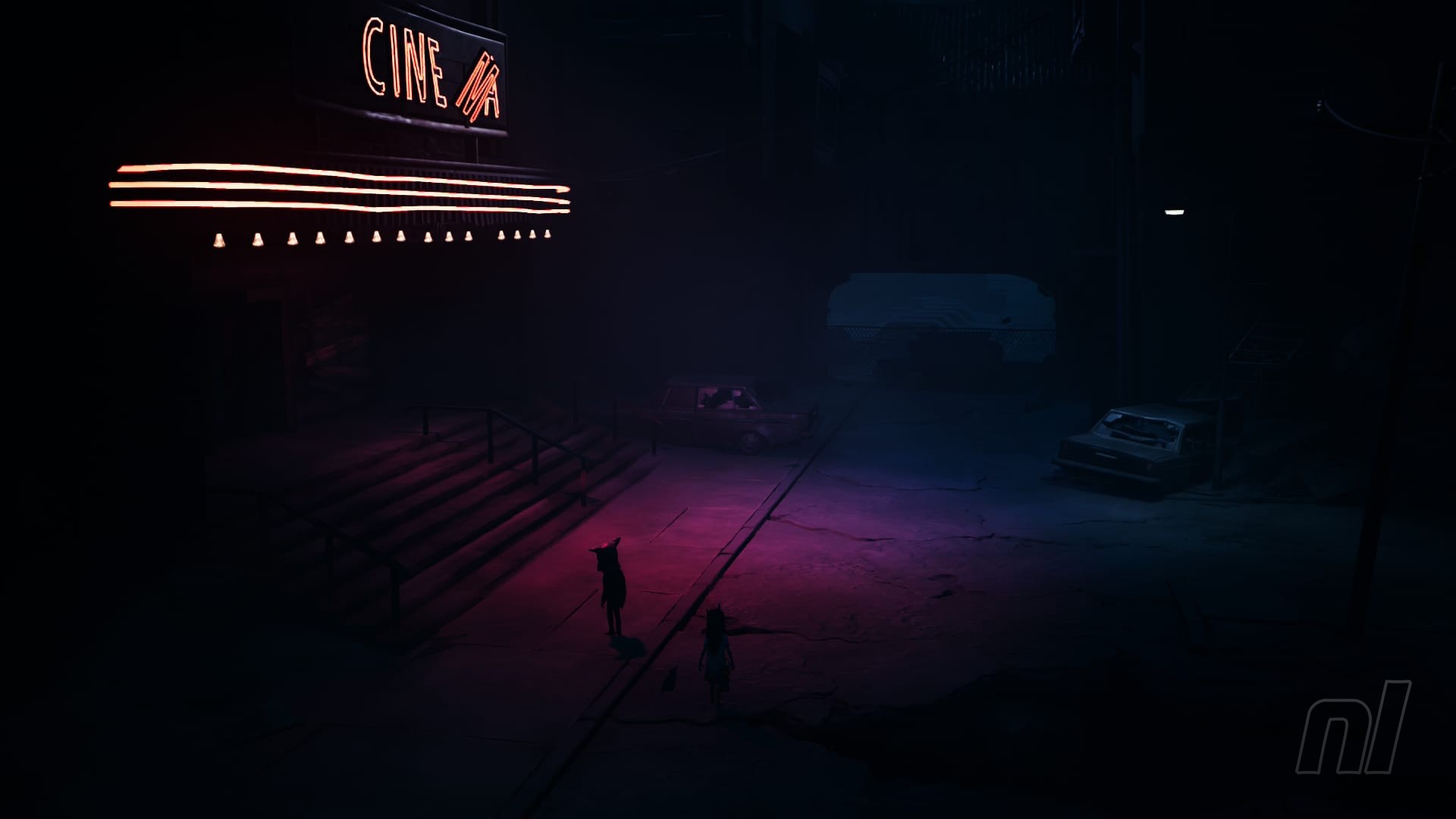
Reanimal marks a shift from the Tim Burton-esque macabre of the studio’s earlier titles towards what, by the end, feels closer to the shell-shocked horror of Elem Klimov’s war film Come and See, infused with the profane supernatural. Its moments of pulse-pounding escalation overwhelm the senses, while quieter stretches seethe with tension and fear of the unknown.
There are small points of friction along the way, whether in busier encounters that can briefly disorient or in lengthy load times that occasionally interrupt the otherwise seamless flow. Even so, these are minor frustrations in a game that so consistently delivers on its vision, and they do little to dull the impact of its world, atmosphere, or stellar set-piece design.
Narratively, you play as a brother and sister venturing through a hellish world in an effort to rescue their missing friends, a simple setup that effectively supports the game’s focus on co-operative survival. There is well-executed voice acting that elevates certain moments and sheds light on the predicament facing the characters, though instances of it are sparse.
Reanimal is fully playable in single-player, which pairs you with an AI companion, but it supports local and online co-op with GameShare, too. The game frequently requires its protagonists to act in tandem – flipping switches simultaneously or coordinating actions to progress – and both playable characters function identically, with no mechanical advantage given to either.
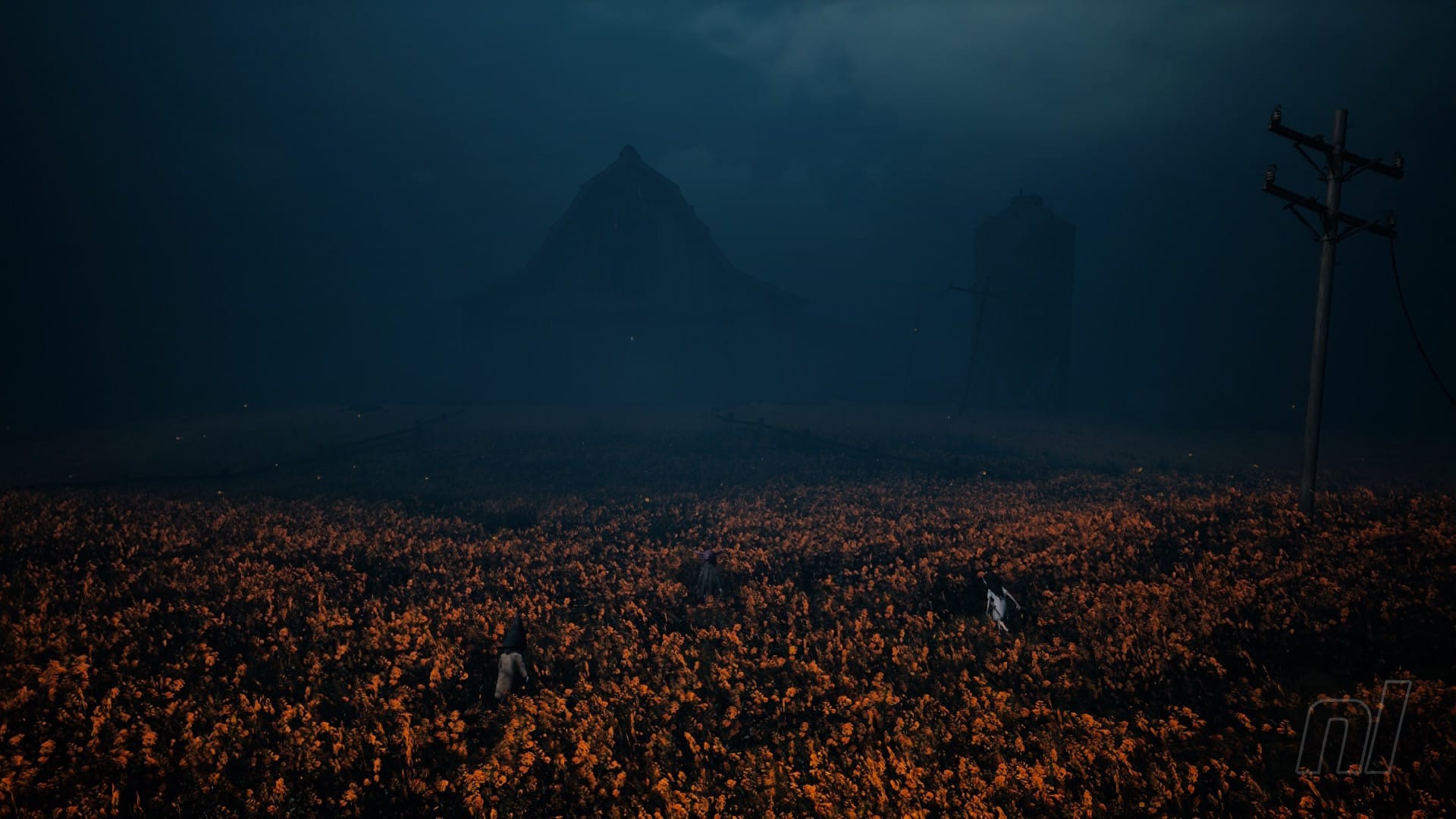
My review is primarily based on my time playing solo, and the companion AI generally keeps pace, responds reliably to prompts, and does a solid job supporting the game’s more demanding sequences, particularly during chases and combat. Rare moments of awkward AI behaviour self-resolved and were typically tied to puzzle conditions not yet being met.
Compared to the playable protagonists of Little Nightmares, who often feel almost doll-like – underpowered, limited in their movement, and unable to reach the height of door knobs – the characters in Reanimal are larger and more mechanically capable, while the core loop of escaping a hostile space by cleverly eluding and besting an area’s apex threat remains intact.
While Little Nightmares is built around a side-scrolling progression, Reanimal’s environments are far more intricate and non-linear, requiring exploration and backtracking to find the tools needed to overcome obstacles. There are traversal mechanics through the use of a boat and other vehicles, though it’s best to avoid detailing them here to prevent spoilers.
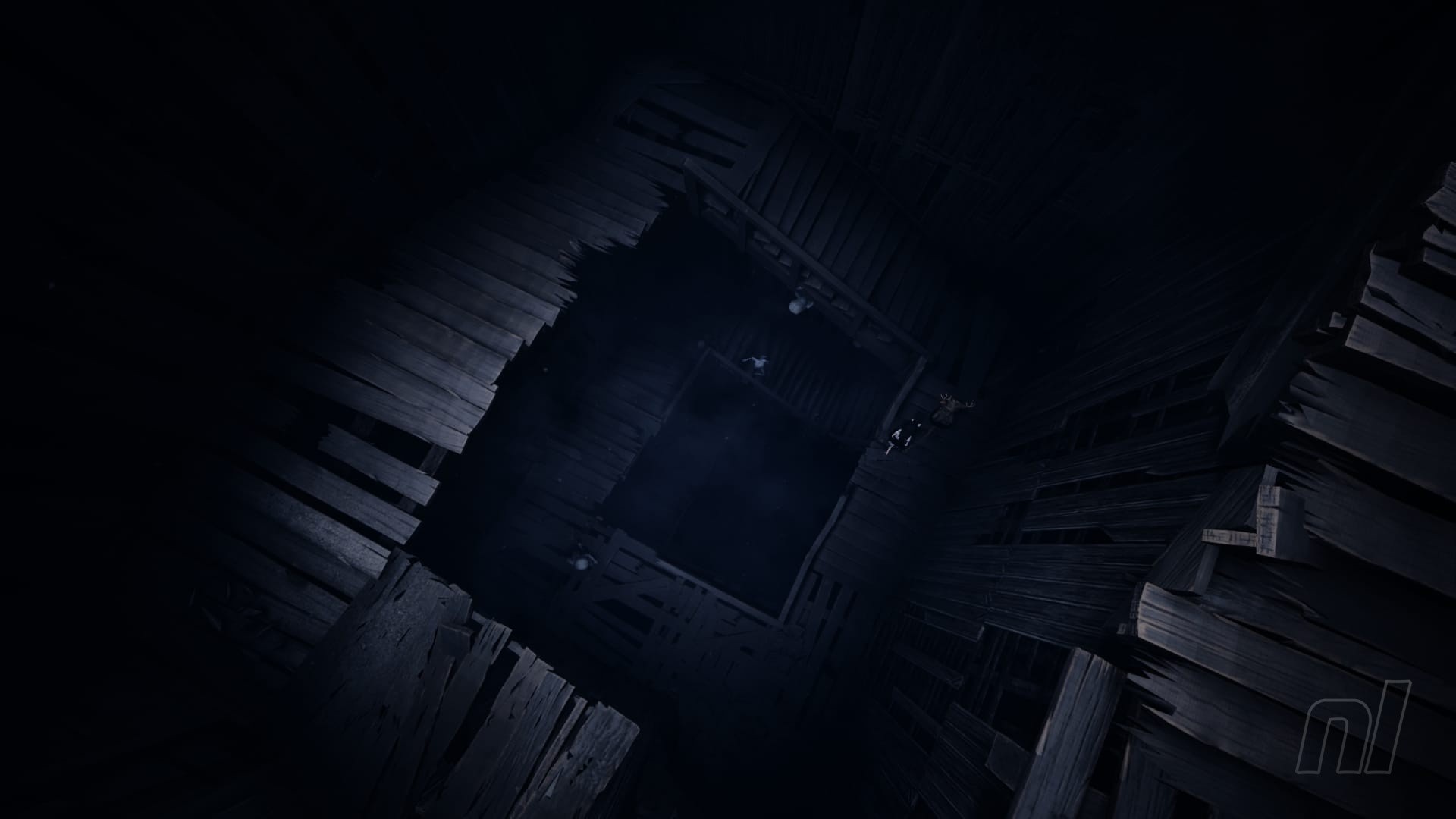
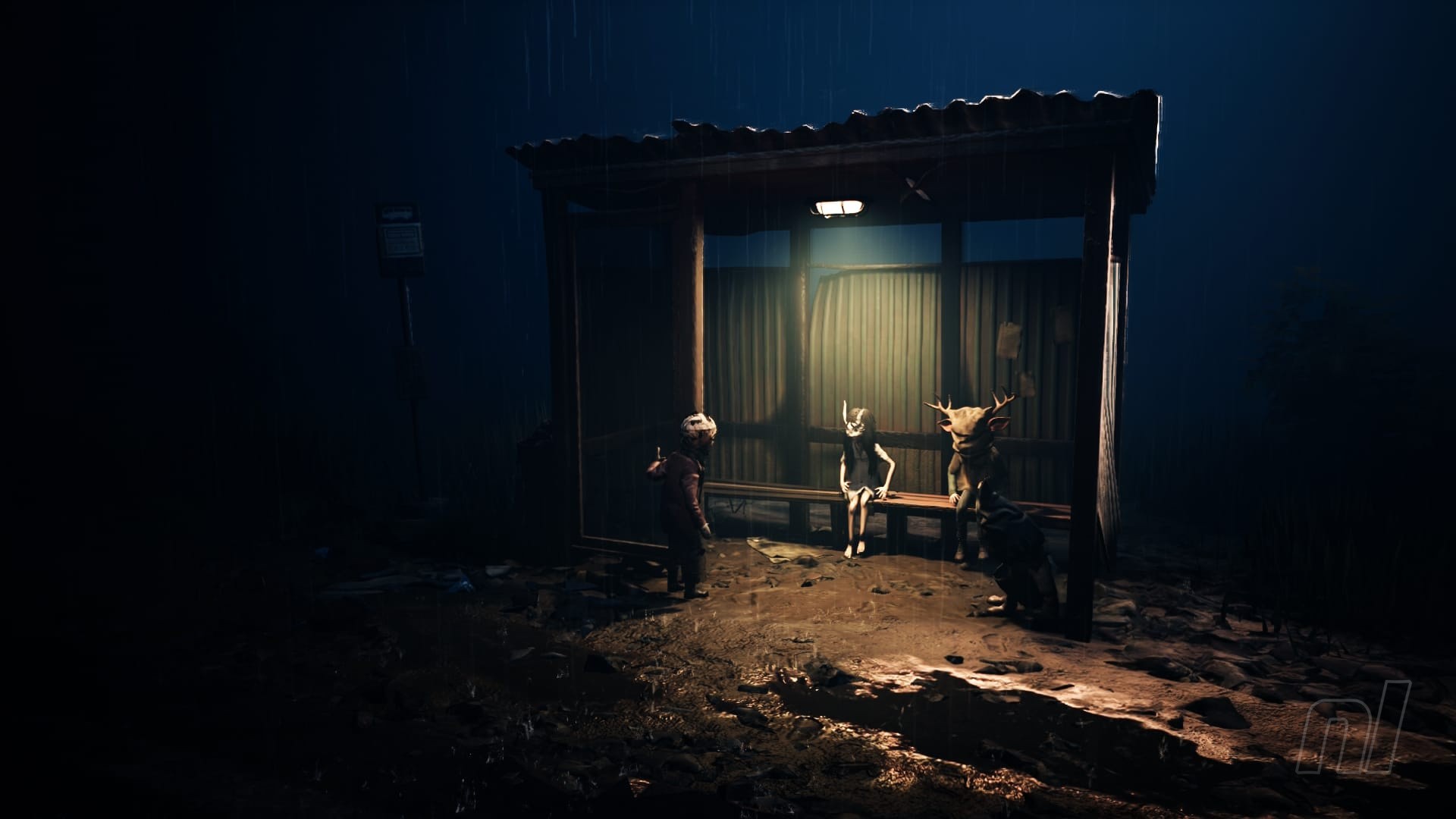
The game also includes light melee combat, primarily against enemies of your own size, with the companion AI mirroring the player’s actions, attacking in tandem or raising a light source to illuminate the surrounding darkness. The game’s lighting and colour palette is genuinely gorgeous, yet it’s frequently unafraid to plunge you into pitch-black darkness.
Given just how dark the lighting can be at times, it’s worth noting that a small white indicator appears when you get close to objects like hatches and levers that can be interacted with, as well as cracks in walls you can squeeze through, which feels like thoughtful environmental design that guides the player without being intrusive or breaking immersion.
That said, it’s still possible to overlook smaller items, such as a key on the floor or a tool required for a puzzle amidst a cluttered space, which can briefly stall progression until they’re discovered. These objects are marked by a subtle white outline when approached, but spotting them can occasionally require visual skimming of the environment.
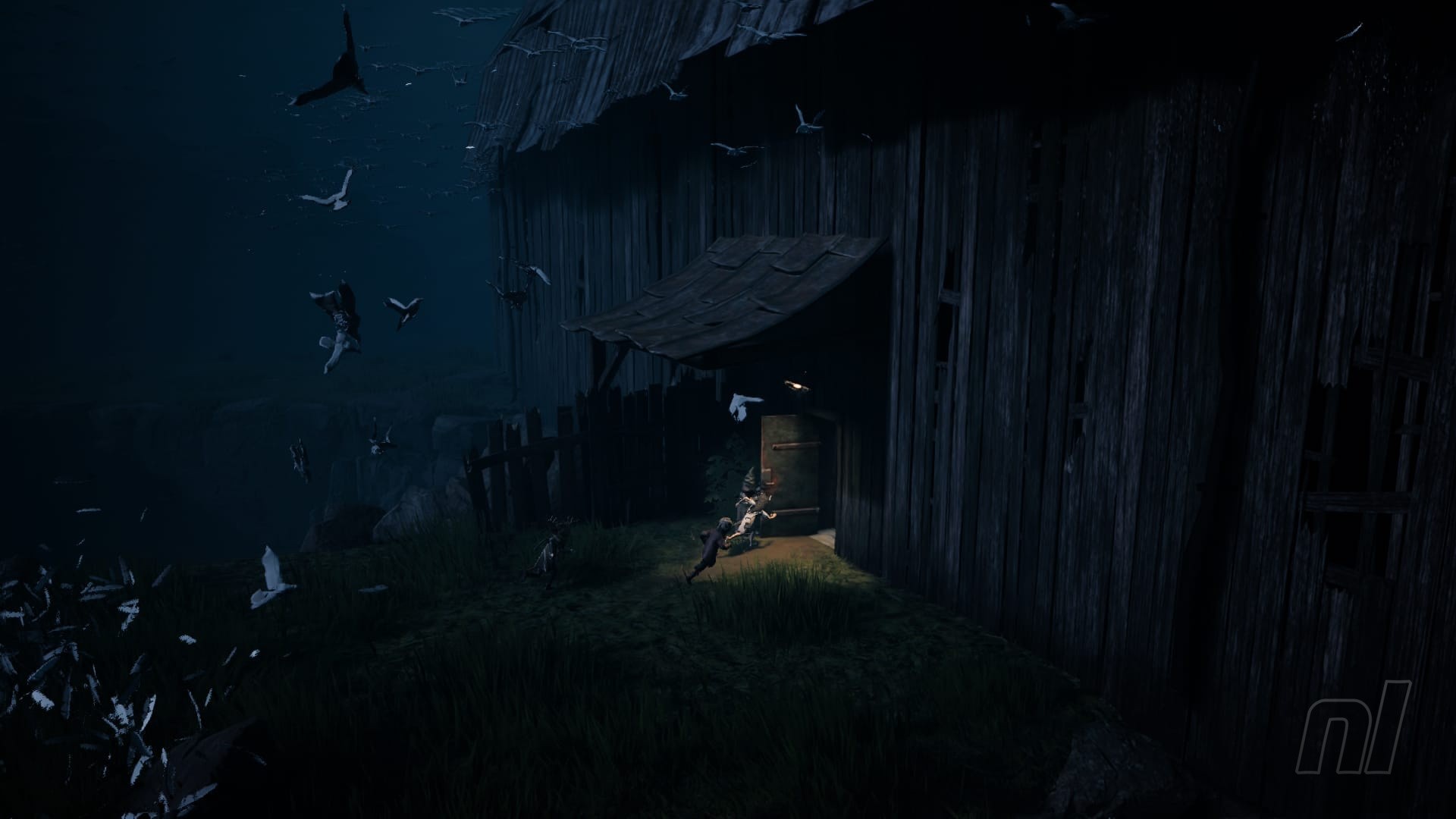
There are a variety of well-hidden collectables scattered throughout, including masks that your characters can wear, which are typically tucked away behind easy-to-miss hidden rooms. Reanimal’s relentlessly grim world is also dotted with flyers pinned to walls, which unlock concept art and offer an additional incentive to explore off the beaten path.
The game’s audio design also stands out, especially when played with headphones. Ominous bellows, grinding factory machinery, creaky floorboards, howling wind through open spaces, blaring car alarms, and a barrage of abrasive noises sharply heighten the stress and tension, especially as you’re tailed by no shortage of horrid things during chase sequences.
A recurring frustration I had with Tarsier’s previous game, Little Nightmares II, was the use of encounters that leaned too heavily into trial and error and instant deaths, often requiring repeated attempts to progress. Attempting a section over and over broke my immersion and diminished the scare factor. Reanimal does a better job of minimising such friction.
There are a few moments where repetition is difficult to avoid simply because it’s easy to misunderstand what the game is asking of you, such as when player characters are forced to traverse a crumbling multi-forked path while tied together. But arguably the game’s biggest fault is that it can sometimes take more than 15 seconds to reload after you die.
You can complete Reanimal within four to five hours, but there’s no padding. While the first act perhaps too closely resembles Little Nightmares, from the design of its antagonist to the rhythm of its environmental puzzling, Reanimal steadily sets itself apart visually and narratively as it progresses, while gameplay becomes far more varied and ambitious.
The game’s final act culminates in a genuinely thrilling spectacle that leaves behind layers of lore for diehard players to unpack. By the time the credits roll, everything the game has been building towards comes together in a way that feels greater than the sum of its parts. It marks Tarsier Studios’ best work to date and a confident evolution of their creative vision.
Conclusion
With Reanimal, Tarsier Studios delivers its darkest, boldest work yet. Expanding on the Little Nightmares formula with non-linear exploration, striking audiovisual design, and bombastic set pieces, this is an imaginative horror experience that confidently delivers its vision while offering accessible co-op play that fans of the developer have long clamoured for.


Comments 39
I love these games and I enjoyed the demo but they are a bit too short for my taste so I'd probably grab it with a small discount.
Interesting. Have the fixed the frame rate from the demo. Also there was a lot of complaints about the AI being dumb and not helpful, glad that this sounds better now.
Thanks for the review, not interested in this personally considering its genre, but glad to hear it's so good for those who are - great that it's playable both in single player and co-op (and even more so since the latter supports GameShare, too)!
Given it's on the short side, I'll wait for a sale but what a score. I honestly didn't expect that.
Been looking forward to this. I'm glad to see it's amazing. I really enjoyed the first two Little Nightmare games and will definitely get this one.
I'm not usually like this with game runtimes... and I'm excited to play this with my wife, but the run time is just a tad too short for the $39.99 price tag.
I might wait and see if we can grab it at a small discount. Maybe around $29.99, I'll jump in.
Thanks for the review!
Seems like a perfect GameFly rental. I understand they put a lot of work into it and they deserve to make a lot of money but 5 hours is not enough entertainment to warrant that price tag for me. Probably not a fair comparison but Silksong gave me 100 hours for $20 and I've heard they're making bank on that game, and it took them 7 years to develop, so I'm wondering if a competitive price wouldn't have benefited this game too, but hopefully they know what they're doing because I really want them to succeed and keep pumping these out.
$39.99 is a perfectly reasonable price for a polished and memorable 9/10 made by a large team of talented individuals. This isn't the early 2000s anymore.
@Yodalovesu For you, but 40 dollars is steep for something you can complete in a day and for 40 dollars I can use it on another hobby that will last me a lot longer or spend it on a project/something important.
There’s also other games that are well developed and polished longer than 4-5 hours for less than 40.
Played the demo with my partner, we'll probably buy the full game day one and play during the valentines weekend (if we can take a break from Nightreign).
I also like to support developers from my country Sweden : )
Resolution?
Frame rate?
Is Friend Pass supported at launch?
Edit: Push Square reviewer has confirmed it’s seemingly not there at launch sadly.
@Summer235
this is a good point! ive also made the case on here before that whatever the price of a game is relative to another, or relative to another time in gaming, "videogames" as an activity also competes with other activities in life, both for time and money. 👍
Figures that the highest rated THQNordic Nintendo game ever we be the one that's a roll-off from a FIRST PARTY release. Shame it's also Digital only. No idea why Klemens went with that THQNordic is infamous for their col-
It's LRG. It's so they get people double dipping on an LRG/Clear River re-print. Gawddamnit
I'm so glad this turned out great! The cons don't concern me, I'll be getting this one as soon as possible.
What a month!
I'm half asleep and thought the title said "Returnal"
It looks amazing. I love original games like this, so I may check this out.
@TripleJump every time I see the title I think of that as well.
Thanks for the review, I would have missed this otherwise. Agree with the other comments about it being maybe £5-10 overpriced - I feel £29.99 would have been a sweet spot. Does anyone know if the load screens are a bit quicker on the PS5? Or maybe I will wait for a patch... but sounds great
Is nobody tempted by the £149.99-£175 for the limited edition then?
When it comes to price vs playtime, I think time is a bigger investment than money, so being short is a plus in my opinion.
$8-10/hour to play the game through definitely isn't nothing, but it also isn't unfair. How much are movie tickets?
Gaming is not a cheap hobby, but compared to how much more expensive everything else has gotten (and how relatively quickly that's happened), it really isn't as bad as it could be.
People going off on the price of Switch 2 games today don't remember things the way I do. I remember asking to get Street Fighter II for Super Nintendo for my birthday when I was 7 but being turned down due to its price. It was $70. This was in 1992. That would be the equivalent of $161 today. Gaming has never been cheap.
I'm happy that the full game seems to be just as good as the demo, which I loved.
Really happy to hear that the devs cooked with this spiritual successor to the LN franchise, especially after the latest entry by the new team was somewhat mid. I will definitely be getting this eventually.
I'm with the wait for a sale crowd on this one. Too expensive for a 5 hour game. 20-30 hours is the sweet spot for a game Imo, though a resident evil that can be done in 12 or so hours is also acceptable. Short games need short game pricing.
" game’s biggest fault is that it can sometimes take more than 15 seconds to reload after you die."
...and for that reason, I'm out
I ordered it on PS5 for obvious reasons
"15 seconds to load after you die." People have forgotten older games, like Fallout? Those loading times were enough to brew a pot of coffee, haha. But it is long by today's standards.
I am a bit on the fence on this one. I might get it to play coop with a friend at some point, but I can wait. Glad to see it's such a great experience, though!
Love these games, definitely getting this now, run time isn't an issue for me. Its all about quality over quantity, 30+ hours of padded out ***** ain't my thing.
@Strumpan agreed, dont get this obsession with every game needing to be 30+ hours. Those games bore me.
Better a game leaves you wanting more than less of it, so the short length means nothing to me. Can't wait.
@Strumpan
That makes no sense. So for a game with a runtime of +100 hours, you would only pay up to £9,99?
@Aneira I don't know how you came up with those figures, especially since I said money is less of an investment than time. What I meant was that a long runtime in itself is a negative. We both know that most of the best games are both pricey and lengthy. But if a game manages to be a good experience using less of my time, that's a positive, in the same way that it's a positive if the game manages to be good despite having a lower price.
@Cakefish I don't know if you need a friend pass, since you can use Gameshare.
@Jeff2sayshi does it work online or local only?
@Cakefish From the review: Reanimal is fully playable in single-player, which pairs you with an AI companion, but it supports local and online co-op with GameShare, too.
Aww what a shame. It looks like a game I would definitely have tried out. Guess I'll just watch someone else play it.
@tseliot Yep, that was it for me. I need Celeste style reloads to enjoy a game. Less than 1 second!
Game key card = No buy
Show Comments
Leave A Comment
Hold on there, you need to login to post a comment...