
Ready to feel old? It’s been about 13 years since the launch of the 3DS remake of Dragon Quest VII, which itself was released about 13 years after the original on the PSX. That means that it’s time for yet another remake of the storied classic, which has been dubbed Dragon Quest VII: Reimagined this time around. This iteration goes a bit farther than its 3DS predecessor in making various nips and tucks that update the game for a new generation, and I’m pleased to report that this feels like the most enjoyable version of Dragon Quest VII yet.
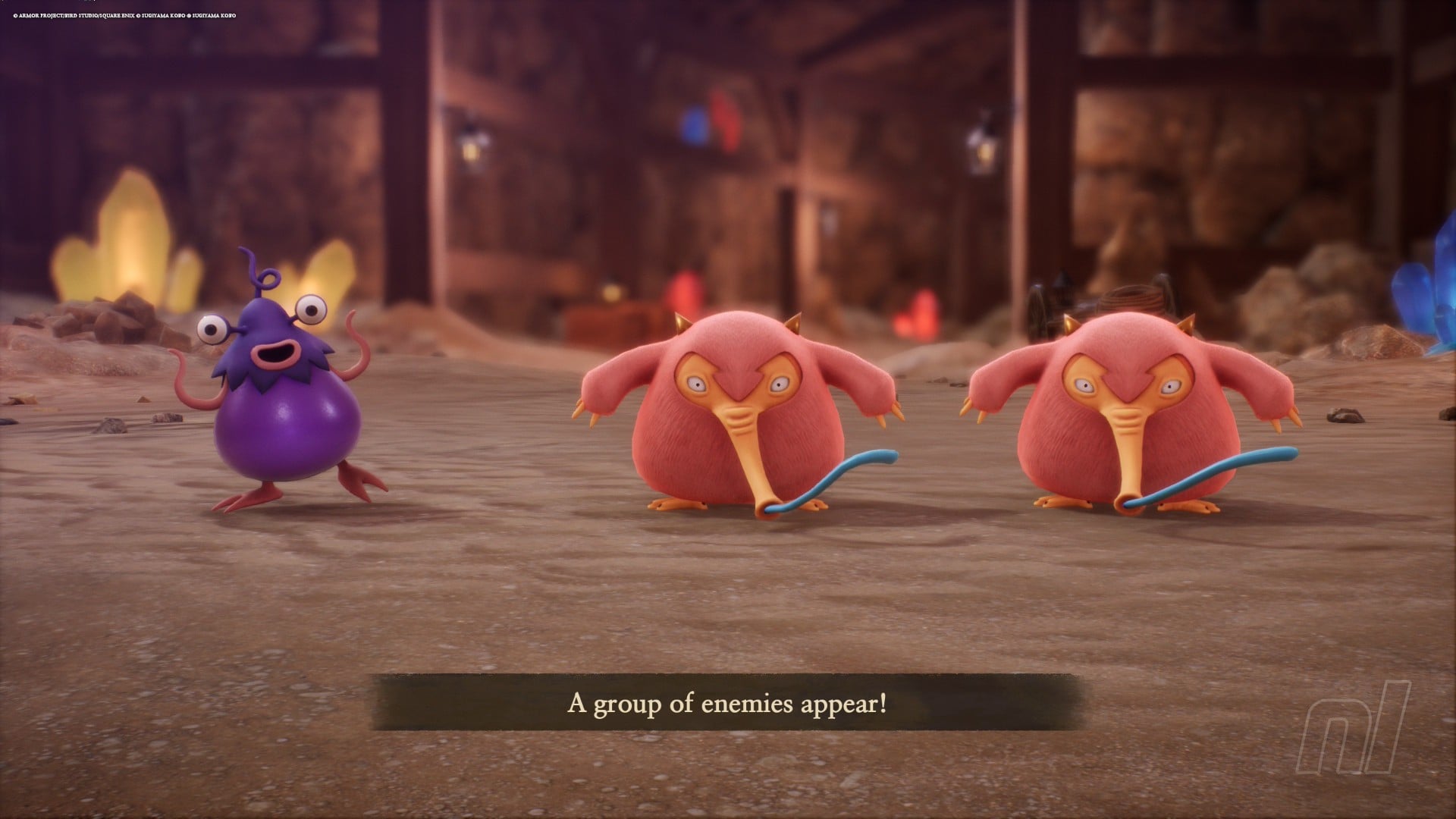
The narrative places you in the role of a quiet boy living a peaceful life who believes there's more to the world beyond his small island home. He’s joined in this belief by the adventurous Prince Kiefer and the Mayor’s daughter, Maribel, and it isn’t long until this band of kids discover a mysterious shrine in which ancient stone tablets allow them to travel to various places in the past.
The plot then takes an almost anthological approach, where you and your party jump back in time to various islands and play out small and largely self-contained subplots on each one, such as saving a town that’s been overrun by robots or uncovering the mystery of a village in which everyone has been turned into animals. After resolving the conflict for that island, it magically reappears in the ocean in the present and you can visit to see how your actions led to a changed future.
It’s not a very character-driven plot like you may find in a grander adventure like Xenoblade, but what the story lacks in deep characterisation, it more than makes up for in its cosiness. Despite some occasionally dark themes, this is the sort of light, airy, and chipper experience that keeps you invested due to how consistently it maintains its positive atmosphere. As you work through these cute and uplifting stories of friendship and courage, you feel more connected to the places you’re uncovering, which leads to a much more emotional experience later on when the story starts to come together into one coherent strand.
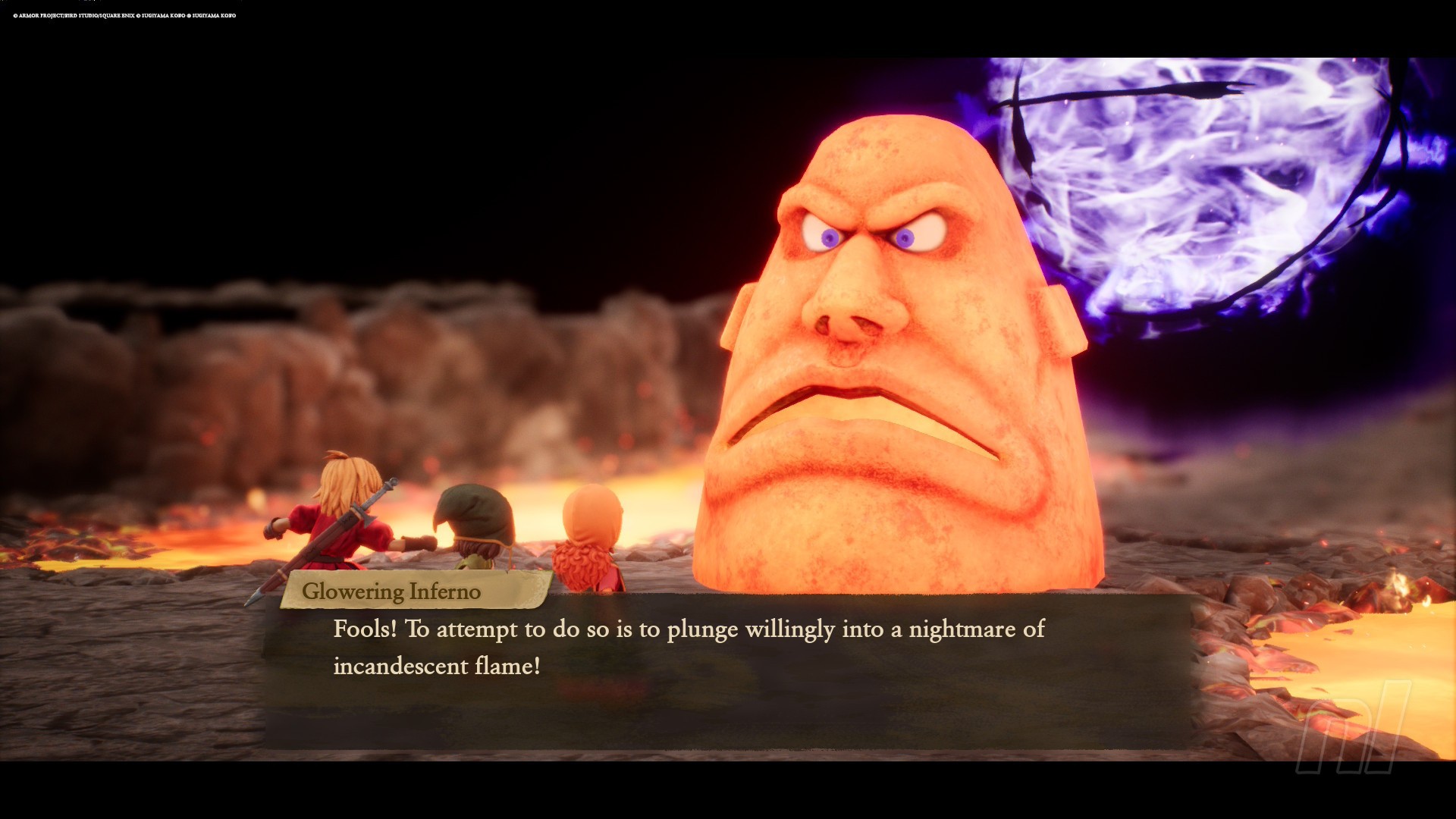
One of the main selling points for this reimagining is the 'streamlining' of content, and while I’m sure this may be divisive among some fans, I’d say the changes made here were largely for the better. The original game was infamously bloated, most notably with it taking around two hours from the start of the game before you even enter your first combat scenario, and this reimagining has cut out a lot of the extraneous dialogue and backtracking that added so much padding. Fortunately, these cuts were made tastefully and led to an overall tighter game—what's lost in raw detail and content is made up for by an adventure that moves where the original tended to drag.
World exploration also tends to proceed at a thrilling pace, mostly due to the elimination of random battles that’s carried over from the 3DS remake. Rather than getting jumped every few steps, enemies now roam the map freely and can be deftly avoided if you’d rather just pass through an area. If their level is far enough below yours, they’ll even run away from you and swiping with your sword will net you the rewards you’d get from a battle without the hassle of jumping to the combat screen.
Couple this with nice quality of life features like fast travel and the Nose for Treasure skill, and it’s never been easier for completionists to rinse each area of every hidden chest and Mini Medal.
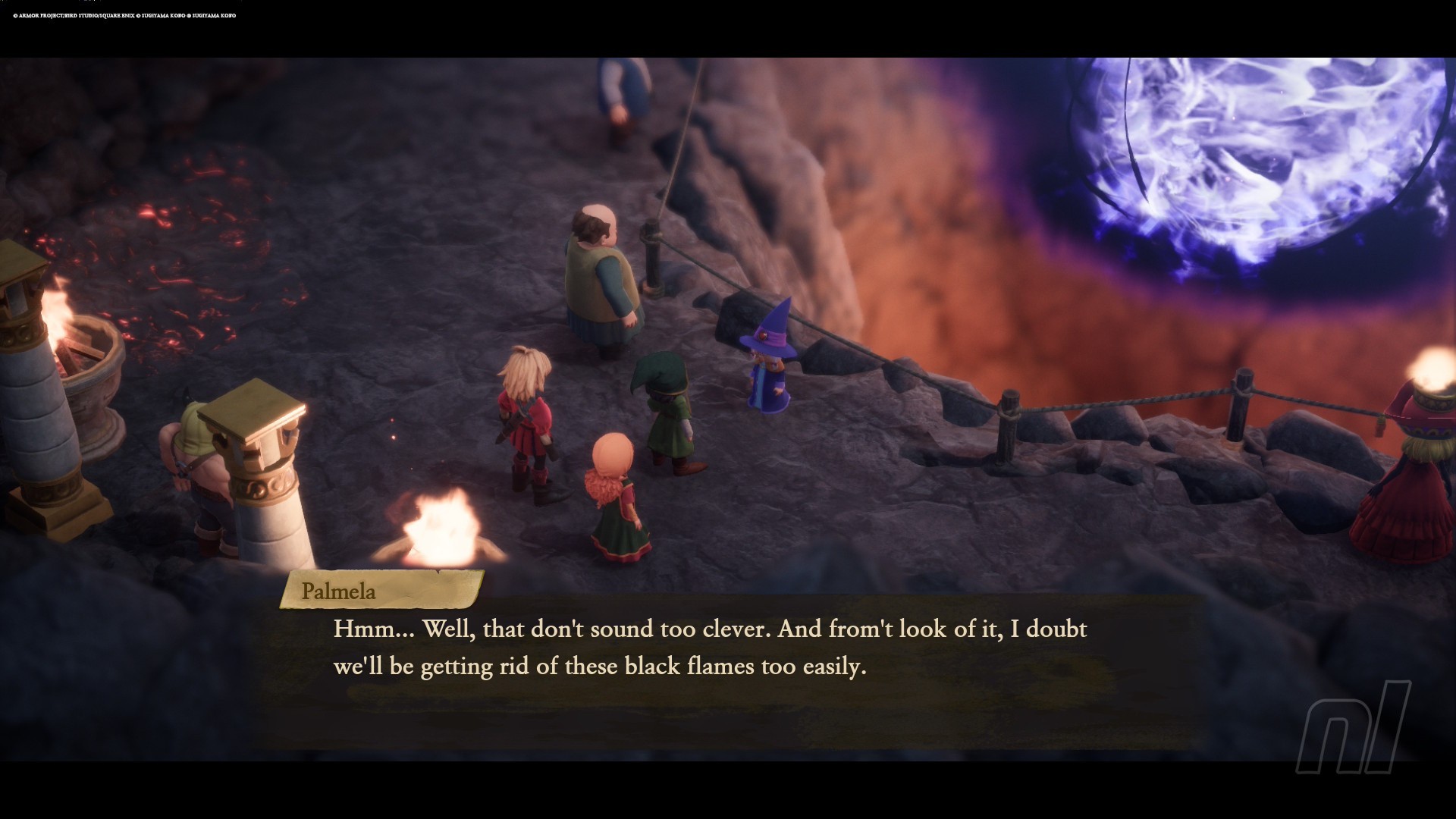
When you happen to come across a foe who’s closer to your level, battles follows the same bog-standard turn-based combat the franchise has always been known for, with you utilising an active party of up to four members to bash in some Slimes. Though the simple approach may feel a bit quaint compared to more mechanically advanced combat systems, like the Boost/Break system in Octopath Traveler or the Press Turn system in Shin Megami Tensei, that doesn’t mean that it isn’t still engaging.
Each character gradually amasses a swath of diverse skills and spells to bolster their role in the fight, and if you don’t want to get caught up with navigating all the menus, there are a variety of competent auto-battle macros you can set that do a great job handling just about any trash mob battles.
Similar to the Pep Powers of Dragon Quest XI, party members can now occasionally get ‘Worked Up’ after they’ve dealt and received enough damage. These powerful short-term buffs are connected to the character’s vocation (more on that in a bit) and can do things like block all damage for a turn or significantly increase damage output. They aren’t necessarily an ‘instant win’ button, but triggering one can certainly turn the tide of a battle that's slowly getting away from you. I also appreciated how they’re randomly triggered in the majority of cases, which keeps them from being an easy crutch to lean on and ensures they act more as a nice X factor that can suddenly mix up a battle.
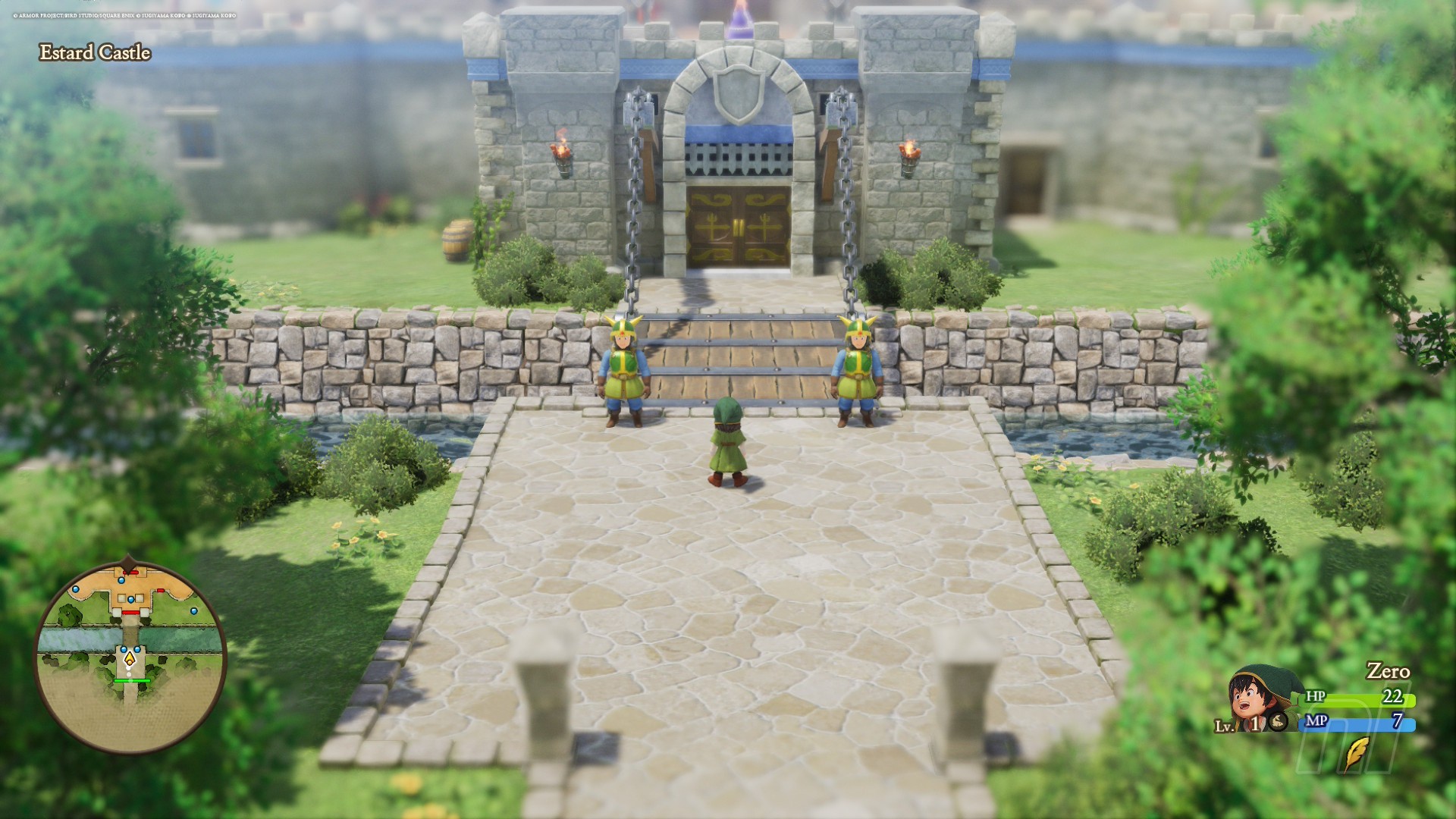
Vocations are the class system used in DQVII and they follow the progression for a standard jobs system—each one is levelled separately from the character it’s equipped to, and that character unlocks newer skills and abilities as they move up in vocation ranks. As you progress through the world and explore, you slowly unlock more vocations, the more powerful of which require a character to master some prerequisite vocations before granting them access to the powerful stat buffs and abilities they come with.
For this remake, vocations have also gotten a nice freshening up to make them more compelling. Not only are there new vocations added, but you can now unlock the ability to 'Moonlight', which means you can add a second vocation to a character to further alter their stats and available abilities. It doesn’t quite match the heights of the cross-classing madness found in the Bravely Default or Octopath Traveler games, but it is another step in that direction and makes party building a much more interesting endeavour as you explore different builds and skill mixes.
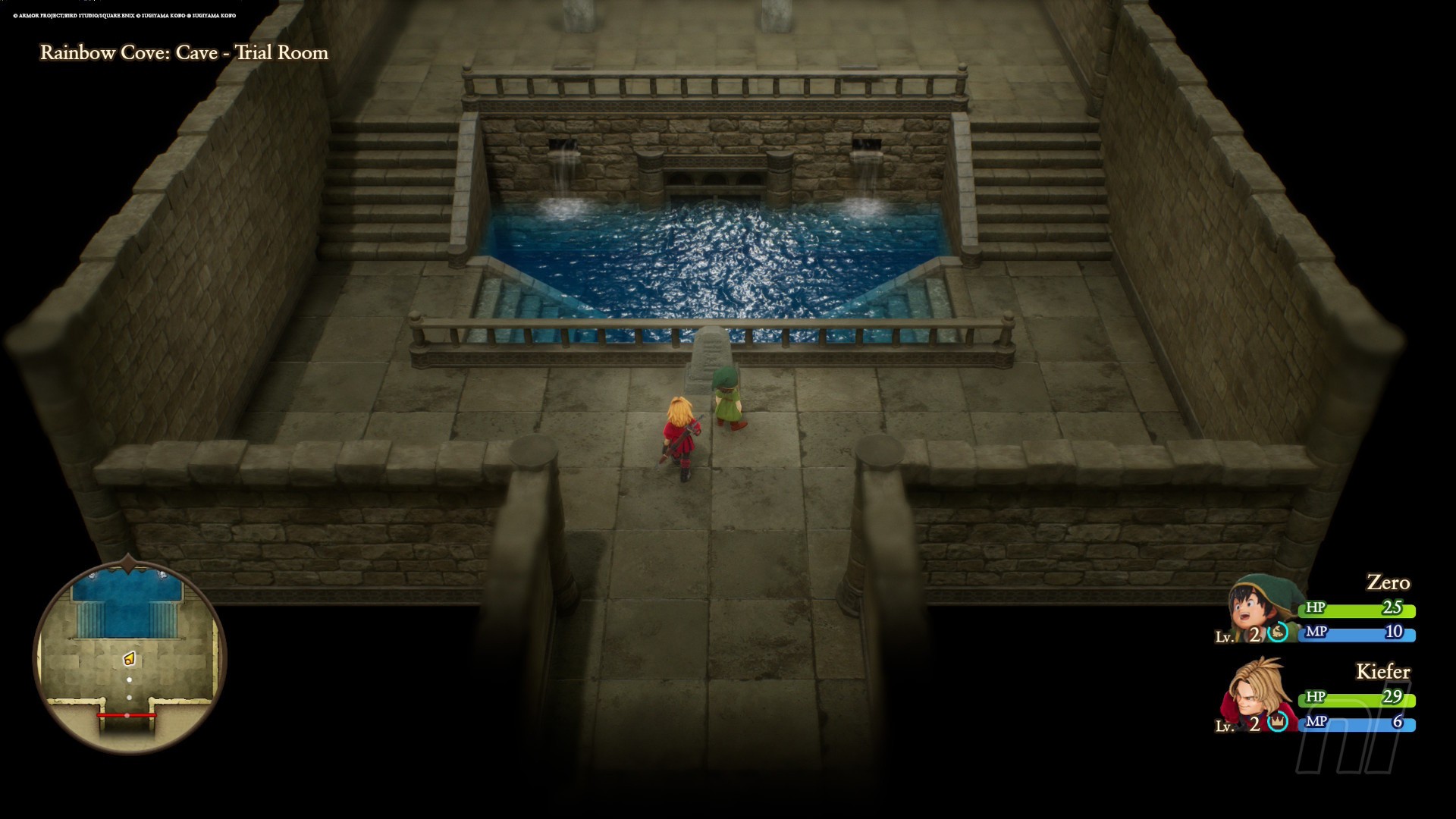
In a massive step up from the pixel art graphics of the original and the somewhat chunky models of the 3DS remake, the visuals have been updated to reflect a more photorealistic toy-like atmosphere. Square actually made small handmade dolls of the various party members and scanned them in for extra detail, and every frame looks as if you're viewing a carefully crafted diorama.
This looks especially great on Switch 2, where an unbroken 60fps and at least 1080p resolution present everything with sharp detail and smooth motion. I’d go so far as to say that this is the best-looking Dragon Quest game Square Enix has ever produced, surpassing its previous efforts in the original release of Dragon Quest XI via its seamless blend of photorealism with Akira Toriyama’s cartoonish art style.
The soundtrack also got a makeover here, with all the music being re-recorded and treated with new orchestral arrangements that capture the essence of the original while introducing some new elements. These arrangements all perfectly reflect the whimsical and adventurous spirit that the Dragon Quest franchise is known for, keeping the atmosphere playful while occasionally taking things into a more serious realm.
Conclusion
Dragon Quest VII: Reimagined proves to be a strong revisit of a classic, trimming the fat and including welcome additions to make for a magical experience that no fan of classic JRPGs will want to miss. Though I’m hesitant to call this the 'definitive' version of the game, given the content cuts, I would certainly say it’s the most fun version yet. Combine the more engaging pace of the narrative with some nice gameplay updates like moonlighting and those gorgeous visuals, and it’s tough to argue that the previous versions are more enjoyable.
At any rate, I’d highly suggest you pick this up if you’re looking for another high-quality, old-school JRPG for your collection; Dragon Quest VII: Reimagined may not be all that innovative, but it absolutely nails its gameplay and aesthetics.


Comments 107
I feel like it's a good time to be starting an upbeat, positive adventure. A few dozen hours of optimistic escapism
Thanks for the review, although I needed very little convincing to get this wonderful game!
After playing the demo I can safely say that it has won me over and that DQ VII: Reimagined will be my first ever foray into the Dragon Quest universe.
Removed - inappropriate; user is banned
Square is on fire! Can't wait to get this game on my Switch 2.
Now let's see how Rebirth looks and runs on the system!
@gameruprisingDOTto Hopefully quite a few.
So after NL has written no less than 4 articles about Dispatch’s censorship, it was deemed appropriate not to even acknowledge that DQ7 was similarly censored?
Still need to finish the demo before purchasing the full game.
@FrenchVaniIIuxe Aside from making one of the characters less fan-servicey, how else has it been censored?
Thanks for the review, unfortunately missed it on 3DS back in the day so I'm glad they've now remade this game and even more so since this version in particular is so good with its pacing, quality-of-life features etc. - looking forward to playing it myself when I can even more than I already was (not anytime soon though considering that I haven't finished playing Dragon Quest III yet despite rolling the credits and that I have I & II to play after that)!
"Best-Looking DQ Ever".
I would probably give that title to DQ 11 S, but this game does look pretty good too in terms of art style.
@FrenchVaniIIuxe, probably because this game is the exact same on all platforms, and the design changes were seemingly chosen by the devs themselves (probably because they just didn't want to bother arguing with the increasingly tightening age restriction systems of the EU, Australia, and the like). The whole situation is just getting really out of hand.
@gameruprisingDOTto Ah yes, Dragon Quest 7, the game we all know to have been remade dozens of times
I really enjoyed the demo. It will be an inevitable purchase for me, just not right now.
The only DQ games I finished were the first one on the NES, DQ XI on the Switch, and DQ Builders 2, so im all over the place.
@FrenchVaniIIuxe a remake changing things is not censorship. It’s taking creative liberties.
@gameruprisingDOTto @mikegamer what about DQ 1,2,3,4, F Fantasy 1,2,3,4, Tales of Phantasia, among others ?
@mikegamer I mean this is the second time in 15 years the ps1 original got remade from the ground up.
i really dislike the character models to be honest, its just so juvenile...
I want to buy it, but I don’t want it digitally and the “physical” is a key card. So I guess I am not buying it instead. Sad.
Great!
Now the question is... should I get the physical Switch 1 or Switch 2 version?
Cannot wait for tomorrow!
@justin233 There's a physical Switch 1 version as an option, even though it sadly doesn't come with a Switch 2 upgrade.
i'm kinda on the fence with this game because they cut stuff in the original ps1 game which i still have.. i enjoyed the 100 plus hours challenge to finish the game..
@Quarth only if you want a physical game the switch 2 version is the better choice..
@darkswabber
By censoring them.
@johnedwin Same here, I expected to buy this ASAP, but now I'm wondering if I should bother. It would be one thing if I never played the original version, but I can't help but feel like I'd be getting ripped off if I buy the new version.
@johnedwin Yeah, of course the Switch 2 version is better if you buy it digitally.
"Combat feels a little plain compared to more modern systems"
Sounds like a good thing to me! I hope I never see the day when they introduce quick time events to Dragon Quest games. I bounced off Clair Obscure HARD. I want to select my attacks in peace, thank you very much. Nothing wrong with a bit of simplicity and monotony if the vibes are good!
@FrenchVaniIIuxe They mention it had been streamlined, but what exactly are they 'censoring' that you object to given these are child-like character models?
Yeah, even the demo was addictive and great. No money, no funny. I will get this asap though.
Looking forward to this...
Removed - unconstructive
@darkswabber Your point being?
Removed - flaming/arguing; user is banned
@CaptainQuo, they did make changes to outfit designs to make them tamer, which has unfortunately been happening to the Dragon Quest series a lot in recent years. As a matter of fact, that has been happening in quite a bit of Japanese games franchises lately because, as I mentioned in my first comment up above, unnecessarily tightened age restrictions in places like the EU and Australia. Also, the casino was taken out, so I hear.
To add more about the casino situation, the newest game in the Trails JRPG series, Trails Beyond the Horizon, which came out last month, did not release in Australia except on Steam, and if it did come out in Australia, it would've had a 18+ rating (because it has a casino) even though, with the content the game has, it really doesn't need that rating. If Square Enix had kept the casino in DQ7 Reimagined, the game would've been slapped with a very much unwarranted mature rating in the EU and Australia.
Yes, Square Enix most likely did decide to make the changes to the outfits and take out the casino themselves. But they also probably only did it because they didn't want to be slapped with a stupid, very much unwarranted mature rating. There's also the topic of the original designs being created by Akira Toriyama, and a lot of people like Dragon Quest because of Akira Toriyama's designs, so those designs being changed are also a complaint worth bringing up in that regard.
After watching a little bit of gameplay, I decided that I will someday get the PlayStation 1 version instead. Not in the mood for remakes anymore.
I can't wait! Looks soo cute and fun!
Removed - flaming/arguing
@Nep-Nep-Freak The designs look exactly the same. Most people don't even seem to be complaining most about the casino stuff, but for some reason are unhappy about a bit of cloth being added to a character.
I will be buying the Switch 1 version because I get the game on the actual cartridge.
Super stoked for this after that demo! Loved DQ XI but other than that my only experience with the series is strangely DQ Builders 2.
With this and FF7, I'm set until Spring when I will come out of hibernation 😃
still baffled why this game is a game key card which most of us would agree this game should been put on a cartridge since it isnt that big to begin with but oh well.
@xmkbest long live turn based 👍
I wish they'd remember Chrono Trigger exists
Gotta love Dragon Quest!
@mackers84 @Pushsquare gave it an 8 of you really want to read an 8 review. They're pretty much the same beside the score though.
https://www.pushsquare.com/reviews/ps5/dragon-quest-vii-reimagined
@RiasGremory Presumably because cards are expensive and Square decided it wasn't worth the extra cost. Hopefully with smaller cards beginning to release we see less of this going forward.
Interesting to have so much "it doesn't quite live up to X game series" - being unfavorably compared against other games at least three times, and then see a 9/10 score at the end.
Obviously a score is just a number and people who take it seriously are missing the point of reviews, but I was not at all expecting a close to perfect score based on the text of this review.
I still havent played my copy of DQVII on 3DS. I'll be interested when some DQ fanatic inevitably posts a video going over the differences between the two.
Don't usually copy-paste my comments but here is what I had to say under the Push Square review:
Just a heads up, if you don't have a tolerance for long games this remake isn't going to remedy that. It's still very slow compared to other modern games.
I've been playing through the PS1 original in preparation for Reimagined and for reference I'm around 75hrs and close to the end of the main story, and that includes several hours of job class grinding (which isn't necessary to beat it, I'm just going above and beyond cause I love the game).
There isn't anything notably tedious about the original, that's just something that's been parroted on the internet, widely by people who only heard that secondhand. This remake cuts the job grinding down by a lot by letting you have two jobs at a time... But it also cuts more than half the jobs out of the game (Monster Hearts being used for unlocking new jobs have been replaced with Monster Hearts as equipment, which is neat but not really as interesting).
This remake cuts a lot of content in fact, and sands down much of the prologue into something that fails to capture the same tone and development the original did, you can expect much the same for the rest of the game. Basically, it's going to be too slow paced for most people in general but too fast paced for people who enjoyed the original. Worst of both worlds.
This isn't me saying this remake is bad, it will still be good if it's using DQVII as a base.
But much like the 3DS remake, Square Enix is too insecure with its online reputation and ends up expediting the soul out of it. Many scenarios, characters and mechanics are watered down for the sake of saving just a little bit of time, and as a result both remakes suffer where the original doesn't.
It remains the definitive way to experience Dragon Quest VII, and probably will forever.
Just something to consider before buying. I'll still be picking up the remake, and I'll probably enjoy it for what it is, but you're not getting DQVII at its best, of course other than best looking.
It’s an absolute joke that there’s no Switch 2 upgrade for this (or DQ 1/2HD for that matter), especially considering they dropped a free update for 3HD proving there’s no reason they can’t do it.
Can’t wait to continue on from where the demo left off. Many games to play on the Switch 2 and still quite the backlog to tackle.
@larryisaman Absolute joke? What is the incentive to manufacture a Switch 2 GKC release if an upgrade is available? Your stated example applies to a game that was only physically available on Switch 1. Examples of a simultaneous release with an upgrade path aren’t that abundant, such as FFT Ivalice Chronicles. Maybe for FFT this was because the Switch 2 physical release was a code in the box.
I just finished DQ1HD and I need a break, so I'm gonna pass on this for now but will definitely play at some point in the future for sure
Whenever I can afford it. I really want to get this game. It looks adorable and charming.
@MegaChem Just release the Switch version on a cartridge with the upgrade available to Switch 2 users as a download? And don’t bother with making a GKC at all? Sure you’re still having to download something but at least you have a full game on the cartridge versus nothing but a download key.
For the record I’m not inherently against key cards but when there’s an option to have the best of both worlds and they offer a catch 22 instead then yes it’s a joke.
Will be getting this on s1 lateron. Sadly...
@larryisaman agreed 100℅
@Quarth Ah - I didn’t think of that for some reason. Thank you.
Also for long time fans, would you play this or XI first? I haven’t played any mainline DQ games.
I absolutely love the 3ds version of this, but I don't know if I need to buy yet another version of the same game. It looks great though!
Glad this remake is very much worth my time, though I didn't expect anything different. I'll pick up the physical Switch 1 version at some point, though I'm not in a hurry; not only did I play through the 3DS version a couple years ago (also a fun take IMO), but I'm in the middle of Dragon Quest II HD-2D Remake and have both XI S and IX backlogged before I even dream of touching other entries. And this is before even considering spinoffs.
Oh well, another censored remake...
I'm excited to play. DQ7 is the only one in the series I couldn't complete (with two attempts) due to its length and other subjective issues. I liked the demo a lot, definitely going to pick it up.
@larryisaman Totally understand your frustration. If they just release physical on Switch 1 then it may create a marketing issue (customers may wonder why they bought a Switch 2 for Switch 1 games). I like the idea of the Switch 2 edition cards that can be used on both systems, but am not willing to pay more for the solution.
I will start caring when this is physically on a cartridge or disc. Until then, my PS1 version is fine.
@justin233 I would probably recommend XI before this. Not that they are connected story wise, but it's a great first time DQ game.
Never been into the DQ games, too kiddy for my tastes and this looks pretty generic.
I must say, its cool they removed the blind random encounters in most of these remakes. I almost mentally blocked out the trauma of walking 3 steps into another battle the years of old-school RPGs gave me, but playing the Star Ocean 2 R, really made me appreciate being able to decide when I battle.
@Chocobo_Shepherd The Switch or PS5 version is on cartridge/disc whereas the Switch 2 version is on game key card.
Thanks for the review! I think I'll try to get into DQ at some point. I haven't found much fun with RPGs in the past, but I actually really enjoyed the demo for XI. This looks and sounds good, too!
Very excited to play, although I need to finish the FFVII remake first😁
@larryisaman square-enix released that upgrade patch for dragon quest 3 hd-2d because their was no switch 2 version now they say choose what games works for you..
What the review ABSOLUTELY FAILS at properly addressing is the streamlining of the experience.
For people who played both the original and this "diet" version, the pacing would have already been a lot better just with the QoL of the combat system, and twould have consequently sat at a comfortable 60h mark - for a game originally 100h, that's not so bad.
But additionnally, Square removed about A FOURTH TO A THIRD of the story content: a lot of islands were completely removed (the one in the time loop for example), while the ones that stayed got their time shortened sometimes tastefully (to avoid backtracking) but more often than not removing complete scenes and dungeons.
They have thrown difficulty completely out of the window by drowning the player in healing items and checkpoints so that resource management is non-existent - and a STAPLE of DQ games as they're knowned and wanted for the old-school experience - and bosses are just a complete joke.
And to counterweight they.... added 2 segments, totalling 40 minutes MAXIMUM of unnecessary story???
Giving this a 9 is a proof that you don't know anything about what makes a DQ-Game or what the appeal of those games is.
@johnedwin Right, but they can do both. Namco did a Switch physical version of Shadow Labyrinth with a free upgrade and a key card for the Switch 2 version without issue.
Even if they charge for the upgrade it’s still better to have a proper physical release of some version of the game rather than having to choose between two options that aren’t ideal for a Switch 2 owner. The way they’re doing it just makes me not want to buy either because I know they could easily offer a solution and aren’t willing to.
@Serpenterror gahhhh I didn't even know it was releasing on PS5!! THANK YOU!!!
I still need to finish DQ 2 HD first before jumping into another Dragon Quest game. This is definitely on my to play list, just wish there was an upgrade path for the Switch 1 version but I'll probably end up getting this digital or key card for Switch 2.
Loved the demo on Switch 2 will definitely be picking this up at some point.
Big oof on the key card. A free upgrade on the eshop for the Switch 1 version could have fixed that, but oh well...
Guess I'll wait for a 90% off "failed to meet expectations" type sale.
@larryisaman My thoughts exactly.
@TheWokesterGamer I mean.. most of the characters are kids.
@Quarth I bought both 🤣
I'm glad the DQ games are being remade, but I will stick with the 3ds version on this one. Not a fan of cutting content. I'm bummed they got rid of the casino just to satisfy the European ratings board.
I would put "game key card" in the cons list. Anyway, it would be great to read about how Switch 1 version fares against Switch 2. Many of us would like to have it on a proper cartridge.
@SwitchVogel how long did it take to complete?
@Moroboshi876 obviously switch 1 will have only 30 fps muddier visuals and longer load times along with frame rate issues the price you pay for a physical version..
I like having the Casino in DQ games. (And stuff like that style show thing it’s part of the charm).
Still disappointed they went for this again instead of IV/V/VI (I fancy replaying that trilogy but not on a 3DS or DSi XL).
I would play the translated SFC roms but VI is a bit of a mess still.
(There again that far east of Eden game has actually had it’s translation finished so maybe I should try that.)
I appreciate the streamlining, especially reading the developer reviews and the process of cutting out certain parts that everyone either vaguely recalls or only remembers being that part that drags the experience so you dont care to play the game ever again.
I still think the art style is not for me (which is fine) but I do love the DQ angle of being the one part of the world you grew up in that is not interested in changing beyond tinkering at the edges.
@BleakStuff
There was also visible encounters in the 3ds remake of this but that version had the issue where there were so many enemies flooding narrow halls that it made it so you were getting into far more encounters than the original psone game with its random encounters.
This remake seems to handle them better from what ive seen.
(also enjoyed the star ocean 2 remake and how that handled them too)
Think I might pick this up on Switch 1 because I hear that version comes with the game.
@Moroboshi876 From rpgsite: “Even on Switch 1, the 30fps experience holds up very well and you get good visuals all things considered. On Switch 2, the 60fps experience is near-perfect with some lingering frame pacing issues present.”
@Pillowpants They were SO wise to put out that demo. DQ has never been on my radar but those six hours of pure bliss absolutely won me over as well!
Glad to hear the game turned out just as good as I expected. I’m not distraught about the cut content, and from everything I’ve read, the game isn’t worse off for it. I’m looking forward to playing it in a couple of days.
After seeing complaints about censorship I had to Google it to see and all they did was replace a charcter basically wearing panties to now have shorts on?
It actually looks better too imo.
The removal of the casino is the bigger loss imo.
They cut too much from the original AND 3DS versions while making it too easy. What a mess.
@FrenchVaniIIuxe So DQ7 has a lot of explicit nudity that got censored through black bars? And on other platforms there's an option to remove those bars but not on Switch?
Obviously that's not the case. DQ7 never showed explicit genitalia and such things. It's not comparable.
@Pillowpants oh man. Thats really exciting. There's a whole lot of great games out there if you dig this one.
@LikelySatan Thanks! I have my hands full now on FFVII Remake first, but as soon as I have time, I'll be digging in!
I'll check the prices and graphical differences between NS1 and NS2 versions if it's worth going NS2 this time.
But I got DQ 1&2 on Switch 1 because of DQ 3 being on Switch 1 and is on cartridge.
I want to get this but I think I'll wait for it to be on sale.
Time for adventure! Whilst not a fan of the silly early release perk in general, I'm tempted to boot this up tonight for that JRPG goodness ^_^
Happy that this has turned out well; sad that it's on a Game Key Card. Will be going for the original Switch version.
Got it for PS5. Should be here tomorrow. Can't wait!
Since Switch 2 version is on a GKC, I guess I'll go with the Switch 1 version. But since Square Enix doesn't have the decency to offer an upgrade path for this one (like they did for FFT), I'll wait to pick it up on sale.
@HeeHo It's depressing that a certain subsection of players are foaming at the mouth over a character wearing marginally more clothing than before.
I own this on the 3DS and played it and can still play it. But I went ahead and bought it for the Ally off steam. The Demo just grabbed me and dragged me back in. I'm 5 hours in and happy as a lark.
@johnedwin You're right and that really tells us the state of the industry, which is sad.
Yeah, that's one way to feel ancient 😅
We have (have!) Dragon Warrior VII for the PSX still. I remember it being the last game with the Warrior name, too.
I grew up with the Warrior name, too, as I had the original games on my NES.
Glad to see it's still getting love after all these years. It's a fantastic game with a lot of atmosphere and heart.
...Now excuse me while I plan my retirement lmao
That semi-bump combat a la Ys is a great feature. it's really creative for them to do that to make a blend of turn-based and action RPG.
@Nep-Nep-Freak
I would give it to DQXI but not S that was a huge downgrade comparede to the OG version, still don't understand the dession to downgrade all version just for the Switch....
Show Comments
Leave A Comment
Hold on there, you need to login to post a comment...