 by
by 
When you start up a top-down Zelda game, you usually know how things will start. You’ll get some scrolling exposition text setting up the events of the game, and you’ll either be plonked in the middle of a room or a field, ready to save the princess, or wake up after a dream or a shipwreck or something. I’m generalising, but there’s something intimately familiar about how an old-school Zelda game often stands out. It’s cosy, it gets you asking questions, and it's very fantasy.
Pipistrello and the Cursed Yoyo doesn’t do all of that. After your obligatory context dump, protagonist Pippit is sitting in the back of a taxi, yapping away at the driver. He’s talking about his family – whom he’s going to visit – and his yoyo skills. And he really loves his yoyo. He’s confident, chatty, but far away from your typical hero with an attitude and a lack of direction.
Subscribe to Nintendo Life on YouTube852k
Playing through Pipistrello over the summer, I was completely enchanted by its chunky spritework and its sprawling metropolis map. The vibes are the complete opposite of a Zelda game. Except that’s almost exactly what Pipistrello is – a top-down GBA-inspired Zelda with an injection of energy, colour, and attitude. It’s got sass for days and an extremely fun mesh of platforming, combat, and exploration, all driven by a simple walk of the dog… and a bunch of other tricks.
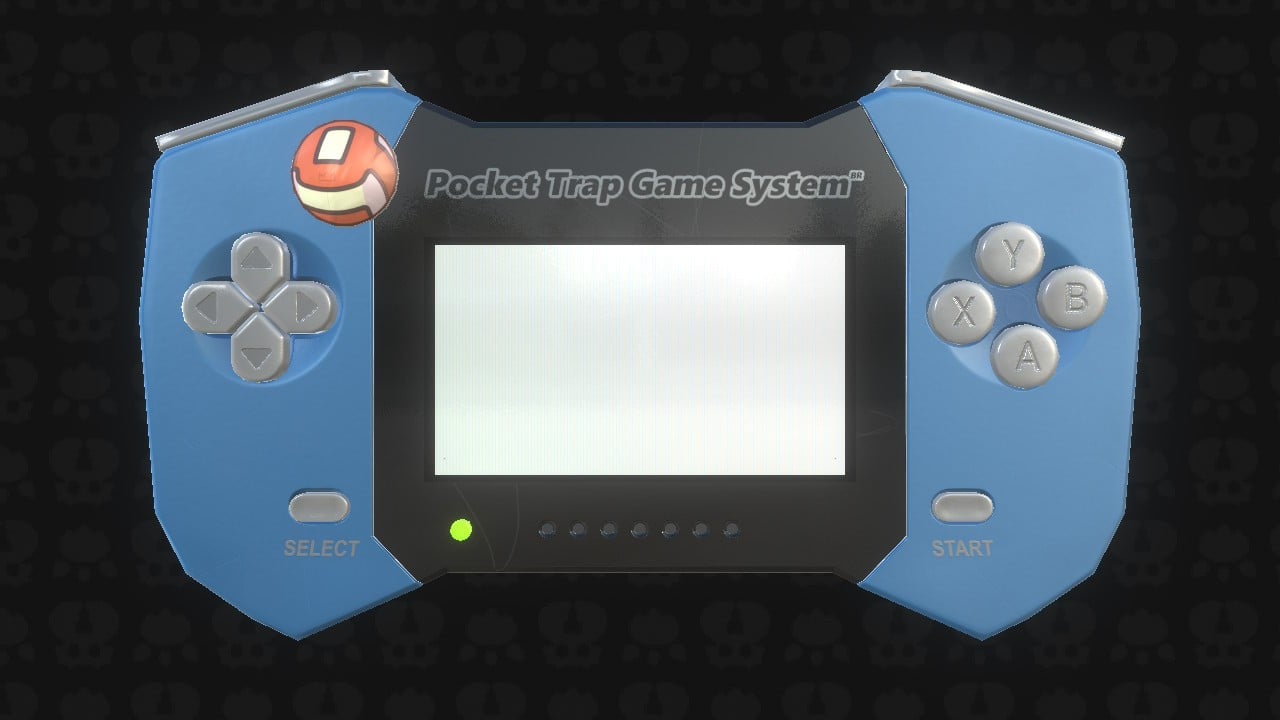
No sooner than Pippit’s auntie Madame, head of Pipistrello Industries, is attacked by four frustrated industry owners, is the young bat forced to confront the issues his family’s business has caused. Oh, and because of the battery-power spell used on Madame, his yoyo is now possessed by his auntie, and she frequently likes to speak to him. Yes, this is absolutely a love letter to The Minish Cap.
Pippit and Madame’s banter makes the game for me in the same way that I loved Ezlo’s snarky nature in Capcom’s GBA Zelda game. And while Link doesn’t talk, I remember thinking of ways to backchat Ezlo multiple times. With Pipistrello, Pippit is already doing that – and sometimes it’s earned, because while Madame may love her nephew, she’s not exactly supportive of his love of the yoyo.
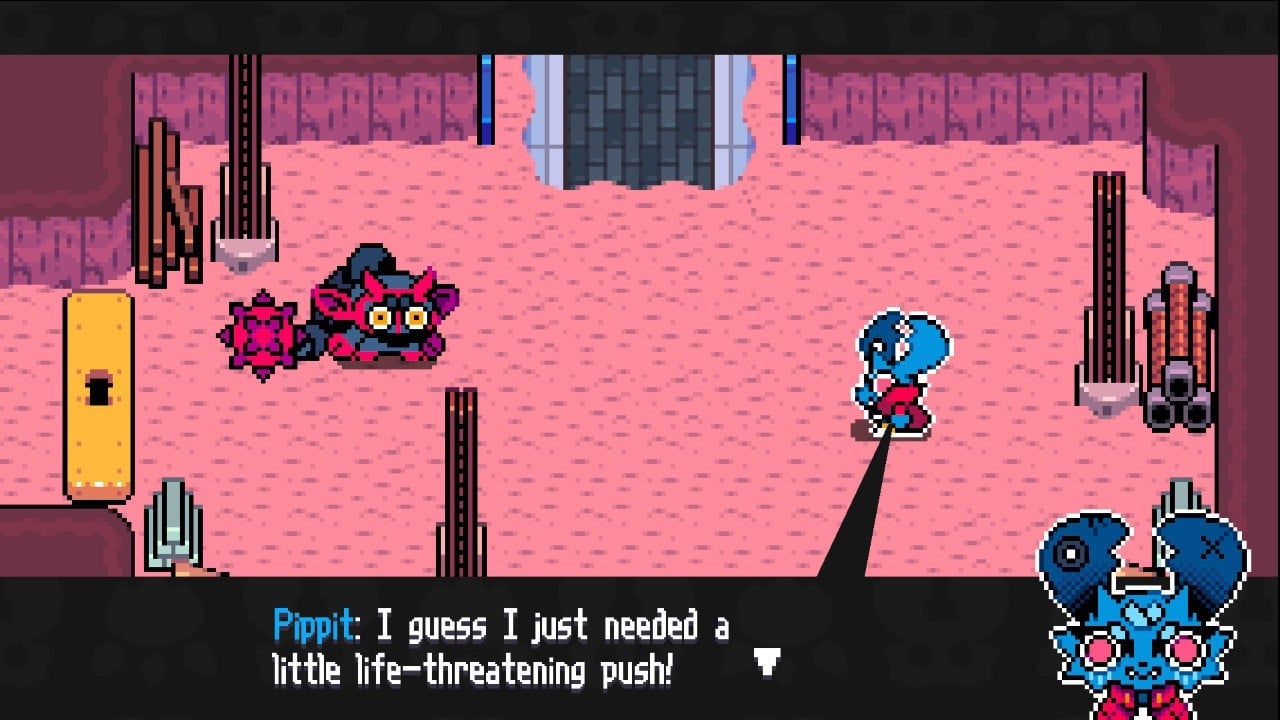
Because Pippit speaks, it immediately gives the game a different kind of energy. Think about the pacing and the world of a top-down Zelda: it’s usually steady, lush and green, and each map is the kind of place you can steadily make your way around, chopping down octoroks, chuchus or patches of grass. Pipistrello might look cute and cuddly, but that electric colour palette only helps bolster the more kinetic movement of the little bat and his yoyo, now enhanced with battery-powered magic and a grumpy aunt.
Every new attack or skill is based on a real-world yoyo trick, and their uses logically make sense. Round the World, for instance, sees Pippit spin the yoyo around his head, pushing enemies away. He also has a charged attack that will keep the yoyo in place to do multiple hits of damage. And there are plenty of angled corners everywhere, which Pippit can use to bounce his yoyo off of to grab items from afar or attack enemies on the other side.

Upgrades don’t come in the form of new weapons or upgrades, or even new outfits. Instead, you have to earn them by paying off a debt to your cousin Pepita. Again, something that totally makes sense in an urban environment and within a family that’s fuelled by greed and money. The debt stays with you and half the money you collect goes towards paying it off, but you’re also lumbered with a debuff or two until you pay it off. You might have one heart fewer or be a little slower for a while. Picking the upgrade you want at the right time is crucial, because no one wants to go into a boss fight with lower defences.
But I think the traversal is where the game really shines, and the creativity of each trick is so fun to play around with. Walk the Dog is now a kind of auto-run, which pulls Pippit along water and bounces off of angled corners. The UFO allows Pippit to suspend the yoyo in mid-air off-string, so he can hook onto it and jump over large gaps. Every single skill is hugely important, because each one will lead to a different secret, a Petal Container (a very subtle nod to a Heart Piece), a Badge (think Paper Mario), or a hidden room.
It’s just like blowing up a wall with a bomb, but Pipistrello does it with its own flair, and a dash of Metroidvania connectivity and backtracking. But with how densely packed each screen is – whether it be dissatisfied citizens or people queuing up to gorge on fast food, enemies hopping around, holes in the ground, traffic, etc. – this large city feels lived-in. This isn’t a forest and a beach and a jungle all linked together; it’s a metropolis crumbling under the weight of corporate competition.
The city itself is a character as a result – split into four distinct districts, with Pipistrello Manor at the far north, each one is home to one of the four business owners who attacked Madame. There’s also an entire underground sewer map (the depths? Say it ain’t so!) which is just another delightful collection of movement puzzles and secrets.
Old Rattalia Town is home to the Roquefort Shopping Center and is a hub of commerce, food, and trouble, while the Fadalins Neighborhood is home to a much greener area, and where the FadaFest Convention takes place. And each district has its own dungeon. C’mon, you didn’t expect dungeons in a Zelda-inspired game? And all of them are brilliant.
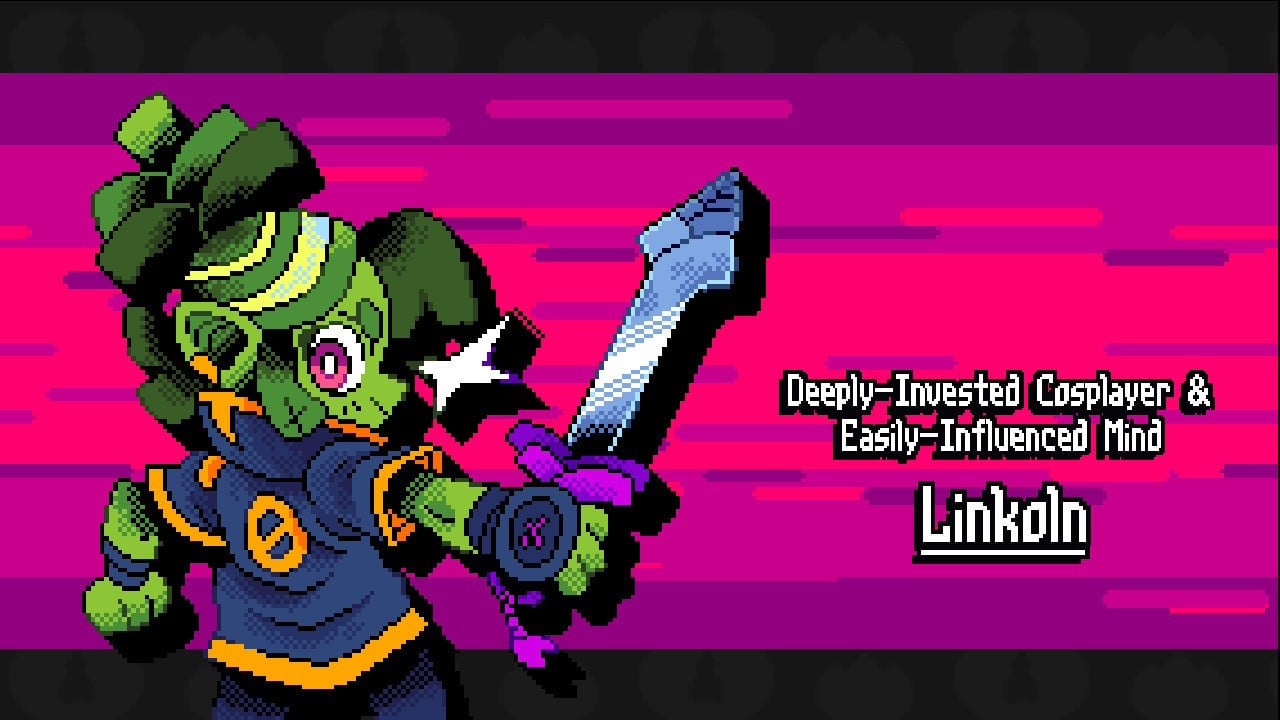
The PoultryFC Stadium might be my favourite, a football stadium which culminates in a match against Cuca Carrara’s (one of those aforementioned business leaders) team, which the boss has been using to fix matches and steal money from eager gamblers. Toxy runs a never-ending convention that scams attendees with crypto-like schemes, and to end it, you have to fight a cosplayer called Linkoln. Yeah...
Each of these mazes is an interconnected playground of puzzles, enemy gauntlets, items, and more. And the puzzles in Pipistrello aren’t easy; logical, but tricky. Think of scenarios where you have to Wall-Ride, jump, bounce off the wall, hook onto a UFO, and then Wall-Ride again. Every movement skill often comes into play in succession, particularly in some of the optional challenges. But when you get the item at the end, it feels so good.
Pipistrello may wear its influences proudly on its sleeve, but it’s all the better for it in my eyes. It gives the ever-popular top-down Zelda formula a shot of spiritedness, a dash of brashness, and a pop of colour. This isn’t a game about saving one person or saving the world from a great evil – the evil here is capitalism, people trying to make a profit to benefit their own industry. And Pippit recognises that the four industry bosses are part of the problem, but the ultimate problem is caused by his aunt.
There’s no empathy for Link’s foes in Zelda, because those games are a tale of good versus evil. But in Pipistrello, Pippit is empathetic to his enemy’s concerns; his aunt has been hogging all the power and putting pressure on other businesses. This moral core is only possible because of the setting and gameplay – this is a classic Zelda for the modern day, addressing concerns that we all have. Not a fantasy, but an Around the World reality.
If you felt let down by last year’s Echoes of Wisdom, or you’re really craving some pixel art Zelda-style gameplay with a touch of Metroidvania (and I know there’s been a bunch of those this year), please don’t sleep on Pipistrello. It’s a masterclass in level design that deserves to be celebrated.
Have you played Pipistrello and the Cursed Yoyo? Let us know in the comments.