
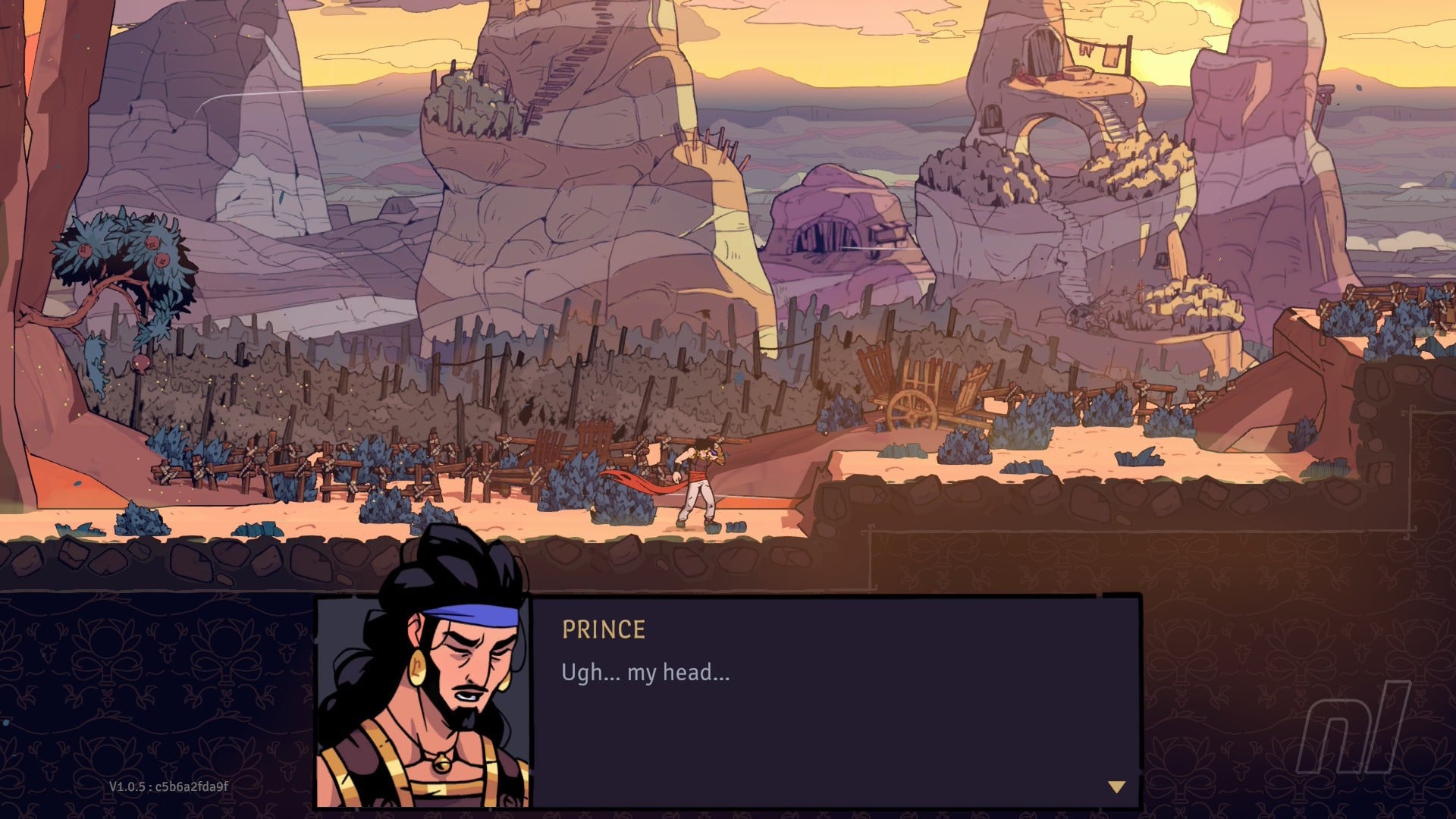
It’s hard to believe that it’s already been the better part of a decade since the launch of Dead Cells, though its absurdly long stretch of post-launch DLC expansions and updates certainly helped to keep it in the average player’s consciousness. The original Dead Cells developer, Motion Twin, actually passed the buck in 2019 to a sort-of assist studio (Evil Empire) formed of former Motion Twin devs and new hires, which made the lion’s share of DLC updates, including the excellent Return to Castlevania. After Dead Cells was officially sunsetted, Evil Empire wasn’t quite done with some of its gameplay ideas, and built this roguelite entry in Ubisoft's franchise.
Billed as The Rogue Prince of Persia, this acts as a sort of spiritual successor to Dead Cells, carrying on many gameplay concepts while integrating some new ideas that help to build its own identity. I’m happy to report that Evil Empire clearly hasn’t lost a step in the transition to a new project - The Rogue Prince of Persia is an approachable and addictive take on the studio’s signature action gameplay and is absolutely something I’d suggest you check out soon.
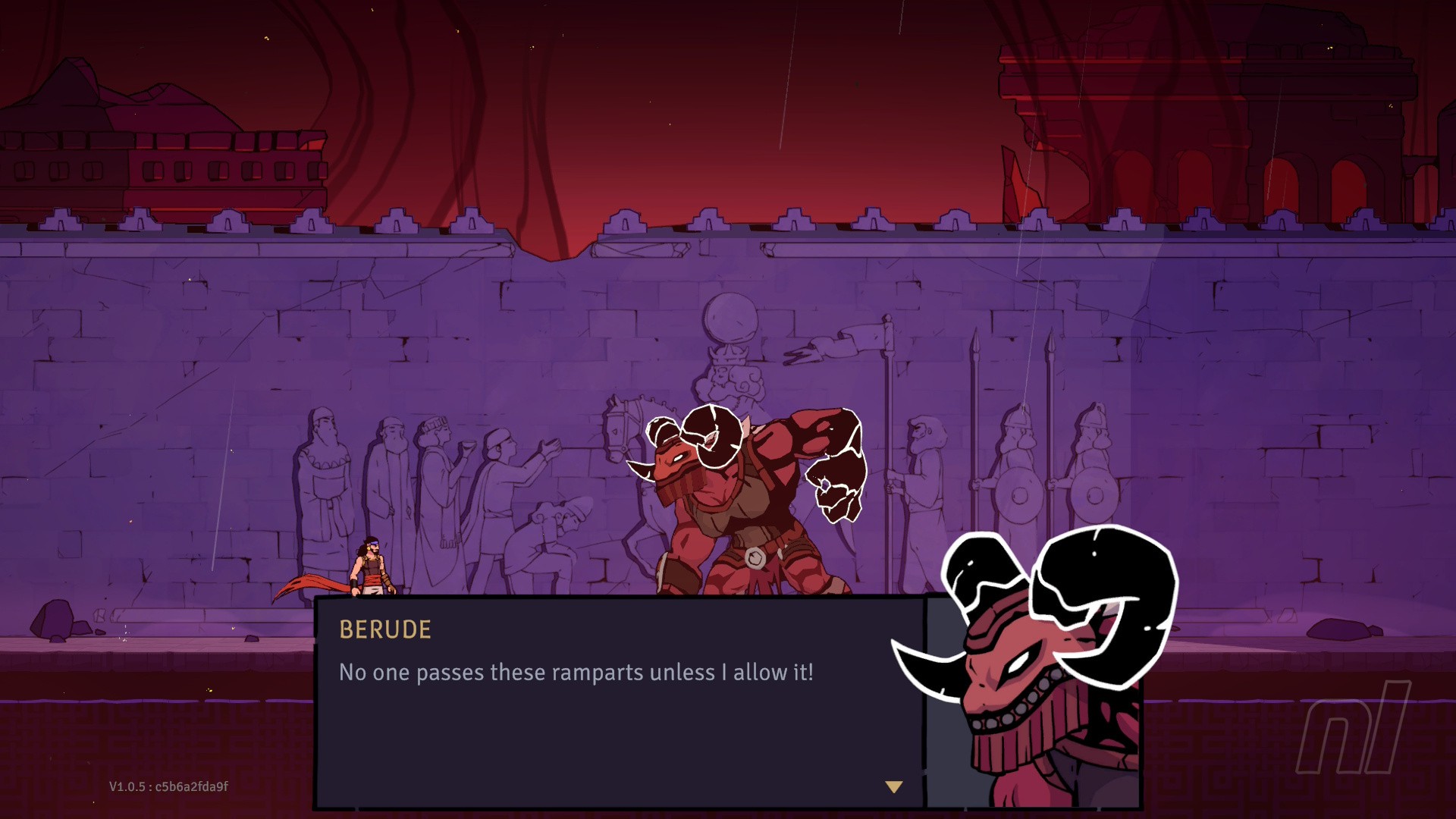
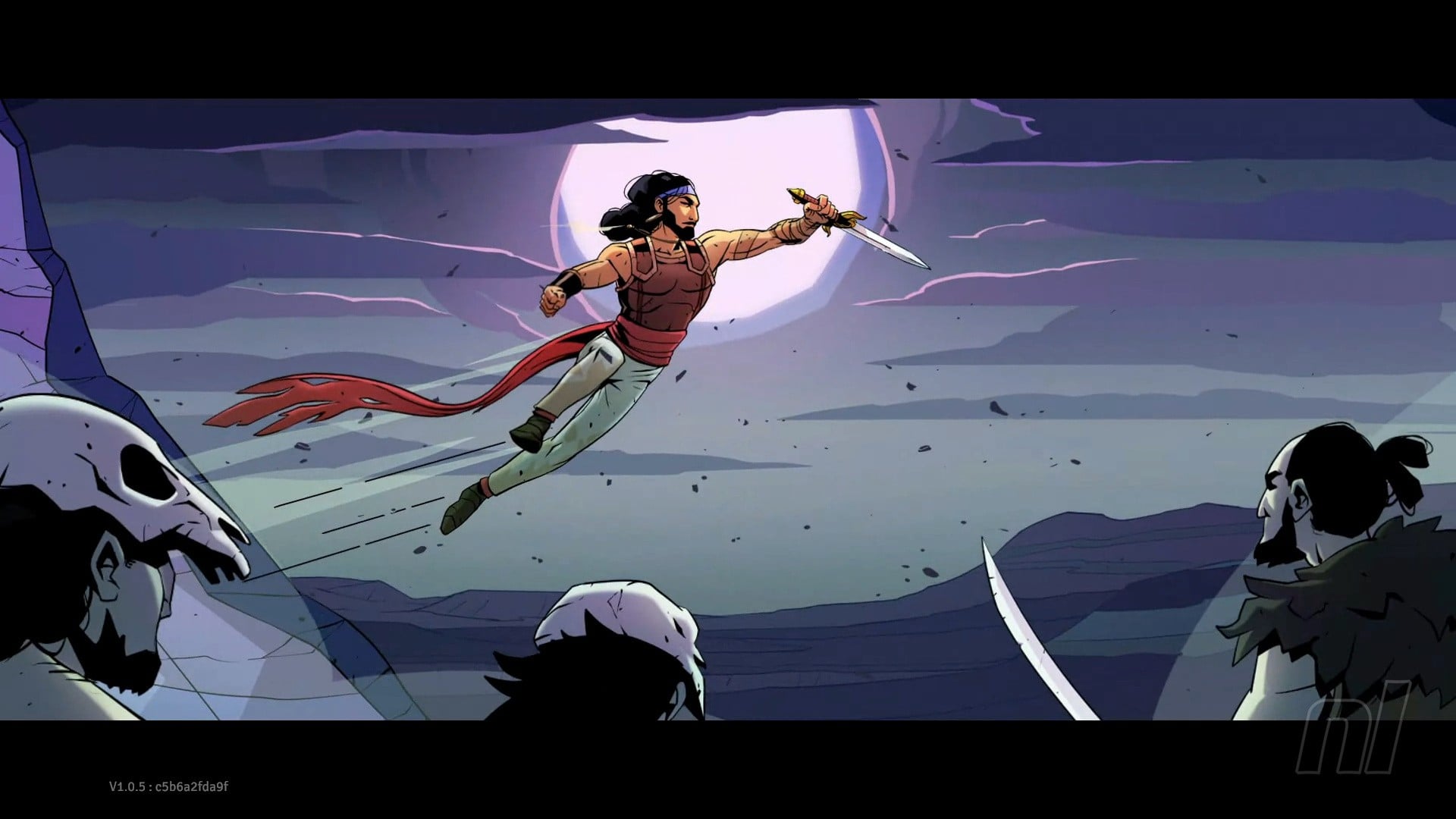
In a bit of a deviation from the typical roguelite format, the story here actually features as more than just mere window dressing to get you into the action. You play as the titular Prince, a smooth and competent fighter whose confidence is inflated by a magic bola he’s had since childhood which instantly sends him back in time whenever he falls in battle.
The Prince is tasked with leading the defence effort to save his beloved city of Tisfun from an invasion by dark magic-powered Huns, yet after a brave but ultimately doomed initial effort, the Prince is revived by a mysterious shaman in a camp outside the city, from which he launches his endless attempts to defeat the Hun generals and save his people.
A key part of how the narrative unfolds is linked to the Mindmap, a sort of constellation that tracks major events, characters, and key items to help facilitate the locations you pick for runs. As you move through an area, you’ll often come across a character or environmental object with information that moves the story forward a bit, whether by unlocking a new area to explore in a subsequent run or giving you a hint to solve a puzzle.
There are many instances where progressing the story in one area first requires you to come back in a later run after exploring another area to get a key item or solution, incentivising replays while also keeping the Prince’s story moving. I thought this was a very interesting way of mixing storytelling with gameplay, as it makes each death and subsequent restart feel like a continuation rather than a setback.
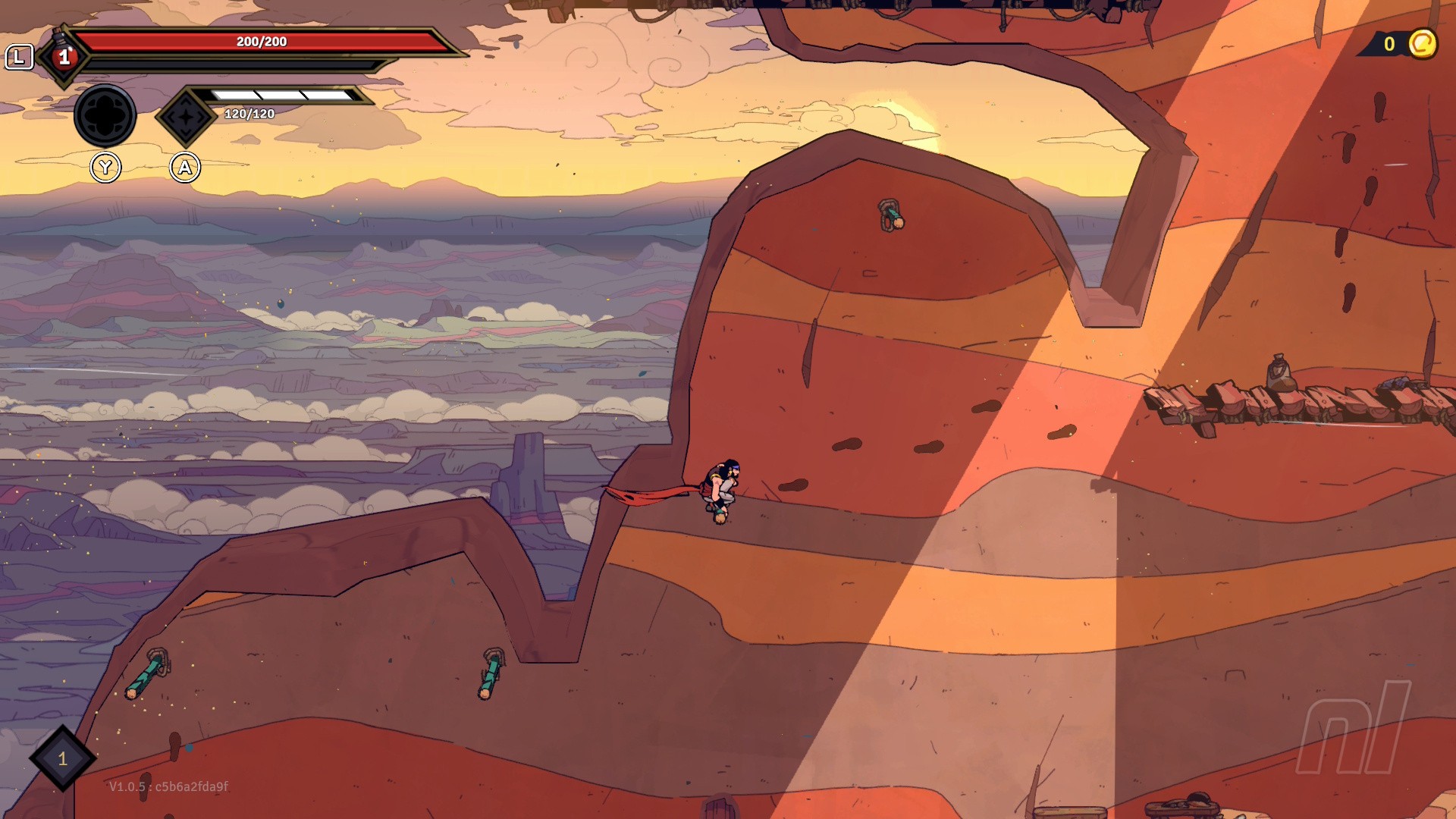
Evil Empire's past experience with Dead Cells is immediately apparent in the gameplay, which is equal parts snappy, thrilling, and difficult. You begin each run with a weapon and a limited-use secondary tool, giving you enough options in combat to feel like you have a fighting chance, but not enough to get complacent. The Prince is a slippery and lithe combatant, effortlessly gliding across walls, jumping between beams, and vaulting over enemies as he cuts them to ribbons with his blades and tools. His agility is all the more important given that he’s quite ‘squishy’ if a foe happens to land a blow — the Prince may be able to dish out the pain, but it doesn’t take too many hits from even trash mob enemies to put him in the danger zone, if not sending him all the way back to camp.
A big part of what makes the combat so engaging is the sheer variety of weapons and enemy types, making encounters feel dynamic and fresh. Every weapon has a different feel and caters to a different playstyle, with each featuring unique special attacks and different conditions to trigger critical hits. Pair this with enemies that have clearly telegraphed (but tightly timed) tells and combat quickly becomes a deadly dance of weaving between danger zones, prioritising targets, and carefully managing your own movements to maximise the pain you can deliver. Skirmishes rarely last more than a couple of seconds, but each one feels invigorating, especially once you’ve gotten yourself into a nice rhythm and have mastered the attack animations of that area’s enemies.
This sense of free-flowing progression extends to the platforming, which manages to be challenging without being too punishing. As long as there’s a wall in the background, the Prince can get a couple of steps in on a wall run to help bridge the gaps between poles and ledges, which adds an interesting dimension where you constantly have to pay just as much attention to the background as you do the ground beneath his feet.
There’s a bit of a learning curve to the controls, but it doesn’t take too long before you’re able to effectively read the upcoming terrain and parkour through it with ease, calling to mind some Sonic games in how it rewards dexterity with speed. There’s even an in-game mechanic for this called Vayu’s Breath, which increases speed and grants other passive benefits if you can time various jumps perfectly.
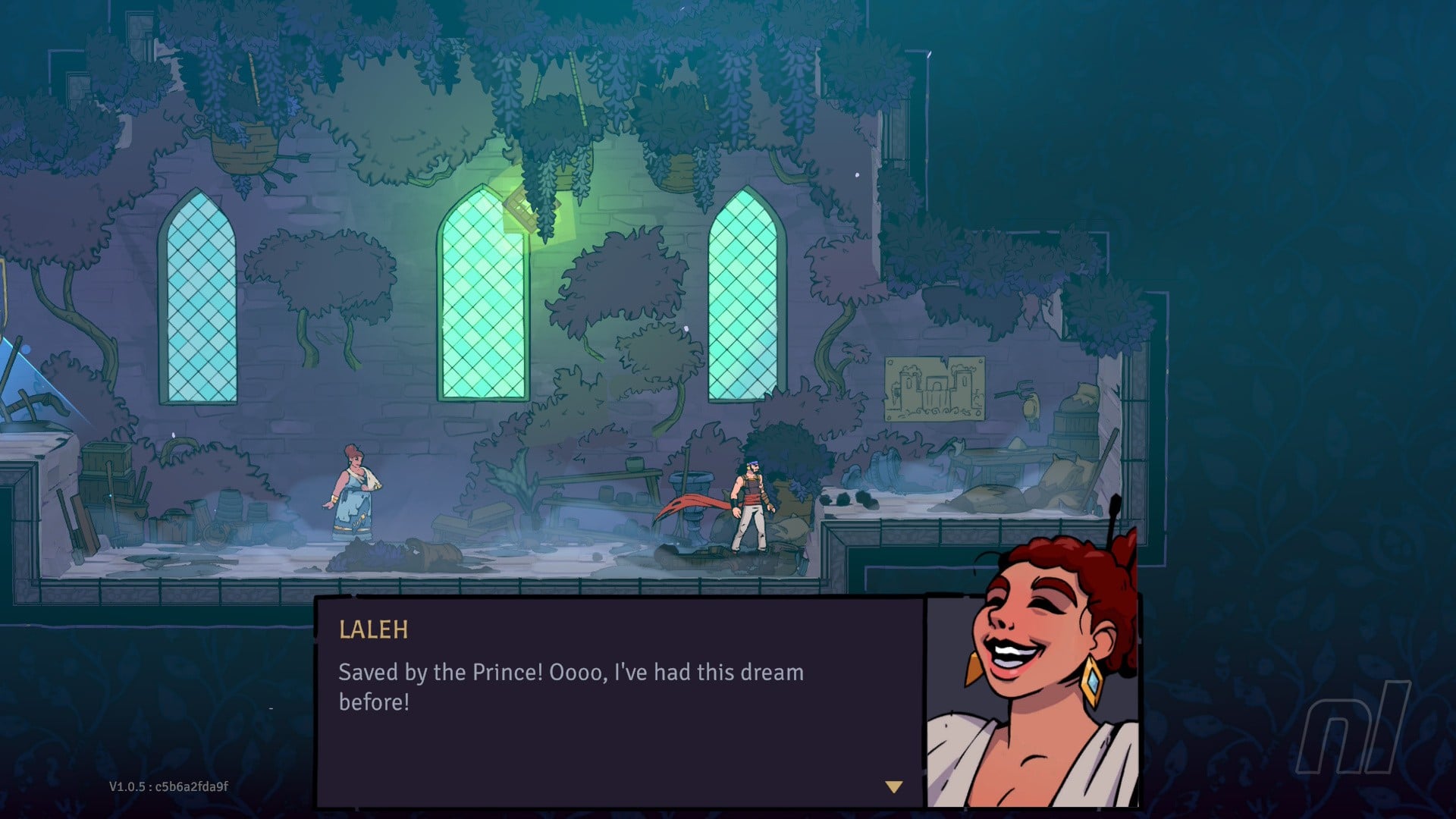
All this comes together to make for a game that moves in a way that few other entries in the genre manage to capture. Defeating enemies, scaling obstructions, swiping rewards, and lunging between ledges leads to a wonderfully cohesive experience where it feels almost like you’re being pulled forward by an invisible force to the next objective. That polished moment-to-moment gameplay then helps to take the bite out of the inevitable deaths that you face — even if you have to reset, the game feels so good to play that you can’t help but rush right into your next run.
Despite the difficulty, there are a variety of metaprogression elements that offer both vertical and horizontal progress to take the edge off. In terms of vertical progression, every enemy and boss you kill earns you some experience, which grants you a skill point each time you level up to be invested in a collection of skill trees you slowly unlock. These can grant you flat stat increases like more max health or a higher health potion carrying capacity, or more passive buffs like the ability to break shields with a kick. As for horizontal progression, the soul cinders you slowly accrue throughout a run can be spent on new weapons, medallions, and tools that are all added to the loot pool for enhanced build variety in subsequent runs.
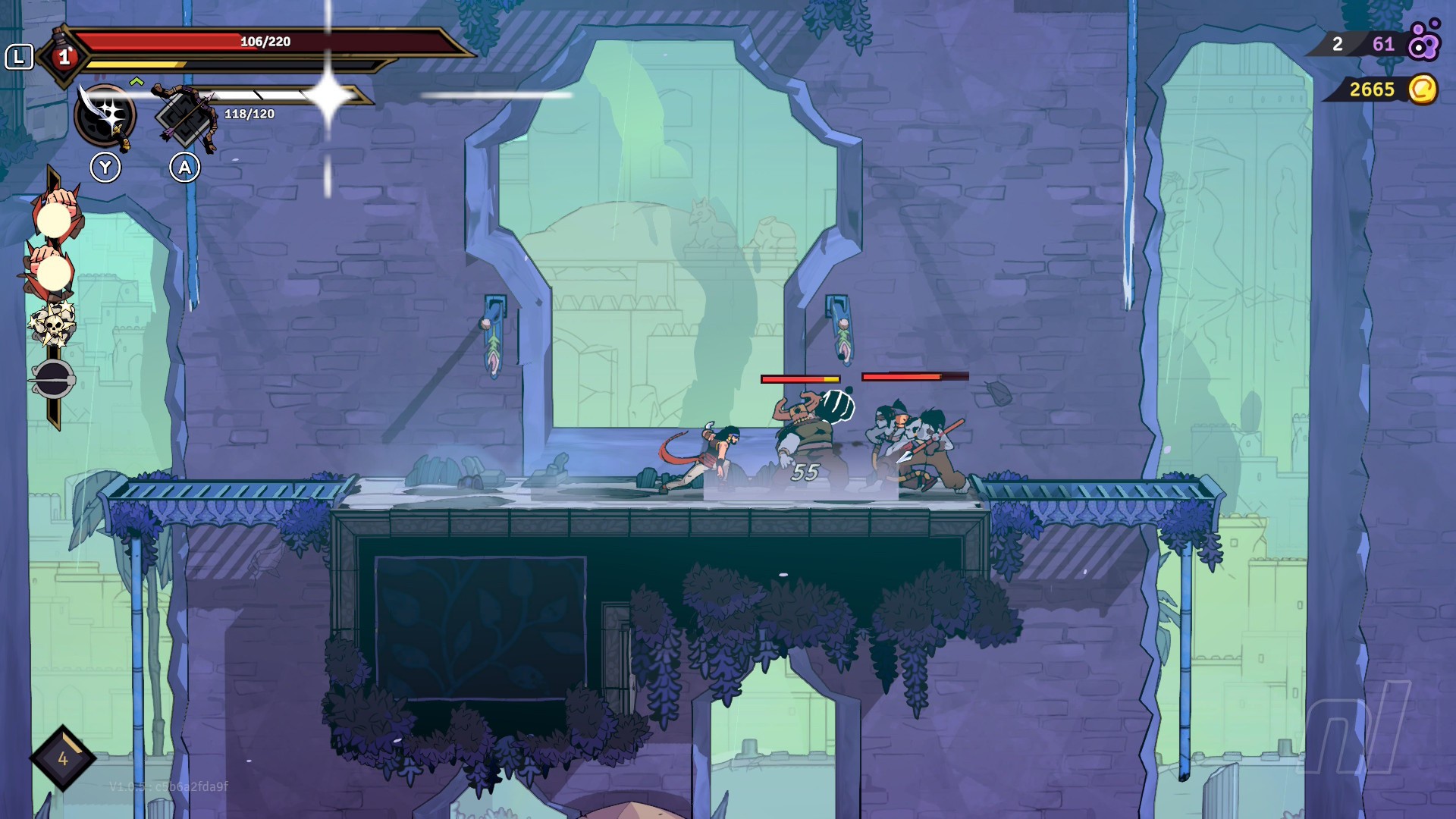
Between these things, it always feels like you’re making some sort of progress with each run, regardless of how far you actually got, which goes a long way towards making the gameplay loop so addictive. Not only do you feel a little more powerful, but there are very often rewards back at camp that are just out of reach and require you to do another run for resources needed to unlock another weapon or skill.
So great are these rewards that they can sometimes go a bit too far, making the game a little too easy in places. It should only take you about 10 hours to reach the initial ending, less if you’re experienced with games like this and pick up on the mechanics quickly. And while there’s a nicely rewarding take on the Heat System from Hades here to turn up the pain on subsequent attempts as you go for the true ending, I still couldn’t help but feel like some of my victories came a little too easily. Suffice to say, those of you hoping for something as tough as Dead Cells may be left a bit disappointed, as you’ll likely chew through all the content in this release faster than you’d initially think.
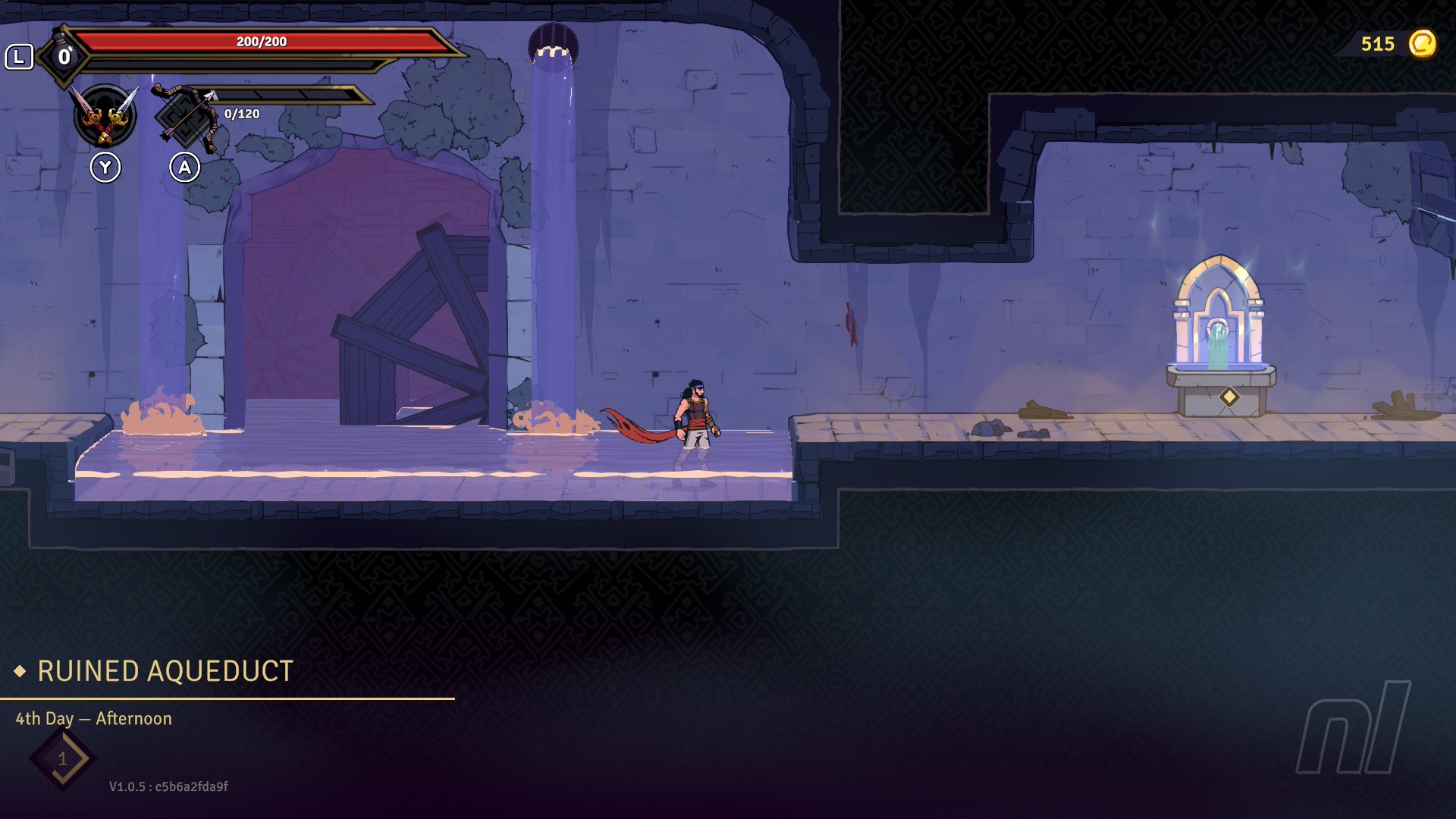
Visually, the Rogue Prince of Persia looks fantastic, with a somewhat comic book art style that focuses on various distinguishing colour palettes and set pieces for each biome. Whether you’re slipping down the cool waterways of the Ruined Aqueduct or dodging between sawblades and flames in the warm halls of the Grand Academy, each area is memorable and distinct from the next. The action also unfolds at what appears to be a smooth 60fps in both docked and handheld, with the resolution looking crisp in both modes, as well.
Conclusion
The Rogue Prince of Persia stands as both an excellent and innovative entry in the long-running series and a worthy follow-up to the developer’s previous work. The smooth action, gorgeous visuals, and addictive loop all come together to make for the kind of game that’s tough to put down.
Though skilled players may be a bit put off by the easier difficulty relative to roguelite genre standards, this is still a very easy recommendation for anyone interested in a more approachable roguelite that doesn’t have a massive learning curve. Evil Empire has done a great job in crafting an impressive, approachable action game here.


Comments 34
I will definitely get the game, now that is has a Switch2 version. Loved Dead Cells and this looks fantastic.
Thanks for the review, was already interested in Rogue Prince of Persia after playing the also excellent Lost Crown (if not arguably better and personally I'd say so considering the game itself, its wealth of options including accessibility ones etc.), but definitely even more so after reading this - I should give also Dead Cells a try at some point, but I'll start with this game considering that it's challenging, but not as difficult as that game and roguelites in general which is actually a positive for me along with everything else mentioned!
I do love prince of Persia games but I’m a bit fatigued on this genre. I tried it on gamepass and had a decent time with it. Maybe I’ll pick it up someday but I can wait on this one. I already have Dunjungle preordered to play and have yet to try Hades 2 or Absolum, so those will keep me busy. The Lost Crown was a masterpiece. I beat it recently and I really hope Ubisoft continue off of that game with something.
Awesome! Thanks for the review.
I’m glad this got a good review on NL, was hoping it hadn’t slipped into obscurity? I really loved Dead Cells, however I’m still hooked on Absolum and Marvel CI right now for my beat ‘em up fix. Particularly Absolum with its roguelight charms. Quite possibly my GOTY.
Rogue Prince is definitely on my wishlist for future, though! Good to know it runs well on S2.
Excited to give it a rip! Grabbed my copy yesterday
Game is really fun, I agree it is on the easy side for this genre. My two complaints are the art style is hideous, and one of the boss fights is way too long.
This game is on sell at the moment too for anyone interested.
It's a shame that this is a Ubisoft game, so it's a hard pass for me. The art style is definitely not as good as Dead Cells, either. Hopefully the next game from this studio won't be a Ubisoft game, either.
I love Prince of Persia and like the gameplay of this. The roguelike nature of the game kills it for me. I am 5 hours in on Xbox and still getting barely anywhere in the game. I feel like I am making no progress. Takes ages just to increase a level for an upgrade. 10 hours sounds very optimistic for me. I'd be surprised if I don't at least double that.
A great game, about 20 hours to complete, and a lot of fun. The developers have announced new content coming next year. The only downside is that Ubisoft put the game on sale for 33% off just few hours after release. And I had already bought it at full price, but it's worth the price I paid.
@Enigk I played a lot of dead cells so that is probably why the game came across as very easy. I use the twin blades that give a bonus after vaulting. If you are struggling on Bataar you can kick the bombs that follow you around for major damage.
I played it on Steam, it's great. Waiting for a good sale to get it on Switch too.
When a game like this comes out on the Switch and Switch 2 without an upgrade path, I really wish someone would do a breakdown of the differences. If a game is pretty much the same on the Switch, I'd probably get that version because the Switch has better battery life and a Switch version can be played on either system. But if the Switch 2 version plays significantly better than the Switch 1 version running on the Switch 2, I'd probably get the Switch 2 version and limit which system I can use it with. So now I'm wondering about this game and Marvel Cosmic Invasion. What am I losing getting the Switch 1 version?
Ubisoft, you say? Yeah, I'll pick this up on deep sale in a few months then.
Due to the GKC, I might grab the Switch 1 special edition after a heavy discount. Given how small the game is, I'm annoyed that they didn't just make a Switch 1 build that runs better when played on Switch 2 instead of having two separate builds.
They're both the same size too, for crying out loud, so I assume that they're both running the same damn code. Why even have two separate builds/releases where the Switch 2 "physical" release is vastly inferior?
It’s great to see Prince of Persia back in such a strong force. I’ll admit that perhaps I’m getting a little burned out of roguelikes, but I do like this one, just not as much as I loved Dead Cells or Lost Crown, but it’s a solid step forward for both teams.
does this game force you to create an Ubisoft account to play it?
(im usually pretty good/lucky with getting around the "sign in" hurdle but with that other recent PoP game I had no luck, and that was just the DEMO.
yadda yadda I didnt play that game and ive all but written off Ubisoft as a publisher for good, so nice job guys 👍)
@The_Nintendo_Expat Yes, a Ubisoft account is required, even if it's useless there are no achievements or rewards to earn. To play without a Ubisoft account, you must put your console in offline mode.
@AlleyCat
hey, thanks! no need to bother with this one, then 👍
The only complaint I have is why is the version number always on screen, it's really strange and I just can't unsee it.
I played it on Gamepass last night for a bit. Didn’t like that I couldn’t use the dpad. I didn’t find it all that interesting really. I guess I could try my M30 but I think I don’t like it enough. There are too many button combinations and I don’t think it would be great trying to play it even though it can emulate the analog stick. Much happier with Shinobi or Ninja Gaiden. I am not sure how much I like rogue lites because I don’t actually feel like I am improving until all the stuff is maxed out. (Hades was like that.)
Did I just read this whole review without one mention of how awesome the soundtrack is?! I mean I get we all have different genre preferences but this music is damn good.
The Middle Eastern x Hip Hop sound elevates the whole experience. Each locale not only has a unique look but it's own song too, and it all creates a real vibe. I've been happily listening to the OST outside of the game.
And that title track with those vocals? Chef's kiss.
Anyway, just wanted to shout out ASADI's work on this game and thought people should know. OST is on both Apple Music and Spotify if you're curious.
I’m really annoyed about this. I bought the Switch 1 version not knowing it had a Switch 2 version. Ubisoft should release an upgrade patch for owners of Switch 2.
The game is great but I want to play it at 60fps on Switch 2
Great news. As long as it was getting 7s or above I was gonna get it. Loved Dead Cells
@nathatruc I agree, that is so strange and annoying! Don’t understand why it stays there constantly, surely they will remove it in a patch.
Really, truly loved this game. Here's my review: Evil Empire should be proud of this one. I don't usually dig roguelikes but I make an exception for ones like this.
Taking Dead Cells and adding a story with a fluid movement system and a rad soundtrack (Persian instruments with trap beats work together surprisingly well?) and you've got a solid title! The gameplay feels great, and I really loved all the platforming challenges that would pop up. Finding good synergies was also fun, if a little simplistic Unlike other roguelikes I tend to bounce off of, what helped me the most in enjoying this game was that 1. There's plenty of progression between runs and 2. There are story objectives for every run. I never felt like I was wasting my time, and I was able to get through the story with a decent amount of challenge without feeling like I was beating my head against the wall. I really appreciate that, and I highly recommend this game to people who enjoy Hades for the same reasons!
I would absolutely love more indie companies to take a stab at big IP's, because things like this and Cadence of Hyrule turned out really well. Between this and the Lost Crown, I think I have a new favorite franchise; please keep new 2D entries coming!!
The logo looks like something that won a middle school graphic design contest.
This game looks really bad. Sorry, hate to be a stick in the mud.
@Pillowpants Uhh, what did Ubisoft do? They've always been a great studio.
@The_Nintendo_Expat I wouldn't know about the demo, but if you were talking about The Lost Crown, you do not need to sign in a Ubisoft account to play it on Switch.
I very much enjoyed my 75h+ spent with it!
I'm not really into the rogue genre, but I enjoyed The Lost Crown SO MUCH that I'm willing to give this one a go eventually.
I cannot bring myself to create an Ubisoft account. It just feels dirty. In a bad way.
I’m absolutely tired of anything with the word “rogue” in it, just give me a normal game, for god’s sake.
Show Comments
Leave A Comment
Hold on there, you need to login to post a comment...