by
by 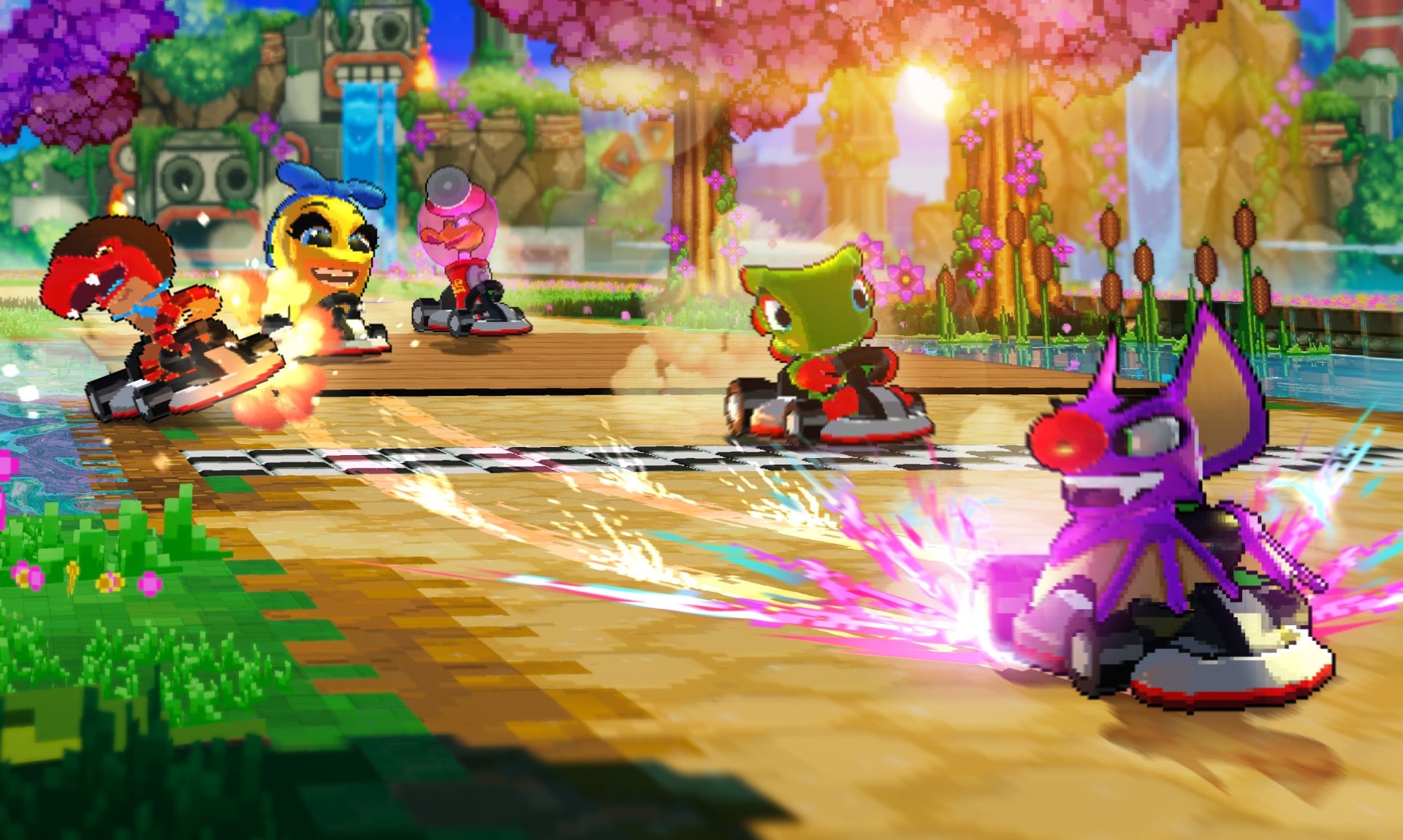
The Mario Kart series has evolved in some truly remarkable ways over the past few decades, but I feel little shame in stating that the 1992 original remains one of my personal favourites (I'm odd like that; I'd pick the original F-Zero and Star Fox over later iterations, too – probably because, deep down, I'm a boring old fart).
So, upon discovering that Playtonic's upcoming racing title Super Yooka-Laylee Kart takes inspiration from Mario's Mode 7 karting debut and not, as many suspected (and perhaps hoped), more recent 3D offerings, I was pleasantly surprised. I realise that not everyone will share my rose-tinted enthusiasm, but hopefully by the end of this hands-on preview, I will have changed your mind slightly.
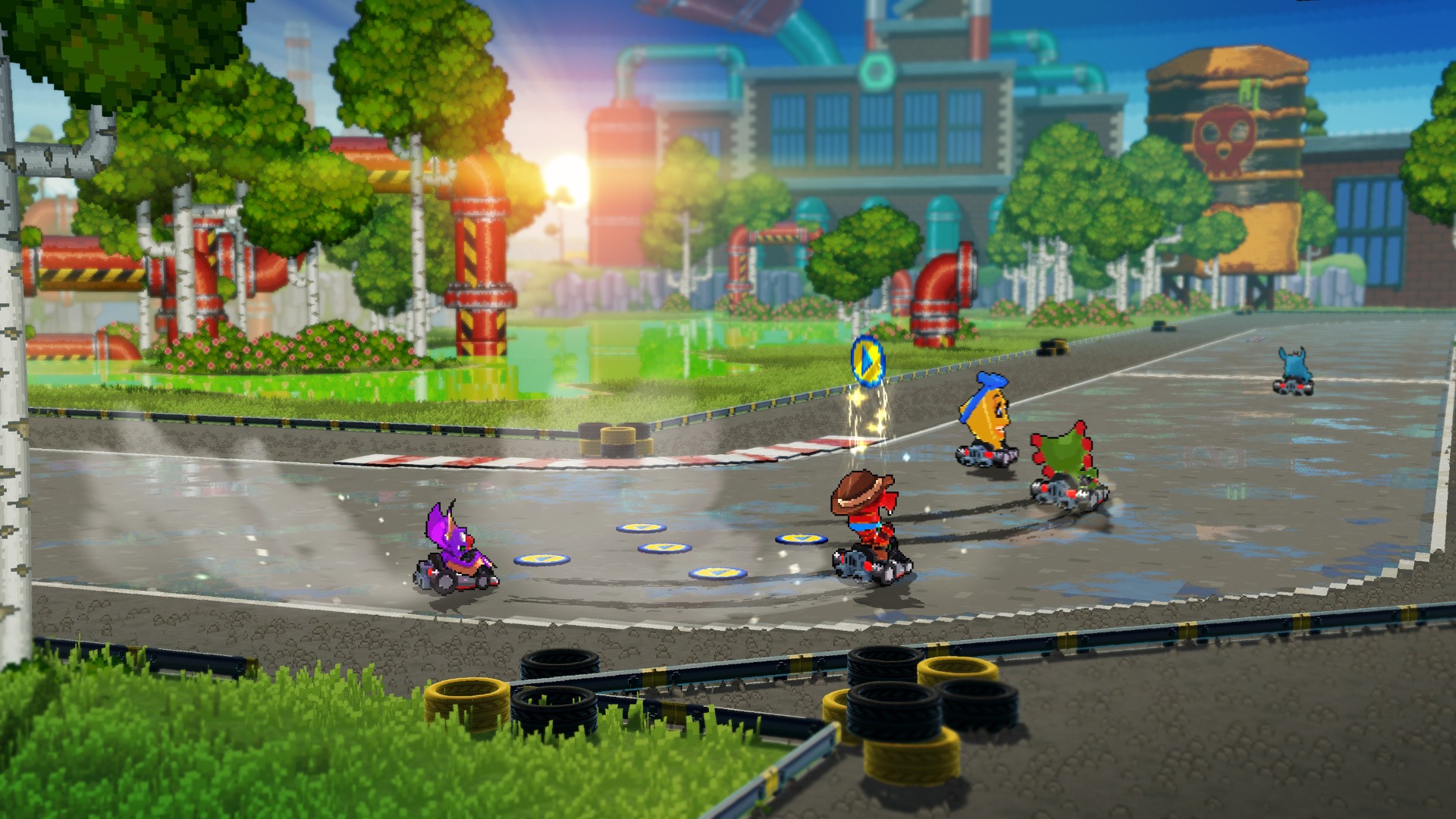
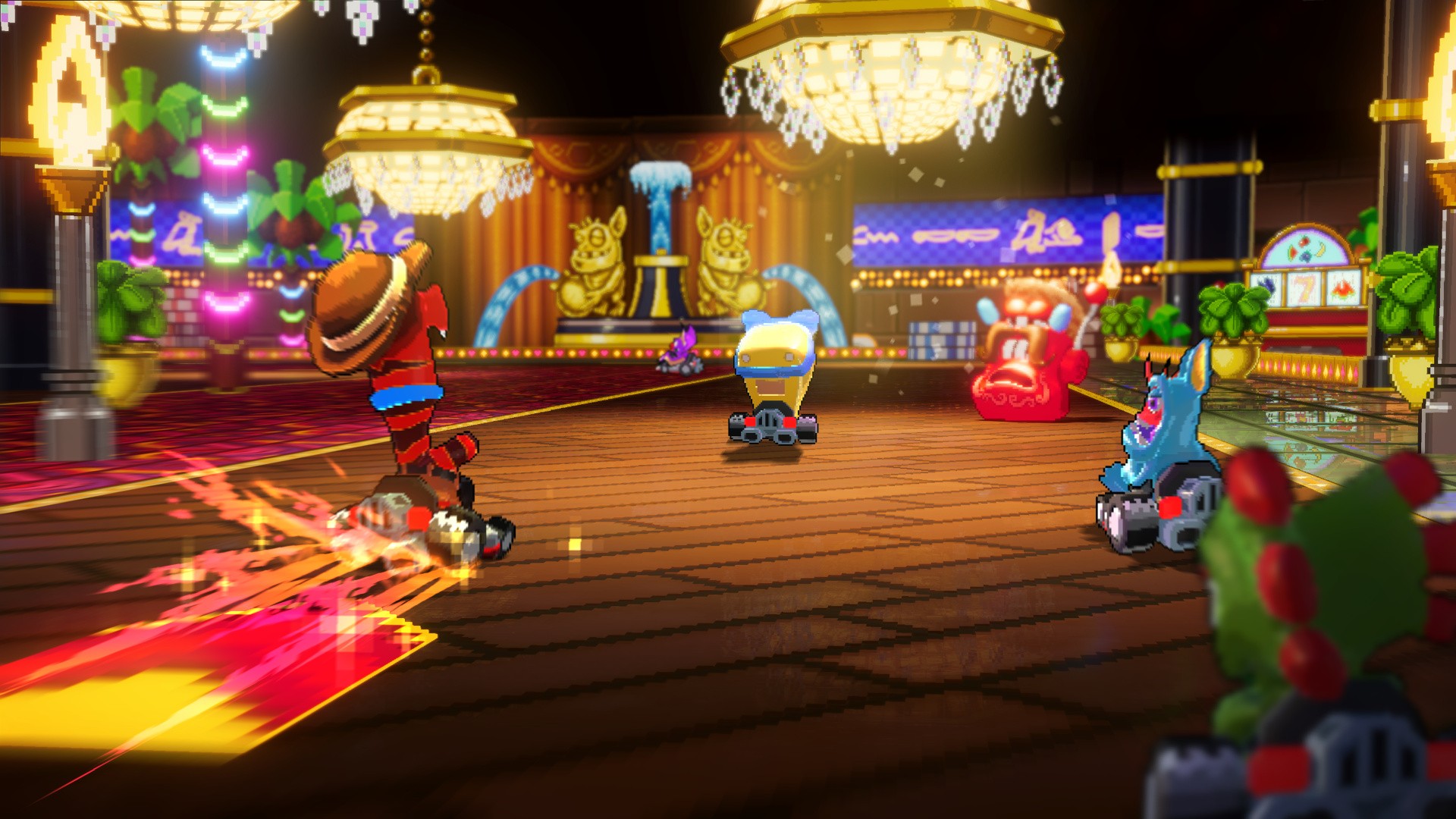
Let's address the elephant in the room first – yes, Super Yooka-Laylee Kart looks like Super Mario Kart. That was always the intention, according to Playtonic studio head Gavin Price, who is a big fan of Square Enix's 'HD-2D' approach.
However, it's not entirely the same as Super Mario Kart; there are 3D elements at play here, such as walls, pipes and other trackside objects. There are also plenty of visual effects Nintendo's 16-bit system could never hope to achieve, such as fractured sunbeams streaming through the clouds, convincing reflections on bodies of water and cherry blossoms being kicked up realistically as your kart drives over them.
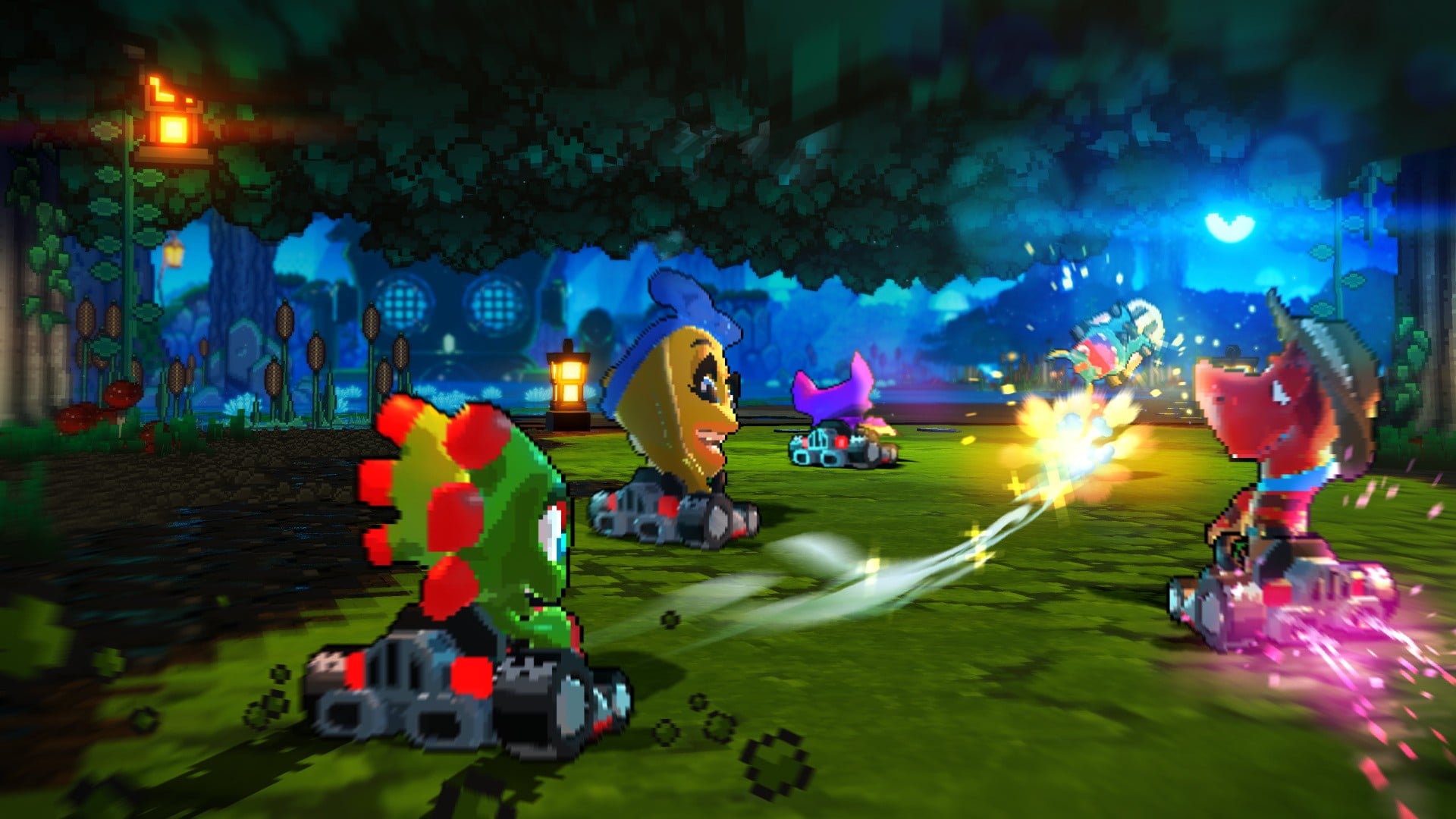
Another aspect faithfully captured from Super Mario Kart is the way the game controls. Hardcore fans may disagree with me on this, but I believe the 16-bit original (and Mario Kart Super Circuit on the GBA) don't handle the same as later 3D entries because the course is entirely flat; you don't have to compensate for undulations or bumps in the track as you throw your kart into a hairpin bend.
As a result, I always play Super Mario Kart with my vehicle sideways for practically 90% of the race, power-sliding in an attempt to hug the corner as tightly as possible and shave seconds off my lap time; there are no jumps, hills or pits to get in the way of my rubber-burning drifts. While this mechanic is present in later Mario Karts, the way you deploy it in the original feels subtly different – and Super Yooka-Laylee Kart recreates that feeling perfectly.
The only issue I have at present is that the speed at which the parallax background moves has given me some of the worst motion sickness I've ever experienced while playing a video game. The other people who tested the game alongside me at Playtonic's HQ (Hookshot CEO Ant Dickens and my son, Noah) didn't have any problems; the latter even set the fastest lap time of the day.
Both Price and Playtonic's QA Manager, Lee Jackson, told me that this issue is on their radar, and they're looking at either slowing the speed at which the background scrolls or adding accessibility options that let you tweak this element.
The flat track has another benefit, again carried over from Super Mario Kart. "We want you to be able to see other racers as much as possible," explains Price. Unlike Mario Kart 8 and Mario Kart World, which feature tracks that are so expansive you sometimes can't even see the racer in front of you, Super Yooka-Laylee Kart keeps your rivals in view even when they're a few turns ahead of you, making sure you never feel like they're totally out of reach.
While Playtonic's kart racer perfectly captures what made Super Mario Kart feel so compelling to me as a youngster, there are elements at play here which are fresh and new. "We want it to feel like a fighting game," Price tells us. "There's a rage meter which builds up as you get hit by weapons, and this triggers a powered-up state which allows you to get back in the game in a way that isn't totally reliant on the 'rubber-band' system used in other titles."
On top of that, Playtonic is employing rollback netcode for the game's online races — another staple of the fighting game genre — and there will be input-based special moves to unleash. "What we're aiming for is an accessible but precision-focused arcade racing experience which caters for skill expression via these advanced techniques, and encourages high-level play," says Price.
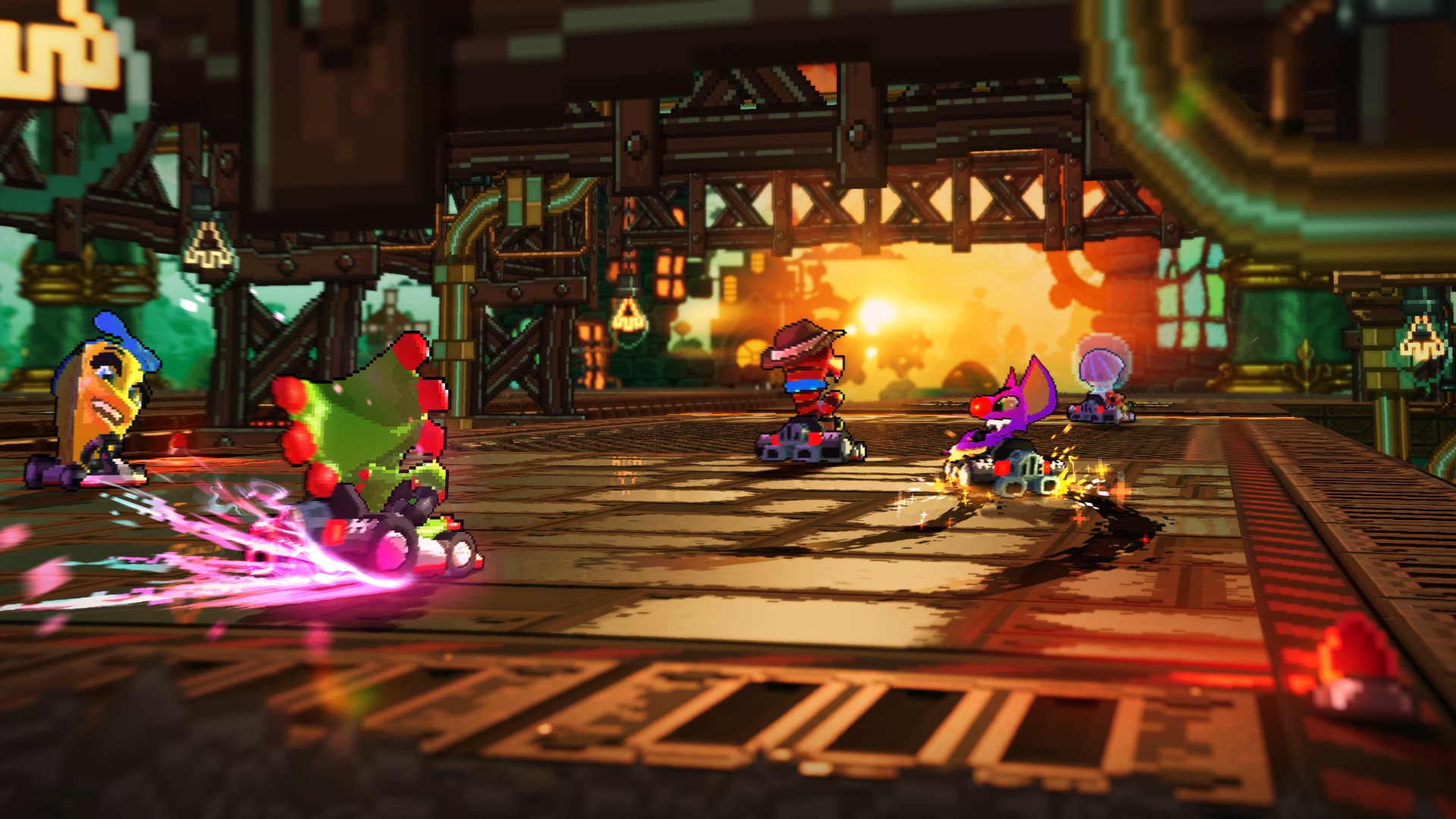
As you dig a little deeper, it's clear that Playtonic isn't interested in simply creating a Mario Kart clone, even if it does borrow some aspects quite liberally. Coins, for example, increase your top speed just as they do in Nintendo's game – but the twist here is that you can spend them in-between races on perks, lending an additional reason to keep hold of them – and introducing a risk-versus-reward mechanic, as spending coins means you'll have a lower initial pace in the next race. "Coins can be thrown or banked," adds Price. "If they hit opponents, it will spin them out, but they also get to keep that coin."
Playtonic are also giving each item you collect multiple uses, adding even more tactical variety. "I think this really adds a lot of potential for strategies and choice throughout an action-packed race," says Price.
Super Yooka-Laylee Kart offers up to eight-player split-screen, as well as comprehensive customisation options when it comes to races. Want the purist 16-bit racing experience possible? You can disable the boost system (which, like Mario Kart, is triggered by drifting) if you wish. You can also select which weapons appear, or tinker with the number of laps. It's even possible to play with small-sized or invisible karts. The level of granular customisation means that no two tournaments need to be the same.
Playtonic promises plenty of characters to choose from, each with unique performance capabilities, and there's a single-player Story Campaign to race through. However, one thing Super Yooka-Laylee Kart isn't trying to replicate is the 'Adventure Mode' seen in Diddy Kong Racing, a Rare title on which Kevin Bayliss, Martin Wakeley and John Pegg (all of whom are now Playtonic employees) worked.
I can understand that many people will be disappointed to hear this, given the pedigree and history of Playtonic as a studio, but Price makes it clear that Super Yooka-Laylee Kart's main focus is social play and challenging yourself against other humans.
"The game is built around skill," he tells me. "We want to foster expressive gameplay mechanics and advanced racing techniques, very much like how the original Super Mario Kart gave you the chance to push your skills to the limit. Add in tactical weapon system and the truly unique Rage mechanic, and hopefully we've created a game that rewards you for mastering each circuit, fully exploring the character roster and constantly looking to improve your racing skills against other players."
So far, Super Yooka-Laylee Kart is only confirmed for Steam, so I naturally pushed Price about the possibility of it coming to Switch 2. I got a swift "no comment" from the Playtonic boss, but, given the company's history with Nintendo systems, I'd eat my own trousers (or should that be Trowsers?) if this game didn't find its way to the system at some point in the near future.