 by
by 
An awful lot has happened for Pokémon in the last 30 years. It's spawned nine mainline generations spanning seven different consoles, countless spinoffs, a trading card game that's more popular than ever, movies, TV shows, merch, a flipping theme park... need I go on?
It is the biggest entertainment franchise in the world with a global recognition that even the House of Mouse would envy. In short, 30 years on, I can't imagine life without it.
I'm sure that a bunch of you lovely lot would say that same, but I'd wager that the series hasn't had quite as much sway over your life as it has for the developers behind the ever-growing sub-genre of Pokémon-likes.
Creature catching and battling, it seems, is such a solid format that it inspires a new wave of studios every year. We see Game Freak DNA cropping up in everything from battle-focused roguelikes to cosy farm sims, and what shines through in the very best of them is a genuine passion for the source material. A desire not to rip off what's come before, but take what they love about it and work it into something new.
With the series' 30th birthday celebrations in full swing, I decided to reach out to a handful of these studios to find out what Pokémon means to them. Unsurprisingly, it means an awful lot.
Humble Beginnings
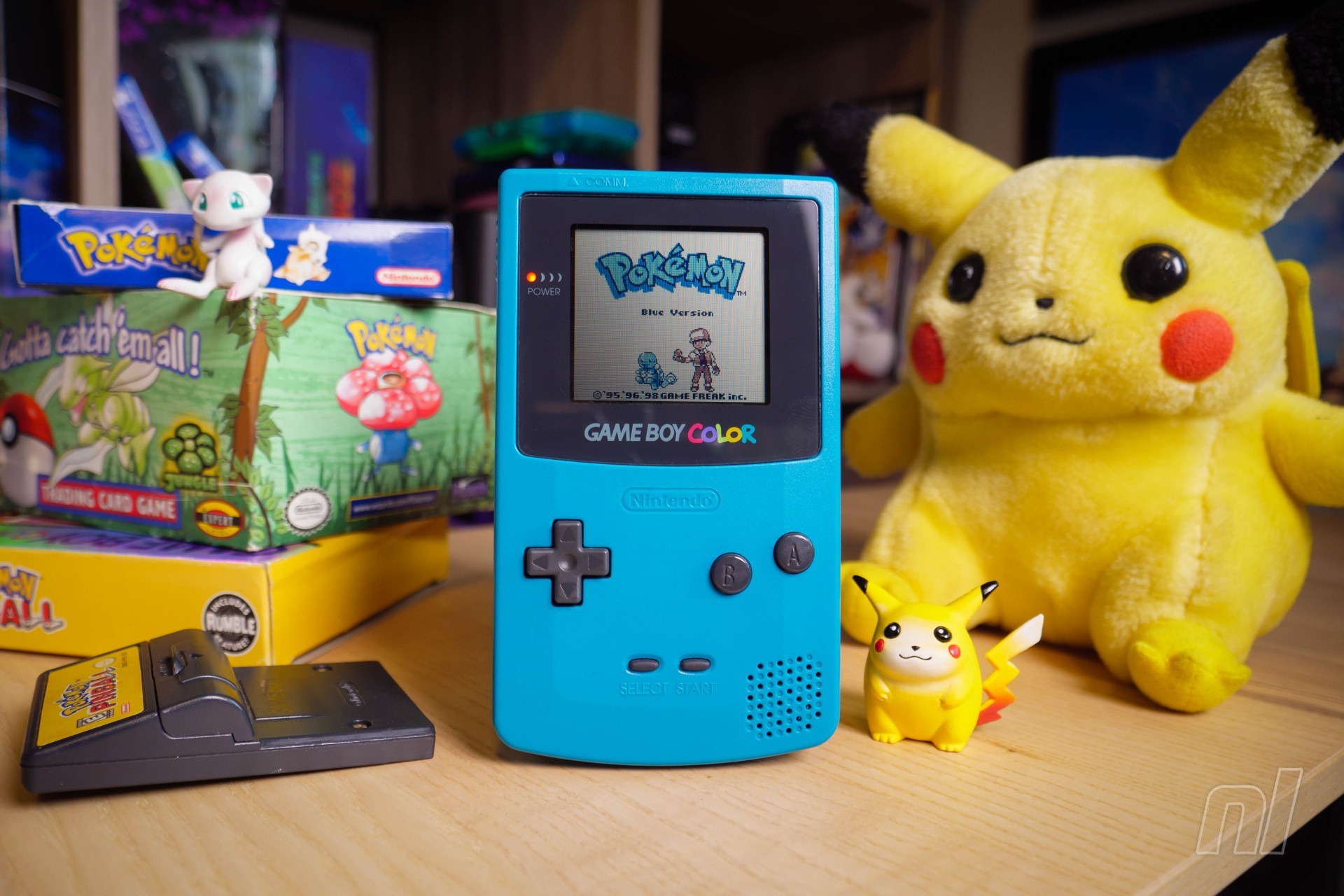
"I got an atomic purple Game Boy Color and Pokémon Blue for my sixth birthday, and that gift set me on a path that I’m still walking along today," said Sandy Spink, the lead dev of Supersoft's creature-catching adventure Moonstone Island. "I remember feeling like Pokémon was made for me, and since I was a child in the 90s, it sort of was."
I heard stories of these childhood inciting incidents — a "canon event", as Cassette Beasts' Jay Baylis describes it — time and again. Alex Pratt, Crema Games' Marketing Director on Temtem, describes picking his first starter (Bulbasaur) as "a split-second choice that would quietly shape years of my life," while Baylis recalls the anime's creature-catching focus as a feature "laser-targeted to fry my six-year-old brain with brand appeal."
It was Jochem Pouwels, who worked with TRAGsoft on Coromon, however, that took the biscuit, as he recalled his earliest memory of the series: playing through Pokémon Red in the wrong language.
"I had absolutely no idea what the NPCs were saying," he says, "but even then, the gameplay was engaging, so I just brute-forced my way through the game by trial and error."
And there's the keyword I was looking for from these devs: 'gameplay'. We all know the mechanics of a mainline Pokémon like the back of our hand at this point — even Legends: Z-A's real-time battle shakeup wasn't enough to wholly push the series' tried-and-tested formula off its axis — but what do they feel like in the hands of a game developer? Why are they so gosh darn appealing?
The Power That's Inside
Regardless of which studio I spoke to, two main features kept popping up: the creatures and the micro-rewards. I'll begin with that first camp because, frankly, the 'mon themselves have always been the reason that I've kept coming back to the series for more.
"I honestly think the loop of collecting monsters as pets to battle with, which lets you progress and discover more monsters, is the single best game concept ever," Baylis says, "People want to see cool creatures, and decide which ones match their own personalities. They want to compare and contrast those choices with their friends. It's brilliant."
there are parallels to be drawn with the modern gacha experiences
It's not just the playground chatter of 'who-found-what', either. LEAP Game Studios, the team behind monster-training roguelike Dicefolk, points out how well the games constantly tease you with new Pokémon via the battle system.
"The fact that Pokémon can be both allies and opponents is key," studio co-founder Luis Wong tells me, "It creates a natural incentive to explore and experiment during battles. Every encounter becomes an opportunity to fall in love with a new Pokémon."
Cute creatures aside, it was the recurring mentions of the game's subtle rewards system that interested me the most because it's something that I have never really considered. Unsurprisingly, a game developer's eye will pick up on things that a more casual player might not.
These rewards come in several different shapes and sizes. Most obvious is the team level and XP, each providing its own little dopamine hit with every battle and wild encounter. "Pokémon employs the classic 'number go up' mechanic that makes most RPGs so satisfying," Spink says, "You can feel your team getting stronger and see it visually as you evolve your Pokémon from these shrimpy little cuties into these war-tank beasts."
But there's the near-constant reward possibility that comes with the simple act of walking through tall grass, too. The games show you the 'mon you'll want to add to your team via battles, then present the opportunity to bump into them during exploration.
"The very short action of moving from one spot of grass to another, or transitioning map sections, awarded the player with a likely new Pokémon appearance," Nexomon lead developer JVemon says. "I think, in that sense, there are parallels to be drawn with the modern gacha experiences: quick, controllable successions of positive feedback - except it was free."
we wanted to create almost a 1:1 homage to Pokémon
Pouwels used a similar 'luck-of-the-draw' comparison in his description of the series' iconic tall grass, "a little slot machine of possibility". This "incredibly satisfying rhythm of constant micro-rewards" means that no two players will ever experience the game in the exact same way, he argues, which he sees as the Holy Grail of development.
"As a developer, that combination of accessibility and hidden depth is endlessly inspiring."
You Teach Me And I'll Teach You
It's a system that we all know and love, so I was keen to find out how these developers pick and choose which mechanics will make the cut in their '-like' games, and how you go about tweaking some of the most iconic features in gaming.
"I've never felt like Pokémon was the only thing a monster-collecting RPG could be," Bytten Studio's Tom Coxon tells me, "even with all the indie monster-collectors coming out recently, there are still so many unexplored avenues in the design space. The genre is wide open and bursting full of potential."
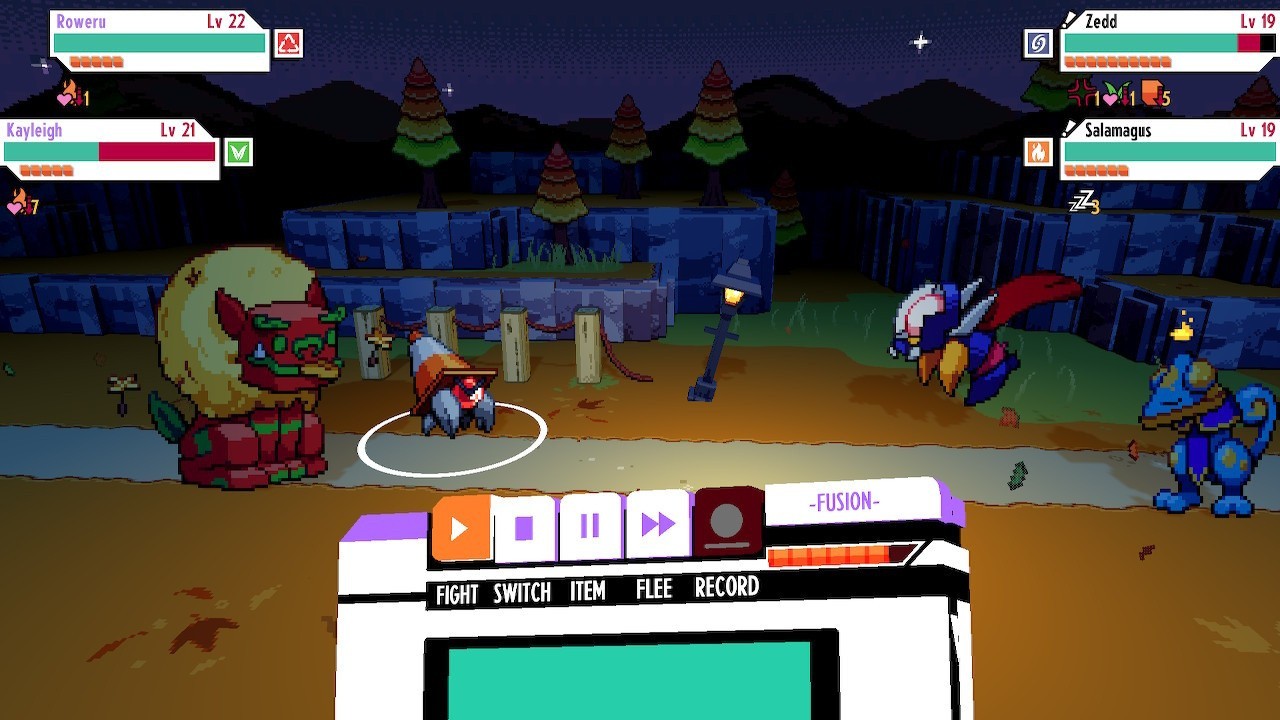
For the Cassette Beasts team, that differentiation came in the act of transforming into different creatures for battle, rather than the more standard approach of collecting them, "an intentional choice to say 'hey, people are making assumptions about what this genre is,'" according to Coxon.
For Spink and Moonstone Island, it was a case of dropping the battle system completely. "I kept the cute guys and left the battle system behind because, to me, the battle system always felt quite repetitive. By using cards for attacks and dealing you a random set each round, every hand becomes a little puzzle to solve."
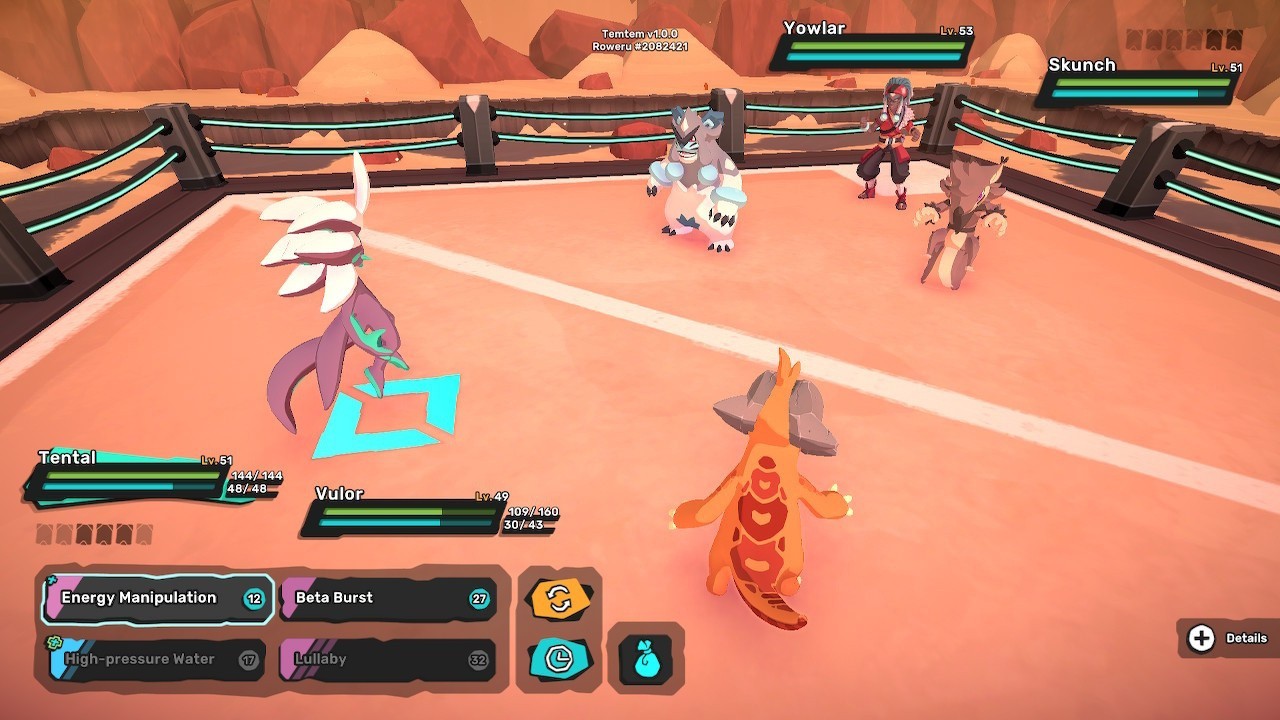
Others took a more straightforward approach. "In the early days of developing Temtem, we wanted to create almost a 1:1 homage to Pokémon," says Crema Co-Founder & Game Director Guillermo Andrades, though the team quickly realised that Pokémon's gameplay consistency was something of a double-edged sword. It forms an immediate link between generations, but "limits how much you can innovate without disorienting your fans." Free from these expectations, Crema realised it had more room for experimentation: "since we had a totally new audience, we had more leverage on carrying out different approaches and unique twists."
Pokémon works best as an entry point into the RPG game world for young aspiring players
But it's a balancing act, of course. Tweaking Game Freak's tried-and-tested formula is essential to stand out from the crowd — and avoid a knock at the door — but change things too much and you risk losing that charm.
"Strong inspirations needed to be drawn if we were to tap into the same player base," JVemon tells me of Nexomon's early days, "This led to creative constraints from fears of alienating an established market." The solution, in VEWO Interactive's case, was to shift focus to "improving seemingly unrelated aspects of the game," like breaking Pokémon's classic linear exploration and implementing a slightly more mature storyline.
While Game Freak has undoubtedly stuck to its guns in the gameplay department over the last three decades, there has been innovation in the series. We've seen battles expand with two or even three Pokémon fighting on your side at once. Each generation from VI onwards has introduced a new tweak to the Mega Evolution formula. And despite Scarlet and Violet's pitfalls, I struggle to imagine the mainline games turning away from an open world any time soon.
What? Pokémon Is Evolving!
All of the devs I spoke to drew inspiration from the classics, opting for Gens I, II, or III when I asked for their favourite games in the series, and you can see that throwback charm in many of them — be that Moonstone Island, Coromon, and Cassette Beasts' pixel art, or Dicefolk's three-creature rotating battles (a feature actually introduced in Black & White, but even they are almost 15 years old now, so you take my point).
Nonetheless, before wrapping up, I wanted to hear their hopes for Pokémon's future. Most of them still described themselves as fans, but would their nostalgia for the early games influence where they would take things next?
The short answer is 'no', not entirely. "I would love it if Game Freak were given the time to make something amazing instead of having to turn the games out so quickly," says Spink. "I hope that one day we get the Breath of the Wild equivalent of a Pokémon game."
Likewise, the Dicefolk team hope to see things grow even bigger in future entries: "We enjoyed the open world of Scarlet & Violet because it made our journey feel even more unique, which is what we want for the future of Pokémon."
But I couldn't help notice the devs' desire for Game Freak to return to its roots, too. "What I'd love to see someday is a real passion project for Pokémon, something like what Sonic Mania was for the Sonic series," Pouwels tells me. "A love letter to what made the franchise special, made by people who grew up with it and truly care about the craft."
On a similarly nostalgic note, Coxon would love to see the series "claw back some of that mystique and even mild horror that the first few games had," while Baylis believes "Pokémon works best as an entry point into the RPG game world for young aspiring players - I hope that going forward they don't abandon that!"
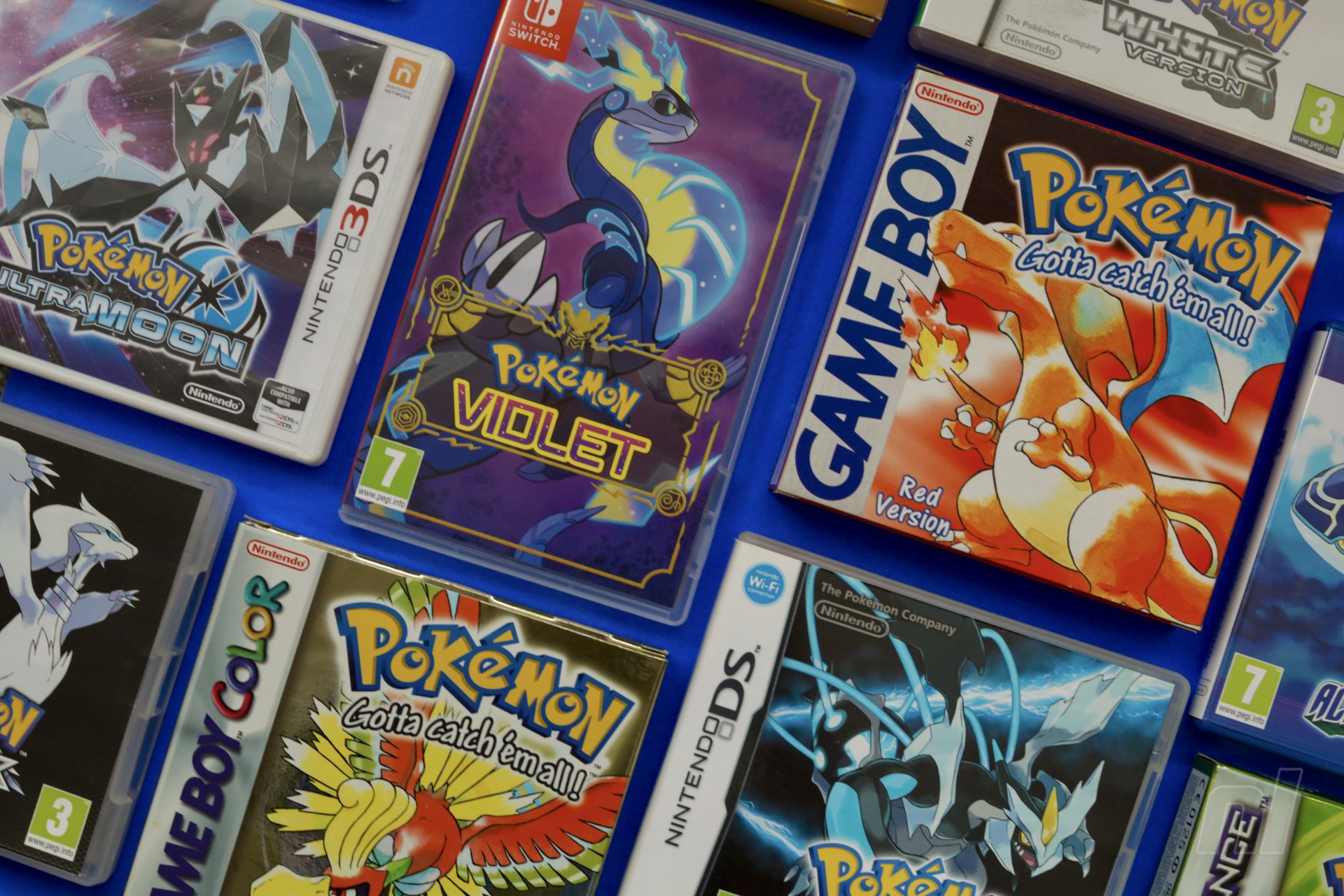
It feels like Game Freak is at something of a crossroads as we head into Gen X and beyond. Scarlet & Violet posed the biggest gameplay leap that we've seen for the series in years, and the potential for innovation feels bigger now than ever before, but performance issues and a lack of polish in those titles have some fans (including me) hankering for some old-school simplicity.
Whatever way the series goes, it'll be intriguing to see what the next generation of game developers take from it — every Pokémon game is someone's first Pokémon game, and all that. Pikachu and co. aren't going anywhere, so you can bet that Pokémon-likes won't be disappearing back into the long grass, either.
And based on how all the devs I spoke to are already demonstrating ways that Game Freak could improve and push the series forward, the promise of more is something that we should all be excited about.
Our thanks to the Crema team, Jay Baylis, Jochem Pouwels, JVemon, Luis Wong, Sandy Spink, and Tom Coxon for taking the time to talk to us.
Let us know your favourite Pokémon-like games in the comments - and if there's an innovation you'd like to see inspire the series itself.