 review by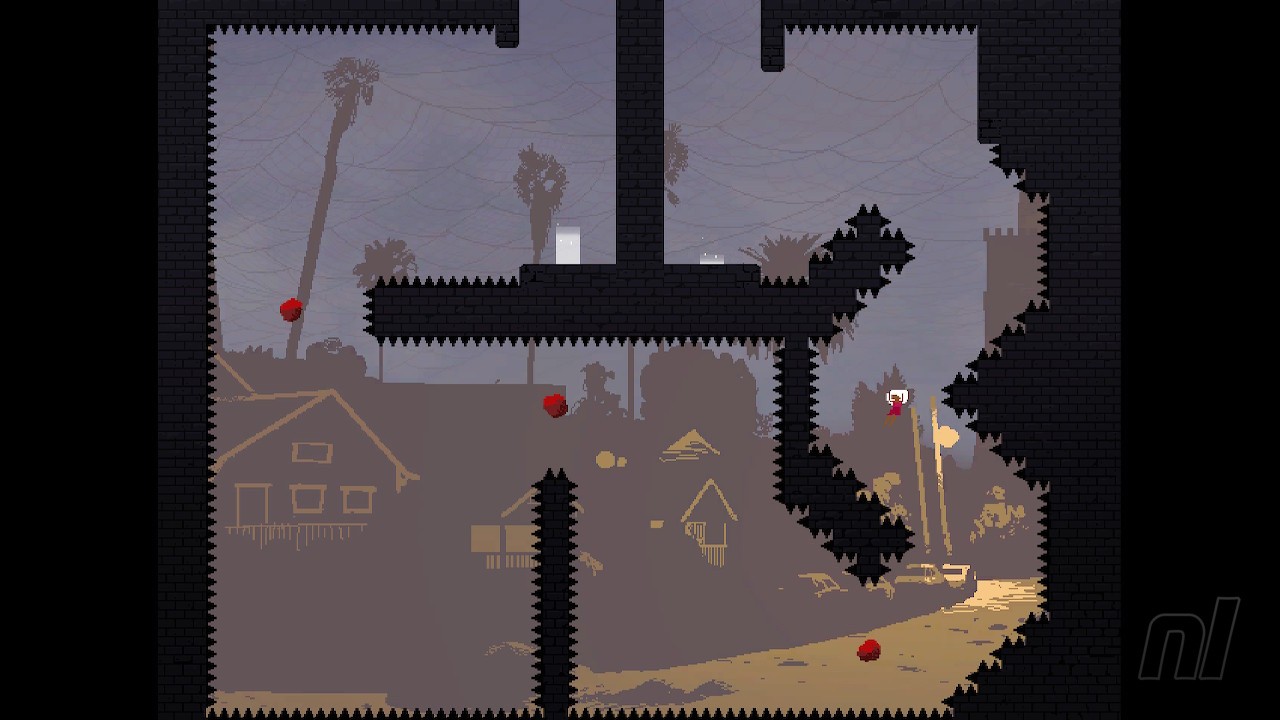
Published by Ysbryd Games and developed by brlka, Love Eternal is an arduous platformer presented primarily in a retro 4:3 aspect ratio. It follows a teenage girl named Maya as she wends her way through a lonesome, though artfully-depicted, castle and the surreal, twisted memories that haunt it.
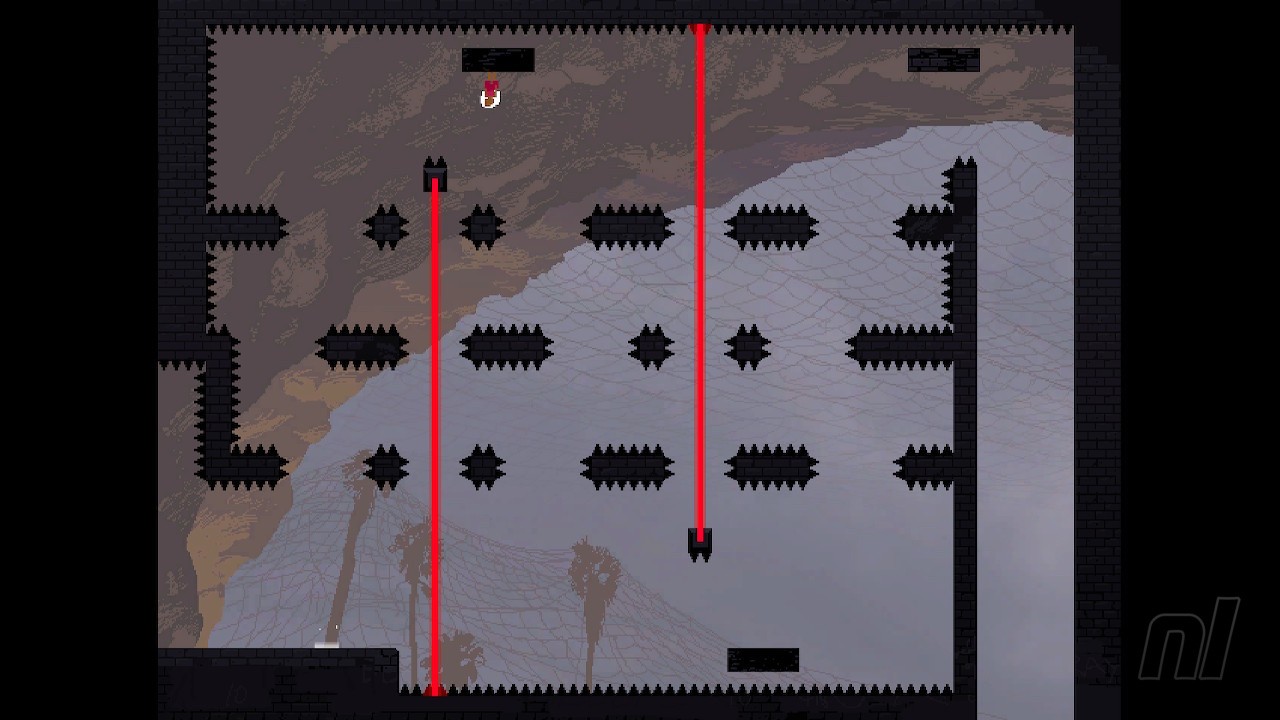
The game begins as many platformers do: through a series of progressively more challenging areas, I’m introduced to our white-haired protagonist’s limited, yet effective, skill set. Maya is able to jump and high jump, but her main ability flips gravity, sending her feet-first towards the top of the screen. The obstacles in the early areas are the expected spiked surfaces, moving platforms, and simple puzzles amid a variety of dark, unusual stages.
While the art as a whole is one of Love Eternal’s more tantalising draws, I was particularly taken by the hand-painted backdrops for each level. They suggest an expansiveness that would be difficult to achieve with the shape of each screen alone, while the thinly etched netting visibly draped over suburban neighbourhoods and palm trees hints at a larger picture of Maya’s prison.

Flipping gravity certainly isn't a unique inclusion for a platformer (VVVVVV is one example), but Love Eternal makes it the focus of gameplay to an engaging degree. Once Maya 'flips', she can’t do so again until she’s landed on a surface. Sometimes there are red orbs that recharge the ability if you touch them mid-air, which make a satisfying glass-shattering sound when struck.
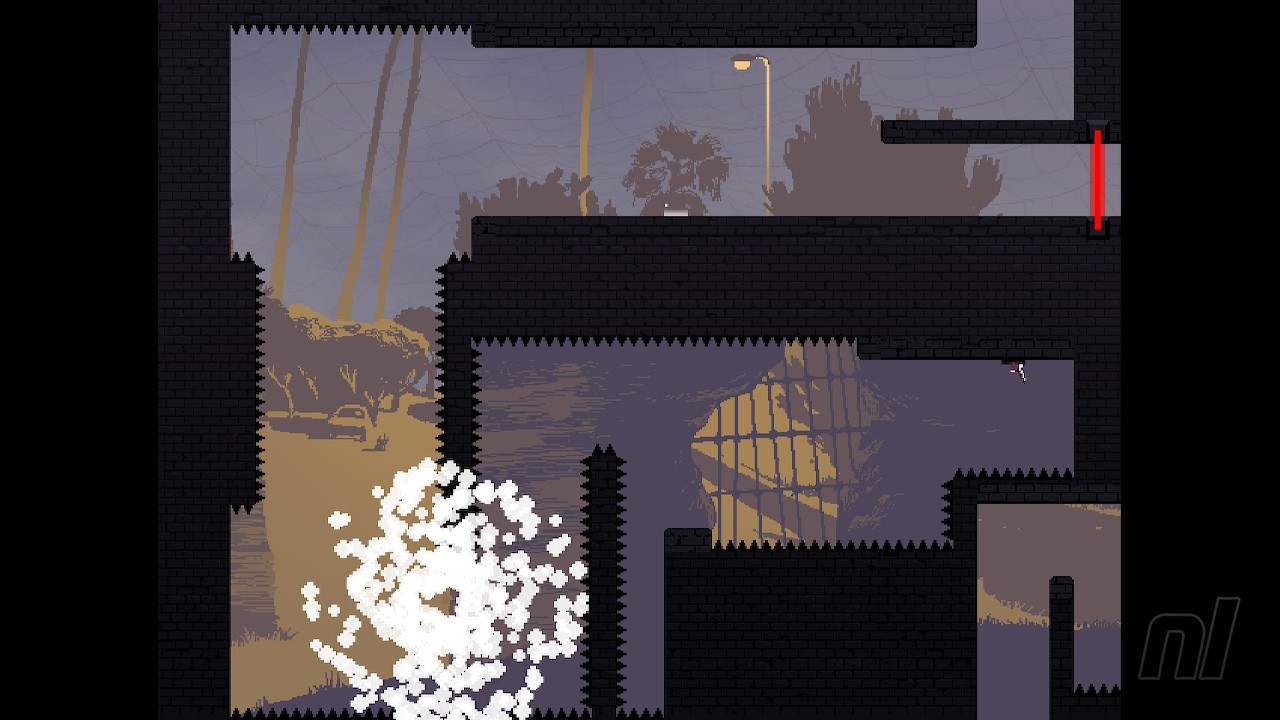
Many levels require you to navigate through a maze of deadly impediments, all without ever touching the ground. Recharging the gravity flip is what makes this possible, with the red orbs acting almost as bouncing points that guide the way. But flipping isn't instantaneous. If you're barreling towards a spiked surface and flips too late, your residual momentum will smash Maya against the ceiling with a crackling gasp. It requires an almost mathematical eye towards timing and acceleration that nonetheless begins to become instinctual after a fashion.
A subtly unsettling score underlines your explorations throughout the castle--a welcoming softness in the contrast to the sharper sound effects of so many deaths. And make no mistake, you will die. A lot.
The game's difficulty embodies the traditional rhythm of platformers. As soon as I'd painstakingly mastered every minor motion and each instant of precise timing in one realm, I finally escaped the prison I started to loathe and am unleashed upon a new level that I'll have to learn a fresh sequence of tediously ordered movements to defeat. For those who love punishing platform mechanics, this is probably a boon. Those who only grind through high difficulty gameplay to unearth satisfying story elements might have a more mixed experience.
Love Eternal bills itself as a psychological horror. It seems to deliver on this promise in the first half, but the tone segues into strange humour and meta-narrative in the latter part of the game. Beware: there are some story spoilers ahead. The set-up is brief but chilling. Maya begrudgingly sits down to dinner with her family before being asked to go answer the phone. She follows the ringing into the hallway, and picks up the phone only to find silence on the other end. When she returns to the dining room, everyone is gone from the table and the front door is open. Walking outside is when the game starts in earnest, as Maya finds her home is just one of many ruins amidst an eerie landscape.
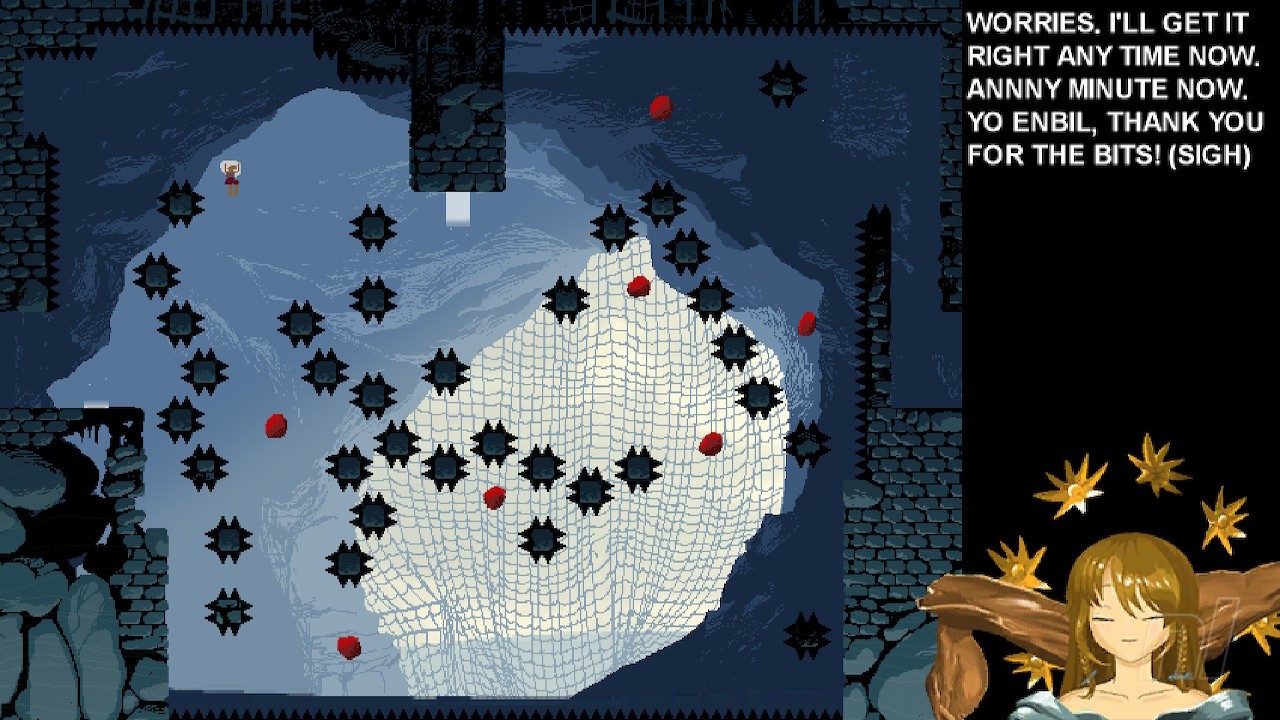
As Maya navigates the labyrinthine environment, she stumbles upon bizarre versions of her life and family members. Soon, she begins to uncover memories of others who were trapped like herself, and eventually she is confronted by the very entity who is holding her hostage.
This is where both the tone and gameplay take a definitive turn. This lonely 'god' delivers a literal PowerPoint presentation featuring clip art which, while funny, still manages to be frightening. Unfortunately, the deity basically lays out her entire plan and motive for trapping people. As with horror in any format, the more the curtain is pulled back on the mystery the less scary everything becomes.
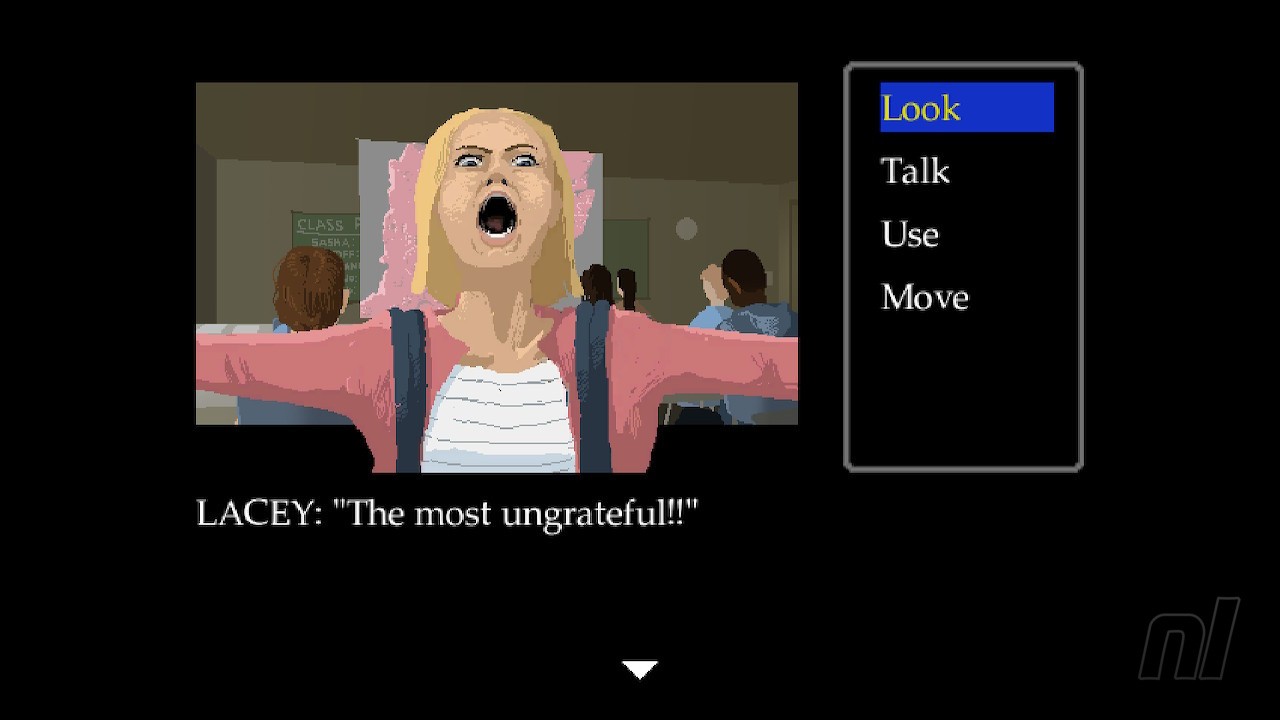
After a chase sequence challenge (actually one of the easier levels for me), the game format changes in a manner reminiscent of Inscryption. Suddenly, it isn't a side-scrolling platformer, but a first-person point-and-click. Maya appears to be back in her regular life, but something's obviously not quite right. She has a brother instead of a sister, and her dad isn’t the same man that’s shown earlier in the game but instead another one of the god’s trapped pets. Most notably, the begrudged god has taken on the role of Lacey—a friend referenced in earlier scenes as having bailed on plans with her.
Sadly, the gameplay in this section leaves a lot to be desired. Your actions are generally limited to “look,” “talk,” “use,” and “move.” Each scene requires you to select these to progress, but it’s an illusion of choice. I wasn’t even allowed to pour my cereal in the wrong order by putting the milk in first. Lack of control can be horrifying, but in this case it was more boring than anything else. Despite some genuinely skin-crawling moments, I didn't find this part enjoyable to play through and it disrupted the pacing significantly.
While she eventually breaks her way back out into the platforming side of the game, there is another framing shift towards the meta that comes later on. Essentially, the game starts over, but a streamer is “playing” the game. She narrates gameplay, but the player maintains control of Maya’s movements.
The streamer is given different levels to play than the actual sequence from the beginning of the game, including the final level. I know that I must have taken longer than intended to beat it because the streamer ran out of dialogue well before I was able to get through.
Here, I occasionally had an issue where the sound would cut in and out. Going without it highlighted for me how much I had been relying on the red gem sound effect to help time my movements. I found that restarting the game did restore the sound, but it still cut out a few more times during my playthrough.
The ending was more trippy than substantive, and it left me feeling like I'd missed something. There was yet another game within a game at the very end: a more old-school style action adventure. I’m sure someone will enjoy figuring out what happens if you can progress far enough within it, but by the time I got my “game over,” I was happy to leave my Love Eternal experience in its pretty grave.
Conclusion
The platforming elements of Love Eternal are delightfully frustrating fun with a limited set of mechanics put to creative and clean use. Multiple levels had me holding my breath, gritting my teeth, and cursing the wayward god who founded the whole endeavour.
The hand-drawn levels are as beautiful as their challenges are frustrating. Unfortunately, an overly ambitious narrative coupled with a strange mid-game shift mars the game's myriad charms.


Comments 7
Thanks for the review, not sure if I'll ever play this myself considering what's mentioned here (potentially the horror, but maybe even more so the difficulty of the platforming if it proved more frustrating than satisfying to me) - regardless, glad it's now also on Switch for those interested in it!
It does sound interesting. I'm not the biggest fan of this style of platformer, but might be something I check out around halloween times for those spooky vibes.
Hard and psychological horror?
Sounds like They Bleed Pixels, that was released years ago.
Sounds like an interesting game, actually, the stuff in the spoiler section sounds interesting to me
Wendy: Every Witch Way on the Game Boy Color also has a gravity flipping mechanic. 🙂
I am not sure this is for me. (I loved VVVVVV but I think based on the review that it would annoy me.) I don’t really like the way it looks either. For this mechanic because of my inexperience with it I think I would need a much more gentle start.
I love me some Inscryption-style shifts and meta-narratives, but this game seems a little too experimental/abstract for my preferences. The tonal changes sound a little too grating for me as well. I might check out a few other reviews to see if others enjoyed it more. Otherwise, it’s a pass.
Show Comments
Leave A Comment
Hold on there, you need to login to post a comment...