
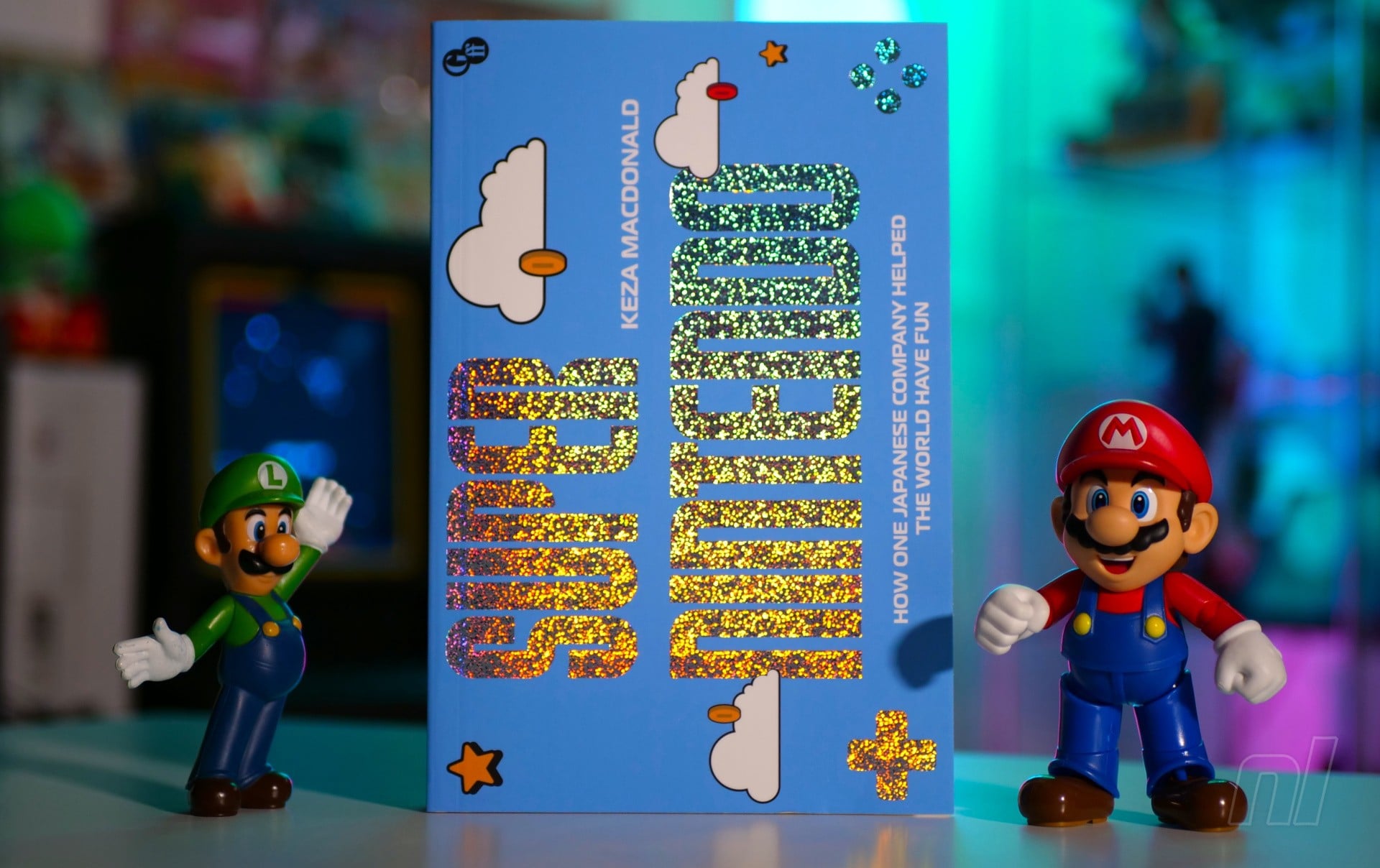
In the introduction to Super Nintendo: How One Japanese Company Helped the World Have Fun, Keza MacDonald makes a simple promise: over the course of the next 12 chapters, you'll read something you didn't already know.
It's the kind of gauntlet-laying that would have any self-respecting Nintendo fan click their knuckles and close their Bulbapedia tab in a 'challenge accepted' kind of way. And yet, 250 pages later, I can honestly say that it rang true.
'Super Nintendo', to bring it down from its proper title, is the story of the company that we all know and love; it's also the story of us, humans, and how we play. The Guardian's Video Games Editor and former Editor-in-Chief at Kotaku UK compiles interviews with just about every Nintendo creative you can think of (and the ones you can't) to explain how some of the industry's most iconic series came to be, while also reflecting on why these series are important in wider culture.
It's comprehensive but never too dense, informative but approachable, and packed with an unwavering passion for Nintendo that I'd wager even the company's biggest detractors would find infectious. In short, if you want to learn about Nintendo, this is the book to do it.
Strictly speaking, this isn't a chronological walkthrough from A to B. It starts with the toy manufacturing of the 1960s and '70s and ends with the development of Splatoon, but each game-focused chapter in between serves as a jumping-off point to explain something larger about the company as a whole.
A chapter on Donkey Kong delves into the early design processes of a little-known artist called Shigeru Miyamoto. A Metroid section also serves to dissect gender representation in both Nintendo games and the wider industry. Animal Crossing acts as a prime case study demonstrating Nintendo's habit of sticking with an idea until its audience finds it.
Be it the story of smash-hit successes like Wii Sports, or the company's more off-the-wall moments like LABO (no, LABO wasn't just a fever dream), the book presents the House of Mario not as a company that's out of touch with competitors, but one that's always looking to what's next — even if 'next' is a cardboard piano.
The Nintendo fanboy in me always likes viewing the company in relation to the larger industry, and MacDonald does a nice job of balancing the micro details of game development with the bigger picture. There are plenty of places that you can look for deep dives into specific titles and their development, but Super Nintendo really shines in showcasing the personal touches.
Take the chapter on Kirby, which is used as a way into discussing the much-missed Satoru Iwata. It's a poignant and heartfelt tribute shining the light as much on Iwata the man as Iwata the designer — the corporate president, computer programmer, and gamer, to paraphrase his iconic introductory quote. By compiling words from Miyamoto, Itoi and others close to him (mainly from Hobonichi's wonderful book, Ask Iwata), MacDonald balances Iwata's commercial and personal impacts. It's fitting that the chapter ends on Miyamoto's memories of their late-night meals and shared sweets rather than impressive sales figures for Wii and DS.
The book is built on one of the most comprehensive collections of interviews that I've seen in a long time, many from MacDonald herself. The veteran journalist throws out tidbits from her chats with Miyamoto, Aonuma, Tezuka, and others, pulling from other works when she didn't have a chance to sit down with the creative in question. Super Nintendo threads each perspective together into a cohesive whole, and it feels like you're getting a peek behind the wizard's curtain, catching a glimpse of all the old developers turning wheels and flipping switches while the end result looks like magic from the outside.
There are lots of little inner-working nuggets peppered throughout the book, and I don't want to spoil them here, but it's exciting to hear some of the company's longest-serving designers talk anecdotally about their perceptions of select products long before they launched. Shinya Takahashi has a list of production credits as long as your arm, so reading about his pre-launch worries about the Switch, about how he wasn't fully on board with the appeal of the design until the first time he moved a prototype from docked to handheld, is fascinating.
Well-worn tales of Miyamoto's Zelda inspiration stemming from his time exploring forests as a child are mixed with lesser-known details, like Koizumi confessing he designed Mario Sunshine's splashy focus on the back of his memories of summer holidays spent by the water. You'll find a lot of these anecdotes elsewhere, but I highly doubt that you've read them all.
By threading them into the story of the company, Super Nintendo proves to be a very satisfying summary of a company that is ever-changing and ever-growing. If this book puts one thing above all others across, it's that Nintendo's sense of fun, and our sense of play, will forever be its most appealing feature.
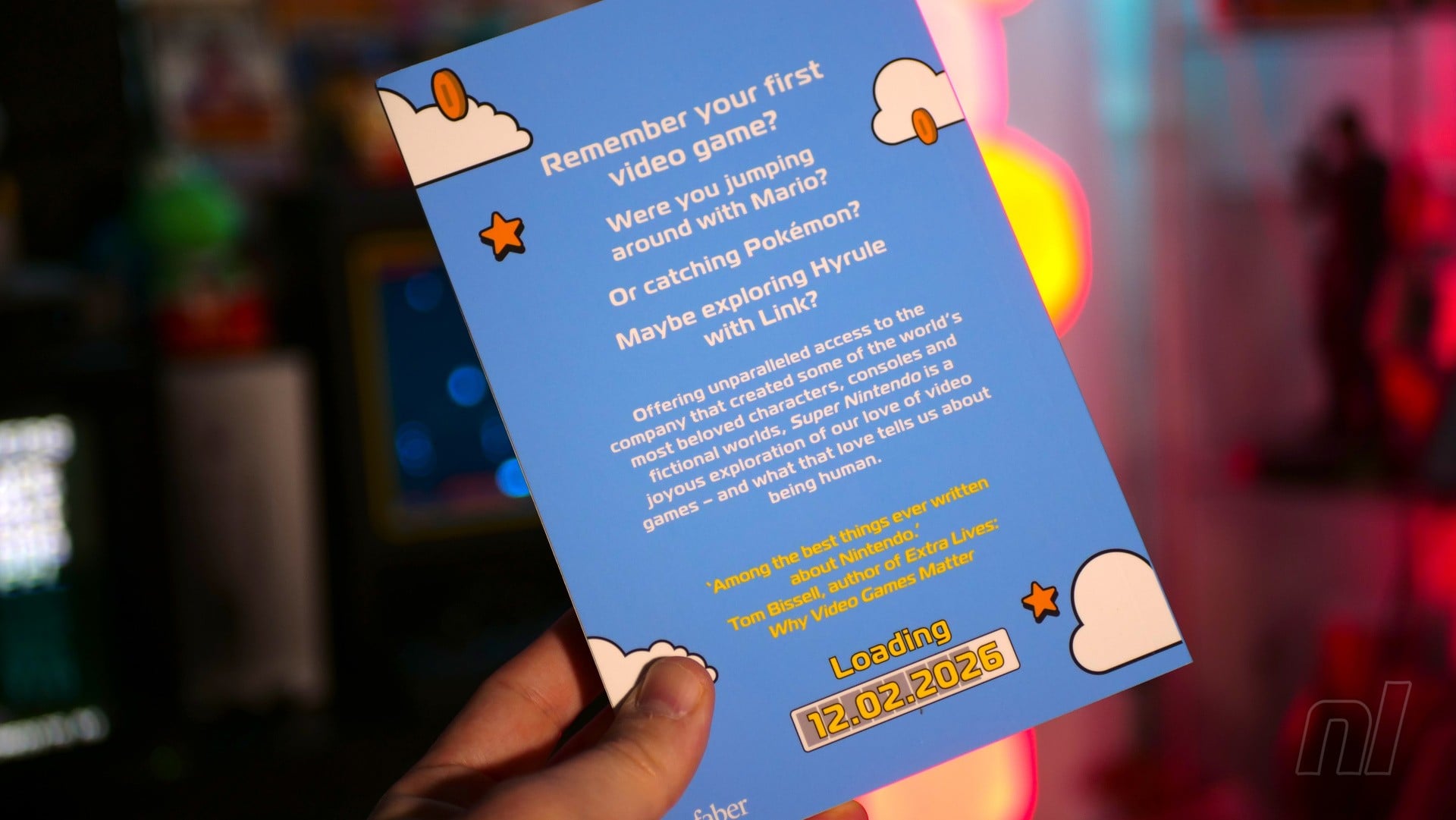
Thanks to Faber for sending an advanced copy. Super Nintendo: How One Japanese Company Helped the World Have Fun launches in North America on 3rd February 2026 and in the UK on 12th February 2026. It is available now to pre-order.