
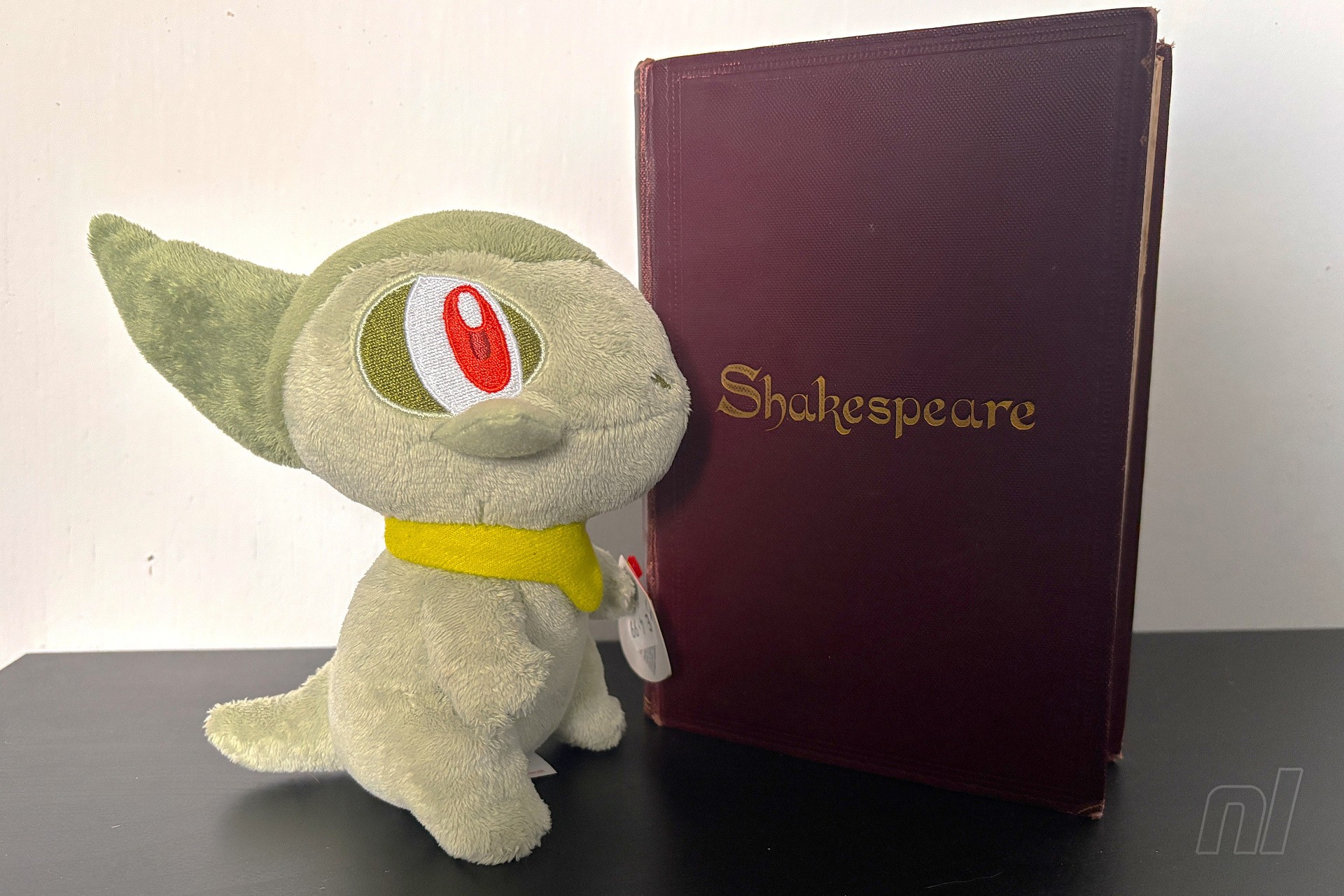
"Enemy DUGTRIO used Fissure. It’s super effective!"
I’m six years old, and I’m staring at Pokémon Yellow on my Game Boy Color screen, dumbfounded. This was my first time fighting Giovanni, the leader of Team Rocket, and he managed to one-shot my Blastoise with a move — a word — I’d never seen before. Fissure? What’s that, a fish of some sort?
That wasn’t the first, nor the last, time Pokémon introduced me to language. The series has a bit of a reputation for using lots of words, but besides the over-tutorialisation of modern-day ‘mon, it’s never really bothered me. Pokémon is a series I’ve grown up with and, alongside reading books, taught me to love words.
Imagine asking your parents at six what ‘Guillotine’ means (pronounced extremely incorrectly, of course) after a Krabby just hammered you with its big claws; besides reading French Revolution textbooks or slicing paper, when else will that come up? I kept pestering every time I saw an attack I had no understanding of. What on earth is an ‘Aurora Beam’? And what does it mean to ‘Constrict’ something?

After consulting my parents and eventually diving into pocket dictionaries, I discovered that these names are absolutely deliberate – most of the time. Constrict is a move that can reduce your speed, and that makes sense, because you’re wrapping up a creature in something. Aurora Beam is just a beam of colourful lights, but absolutely a reference to the Northern or Southern Lights, hence the Ice-typing. And we all know what a Guillotine is, right?
From taking ‘Recoil’ damage to learning about cell movement with ‘Kinesis’, Pokémon Yellow kept throwing new words and meanings my way. At six, I was curious but introverted, with Pokémon acting as my gateway to adventure and my love of RPGs. And I wasn’t just falling head-over-heels for the cute critters and aimlessly wishing Pokémon were real creatures – I wanted to use those words and meanings I was learning about in-game in real life.
Pokémon battles were both a chance to demonstrate my understanding of type match-ups and a place where I could learn not just the art of battle, but the art of language.
In Pokémon Silver, I found out what it meant to ‘perish’ thanks to Misty’s Lapras. In Pokémon Sapphire, I was astonished when my Combusken ‘flinched’ after a Whismur’s attack. I learned about Aromatherapy, too – and no, it doesn’t cure all ailments in real life, unfortunately.
The older I got, the less I relied on questioning family and flicking through hundred-page books to find out the meaning, because animations got better in the jump from Game Boy to GBA. I understood that Teeter Dance — the signature move of Spinda, a clumsy, wobbly Pokémon — meant that the opponent was swaying in an attempt to confuse my Gardevoir, because that’s what the game was showing me, as best as it could in 2003.
Of course, it goes way beyond Pokémon attacks and moves. Items weren’t just functions in-game but tools to help me understand the meaning of things. The series became an ‘Antidote’ (yes, Yellow was the first time I saw that word) for my anxiety and nervousness, and an ‘Elixir’ for my curiosity. Suddenly, things I didn’t like didn’t need to “go away”; I could ‘Repel’ them.
I would’ve encountered most of these words in later life, of course, but as an impressionable child, learning about functional and flowery language in a video game supplemented my love of reading and writing. I wouldn’t have known so early on in life that Fuschia was a shade of pink or a type of flower without spending dozens of hours in the Safari Zone or skipping through town to defeat Koga or Janine.
And, as it turns out, every town in Kanto is named after a colour or shade, which is then matched in-game (on the GBC, at least) by the town’s hue.
As the series evolved alongside me, so did its use of language. Even as a teenager, I was still discovering terms and descriptions that I wouldn’t have otherwise stumbled upon unless I was knee-deep in a novel. Sinnoh’s Mt. Coronet, for instance – when will I need to use the word ‘coronet’? It didn’t matter; it just gave me another tool in the arsenal for when I would eventually sit down and write professionally and need to use a word other than crown. How often do I use ‘Pastoral’ (à la Pastoria from Diamond & Pearl)? Not a lot, but it’s a lovely string of letters, isn’t it?
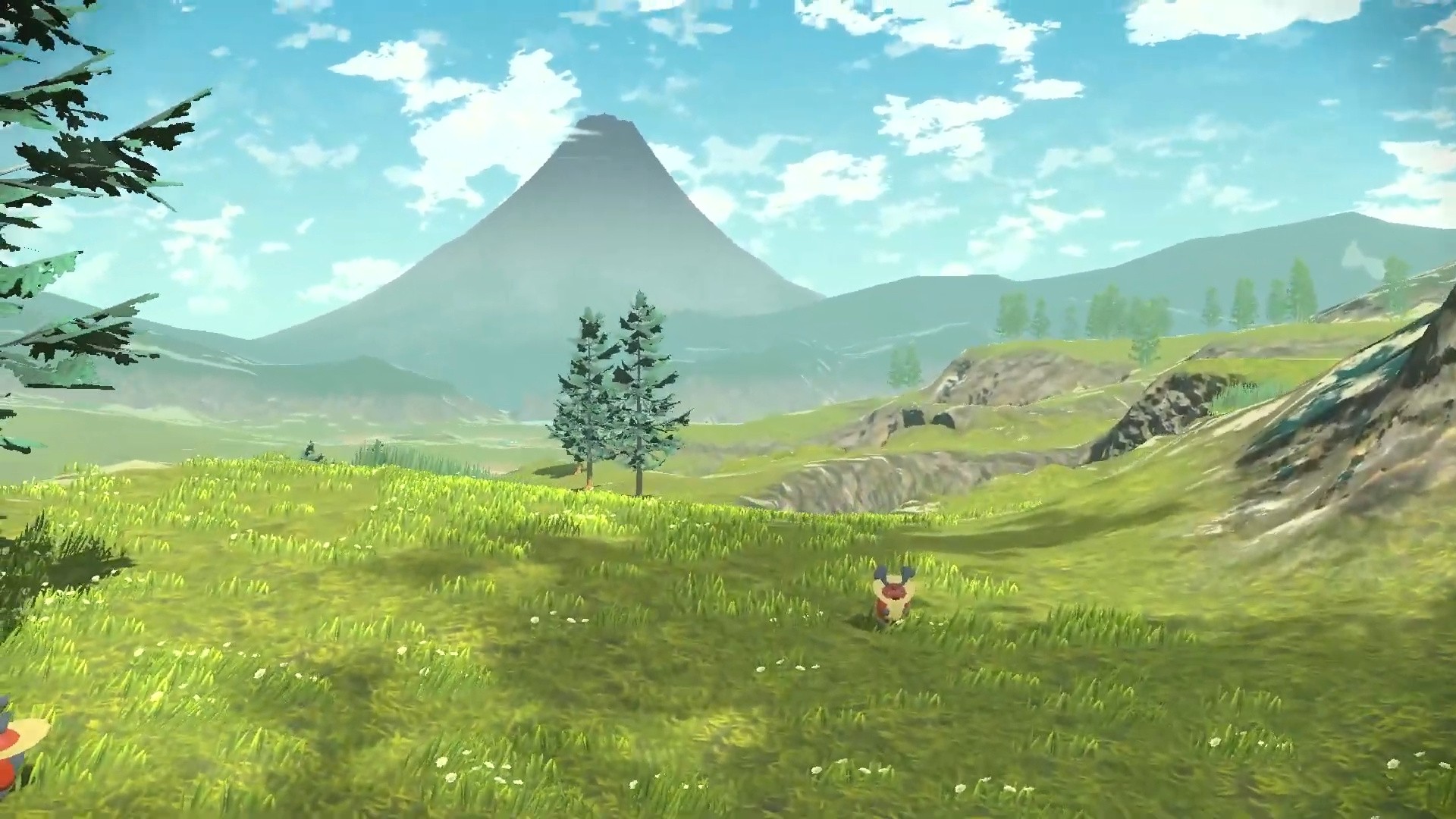
Now, as an adult, that fascination for language and naming conventions has never left me. Every new gen, I love to dive into Pokémon names to understand why they’re called Alomomola or Typhlosion. I’m sure I would’ve gone down the scientific naming conventions of fish and Hawaiian words, or the mammalian order of Eulipotyphla routes eventually, right?
Gen 1 may have started things off simply with Ekans, Arbok, Pidgey, Spearow, and the like, but there’s so much creativity throughout the whole series. Ariados pulls from Ariadne, the tragic Greek figure who used a ball of twine to help Theseus escape the labyrinth. You have literal palindromes in Girafarig and Farigiraf, mirroring their physical designs. Pawniard, Bisharp, and Kingambit are all named after chess pieces of increasing standing. Even just names that are fun to say — like Salazzle, Krookodile, Mimikyu — are joyous expressions of language.
I also want to confess that, until a few years ago, I completely missed the pun staring me in the face of Sudowoodo’s name. An absolutely genius choice, and the localisation team should be proud of themselves (as should the original Japanese team for calling this fake tree Usokkie).
At some point, my love of Pocket Monster names bled into my nicknaming process. My kid self would settle for names like Croc the Feraligatr or Blaze the Torchic, but by Gen 4, I was going by creature colours, Italian words for balloon or winter, or types of flower that closely matched ‘mon designs.
Of course, I still have to name someone after my cat, and occasionally I’ll let myself repeat names – I’ll never top Crumpet the Krookodile, after all. But these creatures, who become my partners for hours, deserve to have names that mean something.
I’ve never lost that appetite for language that Pokémon introduced me to. I knew that stringing together a sentence of fancy words learned in a Pokémon game wasn’t going to win me friends, but at six, playing Pokémon Yellow made me realise that video games were more than just things to play. They could be good. They could teach you things. Play is a part of it, but learning — and experiencing — can be fun.
Have you learned something from Pokémon? Do you enjoy 'mon names and moves? Let us know in the comments.


Comments 21
I'm french, and when I was 6, I played a game in which the only written words I can recall were "It's dangerous to go alone", and I'm not even sure I guessed what the french translation of "dangerous" was... The golden box of that game was deceptive for a somewhat limited boy.
I'm happy seeing these sort of articles.
Good read! And very relatable. Between playing the Pokemon games and being an introverted bookworm in general, I came across many words as a kid lol. Though I will say my pronunciation still occasionally suffers if I've never heard a word used IRL. Which can also be subjective depending on the language and dialect! (Po-tay-toh, Poh-tah-to, car-mull, care-ah-mell, etc.)
And yes, I mispronounced guillotine as "gill-oh-teen" for years thanks to these games lol. The French language and I have never meshed well.
@AlanaHagues "I knew that stringing together a sentence of fancy words learned in a Pokémon game wasn’t going to win me friends"
I'm sure you eventually did ! I noticed that intelligent, thoughtful people tend to find each others (even if I'm not one of them).
Oh my god, I'm SO pleased to see someone else talk about this - the exact same thing happened with me as a kid!
I vividly remember playing Ruby for the first time, aged 7, and getting quickly stumped on 'Absorb' and 'Bide', and even 'ergo' when used by one of Prof. Birch's assistants.
In a meta sense, looking up Pokémon name meanings on Bulbapedia directly taught me the words 'etymology' and 'portmanteau'... and 20 years later, when I was teaching a class of 9-year-olds spelling today, they all remarked "etymology is always your favourite bit"! And it wouldn't have been if it weren't for Pokémon!
I don't remember what language it is, but I remember seeing that a foreign name for Zubat is Nosferapti. Combining Nosferatu and chiroptera? My inner word-nerd was thrilled.
I remember getting Pokémon Yellow in 1999 and being overwhelmed by the sheer amount of text and new vocabulary in a language I didn't speak, so I made it my life's mission to understand what that Game Boy screen was trying to tell me. Now here I am, twenty-seven years later, with a degree in English, teaching ESL for a living and spending the money I make on more Pokémon games. So I guess thanks for a career, Nintendo, and congrats on nearly three decades of sucking my pockets dry.
Beyond just lexicon, the various inspirations and influences with Pokemon designs and regions has led me to learn a lot about the cultures and ecosystems of distant places.
Also, MAMMAL TAXONOMY MENTIONED!
I had plenty of problems in school, but vocabulary was never one of them. During one of the many assessments intended to figure out what was wrong with me, I remember being rated at a 12th grade reading level as an elementary schooler. I attribute that completely to all the flowery and technical language that fantasy/sci-fi stories use to help sell their settings, and considering I was already playing Red version while learning to write my own name, I'm sure Pokemon was a major contributor.
While playing Pokémon has probably taught me a lot of English (and mashing the A button quickly, as I often wouldn't understand the dialogs anyway), I'll forever wonder how it feels to play a Pokémon game in one's own native language. I hope The Pokémon Company will keep expanding the list of supported languages in future games.
Video games taught me a ton of English, and pokemon in general is amazing for learning a language.
I remember loading a German copy of Pokemon Yellow on my 3DS so I could get a better sense of the language.
Great article! This resonates deeply with my own experience. Pokemon Red (and Ocarina of Time collectively) played a MASSIVE part in expanding my vocabulary and interest in language in 1998, and onwards. Color-wise, I only ever heard of Lavender and Fuschia before, so I was in for a surprise when I encountered the words cerulean, celadon, viridian, etc (alongside the words fissure, elixir, and many others) in other contexts/media.
Replaying Pokemon RB on the SNES' Super Game Boy in the 2000s was an awesome experience for me, because of the specialized shifting palettes every time you would enter a new town that matched the town names. For example, the dominant color being actual cerulean (or at least an approximation of it given hardware limits lol) when entering Cerulean City, pewter gray for Pewter City, etc. If I'm not mistaken, the color changes/palettes were considerably more pronounced and varied when playing on SGB , compared to playing on GBC and GBA via backwards compatibility.
In a similar way this reminded me of playing Emerald and getting up to the brail sections. By that age I'd heard of brail but this was the first time anything had made me think about it, like how to physically feel letters and kind of understand a different point of view around language from my own.
I grew up by 3rd party RPG games from PS1 & PS2 like Final Fantasy 8, 9, 10, 10-2, 12 when I was teenager so I grew up with different English words from video games I played.
I learnt some words like atonement (FF 10), Magicks + Techniks (FF 12), disasterrific (FF 10-2), Rally Ho, yourself (FF 9), -Ra & -Ga spell names (FF 8), etc.
This is such a timely topic.
A teacher on Reddit recently was explaining more and more kids just aren't reading. AT ALL.
One student even said, I have TikTok, Chat GTP and the film, why do I need to read it?
“Special” or “spectacle” as I used to pronounce it. I had no idea what that was until years later. I probably learned to read from pokemon tbh. I could make a list of words which originate from there. Some probably common for others like leer but loads of others too.
Good article, thanks for sharing! I also really like language, especially etymology. I think it's incredible how they create names for new Pokémon. They're very clever.
A lovely, lovely article. A reminder of how the impact of games can be much wider than just in-the-moment gameplay.
Great article, for me in addition to all that videogames most likely planted the seed of my passion for and so also studies of foreign languages in general and eventually Japanese in particular: being from Italy some of my first games, especially on the N64, weren't in Italian so I played them in other languages (not only in English which I started learning in elementary school, but also in French and/or Spanish like in the case of Paper Mario since they're more similar to Italian and the latter of those two also in Pokémon Stadium due to accidentally getting that version) - videogames can mean so much to people and that's one of the many reasons why I absolutely love them!
Great article! Pokémon absolutely broadened my vocabulary and there’s one story that sticks out. Yellow was my first game as well, which meant most of my friends had already been playing Red/Blue for a year before I started my own journey. One of my best friends had already finished the game and caught a ton of Pokémon. I asked if I could see some of them, so he let me look through his boxes. I saw Haunter and lit up! Trying to figure out how to put Haunter in his party was a challenge because I hadn’t made it far enough to need to use the PC in my game yet. I also didn’t want to look stupid in front of my friend. I had never seen the word “withdraw” before, but I knew what “release” meant! Clearly I need to “release” the Haunter into his party, right?!… Then I saw the message: “Bye bye Haunter!”
Luckily, I didn’t save the game, so we just turned it off and the Haunter was safely back in his box. I never made that mistake again and quickly learned what withdraw meant!
I distinctly remember taking some standardized test as a kid where the question was about the butterfly life cycle. Immediately thought "Larvitar evolves into Pupitar"! Countless other words and concepts I can definitely see myself having learned from Pokemon too! Great article!
Show Comments
Leave A Comment
Hold on there, you need to login to post a comment...